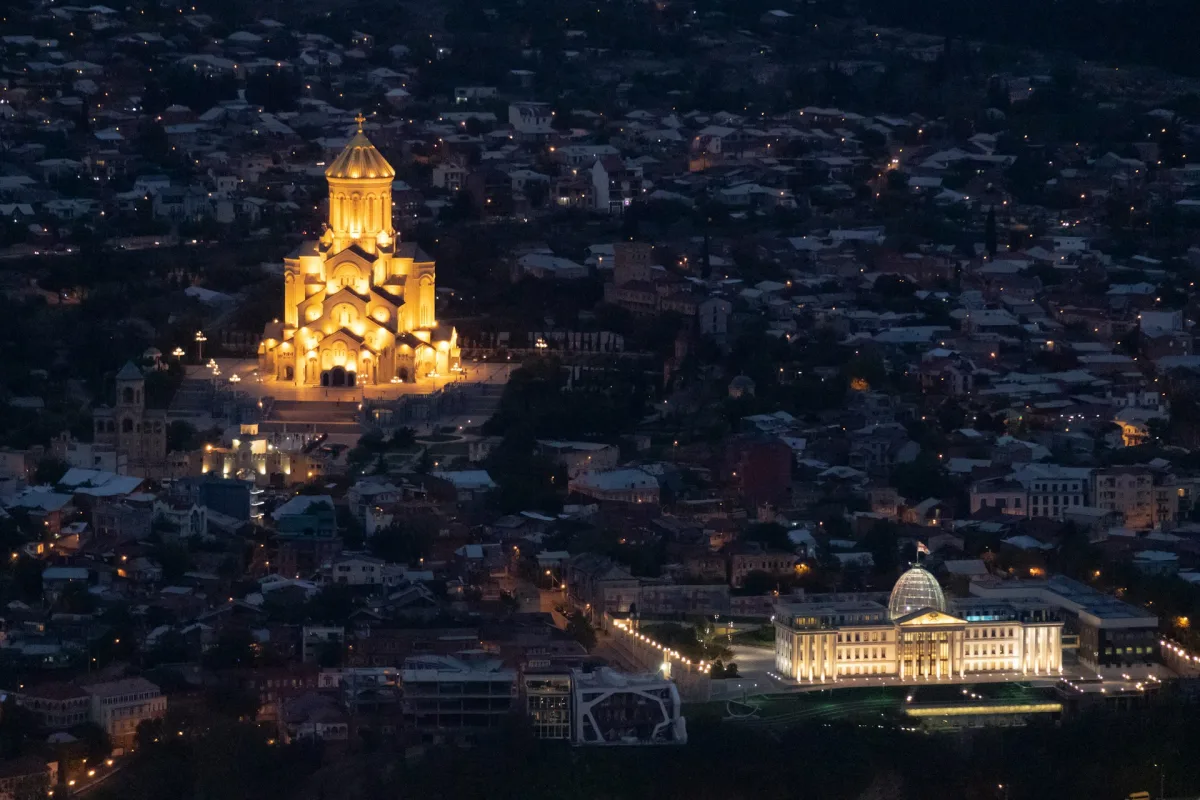
Some family holidays are about doing as little as possible. Others become a shared adventure of discovery, where children and parents learn something new together. Georgia — the country in the South Caucasus, not the American state — sits firmly in the second category. It is a compact country where you can ride a cable car above a medieval old town in the morning, climb into a cave city carved in the Iron Age by the afternoon, and eat cheese bread by the Black Sea in the evening.
What makes Georgia unusually easy for families is the combination of genuinely dramatic scenery, an extremely child-friendly culture, and short distances. Tbilisi to Kazbegi is a few hours up a spectacular mountain highway; Tbilisi to Kutaisi and Batumi is a straightforward drive or train ride west. Georgian families eat late and loudly, children are welcomed everywhere, and nobody minds a bit of noise in a restaurant.
This guide focuses on the family planning decisions: which places work best for children, how to pace an itinerary, what to eat and what to prepare for. For a broader overview of the country, read our complete Georgia travel guide. When you are ready to look at a structured itinerary, see our Georgia family tour package.
Why Georgia works well for families
Georgia has become a popular destination for Indian and European travellers in recent years, and much of that appeal translates directly to families. The country is safe, affordable, and unusually good at absorbing children into daily life.
- Scenery that children actually react to: Snow-capped Caucasus peaks, cave cities carved into cliffs, emerald canyon water and a subtropical coastline give a genuine sense of variety within one trip.
- Short distances between very different places: Tbilisi to Kazbegi is roughly 3 hours; Tbilisi to Kutaisi is around 3.5 hours by road or fast train. You are not spending entire days in transit.
- A deeply child-friendly culture: Georgian hospitality extends warmly to children. Restaurants, guesthouses and even churches tend to be relaxed about families.
- Food that suits younger palates: Khachapuri (cheese bread) and khinkali (dumplings) are reliable hits; the cuisine is generally mild, herby rather than spicy.
- Good value: Accommodation, food and private transport are relatively affordable, which makes a family trip easier to budget.
- Safe and welcoming: Georgia consistently ranks as one of the safer countries in the region for tourists, with low street crime and a strong culture of hospitality.
The best family trips are built on a realistic rhythm. Georgia rewards that approach: a morning of sightseeing followed by an afternoon of park time or a long lunch works far better than trying to see everything.
Is Georgia suitable for children of different ages?
Georgia can work for a wide range of families, but the ideal itinerary shifts with the ages and interests of your children. Rather than trying to cover the whole country, choose the experiences that match your family's energy and comfort level.
- Under 5 years: Keep to one or two bases and avoid long mountain drives. Tbilisi's cable car, Rike Park and the flat boulevards of Batumi are all easy with a stroller. Kazbegi is beautiful but the altitude, the 4x4 transfer and the cold can be hard on toddlers.
- About 6–11 years: This is the sweet spot for Georgia's more adventurous sights. Uplistsikhe's cave town, the boat ride through Martvili Canyon, Prometheus Cave and the Gergeti Trinity Church walk all land well at this age.
- Teenagers: Older children will get more out of Tbilisi's history and architecture, the Georgian Military Highway, and the photography on offer throughout the country. Hiking around Kazbegi and the winemaking culture of Kakheti also appeal more at this age.
These are planning suggestions rather than rules. Consider your child's tolerance for car journeys, altitude and heat before committing to the mountain sections.
Best places to visit in Georgia with family
These destinations form a strong backbone for a family trip. You do not need all of them; pick the ones that fit your time and your children's ages.
1. Tbilisi — the capital
Tbilisi is a genuinely walkable, characterful capital, and the easiest introduction to Georgia for children. The Old Town is a tangle of wooden balconies, carved doorways and courtyards; the Narikala cable car lifts you above it all to the fortress and the Mother of Georgia statue with barely any effort, which is a big advantage with young children.
The Peace Bridge and Rike Park give children space to run, and the sulphur bath district (Abanotubani) is fascinating to walk through even if you do not book a bath. For a rainy afternoon, the Georgian National Museum holds the goldwork that Georgia is famous for.
Practical note: Tbilisi is hilly and the pavements in the Old Town are uneven. Comfortable shoes matter more here than in most capitals.
2. Kazbegi and the Georgian Military Highway
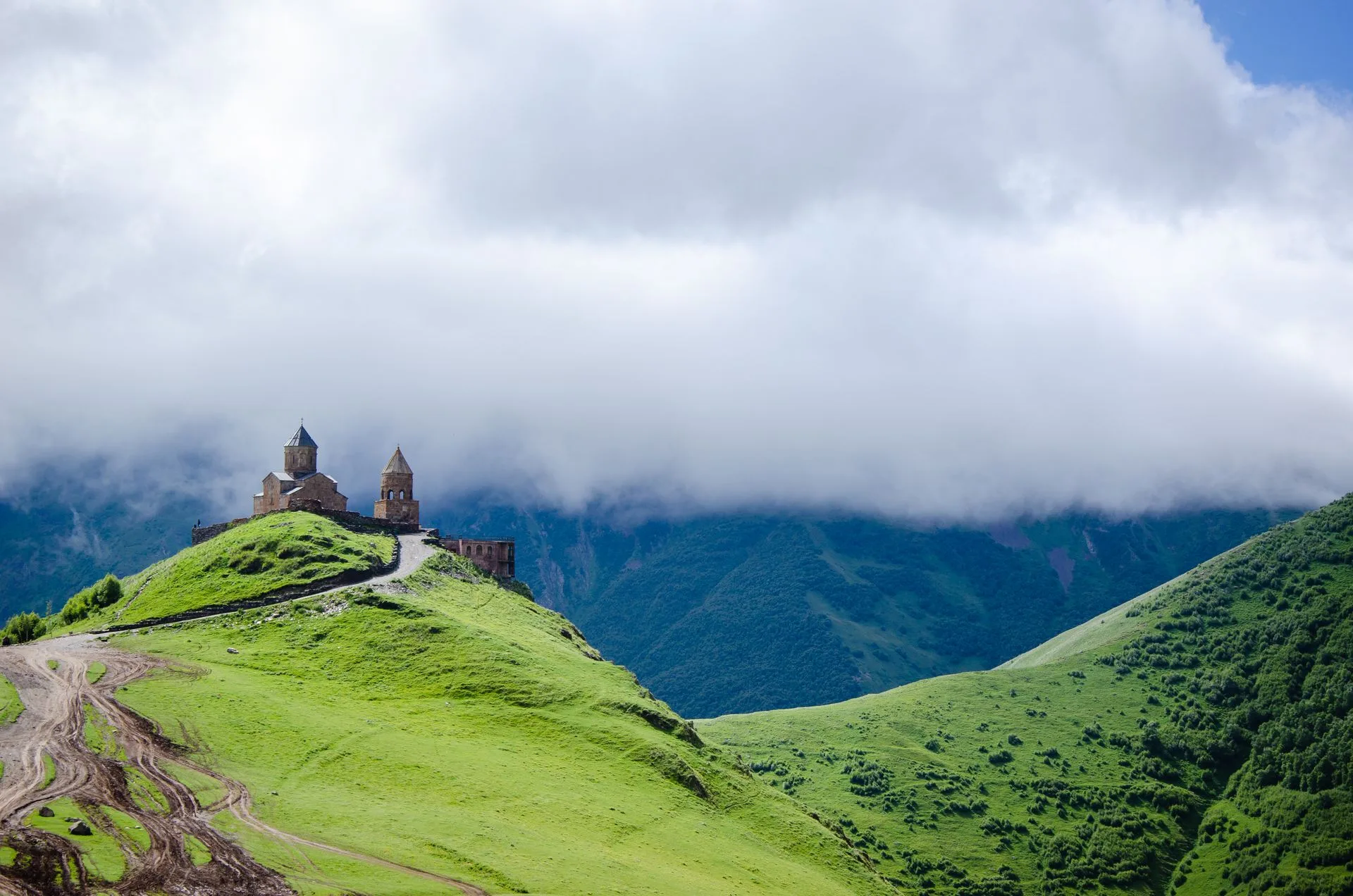
The drive north from Tbilisi along the Georgian Military Highway is one of the great family road trips of the region. You pass the Ananuri Fortress above the Zhinvali Reservoir, the Russia–Georgia Friendship Monument at Gudauri, and eventually reach Stepantsminda (Kazbegi), with Mount Kazbek filling the horizon.
The highlight is Gergeti Trinity Church, perched at around 2,170 metres. The final stretch is usually done by a local 4x4, which children tend to find thrilling. It is cold up there even in summer, and the walk from the car park to the church is short but steep.
A note for parents: the road is winding and can be slow in bad weather. Motion-sickness precautions and a relaxed schedule are worth planning for.
3. Uplistsikhe — the cave town
Uplistsikhe, near Gori, is an ancient rock-hewn town cut into a cliff above the Mtkvari River. Children can climb through caves, halls and passages that were carved out more than two thousand years ago. It is a genuinely hands-on history lesson, and the site is compact enough to explore in a couple of hours.
Surfaces are uneven and there are drops in places, so supervision is essential with younger children. Good shoes and a hat in summer are non-negotiable.
4. Kutaisi, Prometheus Cave and Martvili Canyon
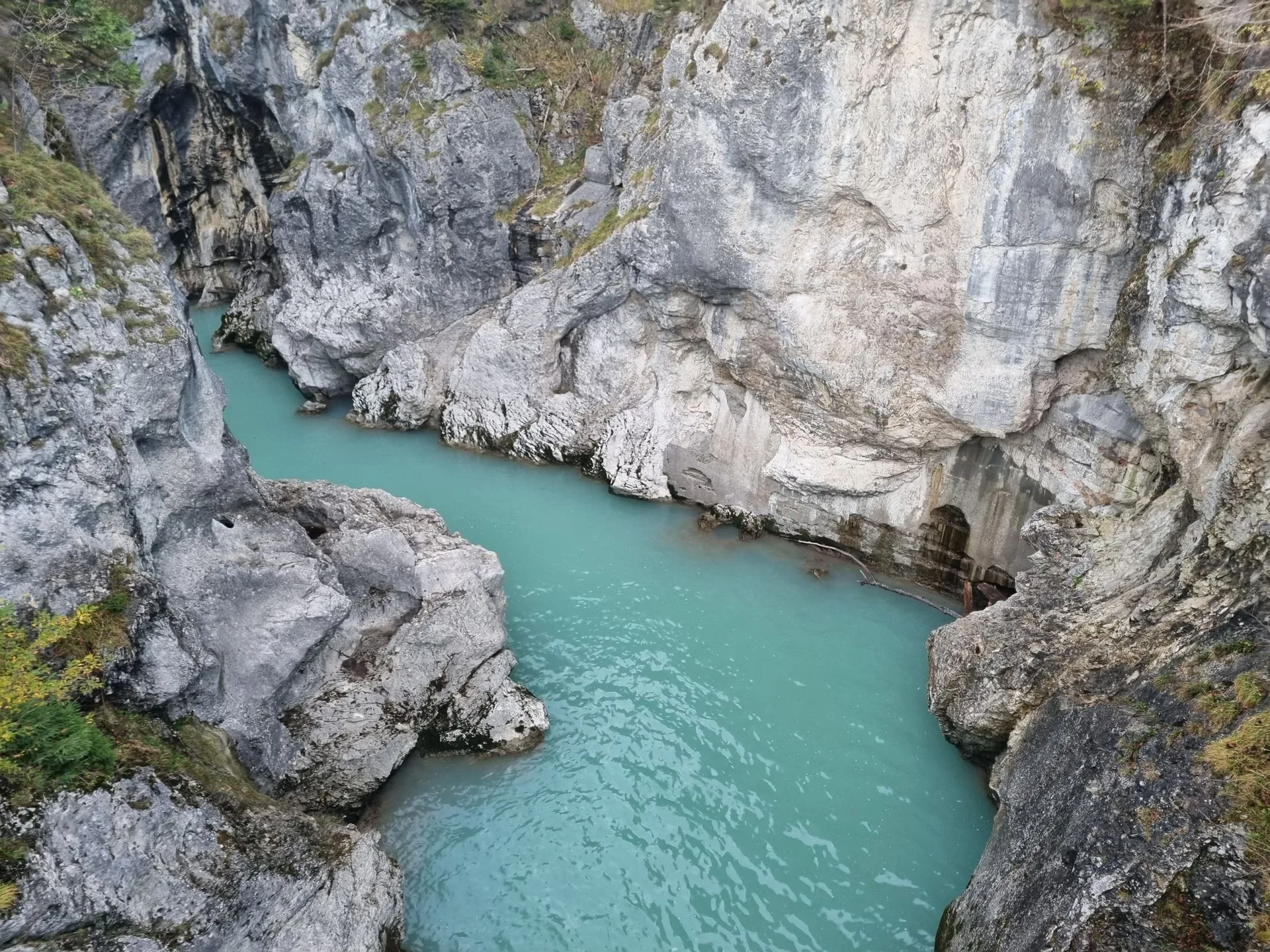
Kutaisi works well as a western base. Prometheus Cave is a large karst cave with theatrical lighting and an underground river; a short boat ride inside the cave is usually the part children remember. Nearby, Martvili Canyon offers a short boat trip through a narrow emerald gorge, followed by boardwalks and bridges above the water.
Both are outdoor, active and relatively short — a good combination for families who do not want a full day of walking.
5. Batumi — the Black Sea coast
Batumi is Georgia's seaside city, with a long boulevard that works brilliantly for families: bicycles, a Ferris wheel, playgrounds and plenty of places to stop for ice cream. The Batumi Botanical Garden on the Green Cape is genuinely large and varied, with bamboo groves and a Japanese garden.
Note that Batumi's beaches are pebble rather than sand. Water shoes are a small investment that make a big difference to children's comfort.
6. Kakheti and Sighnaghi — the wine region
Kakheti, east of Tbilisi, is Georgia's wine country, but it is far from an adults-only destination. Sighnaghi is a small, walled hill town with sweeping views over the Alazani Valley, easy to walk and pleasant for children. The Bodbe Monastery nearby has beautiful gardens. A visit to a wine tunnel — such as the one at Khareba — gives adults a tasting and children fresh grape juice and a cool, cave-like walk.
More family-friendly experiences
Beyond the headline sights, Georgia offers plenty that children enjoy:
- Ride the Tbilisi cable car and the funicular: Both are short, cheap and exciting for children.
- Eat khinkali properly: Learning to hold a dumpling by its topknot and slurp the broth is an experience in itself.
- Try the sulphur baths: Private rooms can be booked, which suits families better than the communal areas.
- Spend time in Rike Park and the city's green spaces: Tbilisi is surprisingly green, and a playground stop resets everyone.
- Look for the Georgian alphabet: The distinctive script is everywhere, and spotting letters is an easy game for children on long drives.
A relaxed 7-day Georgia family itinerary
This outline is a starting point for a first family visit. It is designed as an idea rather than a fixed schedule; travel times, your children's energy levels and the weather may require changes.
| Day | Suggested plan | Family-friendly pacing tip |
|---|---|---|
| 1 | Arrive in Tbilisi. Gentle evening walk to the Peace Bridge. | Keep the first day light after your journey. |
| 2 | Tbilisi Old Town, Narikala cable car and Rike Park. | Use the cable car to avoid a steep climb with children. |
| 3 | Drive the Georgian Military Highway to Kazbegi. Gergeti Trinity Church by 4x4. | Plan motion-sickness precautions and warm layers. |
| 4 | Return south via Uplistsikhe cave town, then on to Kutaisi. | A long driving day — break it up at Uplistsikhe. |
| 5 | Prometheus Cave and Martvili Canyon boat ride. | Wear shoes with grip; surfaces are wet in places. |
| 6 | Drive to Batumi. Afternoon on the boulevard and the beach. | Pack water shoes for the pebble beaches. |
| 7 | Return to Tbilisi, or extend into Kakheti for wine country and Sighnaghi. | Allow a full day for the return journey. |
If you have more time, add two nights in Kakheti and a day in Batumi's botanical garden. If you have less time, Tbilisi plus Kazbegi makes an excellent short family trip.
When is the best time to visit Georgia with family?
Georgia has a varied climate — subtropical on the Black Sea coast, continental in Tbilisi, and alpine in the Caucasus — so the best season depends on where you are going.
- May, June, September and October: Generally the best all-round months. Temperatures are comfortable in the cities, the mountains are accessible, and the autumn grape harvest makes Kakheti especially lively.
- July and August: Best for Batumi and the Black Sea coast, but Tbilisi and the lowlands can be very hot, and mountain areas are busier.
- November to March: Quiet and cold. Tbilisi has a certain winter charm and there are Christmas markets, but the Kazbegi road can be affected by snow, and some mountain accommodation closes. This is the season for ski resorts such as Gudauri rather than a general family tour.
For a first family trip that includes both mountains and coast, late spring or early autumn is the easiest choice.
What can families eat in Georgia?
Georgian food is one of the country's great pleasures, and it is unusually well suited to children. The two dishes most families end up living on are khachapuri (bread filled with cheese; the Adjarian version comes boat-shaped with an egg yolk) and khinkali (dumplings filled with meat or mushrooms and broth).
Beyond those, look for mtsvadi (grilled meat skewers), lobio (stewed beans), pkhali (vegetable and walnut pâtés), and simple grilled vegetables. The cuisine is herb-forward rather than chilli-hot, which makes it easy for younger palates. Children who are fussy will usually find plain bread, grilled chicken and fruit without difficulty.
If your child has allergies, note that walnuts appear in a great many Georgian dishes — this is worth flagging clearly to restaurants and to your guide.
Choosing family-friendly accommodation
The right base matters more than the exact hotel. In Tbilisi, staying within walking distance of the Old Town or Rike Park saves a lot of time in traffic. In Kazbegi, a guesthouse with mountain views is part of the experience. In Batumi, a hotel on or near the boulevard puts the sea and the playgrounds on your doorstep.
Before booking, confirm:
- Room occupancy and bed configuration — "family room" means different things in different countries.
- Whether cots or extra beds carry a charge.
- Air-conditioning, which matters in Tbilisi and Batumi in summer.
- Lift access if you are travelling with a pram.
- Cancellation terms, especially for mountain stays where weather can change plans.
Apartments and guesthouses are popular with families in Georgia, offering space and, often, a kitchen.
How much should you budget for a Georgia family trip?
Georgia is generally a good-value destination compared with Western Europe, though prices have risen in recent years. Rather than quoting a single figure, it is more useful to understand the main costs:
- Flights: usually the largest single cost, and the most variable depending on your departure city and how early you book.
- Accommodation: ranges from budget guesthouses to comfortable city hotels; peak summer and ski season are the expensive periods.
- Transport: a private car with driver is the most practical option for families covering Tbilisi, Kazbegi, Kutaisi and Batumi, and often costs less than expected when split across a family.
- Attractions: many of Georgia's best experiences — the old towns, the mountain viewpoints, the boulevards — are free. Cave and canyon entries are modest.
- Food: eating out is affordable, and portions are generous.
When comparing a Georgia family tour package, check whether private transport, entrance fees and the 4x4 transfer to Gergeti are included, as those are the items that most often appear as extras.
Practical Georgia travel tips for parents
- Plan for winding roads: the Georgian Military Highway and the mountain roads around Kazbegi are slow and curvy. Motion-sickness remedies and regular stops help.
- Dress modestly at religious sites: shoulders and knees covered is expected at churches and monasteries; women often need a headscarf, and many sites provide wraps at the entrance.
- Pack layers for the mountains: Kazbegi can be cold even in midsummer, and the weather changes quickly.
- Carry some cash: the currency is the Georgian lari (GEL). Cards are widely accepted in cities, but cash is useful in villages and at smaller sights.
- Learn a few words: "gamarjoba" (hello) and "madloba" (thank you) go a long way with children and adults alike.
- Keep the schedule flexible: Georgian meals are long and sociable, and children often need a slower afternoon than the plan allows for.
- Check entry requirements: many nationalities can enter visa-free or with an e-visa. Indian travellers should confirm the current rules on the official Georgia e-Visa portal before booking, and see our dedicated Georgia travel guide for the wider planning picture.
- Use official tourism resources: Georgia's official tourism website is a reliable source for events, regions and practical visitor information.
Family packing checklist
- Layered clothing, including a warm fleece and windproof jacket for the mountains.
- Comfortable walking shoes with grip for old towns, cave sites and canyon boardwalks.
- Modest clothing for churches — long trousers or skirts and covered shoulders, plus a scarf.
- Swimwear and water shoes for Batumi's pebble beaches.
- Sun protection: hats, sunscreen and sunglasses.
- Motion-sickness remedies for mountain drives.
- A reusable water bottle and familiar snacks for long travel days.
- A basic first-aid kit and any prescription medicines in original packaging.
- A universal power adapter (Georgia uses Type C and F plugs, 220V).
- Copies of travel documents and insurance details, kept separately from the originals.
How to choose the right Georgia family tour package
Start with your priorities. Do you want mountains, coast, wine country or a mix? Then consider your children's ages and how much driving they tolerate — the difference between a comfortable trip and an exhausting one usually comes down to how many bases you include.
When speaking to a travel planner, be specific about travel dates, the number of adults and children, your children's ages, and your budget. Ask whether the itinerary can be adjusted, and get written confirmation of what is and is not included.
At Destination To Plan, our Georgia family tour package is built around a comfortable pace with family-friendly hotels and guides. It provides a solid foundation that can be adapted to your family's needs.
Ready to plan your Georgia family holiday?
Explore our Georgia family tour package and speak with Destination To Plan about shaping the journey around your travel dates, family size and interests.
Explore Georgia Family TourFrequently asked questions
1. Is Georgia a good destination for a family holiday?
Yes. Georgia combines dramatic mountain scenery, historic towns, a subtropical coast and a strongly child-friendly culture. Distances are short and prices are reasonable, which makes it easier to plan a relaxed family trip than in many larger European countries.
2. How many days are enough for Georgia with kids?
Around 8–10 days lets you cover Tbilisi, Kazbegi, Kutaisi, Batumi and Kakheti at a comfortable pace. A shorter trip of 4–5 days works well if you focus on Tbilisi and Kazbegi only.
3. Is the drive to Kazbegi suitable for children?
The Georgian Military Highway is spectacular but winding, and can be slow in bad weather. Most children manage it well with regular stops, but motion-sickness remedies are worth packing. The final climb to Gergeti Trinity Church is usually done by local 4x4, which children tend to enjoy.
4. What is the best time to visit Georgia with kids?
May, June, September and October generally offer the best balance of comfortable weather and accessible mountain roads. July and August are best for Batumi and the coast, but the cities can be very hot.
5. Do Indian travellers need a visa for Georgia?
Indian passport holders can apply for a Georgia e-visa online, and some travellers with valid visas or residence permits from certain other countries may be eligible for visa-free entry. Always confirm the current rules on the official Georgia e-Visa portal before booking.
6. Is Georgian food suitable for children?
Very much so. Khachapuri and khinkali are reliable favourites, and the cuisine is herby rather than spicy. One thing to watch: walnuts appear in many dishes, so flag any nut allergy clearly.
7. How much does a Georgia family trip cost?
Georgia is generally good value, with flights typically the largest cost. Private transport with a driver is the main variable for families covering several regions, but it often works out cheaper than expected when shared across the group.
8. Can the itinerary be adapted for younger children?
Yes. The most effective adjustment is to cut the number of bases — Tbilisi plus one mountain or coastal stop, rather than a full loop — and to build in more downtime each day.
A family adventure between the Caucasus and the Black Sea
Georgia rewards curiosity. A cable car above an old town, a cave city carved into a cliff, a boat gliding through an emerald canyon and a snow-capped peak behind a hilltop church — these are the kinds of experiences children remember long after the trip ends.
The key is not to see everything, but to see the right things at the right pace. Mix the big sights with long lunches and park time, embrace the food and the hospitality, and leave room for the unplanned afternoon that turns out to be the best one.
For more detailed planning, explore our Georgia travel guide or view the full itinerary of our Georgia family tour package.
Travel information in this article is general planning guidance. Opening arrangements, transport, weather, entry rules, prices and activity availability can change. Confirm current details with official sources and your travel provider before departure.