Ecuador Family Tour Package - 8 Days & 7 Nights
Quito
11°C
Partly cloudy
Feels
10°C
Humidity
86%
Wind
4 km/h
Embark on an unforgettable Ecuador family adventure that takes you from the colonial charm of Quito to the pristine wilderness of the Galapagos Islands and the biodiverse Amazon Rainforest. This carefully curated 8-day family tour package is designed to offer unique wildlife encounters, cultural immersion, and breathtaking natural wonders that will captivate both children and adults alike.
Ecuador is a treasure trove of ecological diversity, where you can stand on the equator, explore volcanic landscapes, walk alongside giant tortoises, and discover exotic wildlife in their natural habitats. From the UNESCO World Heritage-listed historic center of Quito to the enchanting Galapagos archipelago that inspired Darwin's theory of evolution, every moment of this journey promises wonder and discovery.
Our family-friendly Ecuador package includes comfortable accommodations, private transfers, expert naturalist guides, and carefully selected activities that ensure safety and engagement for all family members. Whether you're spotting blue-footed boobies, exploring cloud forests, or learning about indigenous Amazonian cultures, this tour creates lasting memories through authentic experiences and educational adventures.
With its compact geography, Ecuador allows you to experience incredible biodiversity within short distances—from snow-capped Andean peaks to tropical beaches, from high-altitude colonial cities to lowland rainforests. This makes it an ideal destination for families seeking variety without exhausting travel times between destinations.
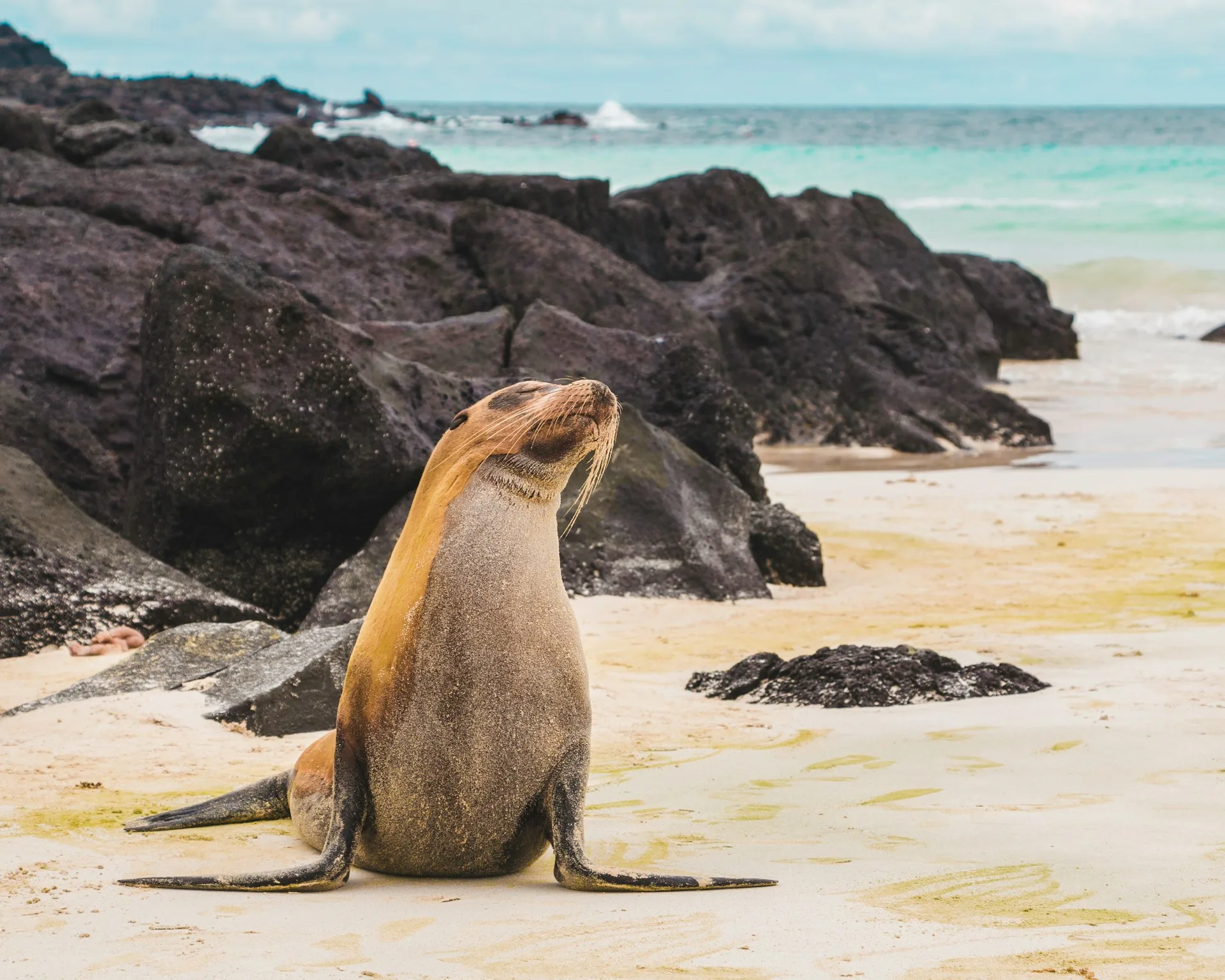
The Galapagos archipelago is Ecuador's crown jewel and one of the world's most extraordinary wildlife destinations. This volcanic island chain, located 1,000 kilometers off Ecuador's coast, offers unparalleled opportunities to observe fearless wildlife that exists nowhere else on Earth. Families can walk among giant tortoises weighing up to 400 kilograms, snorkel with playful sea lions, and witness the famous blue-footed boobies performing their courtship dances. The islands' unique evolutionary history and ongoing scientific research make it an exceptional educational experience for children. Each island has its own distinct ecosystem and wildlife, from the marine iguanas of Fernandina to the waved albatrosses of Española. The Charles Darwin Foundation continues vital conservation work throughout the archipelago, ensuring these pristine ecosystems remain protected for future generations.
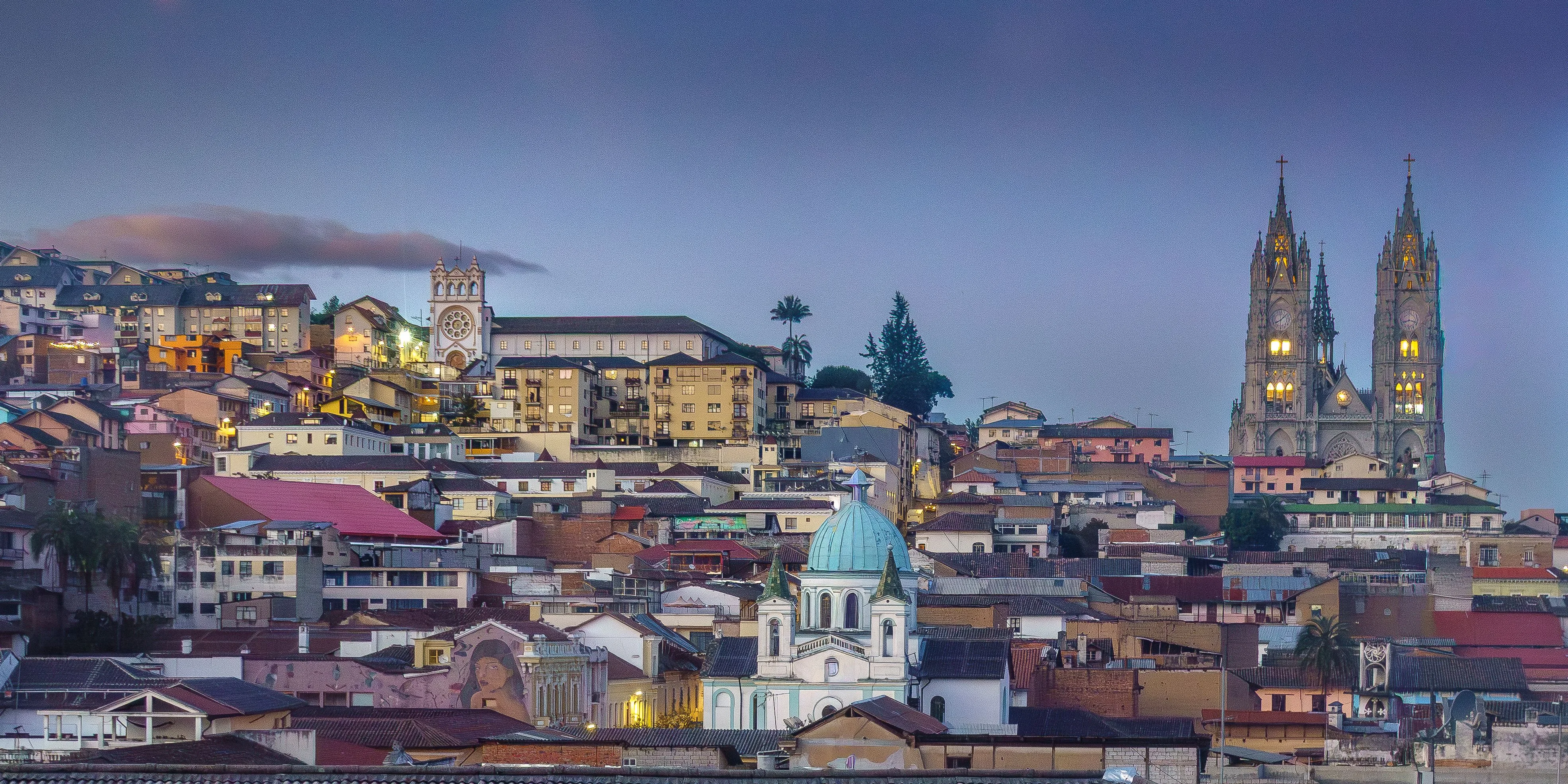
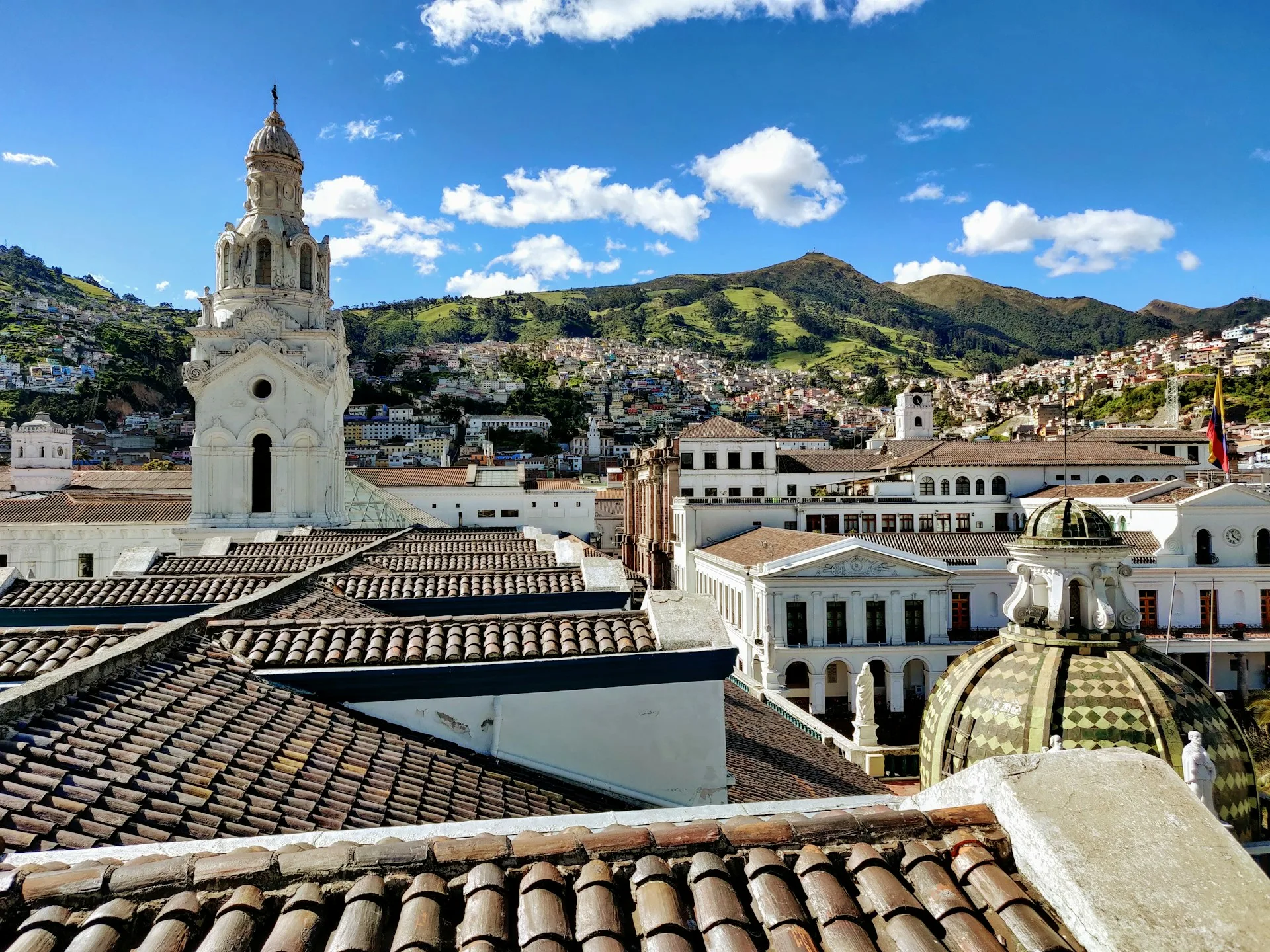
Quito's colonial heart stands as Latin America's best-preserved historic center and Ecuador's first UNESCO World Heritage Site. Perched at 2,850 meters altitude in the Andean highlands, this vibrant capital city showcases spectacular Spanish colonial architecture spanning three centuries. Families can explore the magnificent La Compañía de Jesús church with its golden interior, climb the towers of the Basilica del Voto Nacional for panoramic city views, and wander through charming cobblestone streets lined with colorful buildings and bustling plazas. The historic center's compact layout makes it perfect for family exploration, with numerous museums, artisan shops, and traditional restaurants. Independence Plaza serves as the political and historical heart, surrounded by the Presidential Palace, Cathedral, and Archbishop's Palace. The neighborhood's altitude means cooler temperatures year-round, providing comfortable conditions for walking tours and outdoor activities.
Stand with one foot in each hemisphere at this iconic equatorial monument complex located just 26 kilometers north of Quito. The towering monument marks latitude 0°0'0", offering families a unique photo opportunity on the equator line dividing Earth's Northern and Southern Hemispheres. Beyond the monument, the Ciudad Mitad del Mundo complex features interactive museums explaining equatorial science, indigenous cultures, and Ecuador's diverse geography. Children love experimenting with equatorial phenomena—watching water drain in opposite directions on either side of the line and testing the Coriolis effect. The Ethnographic Museum showcases Ecuador's diverse indigenous communities and their traditional lifestyles. While modern GPS technology has shown the actual equator lies about 240 meters north at the Intiñan Museum, both sites offer educational and entertaining experiences that help families understand Ecuador's unique geographical position.
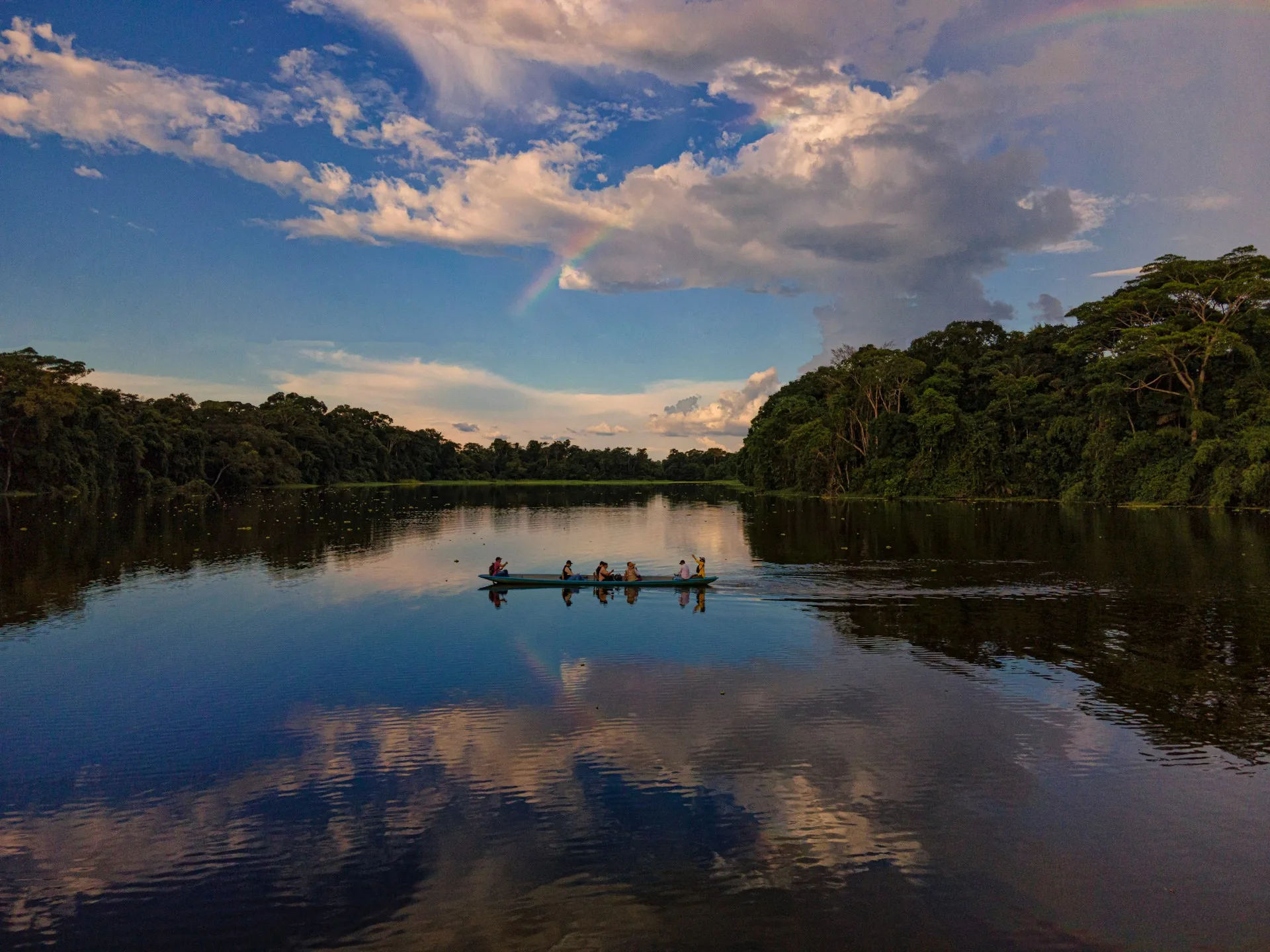
Ecuador's Amazon basin covers nearly half the country's territory and provides families with accessible opportunities to explore one of Earth's most biodiverse regions. Unlike remote rainforest destinations requiring extensive travel, Ecuador's Amazon can be reached within hours from Quito, making it ideal for family itineraries. Guided jungle treks reveal incredible wildlife including howler monkeys, three-toed sloths, colorful toucans, and poison dart frogs. Canoe rides along winding rivers offer chances to spot pink river dolphins, caimans, and countless bird species. Indigenous communities welcome visitors to learn about traditional knowledge of medicinal plants, hunting techniques, and sustainable forest living. Night walks reveal a completely different ecosystem, with bioluminescent fungi, nocturnal mammals, and tree frogs creating a symphony of sounds. The experience provides children with firsthand understanding of rainforest ecology, conservation challenges, and the importance of protecting these vital ecosystems.
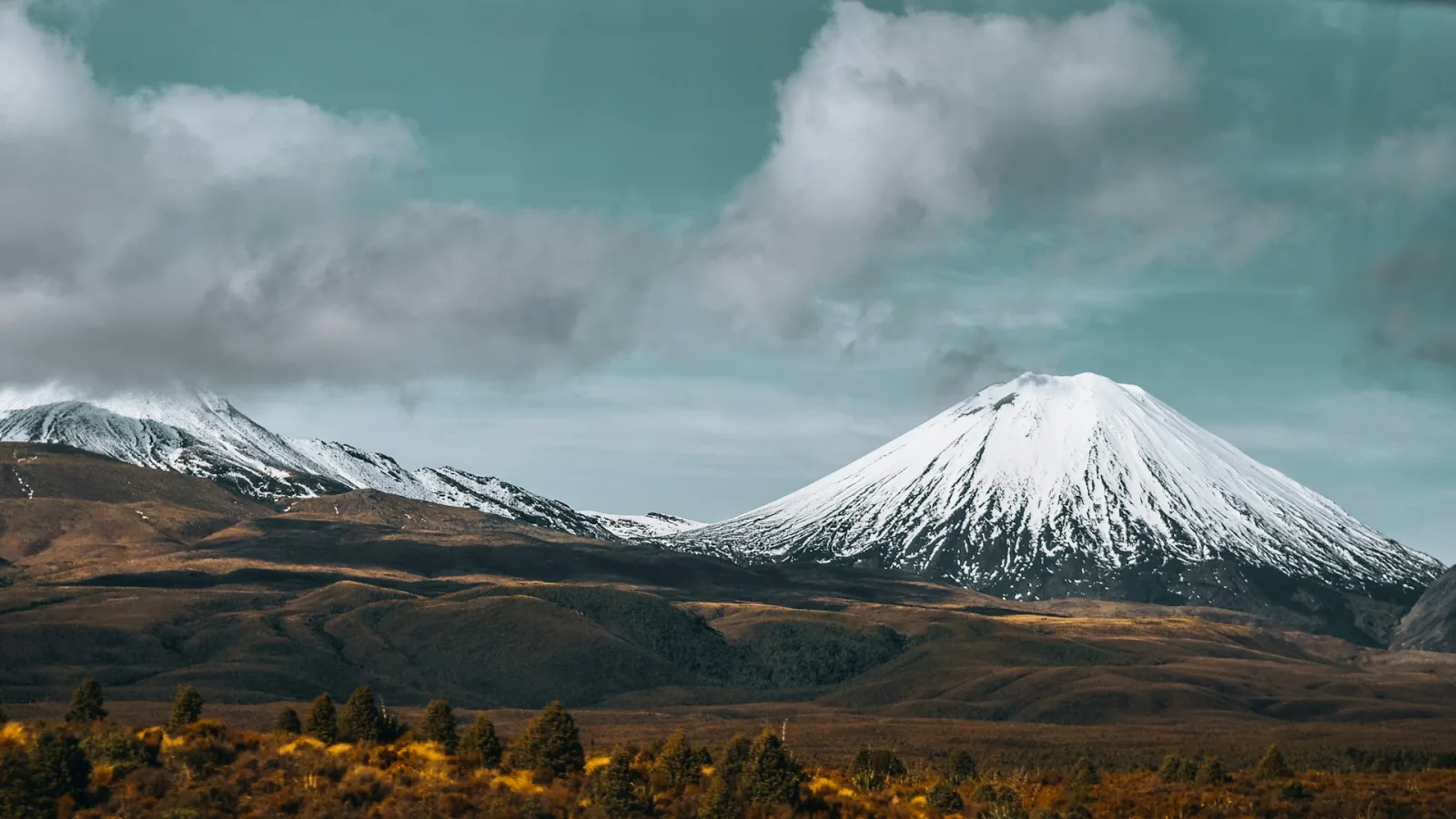
Dominated by the perfectly symmetrical snow-capped cone of Cotopaxi volcano, this national park offers spectacular Andean landscapes and high-altitude adventures suitable for families. At 5,897 meters, Cotopaxi ranks as one of the world's highest active volcanoes and Ecuador's second-highest peak. Families can explore the park's páramo ecosystem—unique high-altitude grasslands found only in the Andes—spotting wild horses, Andean foxes, and the rare Andean condor soaring overhead. A private transfer takes you to the José Rivas refuge at 4,800 meters, where interpretive displays explain the volcano's geology and climbing history. The park's Limpiopungo Lagoon provides excellent bird watching opportunities and reflection views of Cotopaxi on clear days. Educational ranger programs teach about volcanic formation, climate adaptation, and the importance of páramo ecosystems for water regulation. The crisp mountain air and dramatic scenery create unforgettable family photographs.
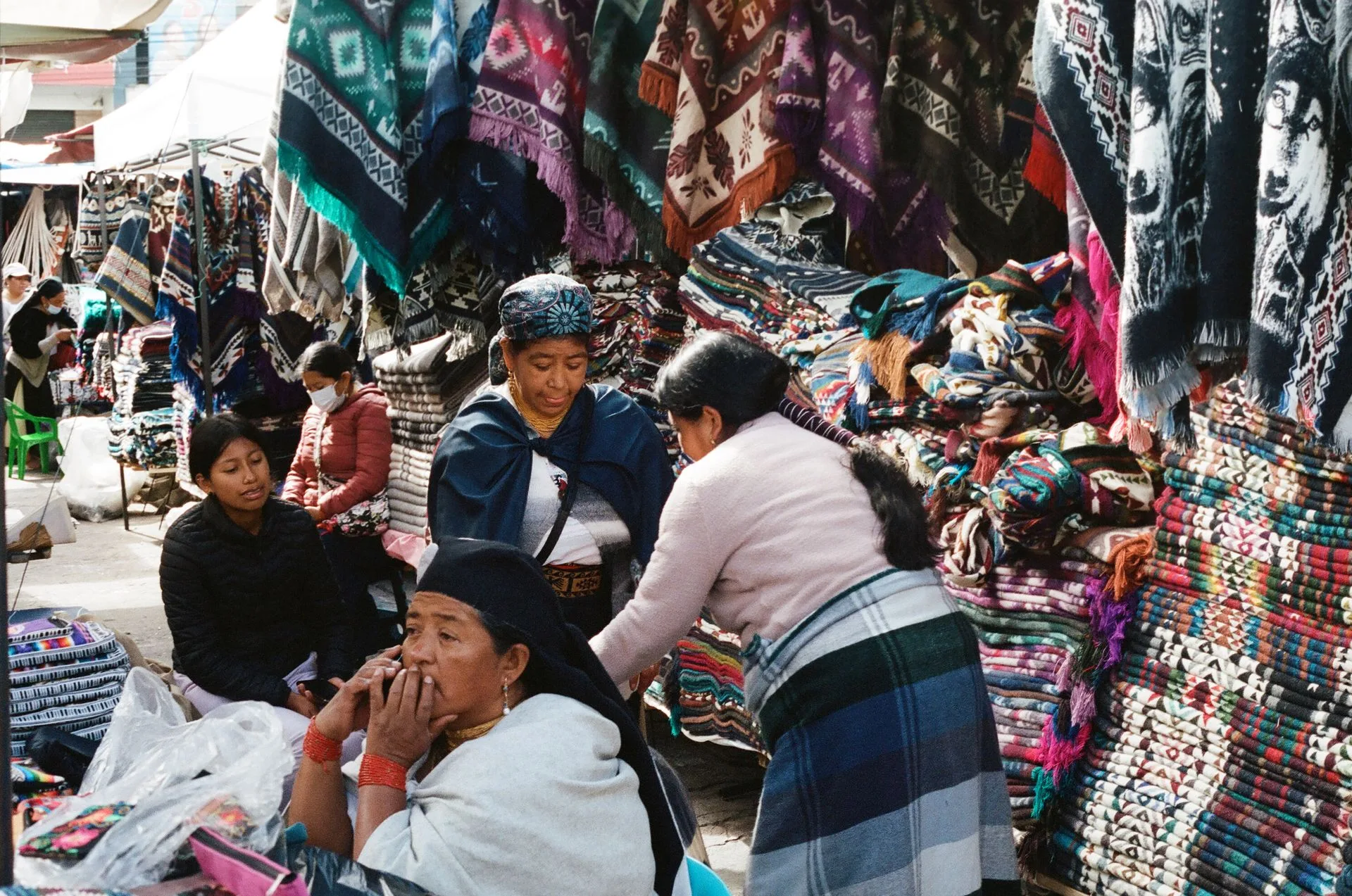
South America's most famous indigenous market transforms the highland town of Otavalo into a vibrant explosion of colors, textiles, and traditional crafts every Saturday. Kichwa families from surrounding villages gather to sell their handwoven textiles, alpaca sweaters, intricate jewelry, and traditional instruments. The market's roots trace back to pre-Incan times, maintaining authentic cultural traditions while welcoming international visitors. Children enjoy watching artisans demonstrate weaving techniques on traditional backstrap looms and trying on colorful ponchos and embroidered blouses. The animal market section offers glimpses into rural Andean life, with farmers trading livestock using methods unchanged for centuries. Nearby villages of Peguche and San Antonio de Ibarra showcase additional crafts including woodcarving and leather goods. The surrounding landscape features the scenic Peguche waterfall and Cuicocha crater lake, making Otavalo an excellent full-day family excursion combining culture, shopping, and natural beauty.
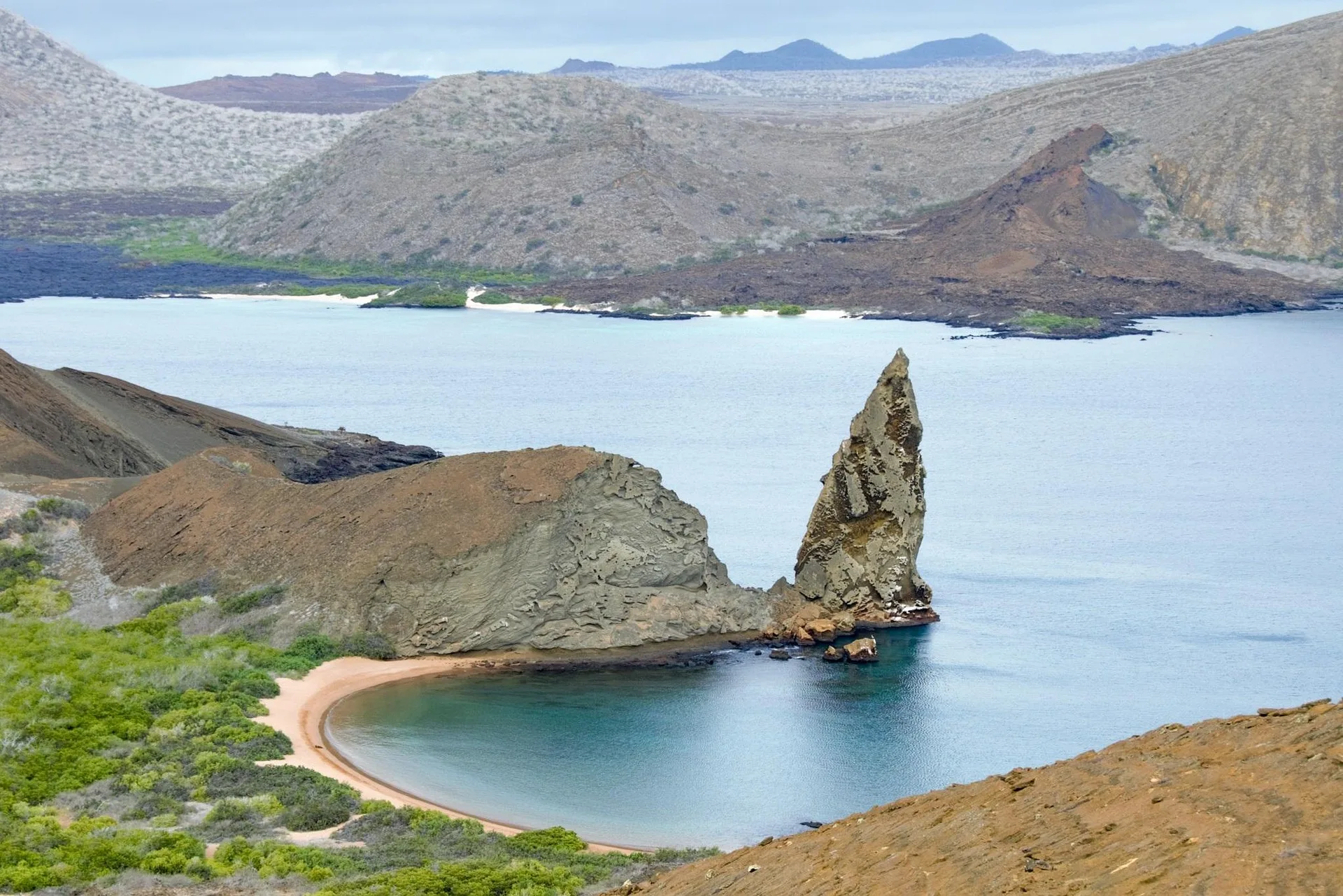
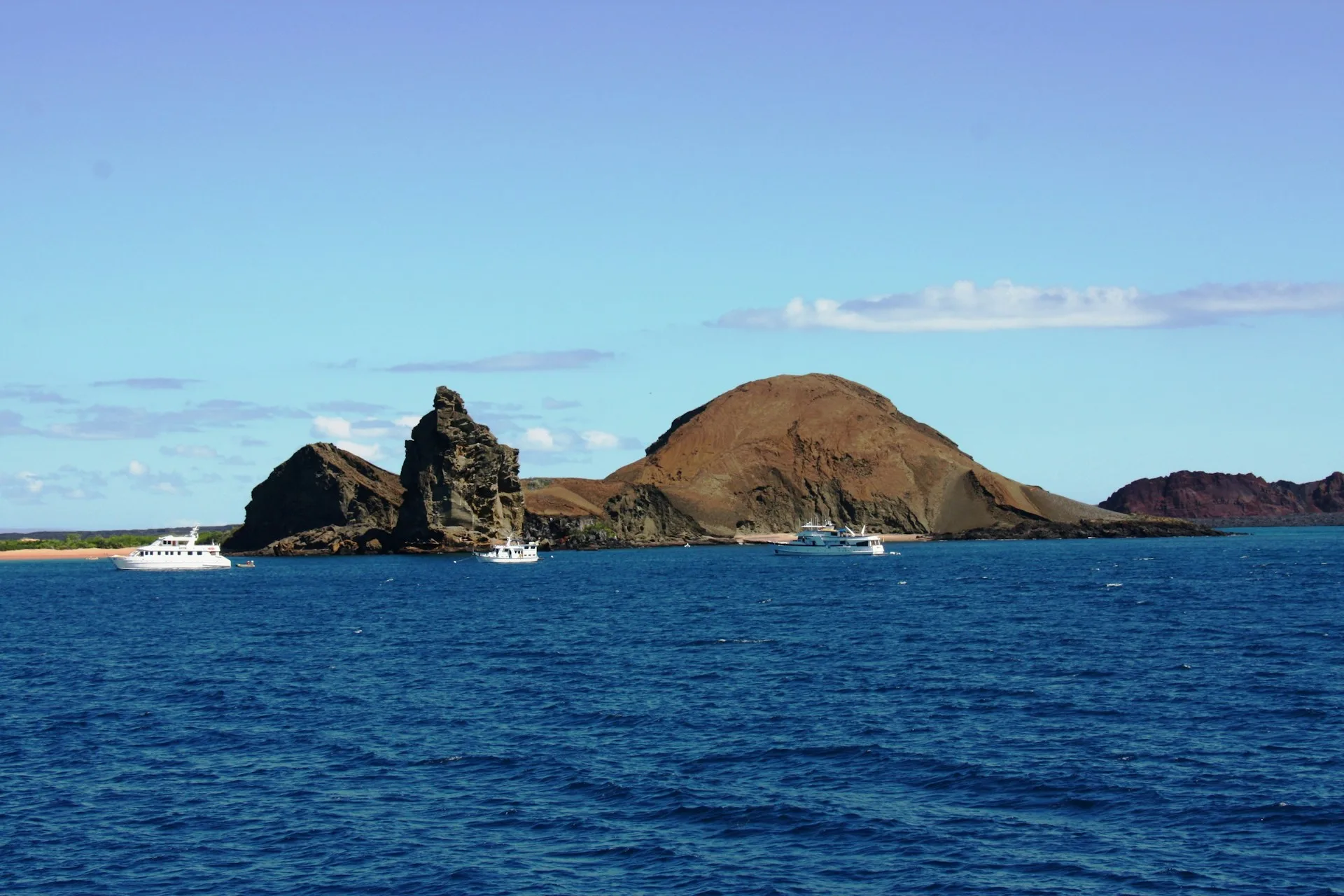
This small Galapagos island boasts one of the archipelago's most photographed landscapes—Pinnacle Rock rising dramatically from turquoise waters. Bartolomé offers exceptional opportunities for family snorkeling, with calm protected bays perfect for children to observe Galapagos penguins, reef sharks, and sea turtles. The island's volcanic origins are on full display, with colorful lava formations, cinder cones, and minimal vegetation creating an almost lunar landscape. A wooden boardwalk leads to a summit viewpoint providing 360-degree panoramas of Sullivan Bay's pahoehoe lava flows and surrounding islands. Marine life thrives in the waters surrounding Bartolomé, including rays, tropical fish, and occasionally hammerhead sharks in deeper areas. The island's compact size and well-maintained trails make it accessible for families with young children while offering world-class wildlife viewing and photography opportunities.
Located just two hours northwest of Quito, Mindo's misty cloud forest ecosystem offers families an accessible introduction to Ecuador's incredible avian diversity. This region hosts over 450 bird species, including dozens of hummingbird varieties that hover at feeding stations, allowing close-up photography opportunities. The cloud forest's unique microclimate—where warm air from lowlands meets cool mountain air—creates persistent fog that nourishes extraordinary biodiversity. Families can explore hanging bridges suspended high in the forest canopy, zip-line through mist-shrouded valleys, and visit butterfly farms housing hundreds of iridescent species. Chocolate tours demonstrate the journey from cacao tree to finished product, with tastings that delight both children and adults. Waterfall hikes lead to refreshing swimming holes perfect for warm afternoons. The town of Mindo offers family-friendly accommodations and restaurants, making it an ideal weekend escape or day trip from Quito for nature-loving families.
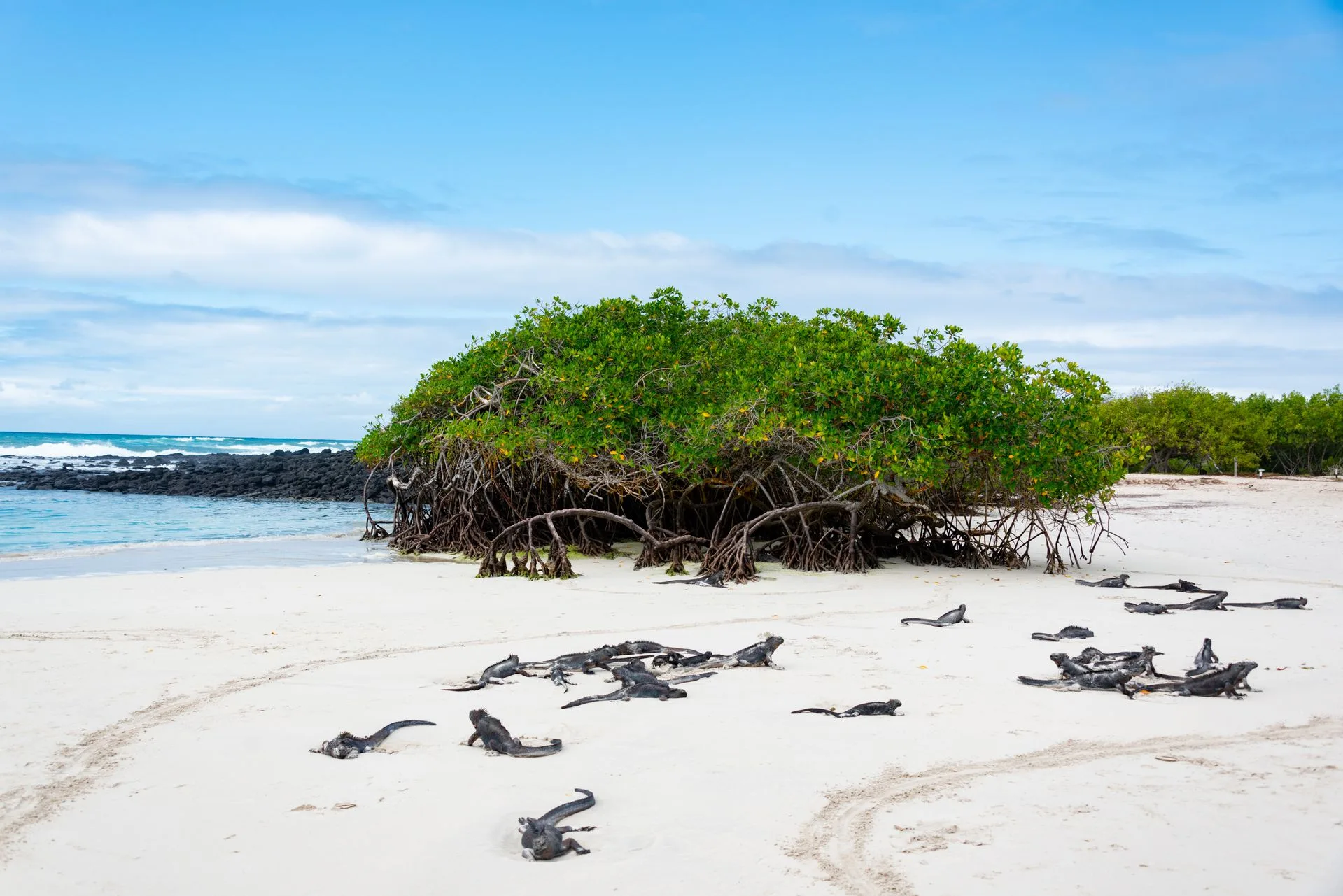
As the Galapagos' tourism hub, Santa Cruz Island combines excellent infrastructure with outstanding wildlife experiences, making it ideal for family visits. Puerto Ayora, the archipelago's largest town, provides family-friendly restaurants, shops, and services while maintaining a relaxed island atmosphere. The Charles Darwin Research Station offers educational exhibits about ongoing conservation efforts, including the famous tortoise breeding program that saved several species from extinction. Families can visit Tortuga Bay, a pristine white-sand beach reached by a scenic 2.5-kilometer boardwalk through arid zone vegetation. The beach's protected status ensures abundant marine life, with marine iguanas sunbathing on rocks and small sharks swimming in shallow waters. Las Grietas, a dramatic volcanic rock formation with crystal-clear water perfect for snorkeling, provides another family-friendly activity. The island's central location makes it an excellent base for day trips to neighboring islands while offering comfortable accommodations and reliable services.
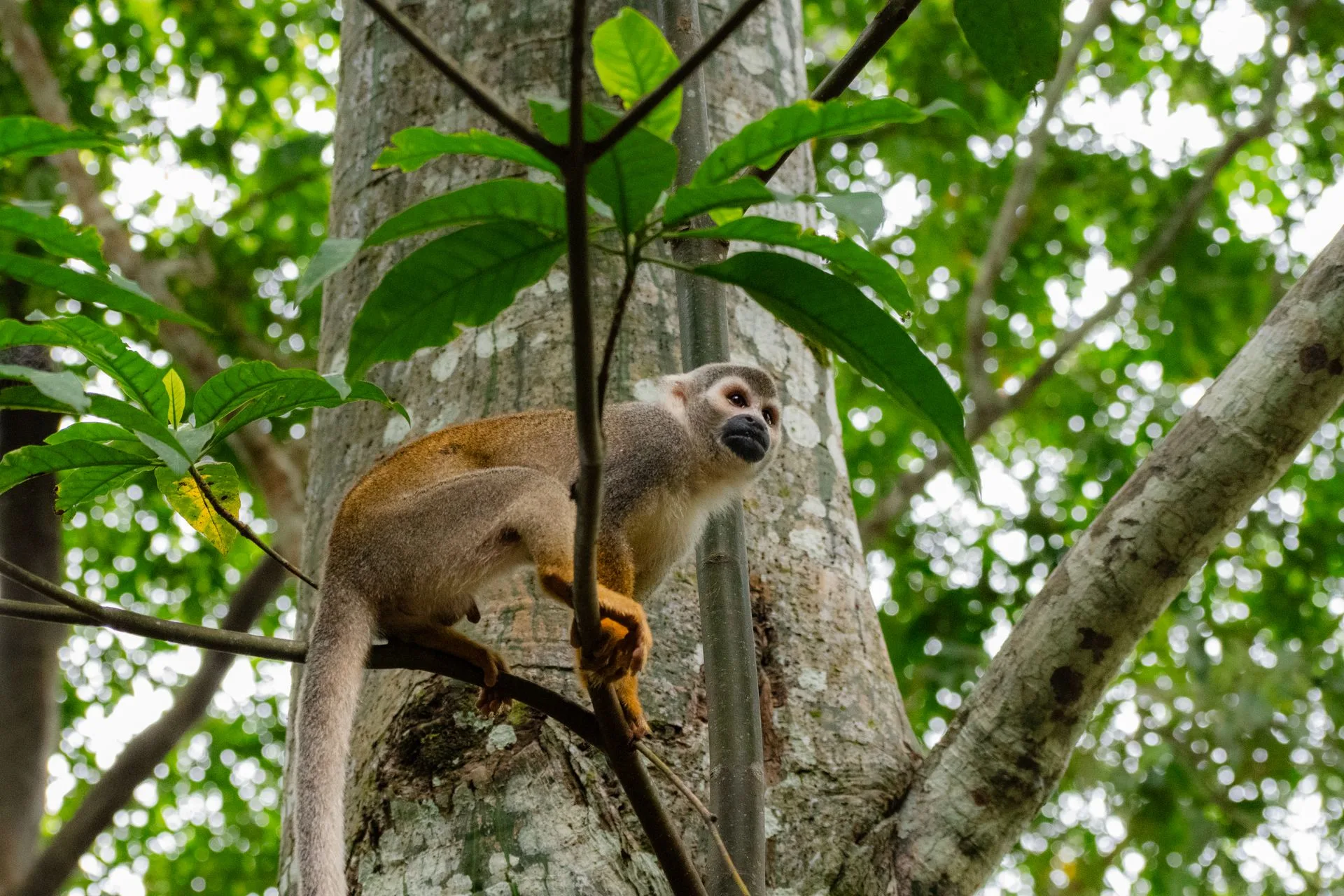
Recognized as one of Earth's most biodiverse regions, Yasuni National Park in Ecuador's eastern Amazon contains more tree species in a single hectare than exist in all of North America. This UNESCO Biosphere Reserve provides families with unparalleled opportunities to experience pristine rainforest teeming with wildlife. Pink river dolphins surface in blackwater lagoons, while colorful macaws create aerial spectacles at clay licks. The park is home to indigenous Waorani communities who offer cultural experiences, sharing their profound knowledge of forest ecology and traditional lifestyles. Canopy towers provide bird's-eye views of the rainforest, where families can spot troops of squirrel monkeys, sloths hanging motionless in trees, and toucans feeding on tropical fruits. Night expeditions reveal nocturnal species including tarantulas, caiman, and the haunting calls of night monkeys. The park's remoteness and pristine condition offer families a truly authentic Amazon experience while supporting conservation efforts and indigenous livelihoods.
Your Ecuador family adventure begins with arrival at Mariscal Sucre International Airport in Quito. After clearing customs and immigration, you'll be greeted by your local guide who will assist with a smooth private transfer to your family-friendly hotel in the city center or modern district. The approximately 45-minute journey provides your first glimpses of Quito's dramatic setting, nestled in a valley surrounded by towering Andean peaks and volcanoes. After hotel check-in and time to refresh, enjoy a welcome orientation session where your guide will review the exciting week ahead and provide helpful tips for high-altitude acclimatization. Quito sits at 2,850 meters elevation, so taking it easy on your first day helps bodies adjust to the thinner air. Spend the afternoon at leisure exploring your hotel's amenities or taking a gentle walk around the neighborhood. In the evening, gather for a welcome dinner featuring traditional Ecuadorian cuisine, including locro de papa (potato soup), empanadas, and fresh tropical fruits, while learning about the country's rich cultural heritage and diverse geography from your knowledgeable guide.
After a hearty breakfast, embark on a private guided tour through Quito's UNESCO World Heritage-listed historic center, where colonial architecture and indigenous culture blend seamlessly. Begin at Independence Plaza, the political heart of Ecuador, surrounded by the Presidential Palace, Cathedral, and Archbishop's Palace. Your guide shares fascinating stories about Ecuador's independence struggles and the square's role in modern history. Walk to the spectacular Compañía de Jesús church, often called the "Golden Church" for its ornate gold-leafed interior—children marvel at the baroque details covering every surface. Continue to the Basilica del Voto Nacional, South America's largest neo-Gothic basilica, where brave family members can climb the towers for breathtaking panoramic views. After a lunch break at a verified family-friendly restaurant serving traditional hornado (roasted pork) and llapingachos (potato cakes), drive to Mitad del Mundo, the Middle of the World monument. Stand with one foot in each hemisphere at latitude 0°0'0" and participate in fascinating equatorial experiments demonstrating the Coriolis effect and water drainage patterns. Visit the interactive Intiñan Museum where children can balance eggs on nails, walk the actual equator line with GPS precision, and learn about indigenous astronomy and sundial usage. Return to Quito in the evening for dinner and rest.
Rise early for a scenic two-hour private transfer north through the Ecuadorian highlands to Otavalo, passing dramatic mountain scenery, agricultural valleys, and indigenous villages along the Pan-American Highway. Arrive at South America's most famous indigenous market, where Kichwa families from surrounding communities gather to sell handwoven textiles, alpaca sweaters, colorful ponchos, jewelry, and traditional crafts. Children enjoy trying on embroidered clothing, watching artisans demonstrate backstrap loom weaving techniques, and selecting unique souvenirs to take home. Your guide helps negotiate fair prices and explains the cultural significance of various textile patterns and designs that have been passed down through generations. Visit the animal market section where local farmers trade livestock using traditional methods, providing authentic glimpses into rural Andean agricultural life. After market exploration and lunch at a restaurant overlooking the mountains, visit the nearby Peguche waterfall, a sacred site for indigenous communities where you can walk through eucalyptus forests to reach the 18-meter cascade. Continue to Cuicocha crater lake, a stunning volcanic caldera filled with deep blue water and home to two small islands. Take a gentle walk along the lake's rim, spotting Andean birds and learning about the volcano's formation. Return to Quito in the evening, enriched by authentic cultural experiences and local interactions.
After breakfast and hotel checkout, enjoy a private transfer to Quito airport for your flight to the Galapagos Islands, one of the world's most extraordinary wildlife destinations. The 90-minute flight offers spectacular aerial views of coastal Ecuador before descending over the volcanic archipelago. Upon arrival at Baltra Island airport, pay the required Galapagos National Park entrance fee and proceed through the biosecurity inspection that protects these fragile ecosystems from invasive species. Meet your certified naturalist guide who will accompany your family throughout the Galapagos portion of your journey, providing expert knowledge about the islands' unique wildlife, geology, and conservation efforts. Take a short bus ride to the Itabaca Channel, then board a water taxi for the five-minute crossing to Santa Cruz Island. Continue by private transfer to Puerto Ayora, the Galapagos' largest town and your base for the next two days. After hotel check-in, visit the Charles Darwin Research Station, where ongoing conservation work has saved several tortoise species from extinction. Walk through giant tortoise corrals, observing these magnificent creatures at various life stages from hatchlings to centenarians weighing over 250 kilograms. Learn about the breeding programs, habitat restoration, and scientific research that continue Darwin's legacy. In the afternoon, explore Puerto Ayora's waterfront, where marine iguanas sun themselves on lava rocks and pelicans dive for fish. Enjoy a welcome dinner at a family-friendly restaurant serving fresh seafood and local specialties.
Wake early for an exciting full-day boat excursion to Bartolomé Island, home to one of the Galapagos' most iconic views. After a hearty breakfast, board your chartered vessel for the two-hour journey across calm waters, passing Sullivan Bay's dramatic lava fields formed during an 1897 eruption. Your naturalist guide points out seabirds, dolphins, and occasionally whales during the crossing. Upon reaching Bartolomé, take the well-maintained wooden boardwalk trail climbing to the island's 114-meter summit, passing colorful volcanic formations, lava bombs, and pioneering plant species beginning to colonize the relatively young terrain. The summit rewards with spectacular 360-degree views including the famous Pinnacle Rock, surrounding islands, and Santiago's pahoehoe lava flows. Descend to the beach for incredible snorkeling in protected Sullivan Bay, where clear waters reveal Galapagos penguins darting past like torpedoes, sea turtles gliding gracefully, white-tipped reef sharks resting on sandy bottoms, and schools of tropical fish in every color imaginable. Children delight in swimming alongside playful sea lions that often approach snorkelers with curiosity. The calm, shallow conditions make this an ideal family snorkeling site. Return to the boat for a delicious lunch while cruising back to Santa Cruz. Spend the late afternoon at leisure, perhaps visiting the Fish Market where pelicans, sea lions, and frigatebirds gather hoping for handouts, or exploring local shops for souvenirs and gifts.
After a leisurely breakfast, walk or take a private transfer to the trailhead for Tortuga Bay, one of the Galapagos' most beautiful beaches. The well-maintained 2.5-kilometer boardwalk trail passes through arid zone vegetation including prickly pear cacti and palo santo trees, with excellent opportunities to spot Darwin's finches, mockingbirds, and lava lizards along the way. The trail opens onto a stunning white-sand beach stretching over a kilometer, where powerful Pacific waves create ideal conditions for body surfing (always respecting safety guidelines and swimming in designated areas). Continue to the protected mangrove-backed lagoon section where calm waters are perfect for swimming, with marine iguanas sunbathing on rocks and small reef sharks visible in the shallows. Pack a picnic lunch or return to town for dining options. In the afternoon, visit Las Grietas, a dramatic volcanic rock formation featuring a narrow crevasse filled with crystal-clear brackish water—a mix of fresh water from underground sources and salt water from the ocean. The 30-minute walk through cactus forest leads to this natural pool where families can snorkel in calm conditions, observing fish adapted to the unique brackish environment and exploring underwater rock formations. The secluded setting provides a peaceful contrast to busier tourist sites. Return to Puerto Ayora for your final evening in the Galapagos, perhaps enjoying a sunset walk along Academy Bay watching frigatebirds roost and pelicans dive for dinner.
After breakfast and hotel checkout, enjoy a private transfer to Baltra airport for your return flight to mainland Ecuador. Upon arrival in Quito, connect to a short domestic flight or private transfer to Ecuador's Amazon region (depending on your chosen lodge location—options include Cuyabeno, Yasuni, or accessible areas near Tena). The journey from highland capital to lowland rainforest showcases Ecuador's incredible geographical diversity within a few hours. Arrive at your family-friendly jungle lodge in the early afternoon, where naturalist guides welcome you with refreshing natural juices and orientation about the days ahead. After settling into comfortable accommodations designed to blend with the forest environment while providing modern amenities for families, embark on an introductory walk along forest trails. Your guide teaches you to identify medicinal plants that indigenous communities have used for centuries, spot army ant columns marching along the forest floor, and listen for the distinctive calls of howler monkeys echoing through the canopy. As dusk approaches, the rainforest transforms—nocturnal species begin stirring and the forest fills with a symphony of insect calls, frog choruses, and bird songs. After dinner featuring Amazonian-inspired cuisine, join an optional night walk where flashlights reveal colorful tree frogs, tarantulas in their burrows, sleeping birds, and perhaps the glowing eyes of a caiman along the riverbank—a thrilling introduction to the Amazon's nocturnal world that fascinates children and adults alike.
Rise before dawn for an early morning canoe excursion, the best time to observe wildlife when animals are most active before tropical heat sets in. Paddle silently along winding waterways as mist rises from the river surface, watching for pink river dolphins surfacing near the boat, families of capybaras grazing on riverbanks, and brilliantly colored macaws flying overhead in pairs. Your guide identifies bird songs and explains the intricate relationships between rainforest species. Return to the lodge for a hearty breakfast before a final jungle trek focusing on the upper canopy and larger mammals. Spot three-toed sloths hanging motionless in cecropia trees, troops of squirrel monkeys leaping between branches, and perhaps the elusive tayra (a large weasel-like mammal) hunting on the forest floor. Visit a local indigenous community where families demonstrate traditional practices including blowgun hunting techniques, fire-starting without matches, and the preparation of yuca bread—staple foods that have sustained forest peoples for millennia. Children enjoy trying their hand at these ancient skills and learning about sustainable forest living. After lunch and lodge checkout, depart for your return journey to Quito. Depending on your international flight schedule, you may have time for last-minute shopping in Quito's modern districts or airport facilities before bidding farewell to Ecuador with hearts full of incredible memories, camera cards filled with unique wildlife photos, and a deeper appreciation for this country's extraordinary natural and cultural treasures.
Capture the Galapagos' most iconic image from the summit viewpoint overlooking Pinnacle Rock's dramatic spire rising from turquoise waters. The wooden boardwalk trail provides multiple vantage points for creative compositions including the volcanic spire, Sullivan Bay's lava fields, and surrounding islands. Early morning light creates beautiful reflections in calm waters, while afternoon sun illuminates the rock formations' orange and red hues. The 45-minute round-trip hike with gradual elevation gain is family-friendly and rewards photographers with postcard-perfect panoramas. Bring wide-angle lenses to capture the entire landscape and telephoto lenses for detail shots of the unique volcanic formations. The summit area allows 360-degree photography including neighboring islands and sometimes dolphins or whales in distant waters. This single viewpoint encapsulates the Galapagos' geological drama and pristine beauty, providing images that define your Ecuador adventure.
📸 Best Time: Early morning or late afternoon for dramatic light
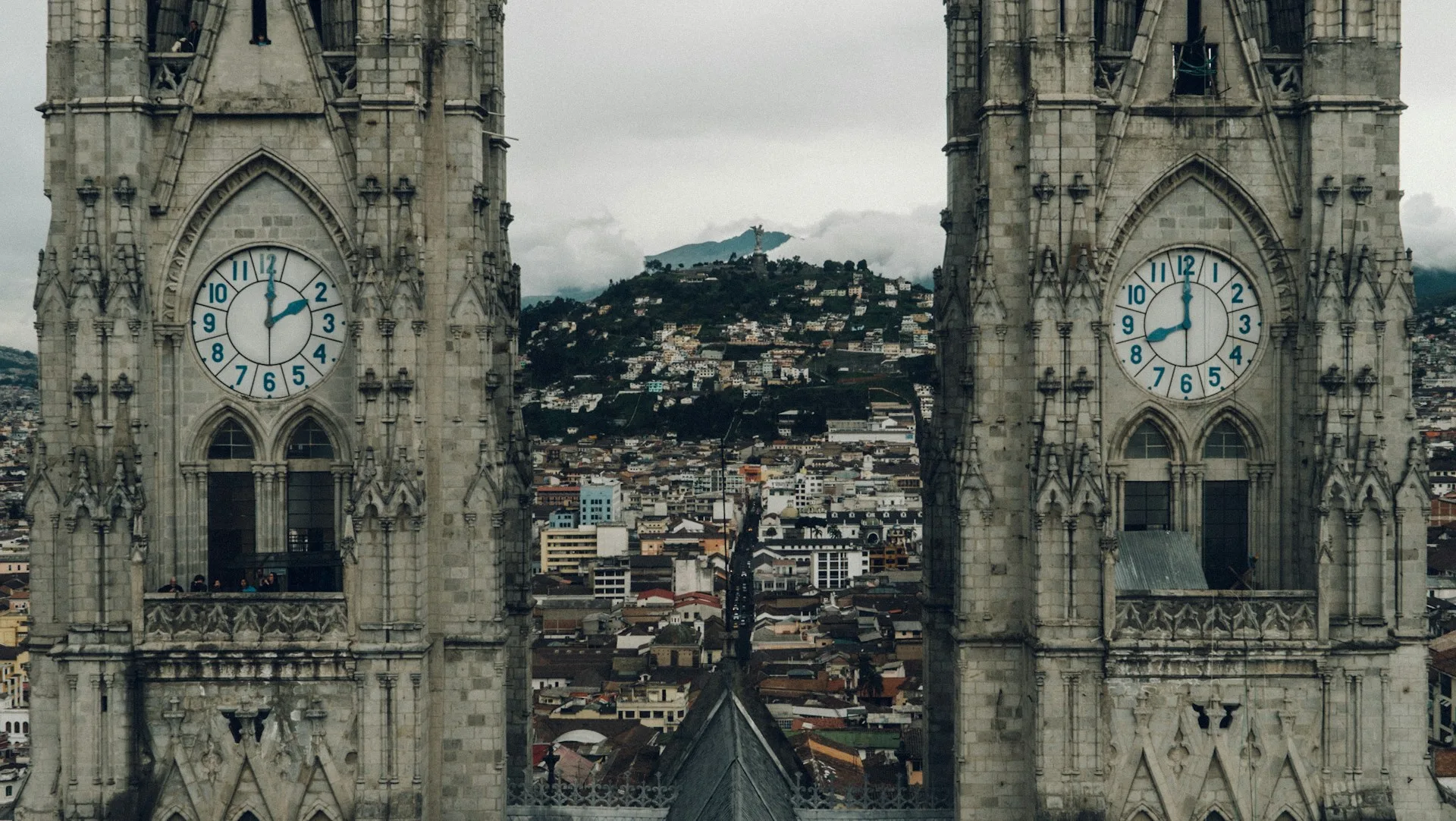
Climb the neo-Gothic basilica's towers for breathtaking panoramic views across Quito's historic center, modern districts, and surrounding Andean peaks. The ascent includes narrow staircases and ladders passing through the clock tower's inner workings—an adventure itself for older children and teens. From the top, photograph the city's spectacular setting in a narrow valley flanked by mountains, with the golden statue of the Virgin of Quito visible on El Panecillo hill. The basilica's unique design featuring Ecuadorian animals (iguanas, tortoises, boobies) instead of traditional gargoyles provides interesting architectural photography opportunities. Late afternoon golden hour illuminates the city's terracotta roofs and white-washed buildings, creating warm-toned images. Clear mornings reveal snow-capped volcanoes including Cotopaxi in the distance. The bird's-eye perspective showcases Quito's impressive urban layout and the dramatic topography that makes Ecuador's capital unlike any other city. Visit during weekdays for fewer crowds and better photography conditions.
📸 Best Time: Late afternoon for warm light on the city
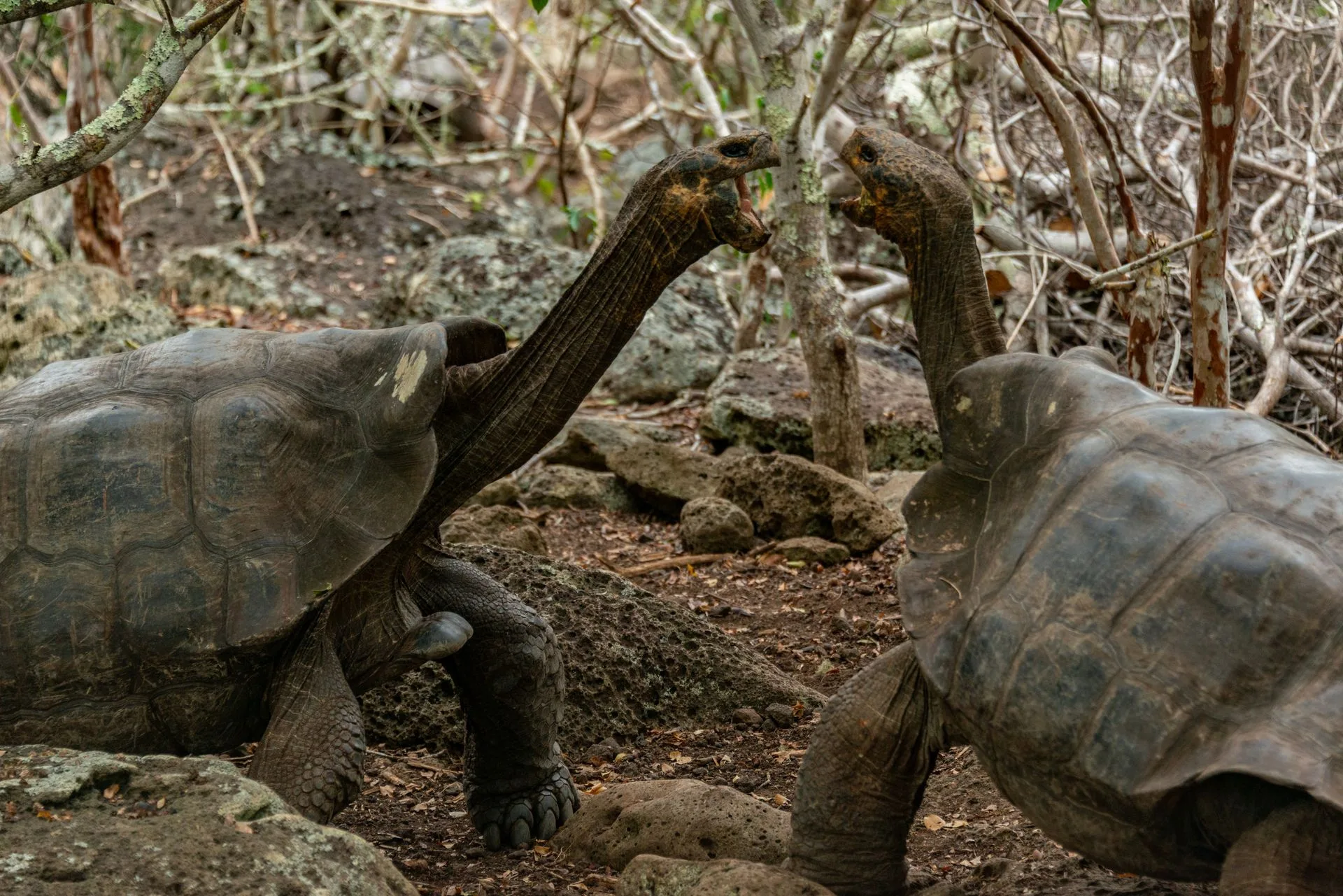
Photograph Galapagos giant tortoises from hatchlings to 150-year-old giants at this world-renowned conservation facility. The open corrals allow close-up photography of different tortoise species, including the distinctive saddleback and dome-shelled varieties that fascinated Darwin. Morning visits offer the best lighting conditions with soft natural light ideal for wildlife photography. Capture portraits highlighting the tortoises' ancient, wise expressions and the intricate patterns on their massive shells that can weigh over 200 kilograms. Children photographing at tortoise eye-level create compelling images showing size comparisons. The breeding center's interpretation panels provide interesting compositional elements and educational context for your images. Visitors can observe tortoises exhibiting natural behaviors—feeding on cactus pads, stretching their long necks, and slowly ambling around their enclosures. These conservation photography opportunities document ongoing scientific work while creating memorable family portraits with these magnificent creatures that symbolize the Galapagos Islands' unique evolutionary heritage.
📸 Best Time: Morning (8:00-10:00 AM) for soft light
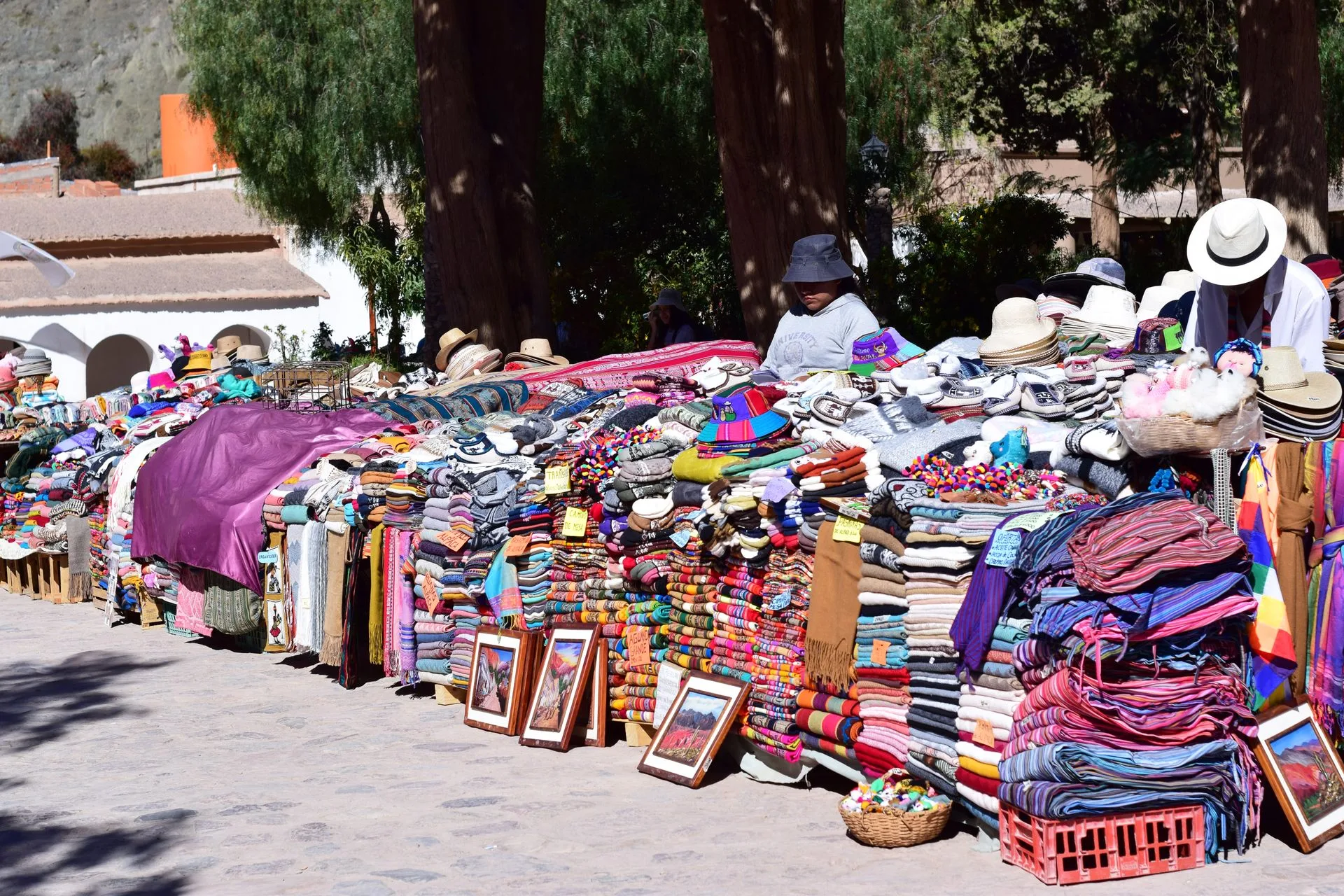
Document the vibrant colors, intricate textiles, and authentic cultural interactions at South America's most famous indigenous market. Early morning arrival captures the market setup as vendors arrange colorful displays of handwoven textiles, embroidered clothing, and traditional crafts. The riot of colors—brilliant reds, deep blues, vibrant yellows—creates visually stunning compositions. Respectfully photograph artisans demonstrating traditional weaving techniques on backstrap looms, their skilled hands creating intricate patterns passed down through generations. Indigenous women wearing traditional dress including embroidered white blouses, black skirts, and gold bead necklaces provide authentic cultural portraits (always ask permission before photographing individuals). The surrounding mountain scenery provides dramatic backdrops. Detail shots of textile patterns, jewelry displays, and craft techniques tell the story of Andean culture and artistic traditions. The market's bustling energy, authentic atmosphere, and visual richness create photography opportunities that capture Ecuador's living indigenous heritage and the continuation of pre-Columbian traditions in modern life.
📸 Best Time: Early morning (8:00-10:00 AM) for best light and activity
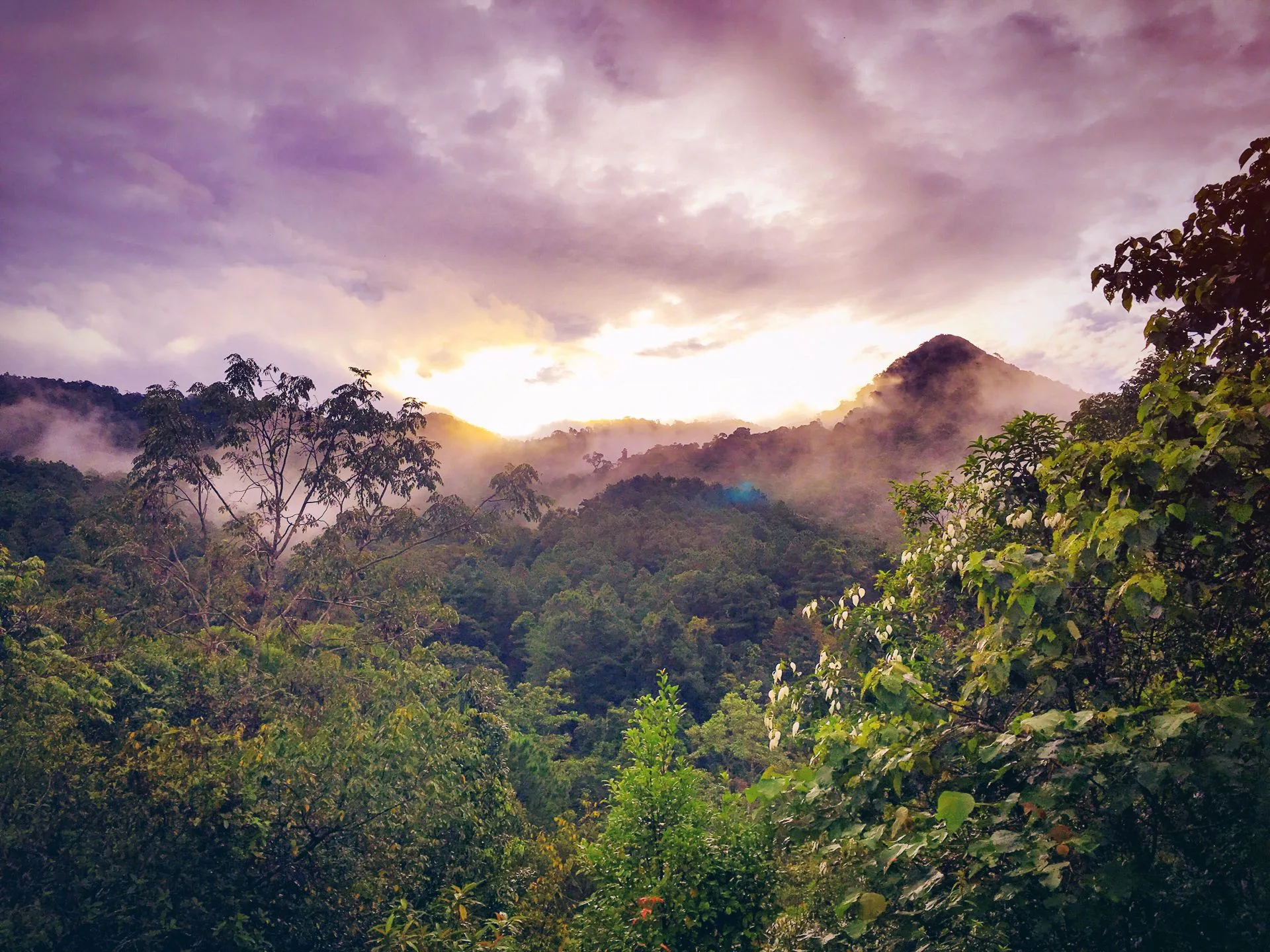
Capture the Amazon's layered forest structure from canopy towers or suspended walkways that provide aerial perspectives usually reserved for birds and arboreal mammals. Early morning golden light filtering through the multi-tiered forest creates dramatic rays and shadows, while mist rising from the forest floor adds ethereal atmosphere. Photograph colorful toucans and macaws in their natural habitat, vibrant orchids growing on tree branches, and the intricate web of vines connecting the canopy. The three-dimensional perspective reveals the rainforest's incredible biodiversity concentrated in upper reaches where sunlight is most abundant. Telephoto lenses help capture wildlife at canopy level including troops of monkeys leaping between trees and sloths moving slowly through branches. Sunrise from canopy viewpoints shows the forest awakening with bird songs and howler monkey calls echoing across the landscape. These elevated photography opportunities provide unique perspectives on the world's most biodiverse ecosystem, showcasing the Amazon's complexity, beauty, and ecological importance through powerful images that inspire conservation awareness in viewers of all ages.
📸 Best Time: Early morning (6:00-8:00 AM) for wildlife activity and soft light
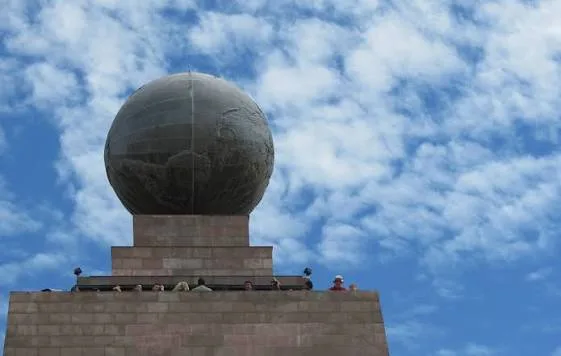
Create unique family photos at latitude 0°0'0" with creative poses showing one foot in each hemisphere at this iconic equatorial landmark. The 30-meter monument topped with a metallic globe provides instantly recognizable background for images documenting your family's equatorial crossing. Midday sun creates minimal shadows ideal for clear, bright photographs, while late afternoon light adds warm tones to the monument's stone facade. Wide-angle shots capture the entire monument and surrounding complex, while closer compositions focus on family members straddling the painted yellow equator line. Creative photography opportunities include perspective tricks making family members appear to balance the globe, jumping photos seemingly floating above the equator, and educational images demonstrating equatorial experiments. The plaza's open layout allows multiple photography angles without crowd interference. These symbolic images represent your family's geographical achievement—standing at the precise center of the Earth—creating memorable documentation of your Ecuador adventure and a unique addition to family photo collections that literally spans both hemispheres.
📸 Best Time: Late afternoon for warm light on the monument
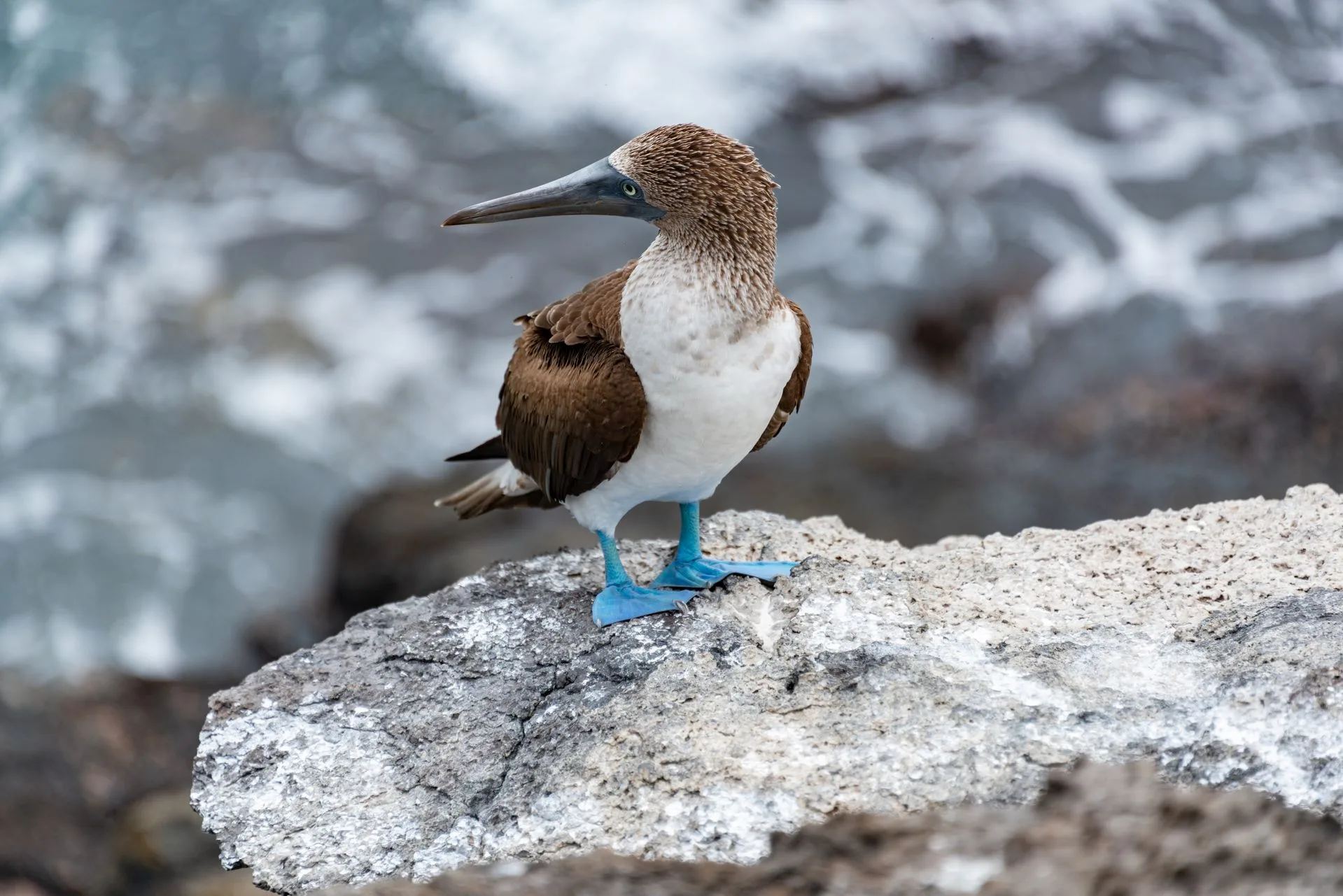
Photograph one of the Galapagos' most charismatic species performing their famous courtship dance with bright blue webbed feet prominently displayed. These fearless seabirds allow remarkably close approaches, making photography easy even with basic camera equipment. The dramatic contrast between their bright blue feet, white plumage, and yellow eyes creates visually striking images. Capture their amusing behavior including sky-pointing displays, high-stepping dances, and gift presentations of stones or sticks to potential mates during breeding season. Beaches and rocky coastlines throughout the Galapagos provide natural backdrops, with turquoise water and volcanic rock enhancing compositions. Males' feet appear brighter during breeding season, indicating good health and making them more attractive to females—an excellent example of sexual selection to explain to children. Action shots of boobies plunge-diving from heights up to 24 meters, entering water at speeds of 100 kilometers per hour, demonstrate their fishing prowess. These entertaining birds' lack of fear around humans and photogenic appearance make them favorite subjects for family wildlife photography, creating images that capture the Galapagos' unique evolutionary story and delightfully absurd natural world.
📸 Best Time: Mid-morning for best activity and light
Note: Opening and closing times are subject to change and may vary depending on the day of the week, public holidays, maintenance schedules, or special events. Please verify current timings before your visit.
Ecuador's equatorial location provides year-round travel opportunities, though June through September offers the most comfortable weather in the highlands with warm days, cool nights, and minimal rain—ideal conditions for exploring Quito and Otavalo. The Galapagos Islands present unique seasonal considerations: December through May brings warmer water temperatures (25-28°C) perfect for snorkeling and swimming, calmer seas, and frequent rain showers that keep landscapes green, while June through November offers cooler waters (18-25°C), better underwater visibility for experienced snorkelers, and prime wildlife breeding activities including sea lion pups and albatross courtship, though rougher seas can challenge sensitive stomachs. The Amazon Rainforest remains accessible year-round with consistently warm, humid conditions, though the "drier" season from October to February provides slightly less rainfall and easier hiking conditions on forest trails, while the wetter months from March to September bring higher water levels excellent for river navigation and increased animal activity around water sources. Family travelers should avoid Ecuadorian school holidays (late June through early September, late December through early January) when domestic tourism increases prices and crowds at popular sites. Overall, the shoulder seasons of April-May and October-November provide excellent value with good weather, fewer tourists, and moderate prices across all regions, making them optimal for budget-conscious families seeking authentic experiences without peak season crowds.
No vaccinations are mandatory for entry to Ecuador from most countries, though yellow fever vaccination is required if arriving from certain countries in Africa or South America where the disease is endemic. However, several vaccinations are strongly recommended for family travelers: routine vaccines (MMR, DTaP, polio) should be up-to-date for all family members; hepatitis A vaccination is recommended for all travelers as food and water transmission occurs throughout Ecuador; typhoid vaccination is advised especially if visiting smaller cities or rural areas; hepatitis B is recommended for families who might have contact with blood or body fluids, undergo medical procedures, or stay more than six months; yellow fever vaccine is recommended (though not required) for travelers visiting the Amazon Rainforest regions below 2,300 meters elevation. The Galapagos Islands have no additional vaccination requirements beyond mainland Ecuador. Consult your doctor or travel medicine clinic at least 4-6 weeks before departure as some vaccines require multiple doses over several weeks. For official health recommendations, visit the CDC Travel Health page for Ecuador or consult with a qualified travel medicine physician.
Yes, this Ecuador family tour is designed with children of all ages in mind, though families with children 6 years and older tend to get the most from the wildlife viewing, snorkeling activities, and educational components. The itinerary balances active adventures with sufficient downtime for rest and recovery. Activities are paced to avoid exhaustion while maximizing memorable experiences. Private transfers eliminate the stress of managing public transportation with children. Quito's altitude requires initial acclimatization, so our itinerary includes an easy first day allowing bodies to adjust gradually—watch for altitude sensitivity symptoms in children and communicate with guides if adjustments are needed. The Galapagos and Amazon components provide incredible wildlife encounters that captivate children's imaginations while offering hands-on learning about evolution, ecosystems, and conservation. Accommodations are selected for their family-friendly amenities, safety, and comfort. Guides experienced in working with families adapt explanations and activities to suit different age groups and attention spans. While the tour includes some physical activities like hiking and snorkeling, alternatives can usually be arranged. Overall, Ecuador's compact geography, incredible biodiversity, and welcoming culture make it an outstanding family destination where children gain educational experiences while having authentic adventures they'll remember for life.
Every month offers remarkable wildlife viewing in the Galapagos, as the islands' resident species remain year-round, but different seasons highlight specific behaviors and species. December through May represents the warm, wet season with calmer seas, warmer water temperatures (25-28°C) ideal for comfortable snorkeling, green landscapes from periodic rainfall, and peak breeding season for several species—giant tortoises nest January-June, sea turtles nest December-March, marine iguanas display bright breeding colors January-April, and land birds court and nest. June through November brings the cool, dry season with rougher seas from southeastern trade winds, cooler water temperatures (18-25°C) creating nutrient-rich upwellings that attract marine life, better underwater visibility for experienced snorkelers, and different breeding activities—albatross courtship on Española Island April-December, blue-footed booby nesting peaks June-August, and sea lion pups are numerous July-October. For families prioritizing swimming and snorkeling comfort, December-May provides warmer water and calmer conditions. For diverse wildlife breeding behaviors and dramatic seascapes, June-November offers unique advantages. Realistically, the Galapagos delivers extraordinary wildlife encounters year-round—the islands' fearless animals, unique species, and pristine ecosystems create transformative experiences regardless of travel dates. Many species like giant tortoises, marine iguanas, sea lions, and Darwin's finches are easily observed throughout the year, making any season suitable for family adventures in this living laboratory of evolution.
This Ecuador family tour is designed with moderate physical activity levels that most families with reasonable fitness can comfortably manage, though some adaptability helps maximize enjoyment. Walking and hiking components include: the Quito historic center tour involves several hours of walking on cobblestone streets and uneven surfaces with occasional steep inclines typical of colonial hillside neighborhoods; the Mitad del Mundo visit requires minimal walking on flat, paved surfaces; the Otavalo market involves walking through crowded market stalls and potentially to nearby waterfalls; Bartolomé Island features a 372-step wooden staircase climbing to the summit viewpoint—doable for most children with breaks, taking approximately 30-45 minutes round trip; Tortuga Bay requires a 2.5-kilometer (1.5-mile) flat boardwalk walk each way, easily completed by families in 30-40 minutes per direction; Amazon Rainforest trails include moderate jungle walks on sometimes muddy, uneven paths for 1-3 hours, manageable with proper footwear and frequent breaks; canoe excursions require minimal physical exertion. Altitude in Quito (2,850 meters) affects some travelers, causing shortness of breath and fatigue during the first 24-48 hours—our itinerary includes acclimatization time and gentle first-day activities. Families can communicate with guides about pace adjustments, shortened trails, or alternative activities when needed. Overall fitness requirements are moderate rather than demanding, with flexibility built into the itinerary to accommodate varying family capabilities while ensuring memorable experiences for all ages.
Your family's safety during Galapagos snorkeling activities is our top priority, with comprehensive measures ensuring secure and enjoyable experiences. All snorkeling excursions include: professional naturalist guides trained in water safety and rescue techniques accompanying every group; life jackets provided for all participants regardless of swimming ability—children must wear them and adults strongly encouraged; proper equipment fitting before entering water, including masks, snorkels, and fins appropriate for each family member's size; thorough briefings explaining ocean conditions, entry/exit points, buddy system protocols, and hand signals for communication; designated snorkeling zones selected for calm waters, minimal currents, and abundant wildlife; panga (small boat) support remaining nearby throughout snorkeling sessions for immediate assistance if needed; first aid kits and emergency oxygen aboard all vessels; guides continuously monitoring group members and ocean conditions; gradual introduction starting with shallow, calm areas before deeper water; family groups staying together with guides providing close supervision of children; equipment including wetsuit availability providing thermal protection and buoyancy; clear communication about personal comfort levels and swimming abilities allowing guides to provide appropriate assistance. Galapagos waters are generally safe with calm, protected bays selected for family activities. The fearless wildlife allows incredible encounters without requiring advanced skills or deep diving. Parents uncomfortable with open water snorkeling can stay aboard while children participate with guides, or families can request shallower alternatives. These comprehensive safety protocols ensure every family member enjoys magical underwater encounters with appropriate support and protection throughout their Galapagos adventure.
As specialists in curated family travel experiences across South America, we understand that planning a multi-destination Ecuador adventure requires expertise, local connections, and meticulous attention to detail. Our Ecuador family tour packages are designed by parents for parents, ensuring every element prioritizes safety, education, and authentic cultural immersion while maintaining the flexibility families need. We work exclusively with verified, family-friendly accommodations that meet international safety standards, provide comfortable amenities, and offer genuine hospitality. Our handpicked naturalist guides possess not only deep knowledge of Ecuador's wildlife, history, and ecology but also extensive experience engaging children of various ages, transforming educational content into exciting discoveries. Unlike generic group tours, our itineraries maintain optimal pacing that prevents exhaustion while maximizing memorable experiences—we know when children need rest and when they're ready for adventure.
What sets us apart is our commitment to responsible, sustainable tourism that benefits local communities and protects Ecuador's extraordinary ecosystems for future generations. Our partnerships with conservation organizations in the Galapagos and indigenous communities in the Amazon ensure your travel supports vital environmental protection and cultural preservation while providing your family with authentic, respectful interactions. We handle complex logistics including Galapagos permits, domestic flights, private transfers, and accommodation coordination, eliminating stress so you can focus on creating memories with your children. Our 24/7 in-country support means assistance is always available should unexpected situations arise. With comprehensive pre-departure materials, packing guidance, and cultural preparation resources, we ensure your family arrives confident and prepared. Whether experiencing the Galapagos' fearless wildlife, exploring Quito's colonial treasures, or discovering the Amazon's biodiversity, our Ecuador family tours deliver transformative experiences that inspire lifelong curiosity, environmental stewardship, and appreciation for our planet's incredible diversity.
 Middle East
 Asia
Asia
 Europe
 Europe
 Europe
 Americas
 Europe
 Asia
Asia
 Oceania
Ready to explore the Galapagos Islands, walk the equator, and discover the Amazon Rainforest with your family? This carefully curated 8-day Ecuador tour combines iconic wildlife encounters, cultural immersion, and natural wonders perfect for creating lifelong memories.
Fill out the form below and our Ecuador travel specialists will contact you within 24 hours to discuss your family's interests, answer questions, and customize this itinerary to perfectly match your needs. We handle all logistics so you can focus on the adventure ahead.