Argentina travel guide for Indians Buenos Aires Patagonia Iguazu Falls

Argentina Travel Guide
for Indian Travelers

Visa, cost, itinerary & tips — your complete guide to planning a trip to Argentina from India in 2026.

Updated for 2026 Travelers
Table of Contents
Jump to any section of this Argentina travel guide

Last updated: April 2026

Argentina Trip Cost from India (Detailed Breakdown)
Realistic cost breakdown for flights, visa, hotels, food, and total budget for 2026

Cost Breakdown 2026

  • Return Flights: ₹90,000 – ₹1,50,000
  • Visa / AVE Fee: ₹4,000 – ₹8,000
  • Hotels (per night): ₹4,000 – ₹12,000
  • Food (per day): ₹2,500 – ₹6,000
  • Local Transport (per day): ₹1,000 – ₹3,000
  • Activities & Entry Fees: ₹10,000 – ₹25,000 total
  • Travel Insurance: ₹1,500 – ₹3,000
  • Total (7–10 days): ₹1.5L – ₹3L per person

Argentina is more expensive than Thailand but generally cheaper than Europe for Indian travelers, especially for food, local transport, and experiences. Flights are the biggest cost component.
Best Departure Cities

  • Delhi (DEL) — Most flight options via Europe or Middle East
  • Mumbai (BOM) — Good connections via Sao Paulo or Dubai
  • Bangalore (BLR) — Limited options, usually via Europe
  • Hyderabad (HYD) — Fewer direct routes, 2+ layovers common
  • Chennai (MAA) — Options via Colombo or Singapore

Delhi and Mumbai offer the best flight connectivity to Buenos Aires with fewer layovers and competitive fares.

Ready to plan your Argentina trip? Let us handle flights, visa, hotels, and tours.

View Argentina Tour Packages →
Flight Routes from India to Argentina
Flights from India to Argentina take 20–28 hours with one or two layovers. Here are the most popular routes.

Delhi to Buenos Aires

  • Route 1: DEL → Dubai → Sao Paulo → EZE (Emirates + LATAM)
  • Route 2: DEL → Frankfurt → Buenos Aires (Lufthansa)
  • Route 3: DEL → Paris → Buenos Aires (Air France)
  • Route 4: DEL → London → Buenos Aires (British Airways)
  • Duration: 22–26 hours
  • Price Range: ₹95,000 – ₹1,40,000

Mumbai to Buenos Aires

  • Route 1: BOM → Dubai → Sao Paulo → EZE (Emirates + LATAM)
  • Route 2: BOM → Addis Ababa → Sao Paulo → EZE (Ethiopian)
  • Route 3: BOM → Doha → Sao Paulo → EZE (Qatar Airways)
  • Duration: 24–28 hours
  • Price Range: ₹90,000 – ₹1,50,000

Note: Buenos Aires Ezeiza (EZE) is the main international airport. Domestic flights within Argentina operate from Aeroparque (AEP). Check South America travel guides for more regional information.

Argentina vs Europe Cost for Indian Travelers
How does Argentina compare to popular European destinations on cost? Here is a practical comparison for Indian travelers.
Expense Argentina (7 days) Europe (7 days)
Flights₹90K – ₹1.5L₹60K – ₹1L
Visa₹4K – ₹8K (AVE)₹7K – ₹9K (Schengen)
Hotels/night₹4K – ₹12K₹8K – ₹20K
Food/day₹2.5K – ₹6K₹5K – ₹12K
Local Transport₹1K – ₹3K/day₹2K – ₹5K/day
Total Trip₹1.5L – ₹3L₹2L – ₹4.5L
Flights
Argentina₹90K – ₹1.5L
Europe₹60K – ₹1L
Visa
Argentina₹4K – ₹8K (AVE)
Europe₹7K – ₹9K (Schengen)
Hotels/night
Argentina₹4K – ₹12K
Europe₹8K – ₹20K
Food/day
Argentina₹2.5K – ₹6K
Europe₹5K – ₹12K
Local Transport
Argentina₹1K – ₹3K/day
Europe₹2K – ₹5K/day
Total Trip
Argentina₹1.5L – ₹3L
Europe₹2L – ₹4.5L

Argentina offers significantly better value on-ground (food, hotels, transport) compared to Europe. The higher flight cost is offset by lower daily expenses.

Best Time to Visit Argentina from India
Argentina can be visited year-round, but the best time depends on the region and your travel goals.
7-Day Argentina Itinerary for Indian Travelers
A perfect one-week Argentina itinerary covering Buenos Aires, Iguazu Falls, and Patagonia highlights.

Season Guide

  • October – March: Best overall — warm weather, ideal for Buenos Aires, Iguazu, Patagonia
  • December – February: Peak summer, highest prices, best for Patagonia glaciers
  • March – May: Shoulder season, fewer crowds, pleasant autumn colors
  • June – August: Winter, ski season in Bariloche, lower prices
  • September – November: Spring, wildflowers, great for wine regions

Day-by-Day Plan

  • Day 1: Arrive in Buenos Aires — rest, explore San Telmo neighborhood
  • Day 2: Buenos Aires city tour — La Boca, Recoleta, Plaza de Mayo
  • Day 3: Tango show in the evening, optional day trip to Tigre
  • Day 4: Fly to Iguazu — explore Argentine side of the falls
  • Day 5: Iguazu Brazilian side — fly back to Buenos Aires
  • Day 6: Fly to El Calafate — Perito Moreno Glacier excursion
  • Day 7: Patagonia landscapes — fly back to Buenos Aires, depart

Want a hassle-free Argentina trip? Our packages include flights, hotels, transfers, and guided tours.

Book Argentina Tour Package →
Argentina Visa for Indians — Complete Guide & Travel Essentials
Essential information for Indian travelers — from Argentina visa requirements and time zones to plug adapters and local transport apps.

Tip: Carry USD cash — exchange rates are often better than using cards in Argentina.

Argentina Visa for Indians

Indian passport holders require a visa or AVE (Electronic Travel Authorization) to enter Argentina. AVE is available if you hold a valid US B2 visa or Schengen visa.

  • Indian Passport Holders: Visa Required (AVE Available)
  • Indian citizens require a visa or AVE (Autorizacion Electronica de Viaje) to enter Argentina
  • AVE is available if you hold a valid US B2 visa or Schengen visa with at least 3 months validity
  • AVE application is online and costs approximately USD 50
  • Processing time for AVE is 10–15 business days
  • Traditional tourist visa requires application at Argentine Embassy/Consulate
  • Tourist visas are typically valid for 90 days
  • Required documents include valid passport (minimum 6 months validity), return tickets, hotel bookings, bank statements, and travel insurance
  • Ensure all documents are accurate and complete before submission
CLICK TO KNOW MORE ABOUT VISA DOCUMENTATION & FEES

Time Zone

Argentina follows Argentina Time (ART), which is UTC-3 and 8.5 hours behind Indian Standard Time (IST). There is no daylight saving time, so the difference remains constant year-round.

  • Argentina Time (ART): UTC-3
  • Argentina follows Argentina Time (ART), which is 3 hours behind Coordinated Universal Time (UTC-3)
  • Argentina is 8.5 hours behind Indian Standard Time (IST)
  • When it is 12:00 PM in Argentina, it is 8:30 PM in India
  • Argentina does not observe Daylight Saving Time, so the time difference remains constant throughout the year
  • Business hours typically run from 9 AM to 6 PM ART on weekdays
  • Banks operate from 10 AM to 3 PM on weekdays
  • Most shopping malls open from 10 AM to 10 PM daily
  • Restaurants serve lunch from 12-3 PM and dinner from 8:30 PM onwards (Argentines dine late!)

Country Code

To call Argentina from India, use the international dialing code +54 followed by the area code and local number.

  • International Dialing Code: +54
  • To call Argentina from India, dial: 00-54-XX-XXXX-XXXX (where XX is the area code)
  • Buenos Aires area code: 11
  • Cordoba area code: 351
  • Mendoza area code: 261
  • Mobile numbers start with 11, 15, or other area codes followed by 8 digits
  • Emergency services: 911 (Police/Ambulance/Fire)
  • Tourist police in Buenos Aires: 101
  • Major telecom providers include Movistar, Claro, and Personal
  • Tourist SIM cards are available at Ezeiza Airport and cost around ARS 3000-5000
  • Free Wi-Fi is available in most hotels, cafes, and public spaces in major cities

Socket & Plugs

Argentina uses Type C and Type I electrical outlets with 220V at 50Hz. Indian travelers will need a plug adapter.

  • Type C and Type I — 220V, 50Hz
  • Argentina uses Type C (European 2-pin) and Type I (Australian 3-pin) electrical outlets
  • Standard voltage is 220V with a frequency of 50Hz
  • Indian travelers will need a plug adapter as India uses Type C, D, and M sockets
  • Type C plugs (2-pin round) work in Argentina without adapter
  • Universal travel adapters are recommended and cost around ARS 2000-4000
  • Most hotels provide adapters at the front desk upon request
  • Adapters are available at airports, electronics shops, and supermarkets
  • Many modern devices (laptops, phone chargers) support 100-240V and will work without voltage converters
  • Hair dryers and high-wattage appliances may require voltage converters if they do not support 220V

Indian Embassy in Argentina

The Embassy of India in Buenos Aires provides consular services for Indian nationals.

  • Address: Calle Brasil 3335, C1431BUE Buenos Aires
  • Contact: +54 11 4807-2900 / 4807-3106
  • Email: [email protected]
  • Emergency (24/7): +54 9 11 4807-3106
  • Working Hours: Mon-Fri, 9:00 AM – 5:30 PM
  • Consular services: passport renewal, emergency certificates, assistance to Indian nationals
  • Notarial services, document attestation, and OCI card services available
  • In emergencies (lost passport, legal issues), contact the embassy immediately
  • Register with MADAD portal for travel advisories and notifications

Argentina Embassy in India

The Embassy of Argentina in New Delhi processes visa applications.

  • Address: B-2/13, Vasant Vihar, New Delhi – 110057
  • Contact: +91-11-4175-2700 / 4175-2701
  • Email: [email protected]
  • Working Hours: Mon-Fri, 9:00 AM – 5:00 PM
  • Argentina also has Consulates in Mumbai (+91-22-2282-2066)
  • Visa applications processed through embassy or authorized visa agents
  • Information on trade, investment, education, and tourism opportunities
  • Argentine citizens can seek consular assistance for passport services
  • The mission regularly conducts cultural events to strengthen India-Argentina relations

Car Driving Orientation

Right-Hand Drive (Opposite to India)

  • Argentina follows right-hand driving, opposite to India's left-hand system
  • Indian drivers will need adjustment period when driving in Argentina
  • International Driving Permit (IDP) required along with valid home country license
  • Speed limits: 40-60 km/h in urban areas, 110-130 km/h on highways
  • Seat belts are mandatory for all passengers
  • Driving under influence of alcohol is strictly prohibited (zero tolerance)
  • Car rental available in major cities but can be expensive
  • Parking in Buenos Aires requires payment through apps or meters
  • Public transport recommended in Buenos Aires due to traffic
  • Road conditions are generally good on major highways

App Based Taxi

Uber, Cabify, and DiDi are Primary Ride-Hailing Apps

  • Uber operates in Buenos Aires and major cities
  • Cabify is another popular alternative with good coverage
  • DiDi (Chinese app) has expanded significantly in Argentina
  • Download apps and register with international mobile number or email
  • Payment options include credit/debit cards, cash, or in-app wallets
  • Average fare from Ezeiza Airport to city center: ARS 15000-25000 (USD 40-70)
  • Traditional taxis (Radio Taxis) are also available and metered
  • Always use registered taxis or apps for safety
  • Peak hour surcharges apply during rush hours (7-10 AM, 5-9 PM)
  • Public buses (colectivos) and Subte (metro) are economical alternatives

Need help with Argentina visa? Our visa team assists with documentation, application, and follow-up.

Argentina Visa Assistance →
Argentina Culture, Language & Local Customs
Understand Argentine Spanish, local slang, and cultural norms to connect better with locals.

Official Language

Spanish (Castellano) — Official Language

  • Argentine Spanish has unique accent and vocabulary influenced by Italian immigration
  • "Voseo" is common — using "vos" instead of "tu" for informal "you"
  • Pronunciation differs from European Spanish — "ll" and "y" sound like "sh"
  • English is spoken in tourist areas, hotels, and by younger generations
  • Italian, German, and indigenous languages spoken in specific regions
  • Learning basic Spanish phrases greatly enhances travel experience
  • Argentines appreciate when tourists attempt to speak Spanish
  • Language schools and conversation exchanges available in Buenos Aires
  • Translation apps work well in major cities with internet connectivity

Local Vocabulary

Understanding these Argentine slang terms helps connect with locals and understand culture better.

  • Che — Hey, mate, dude (famous from Che Guevara)
  • Boludo — Idiot/dummy (can be friendly or offensive depending on context)
  • Quilombo — Mess, chaos, problematic situation
  • Buena onda — Good vibes, cool person
  • Mala onda — Bad vibes, unfriendly person
  • Laburo — Work, job
  • Guita — Money
  • Pibe/Piba — Kid, young person
  • Copado — Cool, awesome
  • Bondiola — Pork shoulder sandwich (popular street food)
  • Mate — Traditional herbal tea (national drink)
  • Asado — Argentine barbecue

Understanding these terms helps connect with locals and understand culture

Toilet Signs

Public restrooms are called "Banos" in Argentina. Signs typically display "Banos" or "Sanitarios" with pictograms.

  • Public restrooms are called "Banos" in Argentina
  • Signs typically display "Banos" or "Sanitarios" with pictograms
  • Men's toilets marked with "Caballeros" or male symbol (blue)
  • Women's toilets marked with "Damas" or female symbol (pink/red)
  • Public toilets in Buenos Aires are generally clean and well-maintained
  • Some public facilities charge small fee (ARS 50-100) for maintenance
  • Shopping malls, restaurants, and hotels have free restrooms
  • Always carry tissues as some public toilets may not have toilet paper
  • Western-style seated toilets are standard; squat toilets rare
  • Accessible/family restrooms available in modern facilities
  • Toilet paper should be disposed in trash bins, not flushed (older buildings)

Interesting Facts

Argentina is the 8th largest country in the world by land area and has produced 5 Nobel Prize winners.

  • Argentina is the 8th largest country in the world by land area
  • Buenos Aires is known as the "Paris of South America" for its European architecture
  • Argentina has the highest consumption of beef per capita globally
  • Tango originated in Buenos Aires in the 1880s and is UNESCO-listed
  • Argentina has produced 5 Nobel Prize winners
  • The country claims territory in Antarctica (Argentine Antarctica)
  • Argentina has the widest avenue in the world — Avenida 9 de Julio (140 meters wide)
  • Mate (herbal tea) is a social ritual — sharing mate signifies friendship
  • Argentina invented the ballpoint pen (Laszlo Biro, 1938)
  • The country has more bookstores per capita than any other nation
  • Argentina uses more psychoanalysts per capita than anywhere else
  • Evita Peron remains one of the most iconic figures in Argentine history
Argentina Shopping & Markets Guide
From leather goods and wine to traditional crafts and flea markets.

Shopping Hours

Most Shops: 10:00 AM – 8:00 PM (Weekdays)

  • Shopping malls typically operate from 10:00 AM to 10:00 PM, seven days a week
  • Sunday shopping is common in malls but many independent shops close
  • Galerias Pacifico and Alto Palermo are popular Buenos Aires malls
  • Small boutiques may close for siesta (1-4 PM) in smaller cities
  • Supermarkets open from 8 AM to 10 PM or later
  • Convenience stores (kioscos) operate extended hours, some 24/7
  • Flea markets and ferias operate on weekends, typically 11 AM – 7 PM
  • Best shopping season: End-of-year sales (Dec-Jan) and winter sales (July)
  • Tax-free shopping available for tourists on purchases over ARS 70,000

Flea Markets

Argentina's flea markets offer unique souvenirs including leather goods, tango items, mate sets, and artisanal crafts.

  • Feria de San Telmo — Buenos Aires' oldest market (Sundays), antiques, crafts
  • Feria de Mataderos — Traditional gaucho culture, folk music, food (Sundays)
  • Feria de Recoleta — Upscale crafts, jewelry, art in elegant plaza (weekends)
  • Paseo La Plaza — Alternative market with local designers and vintage items
  • Feria de Belgrano — Neighborhood market with crafts and organic products
  • Palermo Soho — Trendy boutiques, vintage shops, and designer markets
  • Most flea markets operate on weekends from 11 AM to 7 PM
  • Bargaining is acceptable at flea markets but not in established stores
  • Cash (Argentine pesos) preferred at markets though cards increasingly accepted
  • Unique souvenirs include leather goods, tango items, mate sets, and artisanal crafts
  • Street performers and live music common at major ferias

Famous Brands

Shopping for leather goods offers excellent value compared to international prices, along with Argentine wine and traditional crafts.

  • Leather Goods: Argentina produces world-class leather — jackets, bags, shoes
  • Alpargatas: Traditional canvas shoes (espadrilles) — comfortable and stylish
  • Mate Sets: Traditional yerba mate gourds and bombillas (metal straws)
  • Wine: Argentine Malbec — excellent quality at affordable prices
  • Dulce de Leche: Sweet caramel spread — national favorite
  • Alfajores: Cookie sandwiches filled with dulce de leche (Havanna, Jorgito)
  • Tango Items: Shoes, clothing, and music for tango enthusiasts
  • Ropa de Cuero: Leather clothing from local artisans
  • Argentine Chocolate: High-quality chocolate brands like Fenoglio
  • Local Designers: Emerging fashion scene in Palermo Soho

Shopping for leather goods offers excellent value compared to international prices

Supermarkets

Major supermarket chains like Carrefour, Coto, and Jumbo offer wide product ranges with competitive prices.

  • Carrefour — French chain, widespread, good prices and selection
  • Coto — Argentine chain, competitive prices, many locations
  • Jumbo — Upscale supermarket with wide product range
  • Disco — Premium supermarket chain (owned by Jumbo)
  • Vital — Budget-friendly local chain
  • Chango Mas — Neighborhood supermarket with good prices
  • Tia — Small convenience stores in residential areas
  • Most supermarkets open from 8 AM to 10 PM; some 24-hour outlets exist
  • International products available but limited compared to home countries
  • Local products are affordable and high quality (wine, beef, dairy, produce)
  • Self-checkout increasingly common; most stores accept cash and cards
  • Bottled water recommended; tap water is safe to drink in Buenos Aires but not in all regions
Argentina Food & Cuisine Guide
Argentine cuisine is known for premium beef, asado, empanadas, and Italian-influenced dishes.

Do: Try local asado and empanadas — Argentine cuisine is a highlight of the trip.

Famous Cuisines

Argentine cuisine is heavily influenced by Italian and Spanish immigration, with beef as the central ingredient.

  • Asado — Argentine barbecue, the national culinary tradition with various beef cuts
  • Empanadas — Savory pastries filled with meat, cheese, or vegetables
  • Milanesa — Breaded meat cutlet (Italian influence), served with fries or in sandwiches
  • Choripan — Chorizo sausage sandwich with chimichurri sauce (street food favorite)
  • Provoleta — Grilled provolone cheese with oregano and chili flakes
  • Locro — Hearty stew with corn, beans, meat (traditional for national holidays)
  • Humita — Corn mixture wrapped in corn husks, steamed
  • Facturas — Argentine pastries for breakfast/merienda (medialunas, vigilantes)
  • Pizza — Argentine-style pizza with thick crust and abundant cheese
  • Pasta — Italian influence strong — noquis (gnocchi) traditional on 29th of each month

Argentine cuisine heavily influenced by Italian and Spanish immigration

Beef is central to Argentine diet — quality is exceptional

Famous Fruits

Summer (December-February) offers the best fruit variety and prices. Fruit markets (ferias francas) offer fresh, local produce at good prices.

  • Duraznos (Peaches) — Mendoza famous for peaches, especially in summer
  • Ciruelas (Plums) — Abundant in Mendoza and Patagonia regions
  • Manzanas (Apples) — Rio Negro and Neuquen provinces produce excellent apples
  • Peras (Pears) — Patagonian pears are sweet and juicy
  • Cerezas (Cherries) — Patagonia cherry season (Dec-Jan) is celebrated
  • Frutillas (Strawberries) — Available in spring/summer, used in desserts
  • Arandanos (Blueberries) — Argentina is major blueberry exporter
  • Uvas (Grapes) — Mendoza wine region has excellent table grapes
  • Higos (Figs) — Common in Mendoza and northern regions
  • Tunas (Prickly Pears) — Cactus fruit from northern Argentina

Summer (December-February) offers best fruit variety and prices

Fruit markets (ferias francas) offer fresh, local produce at good prices

National Dish — Asado

Asado is Argentina's pride and culinary tradition — more than food, it's a social event and cultural institution.

  • Asado is more than food — it's a social event and cultural institution
  • Consists of various cuts of beef cooked on parrilla (grill) or asado cruz (cross-style)
  • Traditional cuts include asado de tira, vacio, entrana (skirt steak)
  • Cooked slowly over wood or charcoal fire by asador (grill master)
  • Served with chimichurri sauce (parsley, garlic, oil, vinegar, chili)
  • Accompanied by salads, provoleta cheese, and crusty bread
  • Asado gatherings typically last 3-4 hours, emphasizing social connection
  • Best parrillas: La Cabrera, Don Julio, El Cuartito
  • A complete asado meal costs ARS 8000-15000 per person
  • Argentines consume average of 50kg beef per person annually
  • Vegetarian options limited but improving in urban areas

Avg Cost Of Food

Budget travelers can eat well for ARS 5000-8000 per day at local eateries. Tipping 10% is customary in restaurants.

  • Street Food/Empanadas: ARS 500-1000 each (₹50-100)
  • Choripan: ARS 1500-2500 (₹150-250)
  • Menu del Dia (Lunch Special): ARS 4000-7000 (₹400-700)
  • Parrilla/Steakhouse: ARS 8000-15000 per person (₹800-1500)
  • Mid-range Restaurant: ARS 6000-10000 per person (₹600-1000)
  • Fine Dining: ARS 15000-30000+ per person (₹1500-3000+)
  • Coffee/Cafecito: ARS 800-1500 (₹80-150)
  • Mate: ARS 500-1000 (₹50-100)
  • Beer (Cerveza): ARS 1500-3000 (₹150-300)
  • Wine (Copa): ARS 2000-5000 (₹200-500)

Budget travelers can eat well for ARS 5000-8000 per day at local eateries

Tipping: 10% customary in restaurants (not mandatory)

Service charge sometimes included in tourist areas

Argentina Weather & Packing Tips
Argentina spans multiple climate zones. Pack for your destinations — from subtropical Iguazu to cold Patagonia.

Tip: Pack layers — Argentina's weather varies greatly from subtropical north to cold Patagonia.

Weather

Argentina has diverse climates due to its vast size spanning from tropics to sub-Antarctic

  • Buenos Aires: Temperate, hot humid summers (Dec-Feb, 25-35°C), mild winters (Jun-Aug, 8-17°C)
  • Patagonia: Cool to cold year-round, summer 10-20°C, winter -5 to 10°C, windy
  • Mendoza: Arid climate, hot summers (30-35°C), cool winters (5-15°C), low humidity
  • Iguazu: Subtropical, hot humid year-round (20-35°C), heavy rainfall possible
  • Salta/Jujuy: Mild temperatures year-round, sunny days, cool nights
  • Best time to visit: Spring (Sep-Nov) and Autumn (Mar-May)
  • Summer (Dec-Feb): Peak tourist season, ideal for Patagonia and lakes
  • Winter (Jun-Aug): Ski season in Bariloche, fewer crowds, lower prices
  • Weather can change rapidly, especially in Patagonia
  • UV index is high year-round; sun protection essential

Clothes To Wear

Argentines dress well — avoid overly casual clothes in cities. Pack according to your specific destinations.

For Buenos Aires & Cities:

  • Light, breathable clothing for summer (cotton, linen)
  • Layers for spring/autumn (light jacket, sweaters)
  • Warm coat, scarf, gloves for winter (June-August)
  • Comfortable walking shoes (cities involve lots of walking)
  • Smart-casual attire for tango shows and nice restaurants
  • Rain jacket or umbrella (rain possible year-round)

For Patagonia:

  • Warm layers even in summer (fleece, down jacket)
  • Waterproof/windproof outer shell (Patagonian wind is strong)
  • Sturdy hiking boots with good ankle support
  • Thermal underwear for winter visits
  • Hat, gloves, warm socks

For Mendoza/Wine Region:

  • Light clothing for daytime (hot, dry climate)
  • Sun protection (hat, sunglasses, sunscreen)
  • Light jacket for evenings (temperature drops)

General: Argentines dress well — avoid overly casual clothes in cities

Argentina Heritage & Cultural Highlights
UNESCO sites, national symbols, films, and souvenirs that capture Argentina's cultural identity.

UNESCO World Heritage Sites

Argentina has 11 UNESCO World Heritage Sites total. Many sites offer guided tours and visitor centers.

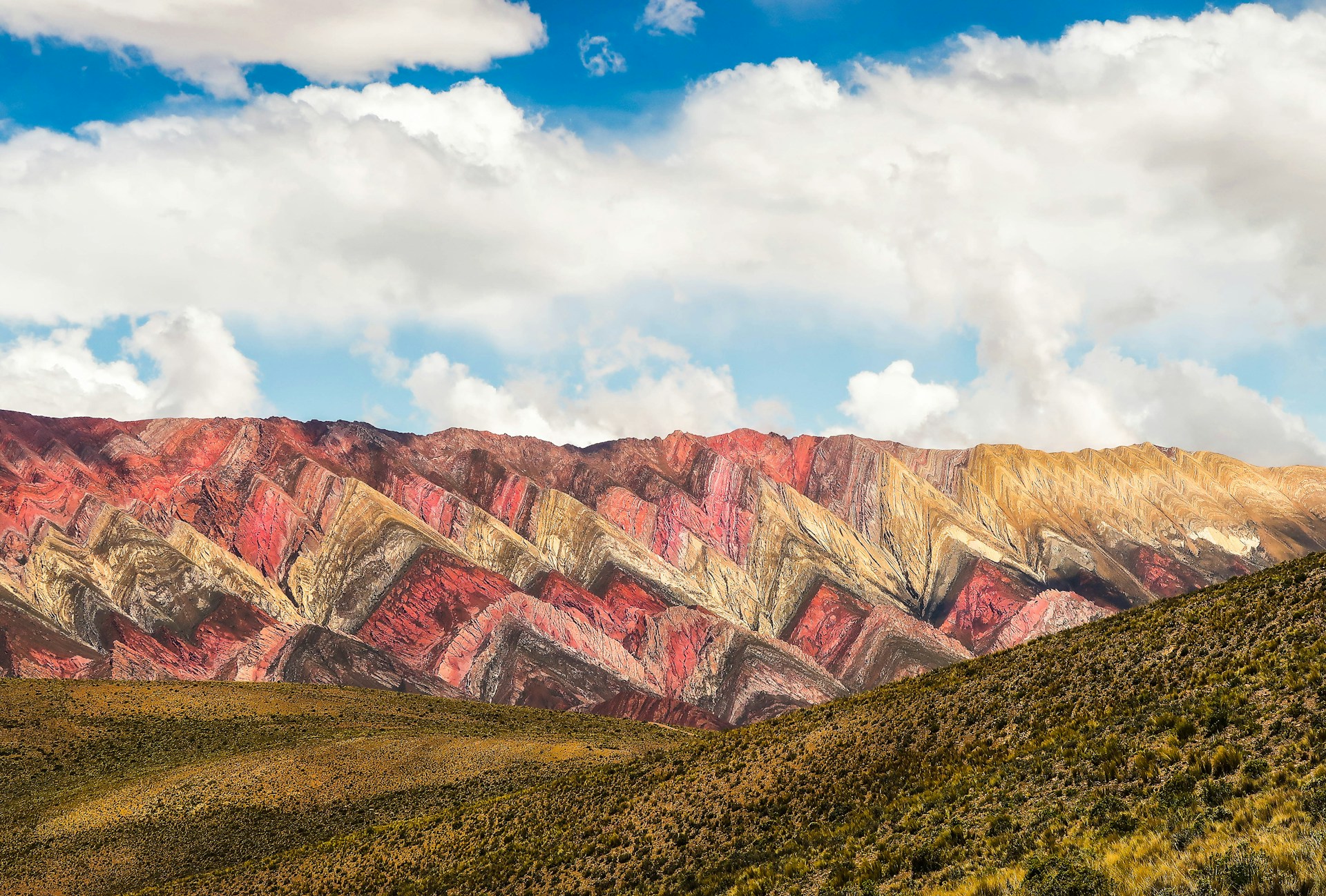
  • Quebrada de Humahuaca (2003) — Stunning mountain valley with colorful mountains
  • Jesuit Block and Estancias of Cordoba (2000) — 17th-century Jesuit complex
  • Cueva de las Manos (1999) — Ancient cave art with hand stencils (9,000-13,000 years old)
  • Peninsula Valdes (1999) — Marine mammal conservation area, whale watching
  • Iguazu National Park (1984) — Spectacular waterfalls and subtropical rainforest
  • Los Glaciares National Park (1981) — Patagonian ice fields and Perito Moreno Glacier
  • Tafi del Valle — Pre-Columbian archaeological sites

Argentina has 11 UNESCO World Heritage Sites total

Many sites offer guided tours and visitor centers

National Symbols

The ceibo flower legend tells of indigenous girl Anahi who transformed into the tree. Hornero symbolizes home and family due to its strong pair bonding.

  • National Animal: Puma (widely recognized)
  • National Bird: Hornero — known for its distinctive oven-shaped nest
  • National Flower: Ceibo (Erythrina crista-galli) — red coral tree flower
  • National Tree: Algarrobo Blanco (White Carob Tree)
  • National Sport: Pato (horseback game combining polo and basketball)
  • National Drink: Mate (herbal tea)
  • National Dish: Asado (barbecue)
  • National Dance: Tango (UNESCO Intangible Cultural Heritage)

The ceibo flower legend tells of indigenous girl Anahi who transformed into the tree

Hornero symbolizes home and family due to its strong pair bonding

Films Shot in Argentina

Buenos Aires is a popular filming location for its European architecture. Argentina has a strong film industry with annual film festivals.

  • Evita (1996) — Madonna starring biopic filmed in Buenos Aires
  • The Motorcycle Diaries (2004) — Che Guevara's journey across South America
  • Nine Queens (2000) — Argentine crime thriller, critically acclaimed
  • The Secret in Their Eyes (2009) — Oscar-winning Argentine film
  • Wild Tales (2014) — Anthology film showcasing Argentine society
  • Official Competition (2021) — Penelope Cruz and Antonio Banderas
  • Argentina, 1985 (2022) — Historical drama about Trial of the Juntas

Buenos Aires is popular filming location for its European architecture

Argentina has strong film industry with annual film festivals

Film Festivals

Film festivals typically feature screenings, Q&A sessions, and industry events. Many festivals offer free or discounted screenings for students.

  • BAFICI — Buenos Aires International Festival of Independent Cinema (April)
  • Mar del Plata International Film Festival — November, FIAPF-recognized
  • Buenos Aires Rojo Sangre — Horror, fantasy, and sci-fi film festival
  • Astrolabio — Cordoba International Film Festival — Diverse international cinema
  • Festival de Cine de la Patagonia — Showcasing Patagonian and regional cinema
  • DocBuenosAires — Documentary film festival

Film festivals typically feature screenings, Q&A sessions, and industry events

Many festivals offer free or discounted screenings for students

Argentina has vibrant cinema culture with numerous independent theaters

Souvenirs

Best places to shop for souvenirs: Feria de San Telmo, Galerias Pacifico, and airport duty-free.

  • Leather Goods — Jackets, bags, belts, wallets (excellent quality and prices)
  • Mate Set — Traditional gourd and bombilla (metal straw)
  • Alfajores — Cookie sandwiches (Havanna brand most popular)
  • Dulce de Leche — Sweet caramel spread in jars
  • Argentine Wine — Malbec bottles from Mendoza (excellent value)
  • Tango Items — Shoes, music, clothing, posters
  • Yerba Mate — Packaged mate tea to take home
  • Handicrafts — Ponchos, rugs, silverwork from indigenous artisans
  • Books — Argentine literature (Borges, Cortazar, Puig)
  • Football Jerseys — Argentina national team or club jerseys
  • Chocolate — Argentine chocolate brands (Fenoglio, Havanna)

Best places: Feria de San Telmo, Galerias Pacifico, airport duty-free

Notable Highlights for Indian Travelers
From famous personalities to groundbreaking inventions, discover what makes Argentina unique on the global stage.

Famous People

  • Eva Peron (Evita) (1919-1952) — Iconic First Lady, champion of workers' and women's rights
  • Jorge Luis Borges (1899-1986) — Renowned writer, poet, philosopher
  • Che Guevara (1928-1967) — Revolutionary leader (born in Rosario, Argentina)
  • Diego Maradona (1960-2020) — Football legend, one of greatest players ever
  • Lionel Messi (1987-) — Current football superstar, World Cup winner 2022
  • Pope Francis (1936-) — First Latin American Pope (born in Buenos Aires)
  • Julio Cortazar (1914-1984) — Influential novelist and short story writer
  • Astor Piazzolla (1921-1992) — Revolutionary tango composer and bandoneon player
  • Mercedes Sosa (1935-2009) — Folk singer, "Voice of Latin America"
  • Carlos Gardel (1890-1935) — Tango singer and songwriter legend
  • Juan Peron (1895-1974) — Three-time President, founder of Peronism
  • Adolfo Bioy Casares (1914-1999) — Writer and Borges collaborator

Famous Inventions

Argentina has strong tradition in medical and scientific innovation, with five Nobel Prize winners in science and peace.

  • Ballpoint Pen — Laszlo Biro, 1938 (journalist frustrated with fountain pens)
  • Subdermal Implant Contraceptive — Developed by Argentine scientists
  • Artificial Heart — Dr. Domingo Liotta performed first artificial heart transplant in 1969
  • Dactyloscopy (Fingerprint ID) — Juan Vucetich developed first fingerprint classification, 1892
  • Penicillin Research Contribution — Argentine scientists contributed to penicillin research
  • Blood Transfusion Techniques — Dr. Luis Agote pioneered blood transfusion methods
  • Coronary Bypass Surgery — Dr. Rene Favaloro developed the technique

Argentina has strong tradition in medical and scientific innovation

Five Nobel Prize winners in science and peace

National Dish — Asado

  • Asado is Argentina's culinary and cultural cornerstone
  • More than a meal — it's a weekly social ritual bringing families together
  • Traditional asado includes: asado de tira, vacio, entrana, mollejas, chorizo, morcilla
  • Cooked slowly over wood (nangapire, quebracho) or charcoal for 3-4 hours
  • The asador (grill master) holds honored position, controlling fire and timing
  • Meat seasoned simply with coarse salt to enhance natural flavors
  • Served with chimichurri (parsley, garlic, oil, vinegar, oregano, chili)
  • Accompaniments: salads, provoleta cheese, crusty bread, red wine (Malbec)
  • Sunday asado is traditional family gathering time
  • Best parrillas: Don Julio, La Cabrera, El Cuartito, Gran Parrilla del Sol
  • Asado represents Argentine identity, hospitality, and love of beef

Is Argentina expensive for Indians? A trip costs ₹1.5–3 lakh for 7–10 days including flights, visa, hotels, and food.

Do Indians need a visa? Yes, Indian passport holders require a visa or AVE to enter Argentina.

Flight duration? Flights from India to Argentina typically take 20–28 hours with one or two layovers.

Is Argentina safe for Indian tourists? Generally safe. Buenos Aires and tourist areas are well-policed. Standard precautions apply.

Currency? Argentine Peso (ARS). Carry USD for better exchange rates. Cards accepted in cities.

Frequently Asked Questions — Argentina Travel for Indians
Quick, honest answers to the most common Argentina travel questions from Indian travellers
1Do Indians need a visa for Argentina?
Yes, Indian passport holders require a visa or AVE (Electronic Travel Authorization). AVE is available if you hold a valid US B2 visa or Schengen visa with at least 3 months validity.
2Is Argentina expensive for Indian tourists?
A 7–10 day trip costs approximately ₹1.5–3 lakh per person. It is cheaper than Europe on-ground but flights cost more.
3How long is the flight from India to Argentina?
Flights take 20–28 hours with one or two layovers, typically via Dubai, Frankfurt, Paris, or Sao Paulo.
4What is the best time to visit Argentina from India?
October to March is ideal for most regions. Spring (Sep–Nov) and autumn (Mar–May) offer fewer crowds.
5Is Argentina safe for Indian tourists?
Generally safe. Buenos Aires and major tourist areas are well-policed. Avoid isolated areas at night and watch valuables in crowded places.
6Do Indians need a transit visa for Argentina flights?
If transiting through the US, a US transit visa (C-1) or valid US visa is required. Transit via Europe or Middle East typically does not require a separate transit visa.
7What plug type is used in Argentina?
Type C (European 2-pin) and Type I (Australian 3-pin) with 220V at 50Hz. Indian travelers may need a plug adapter.
8What is the national dish of Argentina?
Asado — a traditional barbecue with various beef cuts cooked slowly over wood or charcoal. It is both a culinary tradition and a social event.
9Can I use Indian Rupee in Argentina?
No, Indian Rupee is not accepted. Carry USD cash for exchange or use international credit/debit cards.

Have more questions? Our Argentina travel experts can help plan your perfect trip.

Talk to an Argentina Travel Expert →

Note: Information provided is subject to change. Verify visa requirements, exchange rates, opening hours, and travel advisories before your trip. Prices are approximate and may vary based on location, season, and inflation. Argentina experiences high inflation; costs can change rapidly.

About This Argentina Travel Guide

This Argentina travel guide covers everything Indian travelers need from Argentina visa requirements and Buenos Aires travel tips to local food, weather, shopping, and top attractions. Researched, regularly updated, and trusted by group tour planners and independent travelers.

Expert Curated Content

Every section — from Argentina visa rules to Buenos Aires shopping hours — is verified by travel professionals with South America experience.

Regularly Updated Information

Argentina travel costs, AVE authorization fees, and embassy details are reviewed and refreshed to reflect current conditions including exchange rate changes.

Trusted by Indian Travelers

Used by group tour organizers, corporate travel planners, and independent travelers from India researching Argentina itineraries, Patagonia trips, and Buenos Aires city breaks.

Complete Argentina Resource

One guide covering visa requirements, local cuisine, UNESCO heritage sites, weather, packing tips, taxi apps, and essential phrases — no need to visit multiple sources.

More Travel Guides

Explore Other Destinations

Plan Your Argentina Trip

Fill out the enquiry form below and our travel experts will help you plan your Argentina tour from India — visa, flights, hotels, and guided tours.

Get assistance with AVE authorization, flight bookings, Buenos Aires hotels, Patagonia tours, and complete Argentina packages.

Enquire About This Package