A herd of elephants walking across the savanna with Mount Kilimanjaro in the background, Amboseli National Park, Kenya

Kenya Travel Guide
for Indian Travelers

Visa, cost, itinerary & tips — your complete guide to planning a safari trip to Kenya from India in 2026.

Updated for 2026 Travelers
Written by Vishal Narayan — Africa Travel Specialist
Reviewed by Veena Rathore · Africa Travel Reviewer
Last updated after reviewing:
  • Kenya eTA implementation replacing e-Visa (Jan 2024 update)
  • Yellow fever vaccination requirements for transit travelers
  • Great Migration timing and Maasai Mara reserve fee changes 2026

Last updated: April 2026

Kenya Trip Cost from India (Detailed Breakdown)
Realistic cost breakdown for flights, eTA, safari lodges, food, and total budget for 2026

Cost Breakdown 2026

  • Return Flights: ₹45,000 – ₹85,000
  • eTA Fee: $34 USD (approx. ₹2,800)
  • Safari Lodges (per night): ₹12,000 – ₹35,000
  • Food (per day): ₹1,500 – ₹4,000
  • Park Fees & 4x4 (per day): ₹8,000 – ₹15,000
  • Activities (Balloon, etc.): ₹25,000 – ₹40,000 total
  • Travel Insurance: ₹1,500 – ₹3,000
  • Total (7 days): ₹1.2L – ₹2.5L per person

Kenya is significantly more affordable than European holidays on-ground, but safari park fees and specialized 4x4 transport make it a premium experience compared to Southeast Asia. Flights are reasonably priced due to direct and short-connect options.

Best Departure Cities

  • Mumbai (BOM) — Direct flights available via Kenya Airways
  • Delhi (DEL) — Direct flights and excellent connections via Middle East
  • Bangalore (BLR) — Good connections via Addis Ababa or Dubai
  • Hyderabad (HYD) — Connect via Dubai or Doha
  • Chennai (MAA) — Options via Addis Ababa or Nairobi direct (seasonal)

Mumbai and Delhi offer the best flight connectivity to Nairobi (NBO) with direct options and competitive fares. Direct flights take just 6-8 hours.

Ready to plan your Kenya safari? Let us handle flights, eTA, lodges, and game drives.

View Kenya Tour Packages →
Flight Routes from India to Kenya
Flights from India to Nairobi take 6 to 14 hours depending on whether you choose direct or connecting routes.

Delhi to Nairobi

  • Route 1: DEL → NBO (Kenya Airways - Direct)
  • Route 2: DEL → DXB → NBO (Emirates + Flydubax/KQ)
  • Route 3: DEL → DOH → NBO (Qatar Airways)
  • Route 4: DEL → ADD → NBO (Ethiopian Airlines)
  • Duration: 6 hrs (Direct) / 10–14 hrs (Connecting)
  • Price Range: ₹50,000 – ₹90,000

Mumbai to Nairobi

  • Route 1: BOM → NBO (Kenya Airways - Direct)
  • Route 2: BOM → DXB → NBO (Emirates)
  • Route 3: BOM → DOH → NBO (Qatar Airways)
  • Route 4: BOM → ADD → NBO (Ethiopian Airlines)
  • Duration: 6.5 hrs (Direct) / 10–13 hrs (Connecting)
  • Price Range: ₹45,000 – ₹85,000

Note: Jomo Kenyatta International Airport (NBO) is the main gateway. For coastal trips, you can connect to Mombasa (MBA) or Diani (UKA). Check Africa travel guides for more regional information.

Kenya vs Europe Cost for Indian Travelers
How does a Kenya safari compare to a European holiday? Here is a practical comparison for Indian travelers.
Expense Kenya (7 days) Europe (7 days)
Flights₹45K – ₹85K₹60K – ₹1L
Visa / eTA₹2,800 ($34)₹7K – ₹9K (Schengen)
Accommodation/night₹12K – ₹35K (Lodges)₹8K – ₹20K (Hotels)
Food/day₹1.5K – ₹4K₹5K – ₹12K
Activities/Transport₹10K – ₹15K/day₹2K – ₹5K/day
Total Trip₹1.2L – ₹2.5L₹2L – ₹4.5L
Flights
Kenya₹45K – ₹85K
Europe₹60K – ₹1L
Visa / eTA
Kenya₹2,800
Europe₹7K – ₹9K
Total Trip
Kenya₹1.2L – ₹2.5L
Europe₹2L – ₹4.5L

Kenya offers a highly competitive total package cost compared to Europe. While luxury safari lodges carry a premium, the cheaper flights, low eTA fee, and inclusive meal plans at camps make it an exceptional value.

Best Time to Visit Kenya from India
Kenya's weather and wildlife viewing vary by season. Here is the month-by-month breakdown.
Month Kenya Season Wildlife / Mara Coast (Mombasa) Weather India Travel Note
JanDry / CalvingExcellent, calving seasonHot, sunnyHot & dryGreat post-Christmas window
FebDry / CalvingPeak predator actionHot, sunnyHot & dryExcellent wildlife viewing
MarShoulderGood, migration startsWarming upWarming, rain startsGood budget window
AprLong RainsLush, harder to spotRainyHeavy rainsAvoid if possible
MayLong RainsMuddy roads, few touristsRainyHeavy rainsLow season, heavy discounts
JunDry StartsMigration enters MaraCooler, dryCool & dryPeak season begins
JulPeak SafariGreat Migration peaksDry, pleasantCool & dryIndia summer hols, book early
AugPeak SafariMara river crossingsDry, pleasantCool & dryPeak demand, highest rates
SepPeak SafariMigration still presentDry, pleasantWarming upExcellent weather
OctShort RainsMigration leaves, good wildlifeWarmingOccasional showersGood shoulder season
NovShort RainsGreen season startsWarm, showersModerate rainGood for bird watching
DecFestive PeakGood wildlife, lushHot, sunnyWarm, occasional rainIndia winter hols, festive rates
7-Day Kenya Safari Itinerary for Indian Travelers
A perfect one-week Kenya itinerary covering Nairobi, Amboseli, and the Maasai Mara.

Day-by-Day Plan

  • Day 1: Arrive in Nairobi (NBO) — transfer to hotel, rest, or visit Giraffe Centre
  • Day 2: Drive to Amboseli National Park — afternoon game drive with Kilimanjaro views
  • Day 3: Full day Amboseli safari — elephant herds, Maasai cultural village visit
  • Day 4: Drive to Maasai Mara — arrive in time for an afternoon game drive
  • Day 5: Full day Maasai Mara safari — Big Five tracking, picnic lunch
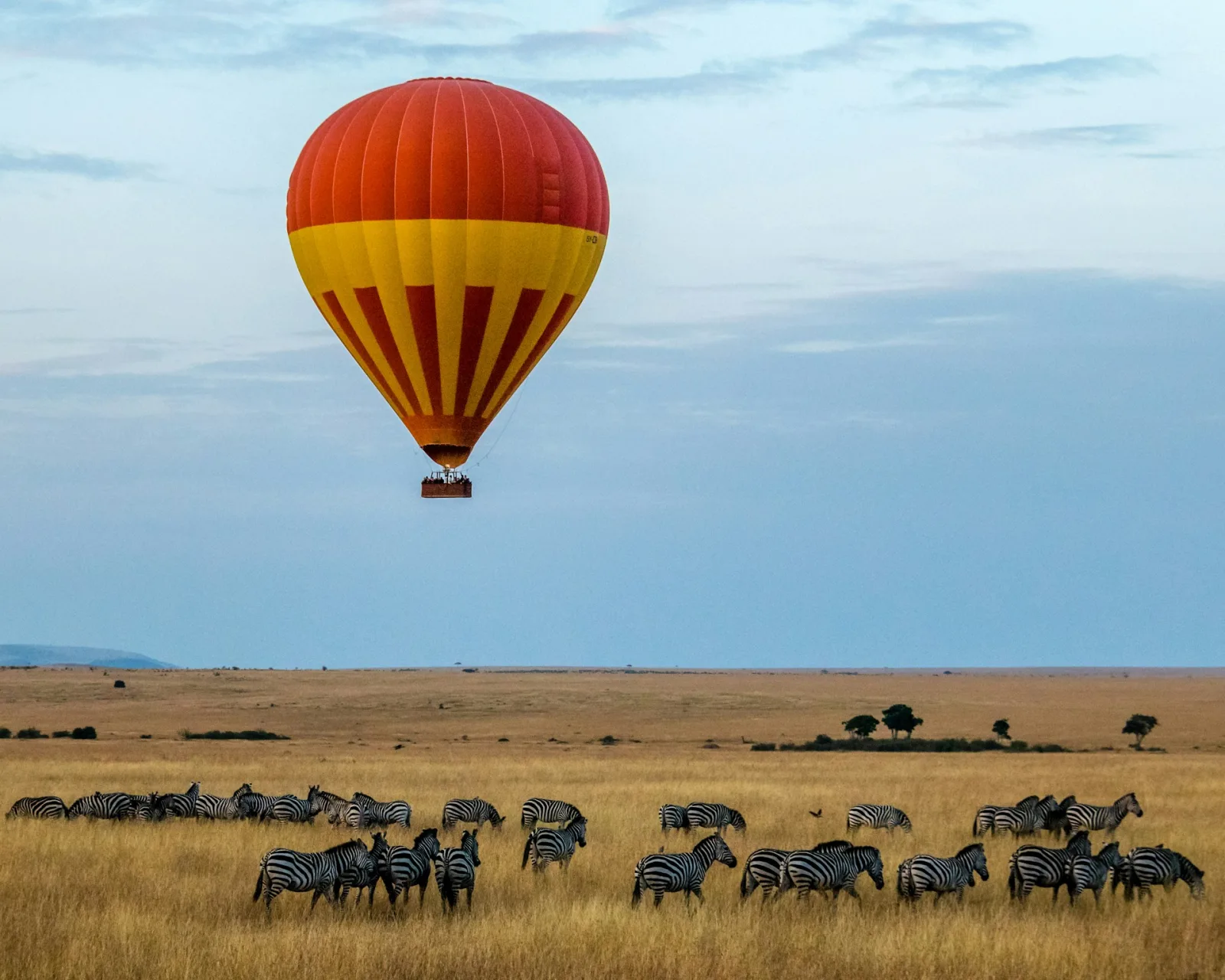
  • Day 6: Optional hot air balloon safari at dawn — afternoon game drive, fly back to Nairobi
  • Day 7: David Sheldrick Elephant Orphanage — transfer to NBO for departure

Planning Notes

  • Transport: Use 4x4 Land Cruisers with pop-up roofs for safari game drives
  • Budget option: Skip the balloon safari (saves ₹35,000) and opt for public campsites
  • Currency: Carry USD printed after 2013 — older notes are often rejected by banks
  • Language: English is widely spoken in tourism. Swahili greetings like "Jambo" are appreciated
  • Connectivity: Buy a Safaricom SIM at NBO airport for the best network coverage in parks
  • Health: Consult your doctor about anti-malarial prophylaxis before travel
  • Book ahead: For July-September (Migration), book lodges 6–8 months in advance

Want a hassle-free Kenya safari? Our packages include flights, eTA, 4x4 vehicles, and lodge stays.

Book Kenya Tour Package →
Kenya Visa for Indians — Complete Guide & Travel Essentials
Essential information for Indian travelers — from Kenya eTA requirements and time zones to plug adapters and health tips.

Tip: Ensure your USD bills are printed after the year 2013. Kenyan banks and exchange bureaus strictly reject older, smaller, or torn USD notes.

Kenya eTA for Indians — 2026 Update

Update (Jan 2024): Kenya has replaced the traditional e-Visa with the Electronic Travel Authorisation (eTA). All Indian nationals must apply online at eta.go.ke before travel. Source: Official Kenya eTA Portal.

  • eTA Requirement: Mandatory for all Indian passport holders entering Kenya
  • Cost: $34 USD (approx. ₹2,800) for a single-entry eTA
  • Where to apply: Official website only (eta.go.ke). Avoid third-party agents
  • Documents: Passport (6+ months validity), passport photo, flight itinerary, hotel booking
  • Processing time: 1 to 3 business days — apply at least a week before travel
  • Duration permitted: 90 days for tourism
  • Yellow Fever: Certificate required if transiting through a yellow fever endemic country
CLICK TO KNOW MORE ABOUT VISA DOCUMENTATION & FEES

Time Zone

Kenya follows East Africa Time (EAT), which is UTC+3 and 2.5 hours behind Indian Standard Time (IST). There is no daylight saving time.

  • East Africa Time (EAT): UTC+3
  • Kenya is 2.5 hours behind Indian Standard Time (IST)
  • When it is 12:00 PM in Nairobi, it is 2:30 PM in India
  • Kenya does not observe Daylight Saving Time
  • Business hours typically run from 8 AM to 5 PM EAT on weekdays
  • Banks operate from 9 AM to 3 PM on weekdays
  • Safari game drives usually start at 6:00 AM and 4:00 PM to avoid midday heat
  • Dinner in lodges is typically served from 7:30 PM onwards

Country Code

To call Kenya from India, use the international dialing code +254 followed by the local number.

  • International Dialing Code: +254
  • To call Kenya from India, dial: 00-254-XXX-XXXXXX
  • Nairobi area code: 020 (Landlines)
  • Mombasa area code: 041
  • Emergency services: 999 or 112 (Police/Ambulance/Fire)
  • Tourist police hotline: +254 708 696 999
  • Major telecom providers: Safaricom (best coverage), Airtel, Telkom
  • Tourist SIM cards available at Jomo Kenyatta Airport on arrival

Socket & Plugs

Kenya uses Type G electrical outlets (British standard) with 240V at 50Hz. Indian travelers will need a plug adapter.

  • Type G — 240V, 50Hz (British 3-pin rectangular)
  • Indian Type C, D, and M plugs will NOT work without an adapter
  • Standard voltage is 240V with a frequency of 50Hz
  • Universal travel adapters are essential for safari lodges
  • Most hotels and lodges provide adapters at the front desk on request
  • Power outages can occur in remote camps; lodges use backup generators
  • Most modern devices (laptops, phone chargers) support 100–240V

Indian Embassy in Kenya

The High Commission of India in Nairobi provides consular services for Indian nationals.

  • Address: Plot No. 1136, Chyulu Road, Upper Hill, Nairobi
  • Contact: +254 20 2600500 / 2600600
  • Email: [email protected]
  • Emergency (24/7): +254 722 204 333
  • Working Hours: Mon–Fri, 9:00 AM – 5:00 PM
  • Services: passport renewal, emergency certificates, assistance to Indian nationals
  • Register with the MADAD portal before travel for advisories and assistance

Kenya High Commission in India

The High Commission of Kenya in New Delhi handles diplomatic relations. eTA applications are processed entirely online.

  • High Commission New Delhi: 10, Aurangzeb Road, New Delhi 110011
  • Contact Delhi: +91-11-4175-2700
  • Email Delhi: [email protected]
  • Consulate Mumbai: 15, Jolly Bhavan II, 11th Floor, New Link Road, Andheri (W)
  • Contact Mumbai: +91-22-2673-0505
  • Note: Visa/eTA applications are NOT submitted physically at the High Commission
  • eTA Portal: eta.go.ke (Official online processing only)

Car Driving Orientation

Left-Hand Drive (Same as India)

  • Kenya follows left-hand driving, identical to India's system
  • International Driving Permit (IDP) required along with valid Indian license
  • Speed limits: 50 km/h in urban areas, 110 km/h on highways
  • Seat belts mandatory for all passengers
  • Self-driving in national parks is allowed but a guide is highly recommended
  • Car rental available in Nairobi and Mombasa
  • Safari 4x4s are usually provided with a driver-guide by lodges/tour operators
  • Road conditions vary; major highways are good, rural roads can be rough

App Based Taxi

Uber, Bolt, and DiDi are Primary Ride-Hailing Apps in Nairobi

  • Uber operates extensively in Nairobi and Mombasa
  • Bolt is a popular, often cheaper alternative with good coverage
  • DiDi has also expanded significantly in the capital
  • Payment options include credit/debit cards, cash, or M-Pesa (local mobile money)
  • Average fare from JKIA Airport to Nairobi CBD: KES 1,000–1,500
  • Traditional taxis (like Monaco) are available at airports but negotiate fare first
  • Always use registered apps for safety and transparent pricing
  • Matatus (local minibuses) are cheap but chaotic; not recommended for tourists

Need help with Kenya eTA? Our visa team assists with documentation and application.

Kenya Visa Assistance →
Kenya Culture, Language & Local Customs
Understand Kenyan Swahili, local customs, and the diverse tribal heritage to connect better with locals.

Official Languages

Swahili (Kiswahili) & English — Official Languages

  • Swahili is the national language and lingua franca, blending Bantu and Arabic roots
  • English is widely spoken in business, tourism, and urban areas
  • Over 60 indigenous languages are spoken, including Kikuyu, Luo, and Kalenjin
  • Learning basic Swahili phrases like "Jambo" (Hello) and "Asante" (Thank you) is highly appreciated
  • Sheng is a popular urban slang blending Swahili, English, and local languages
  • Translation apps work well in cities, but offline packs are needed for remote safaris

Local Vocabulary

Understanding these Swahili terms helps connect with locals and understand the culture better.

  • Jambo / Hujambo — Hello / How are you?
  • Safari — Journey / Trip (the root of the word "safari")
  • Asante / Asante sana — Thank you / Thank you very much
  • Karibu — Welcome
  • Hakuna Matata — No worries / No problems (popularized globally)
  • Mzungu — Foreigner / White person (often used playfully by kids)
  • Pole pole — Slowly, slowly (the Kenyan pace of life)
  • Simba — Lion
  • Tembo — Elephant
  • Lala salama — Sleep well / Goodnight

Toilet Signs

Public restrooms are called "Choo" in Swahili. Signs typically display "Toilets" or "Restrooms" in English with pictograms.

  • Men's toilets marked with "Men" or male symbol
  • Women's toilets marked with "Women" or female symbol
  • Toilets in major lodges, malls, and airports are modern and flushable
  • Public toilets in rural areas or campsites may be "long drop" (pit latrines)
  • Some public facilities in cities charge a small fee (KES 20–50)
  • Always carry your own toilet paper and hand sanitizer when on safari
  • Western-style seated toilets are standard in all tourist accommodations

Interesting Facts

Kenya is the cradle of humankind and the birthplace of the modern safari concept.

  • Nairobi is the only capital city in the world with a national park inside its borders
  • Kenya invented the "safari" concept as we know it today, shifting from hunting to photographic tourism
  • The Great Migration in Maasai Mara is considered the "Eighth Wonder of the World"
  • Kenya is the world's leading exporter of black tea and cut flowers (especially roses)
  • Kipchoge Keino and Eliud Kipchoge (marathon legend) put Kenya on the global athletics map
  • Kenya is home to the "Big Five": lion, leopard, rhinoceros, elephant, and Cape buffalo
  • The equator runs directly through Kenya; you can stand on the line in Nanyuki
Kenya Shopping & Markets Guide
From Maasai beadwork and Kisii soapstone to premium Kenyan coffee and tea.

Shopping Hours

Most Shops & Malls: 9:00 AM – 8:00 PM (Daily)

  • Major malls like Two Rivers, Village Market, and Sarit Centre operate 7 days a week
  • Supermarkets (Naivas, Carrefour) open from 8 AM to 9 PM or later
  • Curio shops and markets in tourist areas stay open until 6 PM
  • Maasai Market vendors move to different locations each day of the week
  • Banks operate from 9 AM to 3 PM on weekdays, and 9 AM to 11 AM on Saturdays
  • Bargaining is expected at open markets and curio shops, but not in fixed-price malls

Flea Markets

Kenya's markets offer unique souvenirs including beadwork, wood carvings, and Maasai shukas.

  • Maasai Market — The most famous market for souvenirs; moves daily (Nairobi)
  • Kazuri Beads Factory — Handcrafted ceramic beads and jewelry (Nairobi)
  • Karen Blixen Coffee Garden — Upscale crafts, art, and coffee (Nairobi)
  • Mombasa Old Town — Spices, kofia caps, and intricate wood carvings
  • Kisii Soapstone Markets — Genuine carved soapstone animals and bowls
  • Cash (Kenyan Shillings) is preferred at markets, though some accept M-Pesa
  • Start at 50% of the asking price and negotiate up; bargaining is part of the culture

Famous Brands & Goods

Shopping in Kenya offers excellent value for handcrafted goods, premium coffee, and wildlife conservation items.

  • Kenyan Coffee & Tea: World-renowned; buy from Java House, Zucchini Greengrocers, or duty-free
  • Maasai Shuka: Traditional red and blue checkered cloth worn by the Maasai people
  • Kisii Soapstone: Intricately carved animals, chess sets, and bowls from Kisii county
  • Macadamia Nuts: Premium roasted and flavored nuts (Try "Nuts About Caramel")
  • Kiondo Bags: Handwoven sisal baskets with leather trim, traditional to the Kikuyu
  • Wanji / Kitenge Fabrics: Vibrant African print fabrics used for clothing and accessories
  • Kenya Airways Pride: In-flight duty-free offers good deals on local crafts and spirits

Supermarkets

Major supermarket chains like Naivas, Carrefour, and Quickmart offer wide product ranges.

  • Naivas: Local Kenyan chain, widespread, good prices and local products
  • Carrefour: French chain (Majid Al Futtaim), premium selection in major malls
  • Quickmart: Popular for quick groceries, fuel stations, and hot food
  • Chandarana Foodplus: Upscale supermarket with excellent imported and local goods
  • Most supermarkets open from 8 AM to 9 PM; some 24-hour outlets in cities
  • Local products like biscuits (Bamba, Gold Coin), tea, and coffee are highly affordable
  • Bottled water is widely available; tap water in Nairobi is generally safe but bottled is preferred
Kenya Food & Cuisine Guide
Kenyan cuisine is a hearty mix of indigenous staples, Swahili coastal spices, and British influences.

Do: Try Nyama Choma at a local spot — it's the ultimate Kenyan social food experience.

Famous Cuisines

Kenyan food is heavily reliant on fresh, local ingredients, with maize, beans, and meat forming the core diet.

  • Nyama Choma — Roasted goat or beef, the unofficial national dish, cooked over open coals
  • Ugali — Dense maize flour porridge, the staple carbohydrate eaten with stews
  • Pilau — Swahili spiced rice cooked with meat, potatoes, and aromatic spices (coastal staple)
  • Chapati — Unleavened flatbread, heavily influenced by Indian cuisine, eaten with almost everything
  • Sukuma Wiki — Collard greens or kale sautéed with tomatoes and onions ("push the week")
  • Kachumbari — Fresh tomato and onion salad with chili and coriander, served with Nyama Choma
  • Mukimo — Mashed potatoes, peas, corn, and pumpkin leaves (Kikuyu traditional dish)
  • Mandazi — Sweet, cardamom-spiced fried dough, perfect with Kenyan tea

Famous Fruits

Kenya's equatorial climate and rich volcanic soil produce some of the sweetest tropical fruits in Africa.

  • Passion Fruit (Matunda ya Shida): Extremely popular, used in juices and eaten raw
  • Mangoes (Maembe): Abundant in coastal regions and eastern Kenya during the rainy season
  • Pineapples (Mananasi): Thika region produces massive, incredibly sweet pineapples
  • Avocados (Parachichi): Huge, creamy avocados are a breakfast staple in hotels
  • Papaya (Papai): Eaten fresh at breakfast or blended into smoothies
  • Tree Tomatoes (Tamatillo): Tart, plum-like fruit often eaten with sugar or salt
  • Coconuts (Nazi): Fresh coconut water and flesh are ubiquitous on the coast

National Dish — Nyama Choma

Nyama Choma translates to "roasted meat" and is the centerpiece of Kenyan social gatherings.

  • Nyama Choma is more than food — it is a weekend social ritual and celebration
  • Traditionally made with goat meat (mbuzi), but beef is also very common
  • The meat is seasoned simply with salt and roasted slowly over an open charcoal pit
  • Served with Kachumbari (tomato/onion salad) and Ugali or Mukimo
  • Eaten with the hands, tearing the meat from the bone
  • Best enjoyed at local "hotels" (Kenyan slang for local restaurants) or dedicated Nyama Choma spots
  • Famous spots in Nairobi: Carnivore Restaurant, K1, and various local joints in Kileleshwa

Avg Cost Of Food

Eating out in Kenya is very affordable. Budget travelers can eat well for KES 500–1,000 per meal at local spots.

  • Street Food / Mandazi: KES 20–50 each
  • Local Hotel (Ugali + Sukuma Wiki): KES 200–400
  • Mid-range Restaurant (Chapati + Stew): KES 600–1,200
  • Nyama Choma (per kg of meat): KES 1,200–1,800
  • Upscale Restaurant (Nairobi): KES 2,500–4,000 per person
  • Fine Dining / Carnivore: KES 4,000–6,000 per person
  • Coffee / Chai (Tea): KES 100–250
  • Tusker Beer (Local Lager): KES 300–500

Tipping: 10% is customary in restaurants if a service charge isn't already included. Safari guides expect a tip of $10-$20 per day.

Kenya Weather & Packing Tips
Kenya's climate varies from hot coastal beaches to cool highlands. Pack strategically for your safari and beach combo.

Tip: Pack neutral colors for safari (khaki, olive, brown). Avoid bright colors, black (attracts tsetse flies), and white (gets dirty instantly).

Weather

Kenya has diverse microclimates due to its varied topography, from sea level to high-altitude plateaus.

  • Nairobi (Highlands): Mild year-round. Day 20–25°C, Night 10–14°C. Can be chilly and rainy.
  • Maasai Mara / Rift Valley: Warm days (25–28°C), very cold early mornings (10–12°C) in 4x4s.
  • Coast (Mombasa/Diani): Hot and humid year-round. 28–32°C with high humidity and sea breeze.
  • Northern Kenya (Samburu): Arid, hot, and dry. Daytime temperatures can exceed 35°C.
  • Long Rains: April to May (heavy, continuous rain, some camps close).
  • Short Rains: November to December (brief afternoon showers, wildlife is lush).
  • Dry Seasons: June–October and January–February (best for wildlife viewing).

Clothes To Wear

Safari dressing is all about layers and practicality. Coastal dressing is light and breezy.

For Safari (Mara, Amboseli, Nakuru):

  • Neutral colors: Khaki, olive green, brown, beige (Avoid black, white, bright blue)
  • Warm fleece or down jacket for early morning game drives (it gets very cold)
  • Lightweight, long-sleeved cotton shirts for sun and insect protection
  • Convertible zip-off trousers are highly practical
  • Sturdy, comfortable closed-toe shoes or hiking boots
  • Wide-brimmed hat with a chin strap (it gets windy in open 4x4s)
  • High-SPF sunscreen and polarized sunglasses

For Nairobi & Coastal Areas:

  • Smart-casual attire for Nairobi restaurants and hotels
  • Light, breathable clothing (cotton, linen) for the coast
  • Swimwear, flip-flops, and a light cover-up for Diani/Mombasa beaches
  • Modest clothing is required when visiting mosques or conservative coastal towns
Kenya Heritage & Cultural Highlights
UNESCO sites, national symbols, and cultural milestones that capture Kenya's rich identity.

UNESCO World Heritage Sites

Kenya boasts 7 UNESCO World Heritage Sites, ranging from ancient fossil sites to vibrant coral reefs.

  • Lamu Old Town (2001) — Oldest and best-preserved Swahili settlement in East Africa
  • Sacred Mijikenda Kaya Forests (2008) — 11 forest sites sacred to the Mijikenda people
  • Fort Jesus, Mombasa (2011) — 16th-century Portuguese military fort
  • Mount Kenya National Park (1997) — Africa's second-highest peak, unique alpine flora
  • Lake Turkana National Parks (1997) — Cradle of mankind, massive desert lake
  • Kenya Lake System in the Great Rift Valley (2011) — Lakes Bogoria, Nakuru, Elementaita (flamingos)
  • Thimlich Ohinga Archaeological Site (2018) — Ancient dry-stone walled settlements

National Symbols

The Kenyan flag and symbols reflect the country's natural wealth, struggle for independence, and unity.

  • National Animal: Lion (featured on the coat of arms holding a spear)
  • National Bird: Lilac-breasted Roller (stunning 8-colored plumage)
  • National Tree: Olive Tree (Olea africana) and Acacia
  • National Sport: Athletics (Track and Field, specifically long-distance running)
  • National Drink: Chai (Sweet, milky tea) and Tusker Lager
  • National Dish: Nyama Choma and Ugali
  • Flag Colors: Black (people), Red (blood shed for independence), Green (agriculture), White (peace)

Films Shot in Kenya

Kenya's dramatic landscapes have served as the backdrop for numerous Hollywood blockbusters and classic documentaries.

  • Out of Africa (1985) — Classic Oscar-winner filmed in the Great Rift Valley and Karen
  • The Lion King (1994) — Heavily inspired by Hell's Gate National Park and Maasai Mara
  • Sahara (2005) — Action movie starring Matthew McConaughey, filmed around Lake Turkana
  • Nowhere in Africa (2001) — Oscar-winning film set in Kenya during WWII
  • The Constant Gardener (2005) — Thriller shot in Kibera and Loiyangalani
  • Born Free (1966) — Classic film about Elsa the lioness, shot in Meru National Park

Festivals & Events

Kenya hosts vibrant festivals celebrating culture, sports, and wildlife throughout the year.

  • Lamu Cultural Festival — November: Dhow racing, donkey races, Swahili poetry
  • Maasai Mara Marathon — September: Wildlife conservation marathon in the savanna
  • Mombasa Carnival — November: Huge street parade with floats, music, and dancers
  • Safari Rally — July: Part of the World Rally Championship (WRC), extreme off-road
  • Twaweza Festival — Arts and culture festival showcasing East African talent

Kenya has a vibrant cultural calendar with numerous local community events and traditional ceremonies.

Souvenirs

Best places to shop for souvenirs: Maasai Market, Village Market, and Nairobi airport duty-free.

  • Maasai Beadwork: Intricate necklaces, bracelets, and belts made by Maasai women
  • Kisii Soapstone: Carved animals, chess sets, and bowls (buy directly from artisans if possible)
  • Kenyan Coffee & Tea: Premium roasted beans and tea leaves
  • Macadamia Nuts: Roasted, honey-glazed, or chocolate-covered
  • Maasai Shuka: Authentic red and blue woven blankets
  • Wood Carvings: Ebony and mahogany animal sculptures (check export regulations for rare woods)
  • Tusker Beer Merchandise: Branded glasses, t-shirts, and openers
Notable Highlights for Indian Travelers
From conservation pioneers to athletic legends, discover what makes Kenya unique on the global stage.

Famous People

  • Barack Obama Sr. (1936–1982) — Kenyan economist, father of the 44th US President
  • Wangari Maathai (1940–2011) — First African woman to win the Nobel Peace Prize (Green Belt Movement)
  • Eliud Kipchoge (1984–) — Marathon legend, first human to break the 2-hour marathon barrier
  • Richard Leakey (1944–2022) — Paleoanthropologist and conservationist
  • Lupita Nyong'o (1983–) — Oscar-winning actress (12 Years a Slave, Black Panther)
  • Jomo Kenyatta (1893–1978) — First President of Kenya, father of the nation
  • David Sheldrick (1919–1977) — Pioneer conservationist, founder of the elephant orphanage

Famous Inventions & Firsts

Kenya is a hub for innovation, particularly in mobile technology and wildlife conservation.

  • M-Pesa: Revolutionized mobile money globally; Kenya is the world leader in cashless mobile transactions
  • Tusker Beer: Brewed in Nairobi since 1922, it's an iconic African brand
  • Kenyatta International Convention Centre (KICC): Architectural marvel and symbol of Nairobi
  • Plastic Bag Ban: Kenya implemented one of the world's strictest plastic bag bans in 2017
  • Community Conservancies: Pioneered the model of community-owned wildlife conservancies bordering national parks

Kenya is known as the "Silicon Savannah" due to its booming tech startup ecosystem in Nairobi.

Conservation Highlights

  • Kenya was the first country in the world to ban rhino horn and ivory trade (1970s)
  • The David Sheldrick Wildlife Trust has orphaned and rehabilitated over 300 elephants
  • Ol Pejeta Conservancy is home to the last two northern white rhinos on Earth (Najin and Fatu)
  • Kenya leads Africa in community-based conservation, giving local tribes a stake in tourism
  • The annual "Great Migration" is strictly protected by cross-border agreements with Tanzania
  • Kenya Wildlife Service (KWS) is highly respected globally for anti-poaching efforts

Is Kenya expensive for Indians? A 7-day Kenya safari costs ₹1.2–2.5 lakh including flights, eTA (₹2,800), lodges, and park fees. It offers great value compared to Europe.

Do Indians need a visa? Yes, Indian nationals require an Electronic Travel Authorisation (eTA) applied for online at eta.go.ke before travel. It costs $34 USD.

Flight duration? Direct flights from Mumbai/Delhi to Nairobi take 6 to 8 hours. Connecting flights take 10 to 14 hours.

Is Kenya safe for Indian tourists? Yes, established safari circuits and coastal resorts are very safe. Exercise standard precautions in Nairobi and avoid walking at night.

Currency? Kenyan Shilling (KES). Carry USD (printed after 2013) to exchange locally. Cards are accepted in cities and major lodges. UPI is not available.

Frequently Asked Questions — Kenya Travel for Indians
Quick, honest answers to the most common Kenya travel questions from Indian travellers
1Do Indians need a visa for Kenya? Has anything changed recently?
Yes, Indians need travel authorization, but the system changed in January 2024. Kenya replaced the traditional e-Visa with the Electronic Travel Authorisation (eTA). You must apply online at the official portal (eta.go.ke) before travel. The cost is $34 USD (approx. ₹2,800) for a single-entry eTA.
2Is Kenya expensive for Indian tourists?
A 7-day Kenya safari from India costs approximately ₹1.2 lakh to ₹2.5 lakh per person. This includes flights (₹45K–₹85K), eTA (₹2,800), 4x4 safari transport, park fees, and lodge accommodation. While luxury lodges carry a premium, the overall package is often cheaper than a comparable European holiday.
3How long is the flight from India to Kenya?
Direct flights from Mumbai or Delhi to Nairobi (NBO) take about 6 to 8 hours, operated by Kenya Airways. If you choose connecting flights via Dubai, Doha, or Addis Ababa, the total travel time is usually 10 to 14 hours. Direct flights are highly recommended to save time and avoid transit visa hassles.
4What is the best time to visit Kenya from India?
July to October is the absolute best time to witness the Great Migration in the Maasai Mara and enjoy dry, cool weather. January to February is also excellent for wildlife viewing and the calving season. The long rains from April to May are best avoided as some camps close and roads become impassable.
5Is Kenya safe for Indian tourists?
Kenya is generally very safe for tourists, particularly in established safari circuits (Maasai Mara, Amboseli) and coastal resorts (Diani, Watamu). In Nairobi, exercise standard big-city precautions: use Uber/Bolt, avoid walking at night, and keep valuables hidden. Indian group travelers consistently report warm, safe, and welcoming experiences.
6Do Indians need a transit visa for Kenya flights?
If you are transiting through Jomo Kenyatta International Airport (NBO) and staying within the international transit area for less than 72 hours, you do not need a transit visa or eTA. However, if you plan to leave the airport to visit Nairobi or stay in a hotel outside the airport, you must apply for an eTA.
7What is the Kenya eTA fee for Indians?
The standard single-entry eTA for Indian passport holders costs $34 USD (approximately ₹2,800). This fee is paid online via credit or debit card during the application process on the official eta.go.ke portal. Beware of third-party agency sites that charge hidden processing fees.
8What plug type is used in Kenya?
Kenya uses Type G electrical outlets (the British 3-pin rectangular plug) with 240V at 50Hz. Indian plugs (Type C, D, or M) will not work without a universal travel adapter. Most safari lodges provide adapters on request, but it is best to bring your own.
9Can I use Indian Rupee or UPI in Kenya?
No. Indian Rupees are not accepted anywhere in Kenya. The local currency is the Kenyan Shilling (KES). UPI is not available. The best practice is to carry crisp USD bills (printed after the year 2013) to exchange at official bureaus in Nairobi or at your lodge. International credit cards are widely accepted in cities and major hotels.
10What is the national dish of Kenya?
Nyama Choma (roasted goat or beef) and Ugali (dense maize flour porridge) are considered the national dishes. Nyama Choma is a social event, often served with Kachumbari (fresh tomato and onion salad). Chapati and Pilau (spiced rice) are also incredibly popular, reflecting strong Indian culinary influences on the coast.
11What is the time difference between India and Kenya?
Kenya is 2.5 hours behind Indian Standard Time (IST). Kenya follows East Africa Time (EAT, UTC+3) and does not observe daylight saving time. When it is 12:00 PM (noon) in Nairobi, it is 2:30 PM in India. Jet lag is minimal due to the short time difference and direct flight options.
12Can vegetarian Indians find food in Kenya?
Absolutely. Due to the large Indian diaspora in Kenya, vegetarian food is very common. Safaris lodges are accustomed to international dietary requirements and will provide excellent veg meals (dal, rice, chapati, fresh vegetables, paneer) if informed in advance. In cities, you can easily find Indian restaurants and local vegetarian staples like Ugali, Sukuma Wiki, and Mandazi.
13Is a yellow fever vaccination required for Kenya?
A Yellow Fever vaccination certificate is mandatory if you are traveling from or transiting for more than 12 hours through a country with a risk of yellow fever transmission (such as Ethiopia, Uganda, or Tanzania). If you fly directly from India or transit via the Middle East (Dubai/Doha), it is not strictly required, but highly recommended for your own safety.
14Which is better for first-time visitors — Maasai Mara or Amboseli?
A first Kenya trip should ideally include both. Amboseli offers iconic, close-up views of Mount Kilimanjaro and massive elephant herds on open plains. Maasai Mara offers the highest density of predators (lions, cheetahs) and is the stage for the Great Migration. If you only have time for one, Maasai Mara offers the quintessential African safari experience.
15Does Destination To Plan offer group tour packages to Kenya?
Yes. Destination To Plan offers customized group and family safari packages to Kenya from India — including return flights, eTA assistance, 4x4 Land Cruiser game drives, luxury tented camps/lodges, and all park fees. Contact us via the inquiry form below or visit our Kenya tour packages page for details and pricing.
Have more questions? Our Kenya safari experts can help plan your perfect wildlife adventure.

Talk to a Kenya Travel Expert →

Note: Information provided is subject to change. Verify eTA requirements, exchange rates, and travel advisories before your trip. Park fees and lodge rates are approximate and may vary based on season (peak vs. green season) and inflation. Kenya experiences seasonal currency fluctuations.

About This Kenya Travel Guide

This Kenya travel guide covers everything Indian travelers need from eTA requirements and safari logistics to local food, weather, and the Great Migration. Researched, regularly updated, and trusted by group tour planners and independent travelers.

Expert Curated Content

Every section — from Kenya eTA rules to Maasai Mara safari logistics — is verified by travel professionals with extensive East African safari experience.

Regularly Updated Information

Kenya travel costs, eTA rules, and park fees are reviewed and refreshed to reflect current conditions, including the January 2024 eTA system update.

Trusted by Indian Travelers

Used by group tour organizers, corporate travel planners, and independent travelers from India researching Kenya safaris, migration itineraries, and beach holidays.

Complete Kenya Resource

One guide covering eTA requirements, safari costs, flights, itineraries, food, culture, and wildlife — all with India-specific context and 2026 accuracy.

More Travel Guides

Explore Other Destinations

Plan Your Kenya Safari from India

Fill out the enquiry form below and our travel experts will help you plan your Kenya tour — eTA, flights, safari lodges, and game drives.

Get assistance with eTA processing, flight bookings, Maasai Mara and Amboseli safaris, and complete Kenya packages.

Enquire About This Package