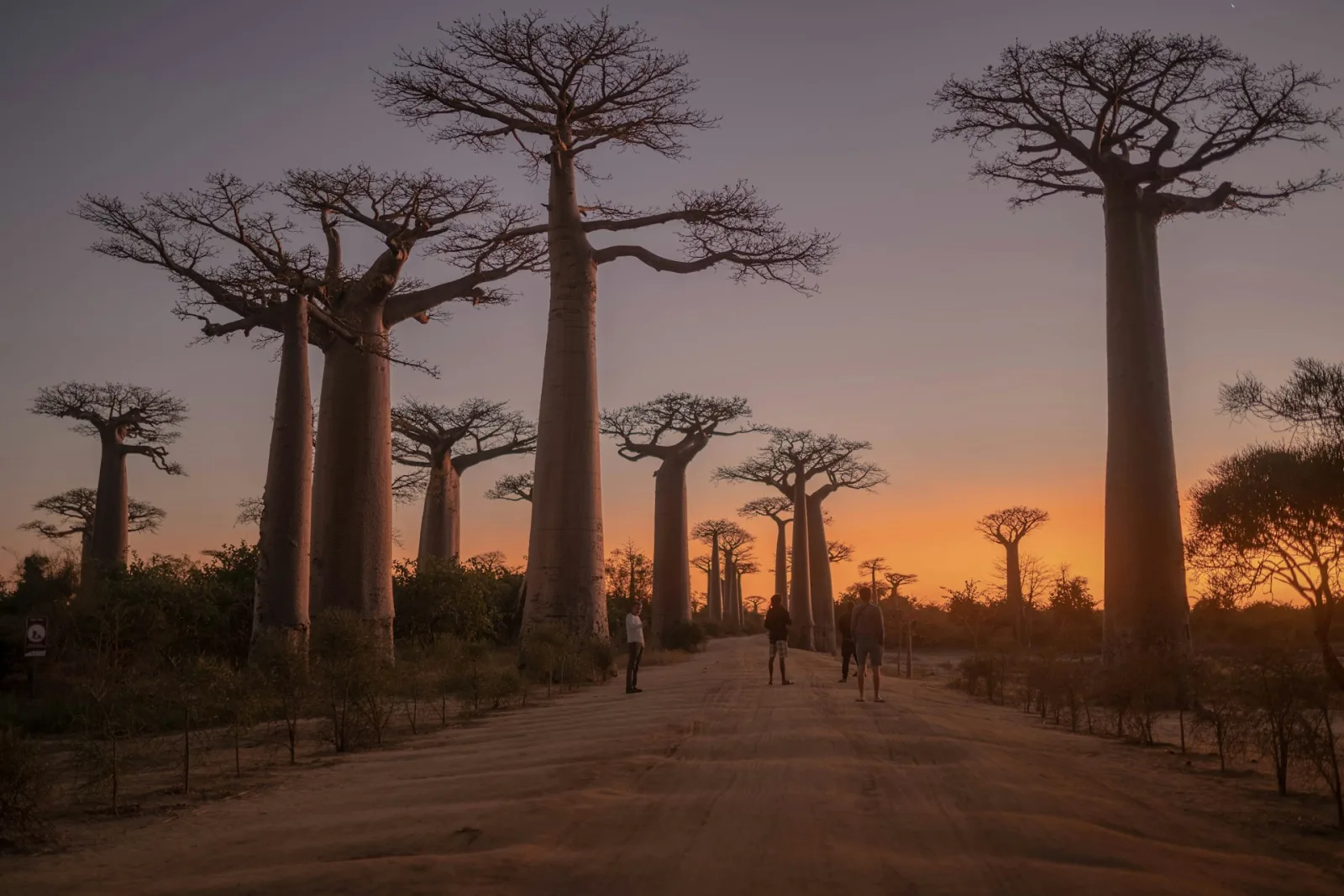
Aerial view of the Avenue of the Baobabs at sunset in Madagascar

Madagascar Travel Guide
for Indian Travelers

Visa, cost, itinerary & tips — your complete guide to planning a trip to Madagascar from India in 2026.

Updated for 2026 Travelers
Written by Vishal Narayan — Africa Travel Specialist
Reviewed by Veena Rathore · Africa Travel Reviewer
Last updated after reviewing:
  • Madagascar e-Visa and Visa on Arrival updates for Indian nationals (2025)
  • Ivato International Airport (TNR) domestic flight route changes to Nosy Be
  • Indian traveler advisories for Antananarivo and national parks 2026

Last updated: April 2026

Madagascar Trip Cost from India (Detailed Breakdown)
Realistic cost breakdown for flights, visa, eco-lodges, food, and total budget for 2026

Cost Breakdown 2026

  • Return Flights: ₹80,000 – ₹1,20,000
  • Visa Fee: ~$35–$40 USD (Visa on Arrival or e-Visa)
  • Hotels/Eco-lodges (per night): ₹3,500 – ₹10,000
  • Food (per day): ₹2,000 – ₹5,000
  • Local Transport & Domestic Flights: ₹15,000 – ₹30,000 total
  • Activities & Park Fees: ₹8,000 – ₹15,000 total
  • Travel Insurance: ₹1,500 – ₹3,000
  • Total (7–10 days): ₹1.2L – ₹2.5L per person

Madagascar offers excellent value for wildlife and beach experiences compared to other Indian Ocean destinations. Domestic flights are the biggest variable cost.

Best Departure Cities

  • Delhi (DEL) — Best connectivity via Dubai or Addis Ababa
  • Mumbai (BOM) — Good connections via Dubai or Nairobi
  • Bangalore (BLR) — Limited options, usually via Middle East
  • Chennai (MAA) — Options via Nairobi or Middle East hubs

Delhi and Mumbai offer the most reliable flight connectivity to Antananarivo (TNR) with minimal layover times.

Ready to plan your Madagascar eco-adventure? Let us handle flights, visa, eco-lodges, and guided park tours.

View Madagascar Tour Packages →
Flight Routes from India to Madagascar
Flights from India to Antananarivo take 14–20 hours with one layover. Here are the most popular routes.

Delhi to Antananarivo

  • Route 1: DEL → Dubai → Antananarivo (Emirates)
  • Route 2: DEL → Addis Ababa → Antananarivo (Ethiopian Airlines)
  • Route 3: DEL → Nairobi → Antananarivo (Kenya Airways)
  • Duration: 14–18 hours
  • Price Range: ₹85,000 – ₹1,20,000

Mumbai to Antananarivo

  • Route 1: BOM → Dubai → Antananarivo (Emirates)
  • Route 2: BOM → Addis Ababa → Antananarivo (Ethiopian Airlines)
  • Route 3: BOM → Nairobi → Antananarivo (Kenya Airways)
  • Duration: 15–20 hours
  • Price Range: ₹80,000 – ₹1,15,000

Note: Ivato International Airport (TNR) is the main international gateway. Domestic flights to Nosy Be or Morondava operate from TNR. Check Africa travel guides for more regional information.

Best Time to Visit Madagascar from India
Madagascar can be visited year-round, but the dry season offers the best wildlife viewing and road conditions.
Month Madagascar Season Antananarivo Nosy Be Andasibe India Travel Note
JanWet SeasonWarm, heavy rainHot, humid, cyclones possibleLush, but muddy trailsIndia school holidays — avoid due to rain
FebWet SeasonWarm, heavy rainHot, humid, cyclones possibleLush, but muddy trailsHigh cyclone risk, travel not recommended
MarTransitionWarm, rain decreasingWarm, rain decreasingGood, trails improvingModerate season, fewer crowds
AprDry Season ✓Mild, pleasant 15–25°CWarm, sunny, idealExcellent, clear trailsGood post-Holi window, ideal start of dry season
MayDry Season ✓Cooler, dry 13–23°CWarm, sunny, clear watersExcellent lemur sightingsGreat shoulder season, good flight deals
JunDry Season ✓✓Cool, dry 12–22°CPleasant, whale shark season startsExcellent, cool morningsPeak Indian travel month — book 4 months ahead
JulDry Season ✓✓Cool, dry 11–21°CPleasant, whale shark seasonExcellent, clear skiesIndia school summer hols — peak demand
AugDry Season ✓Cool, dry 12–22°CWarm, sunny, ideal beach weatherExcellent, baby lemurs visibleGood post-monsoon window in India
SepDry Season ✓Warming, dry 14–24°CWarm, sunny, clear watersExcellent, spring bloomsGood pre-festive window
OctTransition ✓Warm, dry 16–26°CHot, sunny, great divingGood, warming upExcellent month — ideal weather everywhere
NovTransitionWarm, rain increasingHot, humid, rain startingGood, but rain possibleModerate season, lower prices
DecWet SeasonWarm, heavy rainHot, humid, cyclones possibleLush, but muddy trailsIndia school holidays — avoid due to rain
7-Day Madagascar Itinerary for Indian Travelers
A perfect one-week Madagascar itinerary covering Antananarivo, Andasibe rainforest, and Nosy Be beaches.

Day-by-Day Plan

  • Day 1: Arrive in Antananarivo (TNR) — rest, explore Rova of Antananarivo
  • Day 2: Lemurs' Park and Tsimbazaza Botanical Gardens in Tana
  • Day 3: Drive to Andasibe-Mantadia National Park — night walk for nocturnal lemurs
  • Day 4: Morning Indri lemur tracking, fly to Nosy Be in the afternoon
  • Day 5: Nosy Be island hopping — Nosy Komba (lemurs) and Nosy Tanikely (snorkeling)
  • Day 6: Lokobe Special Reserve or Mount Passot sunset, relax on beach
  • Day 7: Fly back to Antananarivo, depart for India

Planning Notes

  • Domestic flights: Book Tsaradia (Air Madagascar) flights to Nosy Be well in advance; schedules can change.
  • Budget option: Skip Nosy Be — focus on Antananarivo, Andasibe, and Isalo National Park for a land-based adventure.
  • Currency: Carry USD or EUR cash — exchange at banks in Antananarivo for the best Malagasy Ariary rates.
  • Language: French and Malagasy are official. English is limited outside major hotels. Download offline translation apps.
  • Connectivity: Telma or Airtel SIM cards are available at Ivato Airport. Buy a local data package.
  • Health: Malaria prophylaxis is highly recommended. Drink only bottled or purified water.
  • Book ahead: For June–August travel, book domestic flights and eco-lodges 4–6 months in advance.

Want a hassle-free Madagascar eco-adventure? Our packages include flights, eco-lodges, transfers, and guided park tours.

Book Madagascar Tour Package →
Madagascar Visa for Indians — Complete Guide & Travel Essentials
Essential information for Indian travelers — from Madagascar visa requirements and time zones to plug adapters and local transport.

Tip: Carry USD or EUR cash in crisp, new bills — exchange rates are significantly better than using cards in Madagascar.

Madagascar Visa for Indians — 2026 Update

Update (2025): Indian nationals are eligible for a 30-day Visa on Arrival at Ivato International Airport or can apply for an e-Visa online prior to travel. The fee is approximately $35–$40 USD. Source: Official Madagascar e-Visa Portal.

  • Visa on Arrival: Available at TNR airport for 30 days. Payable in USD, EUR, or by credit card.
  • e-Visa (Recommended): Apply at least 7-10 days before departure via evisa.mg to avoid airport queues.
  • Documents: Valid passport (6+ months validity), return flight tickets, hotel bookings, and proof of sufficient funds.
  • Processing time (e-Visa): 3–5 business days.
  • Duration permitted: 30 days for tourism (extendable locally if needed).
  • Extensions: Can be extended at the Immigration Office in Antananarivo for an additional fee.
CLICK TO KNOW MORE ABOUT VISA DOCUMENTATION & FEES

Time Zone

Madagascar follows East Africa Time (EAT), which is UTC+3 and 2.5 hours behind Indian Standard Time (IST). There is no daylight saving time.

  • Madagascar Time (EAT): UTC+3
  • Madagascar is 2.5 hours behind Indian Standard Time (IST)
  • When it is 12:00 PM in Madagascar, it is 2:30 PM in India
  • Madagascar does not observe Daylight Saving Time
  • Business hours typically run from 8 AM to 5 PM EAT on weekdays
  • Banks operate from 8 AM to 3 PM on weekdays
  • Most shops open from 8 AM to 6 PM daily
  • Restaurants serve lunch from 12–2 PM and dinner from 7 PM onwards

Country Code

To call Madagascar from India, use the international dialing code +261 followed by the area code and local number.

  • International Dialing Code: +261
  • To call Madagascar from India, dial: 00-261-XX-XXXX-XXX
  • Antananarivo area code: 20
  • Nosy Be area code: 32
  • Emergency services: 17 (Police), 18 (Fire), 124 (Medical)
  • Major telecom providers: Telma, Airtel Madagascar, Orange Madagascar
  • Tourist SIM cards available at Ivato Airport on arrival
  • Free Wi-Fi available in most hotels and cafes in Antananarivo and Nosy Be

Socket & Plugs

Madagascar uses Type C, D, E, and J electrical outlets with 220V at 50Hz. Indian travelers will benefit from a universal plug adapter.

  • Type C, D, E, J — 220V, 50Hz
  • Indian Type C (2-pin round) and Type D (3-pin round) plugs often work directly ✅
  • However, a universal travel adapter is highly recommended for compatibility
  • Standard voltage is 220V with a frequency of 50Hz
  • Power outages can occur in rural areas; carry a power bank
  • Most hotels provide adapters at the front desk on request
  • Most modern devices (laptops, phone chargers) support 100–240V

Indian Embassy in Madagascar

The Embassy of India in Antananarivo provides consular services for Indian nationals.

  • Address: 45, Rue de l'Ambassade de l'Inde, Antananarivo 101
  • Contact: +261 20 22 232 45 / 20 22 232 46
  • Email: [email protected]
  • Emergency (24/7): +261 34 05 123 45
  • Working Hours: Mon–Fri, 9:00 AM – 5:00 PM
  • Services: passport renewal, emergency certificates, assistance to Indian nationals
  • Register with MADAD portal before travel for advisories and assistance

Madagascar Embassy in India

The Embassy of Madagascar in New Delhi handles diplomatic relations and visa inquiries for Indian travelers.

  • Embassy New Delhi: E-3/6, Vasant Vihar, New Delhi 110057
  • Contact Delhi: +91-11-4126-8800
  • Email: [email protected]
  • Working Hours: Mon–Fri, 9:00 AM – 5:00 PM
  • Note: Most tourist visas are now processed via the e-Visa portal or on arrival.

Car Driving Orientation

Right-Hand Drive (Opposite to India)

  • Madagascar follows right-hand driving, opposite to India's left-hand system
  • International Driving Permit (IDP) required along with valid home country license
  • Speed limits: 50 km/h in urban areas, 90 km/h on paved highways
  • Road conditions outside Antananarivo can be poor; 4x4 vehicles are recommended
  • Self-driving is not recommended for first-time visitors; hire a local driver-guide
  • Seat belts mandatory for all passengers
  • Driving under influence strictly prohibited

Local Transport & Taxis

Registered Taxis and Hotel Transfers are Primary Options

  • Global apps like Uber or Cabify are not widely available in Madagascar
  • Use hotel-arranged taxis or registered "Taxy" services in Antananarivo
  • "Taxy Be" are shared minibuses — very cheap but crowded and slow
  • For intercity travel, domestic flights (Tsaradia) or private 4x4 transfers are safest
  • Always agree on taxi fares before starting the journey
  • Rickshaws (pousse-pousse) are available for short distances in smaller towns
  • Renting a 4x4 with a local driver-guide is the most recommended transport method

Need help with Madagascar visa or itinerary planning? Our Africa travel experts can assist.

Madagascar Visa Assistance →
Madagascar Culture, Language & Local Customs
Understand Malagasy and French, local customs, and cultural norms to connect better with locals.

Official Language

Malagasy and French — Official Languages

  • Malagasy is the national language, with French widely used in business, government, and tourism
  • English is spoken in major hotels and by tour guides, but limited elsewhere
  • Learning basic Malagasy phrases is highly appreciated by locals
  • Regional dialects exist, but the Merina dialect (Antananarivo) is the standard
  • Translation apps work well in urban areas with internet connectivity
  • Communication is often indirect and polite; respect and formality are valued

Local Vocabulary

Understanding these basic Malagasy terms helps connect with locals and shows cultural respect.

  • Salama — Hello
  • Misaotra — Thank you
  • Veloma — Goodbye
  • Azafady — Please / Excuse me
  • Eny — Yes
  • Tsy misy — No / There is none
  • Vazaha — Foreigner / Tourist (not necessarily derogatory, just descriptive)
  • Fady — Taboo or forbidden (very important in local culture)
  • Famadihana — "Turning of the bones" (traditional ancestral reburial ceremony)

Toilet Signs

Public restrooms are called "Toilettes" (French) or "Trano fidiovana" (Malagasy). Signs typically display pictograms.

  • Men's toilets marked with "Hommes" or male symbol
  • Women's toilets marked with "Femmes" or female symbol
  • Public toilets in Antananarivo are basic; carry your own toilet paper and hand sanitizer
  • Some public facilities charge a small fee (500–1000 MGA)
  • Hotels, restaurants, and eco-lodges have clean, Western-style seated toilets
  • Always carry tissues as rural facilities may not have toilet paper

Interesting Facts

Madagascar is the world's fourth-largest island and is home to flora and fauna found nowhere else on Earth.

  • Over 90% of Madagascar's wildlife is endemic, including over 100 species of lemurs
  • Madagascar is the world's largest producer of natural vanilla
  • The island separated from the African continent about 160 million years ago
  • There are six species of baobab trees in Madagascar, five of which are endemic
  • Rice is the staple food, and "Havoana ny vary?" (Have you eaten rice?) is a common greeting
  • The Malagasy people are of mixed African and Southeast Asian (Indonesian) descent
Madagascar Shopping & Markets Guide
From vanilla and gemstones to traditional raffia crafts and local markets.

Shopping Hours

Most Shops: 8:00 AM – 6:00 PM (Weekdays)

  • Markets operate from early morning (6 AM) to late afternoon (5 PM)
  • Sunday markets are vibrant but many formal shops remain closed
  • Small boutiques may close for a midday break (12–2 PM) in smaller towns
  • Supermarkets in Antananarivo open from 8 AM to 8 PM
  • Best shopping season: Dry season (April–October) when tourist markets are fully stocked
  • Tax-free shopping is not widely formalized; keep receipts for high-value items

Flea Markets & Artisan Markets

Madagascar's markets offer unique souvenirs including vanilla, gemstones, wood carvings, and raffia crafts.

  • Zoma Market (Antananarivo) — Historic Friday market (now spread across the week), textiles, spices
  • La Digue Craft Market (Antananarivo) — High-quality wooden sculptures, paintings, and jewelry
  • Hell-Ville Market (Nosy Be) — Fresh spices, vanilla pods, ylang-ylang products, and local crafts
  • Morondava Market — Near the Avenue of the Baobabs, known for woven baskets and local produce
  • Cash (Malagasy Ariary) is preferred at markets; bargaining is expected and part of the culture
  • Buy vanilla only from reputable vendors to ensure it is genuine and properly cured

Famous Products

Shopping for local products offers excellent value and supports local artisans.

  • Vanilla: World's finest natural vanilla beans (buy sealed, certified pods)
  • Raffia Crafts: Bags, hats, and table mats woven from native palm fibers
  • Gemstones: Sapphires, rubies, and tourmalines (buy only from certified dealers)
  • Wood Carvings: Intricate sculptures of lemurs, baobabs, and zebu cattle
  • Essential Oils: Ylang-ylang, ravintsara, and geranium oils (Nosy Be is famous for these)
  • Spices: Cloves, black pepper, and cinnamon at a fraction of global prices
  • Lamba: Traditional Malagasy woven cloth, beautiful as a scarf or wall hanging

Supermarkets

Major supermarket chains in Antananarivo offer a mix of local and imported goods.

  • Supermaki — Popular local chain with good selection of fresh produce and basics
  • Leader Price — Offers a range of groceries, including some imported items
  • Shoprite — South African chain with a wide variety of goods (check current operational status)
  • Local markets are often cheaper and fresher for fruits, vegetables, and spices
  • Bottled water is mandatory for drinking; tap water is not safe for consumption
Madagascar Food & Cuisine Guide
Malagasy cuisine is a unique blend of Southeast Asian, African, and French influences, centered around rice.

Do: Try Romazava and fresh tropical fruits — Malagasy cuisine is a highlight of the trip.

Famous Cuisines

Malagasy cuisine is heavily centered around rice (vary), accompanied by a stew or grilled meat (laoka).

  • Romazava: The national dish — a light meat stew (beef, pork, or chicken) with leafy greens (brèdes)
  • Ravitoto: Crushed cassava leaves cooked with pork or beef, often with coconut milk
  • Mofo Gasy: Malagasy rice cakes, a popular sweet breakfast street food
  • Koba: A sweet snack made of ground peanuts, rice flour, and banana, wrapped in banana leaves
  • Varanga: Fried zebu beef strips, often served as a snack or with rice
  • French Influence: Baguettes, pastries, and coffee are widely available in Antananarivo
  • Seafood: Fresh lobster, crab, and zebu (humpless cattle) are coastal and highland staples

Famous Fruits

Madagascar offers incredible tropical fruits, especially during the harvest season (October–April).

  • Litchis: World-renowned, especially from the east coast (December–January)
  • Mangoes: Abundant and sweet during the summer months
  • Bananas: Small, sweet varieties available year-round
  • Pineapples: Extremely sweet and juicy, particularly from the east
  • Avocados: Large, creamy, and often eaten as a dessert with sugar
  • Passion Fruit (Maracuja): Used in fresh juices and desserts

National Dish — Romazava

Romazava is Madagascar's culinary pride — a comforting, flavorful stew that represents the island's agricultural heritage.

  • Consists of tender meat (traditionally zebu beef) slow-cooked with a mix of local leafy greens
  • Common greens include anamamy, anamafana, and brèdes mafana (which leaves a slight tingling sensation)
  • Flavored with ginger, garlic, onions, and tomatoes
  • Always served with a generous portion of white rice (vary)
  • It is a daily staple in Malagasy households, not just a restaurant dish
  • Vegetarian versions can be requested, using mushrooms or extra greens

Avg Cost Of Food

Budget travelers can eat well for 15,000–30,000 MGA per day at local eateries. Tipping is not mandatory but appreciated.

  • Street Food (Mofo Gasy): 500–1,000 MGA each
  • Local Restaurant (Plat du Jour): 10,000–20,000 MGA per person
  • Mid-range Restaurant: 25,000–50,000 MGA per person
  • Fine Dining (Antananarivo/Nosy Be): 60,000–100,000+ MGA per person
  • Fresh Fruit Juice: 3,000–5,000 MGA
  • Bottled Water (1.5L): 2,000–3,000 MGA

Tipping: 5-10% customary in tourist restaurants if service charge is not included.

Madagascar Weather & Packing Tips
Madagascar has diverse microclimates. Pack for your specific destinations — from cool highlands to tropical coasts.

Tip: Pack layers — the highlands (Antananarivo) can be cool, while the coasts (Nosy Be) are hot and humid.

Weather

Madagascar has diverse climates due to its central highlands and coastal regions.

  • Antananarivo (Highlands): Mild year-round. Dry season (Apr-Oct) is cool (10–22°C). Wet season (Nov-Mar) is warm with heavy rain.
  • Nosy Be (Northwest Coast): Tropical. Hot and humid year-round (25–32°C). Cyclone season is Jan–Mar.
  • Andasibe (Rainforest): Cool and wet. Temperatures range from 10–20°C. Rain is possible year-round.
  • Morondava (West Coast): Hot and dry for most of the year, ideal for visiting the Avenue of the Baobabs.
  • Best time overall: April to October (dry season, best for wildlife and roads).

Clothes To Wear

Malagasy people dress modestly and neatly. Pack according to your specific destinations.

For Antananarivo & Highlands:

  • Light layers for the day, warm jacket or sweater for cool mornings and evenings
  • Comfortable, sturdy walking shoes for uneven terrain and national parks
  • Rain jacket or poncho (especially if visiting Andasibe)

For Nosy Be & Coasts:

  • Lightweight, breathable clothing (cotton, linen)
  • Swimwear, rash guard, and water shoes for snorkeling
  • Wide-brimmed hat, sunglasses, and high-SPF sunscreen
  • Strong insect repellent (DEET-based) for malaria and dengue prevention
Madagascar Heritage & Cultural Highlights
UNESCO sites, national symbols, and cultural traditions that capture Madagascar's unique identity.

UNESCO World Heritage Sites

Madagascar has 3 UNESCO World Heritage Sites, all recognized for their outstanding natural value.

  • Rainforests of the Atsinanana (2007) — Six national parks protecting critically endangered lemurs
  • Tsingy de Bemaraha (1990) — Stunning limestone karst formations and unique ecosystems
  • Royal Hill of Ambohimanga (2001) — Historic royal city and sacred burial site near Antananarivo

National Symbols

Madagascar's symbols reflect its unique biodiversity and rich cultural heritage.

  • National Animal: Zebu (humpless cattle, symbol of wealth and tradition)
  • National Bird: Madagascar Fish Eagle (one of the rarest birds of prey in the world)
  • National Tree: Baobab (specifically the Grandidier's baobab)
  • National Plant: Ravenala (Traveler's Palm, though not a true palm)
  • National Dish: Romazava
  • National Sport: Moregy (traditional wrestling) and Football (soccer)

Films Shot in Madagascar

Madagascar's unique landscapes have attracted international filmmakers and documentarians.

  • Madagascar (2005) — Animated film that brought global attention to the island's lemurs
  • The Last King of Scotland (2006) — Partially filmed in Uganda, but features East African settings relevant to the region
  • Madagascar: A World Apart — Various BBC and National Geographic documentaries showcasing its endemic wildlife
  • Island of Lemurs: Madagascar (2014) — IMAX documentary narrated by Morgan Freeman

Souvenirs

Best places to shop for souvenirs: La Digue market in Antananarivo and local artisan shops in Nosy Be.

  • Vanilla Pods: Buy vacuum-sealed, certified beans from reputable vendors
  • Raffia Products: Bags, hats, and mats woven by local artisans
  • Wood Carvings: Lemur, baobab, and zebu sculptures (ensure wood is sustainably sourced)
  • Essential Oils: Ylang-ylang and ravintsara from Nosy Be
  • Lamba Cloth: Traditional woven textiles
  • Gemstones: Only from certified, reputable dealers with proper export documentation
Notable Highlights for Indian Travelers
From unique biodiversity to historical contributions, discover what makes Madagascar a one-of-a-kind destination.

Famous People

  • King Andrianampoinimerina (1745–1810) — Unifier of the Merina Kingdom and much of Madagascar
  • Queen Ranavalona I (1788–1861) — Controversial but powerful monarch who resisted European colonization
  • Philibert Tsiranana (1912–1978) — First President of the Malagasy Republic
  • Jean-Luc Godard (1930–2022) — Influential filmmaker who spent his final years in Rolle, but had strong ties to French-speaking African cinema
  • Dama (Mahaleo) — Iconic Malagasy musician and political figure

Famous Innovations

Madagascar's history includes significant agricultural and cultural innovations that impacted the world.

  • Vanilla Hand-Pollination: Developed in the 1840s (by Edmond Albius on nearby Réunion), this technique made Madagascar the world's leading vanilla producer
  • Rice Terracing: Ancient Malagasy agricultural techniques for cultivating rice in the highlands
  • Unique Biodiversity Discoveries: Continuous discovery of new species of lemurs, frogs, and plants, contributing to global scientific knowledge
  • Famadihana: A unique cultural "innovation" in ancestral reverence, strengthening community bonds

National Dish — Romazava

  • Romazava is Madagascar's culinary and cultural cornerstone
  • A comforting stew of meat (zebu, pork, or chicken) and local leafy greens (brèdes)
  • Flavored with ginger, garlic, onions, and tomatoes, served over a mountain of white rice
  • It represents the island's agricultural heritage and the importance of rice in Malagasy culture
  • Vegetarian versions are available in tourist areas, using mushrooms or extra greens
  • Best enjoyed in a local "hotely" (small restaurant) or a mid-range restaurant in Antananarivo

Is Madagascar expensive for Indians? A trip costs ₹1.2–2.5 lakh for 7–10 days including flights, visa (~$35), eco-lodges, and food.

Do Indians need a visa? Indians can get a 30-day Visa on Arrival or apply for an e-Visa online. The fee is approximately $35–$40 USD.

Flight duration? Flights from India to Antananarivo typically take 14–20 hours with one layover via Dubai, Addis Ababa, or Nairobi.

Is Madagascar safe for Indian tourists? Generally safe. Standard precautions apply: avoid walking alone at night in cities, use registered taxis, and safeguard valuables.

Currency? Malagasy Ariary (MGA). Carry USD or EUR cash for the best exchange rates. Cards are accepted in major hotels only.

Frequently Asked Questions — Madagascar Travel for Indians
Quick, honest answers to the most common Madagascar travel questions from Indian travellers
1Do Indians need a visa for Madagascar? Has anything changed recently?
Indian nationals can obtain a 30-day Visa on Arrival at Ivato International Airport or apply for an e-Visa online prior to travel. The fee is approximately $35–$40 USD. The e-Visa system has been streamlined, making it the recommended option to avoid airport queues.
2Is Madagascar expensive for Indian tourists?
A 7–10 day Madagascar trip from India costs approximately ₹1.2L–₹2.5L per person including flights (₹80K–₹1.2L), visa, eco-lodges, food, and guided national park tours. It offers excellent value for unique wildlife experiences compared to other destinations.
3How long is the flight from India to Madagascar?
Flights take 14–20 hours with one layover, typically via Dubai (Emirates), Addis Ababa (Ethiopian Airlines), or Nairobi (Kenya Airways). There are no direct flights from India to Madagascar.
4What is the best time to visit Madagascar from India?
April to October is the best time to visit. This dry season offers cooler temperatures, clear trails for wildlife viewing in national parks, and ideal beach weather in Nosy Be. Avoid January to March due to the cyclone season.
5Is Madagascar safe for Indian tourists?
Madagascar is generally safe for tourists. Standard precautions apply: avoid walking alone at night in Antananarivo, use registered taxis or hotel-arranged transport, and safeguard valuables. Indian travelers consistently report positive experiences with local guides.
6Do Indians need a transit visa for Madagascar flights?
Transit via Dubai, Addis Ababa, or Nairobi does not require a separate transit visa for Indian passport holders, provided you remain in the international transit area and your layover is within the allowed time frame.
7What is the Madagascar tourist visa fee for Indians?
The Visa on Arrival or e-Visa costs approximately $35–$40 USD for a 30-day stay. Payment can be made in USD cash or via credit card for e-Visas.
8What plug type is used in Madagascar?
Madagascar uses Type C, D, E, and J outlets at 220V, 50Hz. Indian Type C (2-pin round) and Type D (3-pin round) plugs often work directly, but a universal travel adapter is highly recommended for compatibility.
9Can I use Indian Rupee or UPI in Madagascar?
No. The local currency is the Malagasy Ariary (MGA). Carry USD or EUR cash in crisp, new bills for the best exchange rates. International credit cards are accepted in major hotels, but cash is king elsewhere. UPI is not available.
10What is the national dish of Madagascar?
Romazava is the national dish — a traditional meat stew (usually zebu beef) cooked with local leafy greens (brèdes), served with a generous portion of white rice.
11What is the time difference between India and Madagascar?
Madagascar is 2.5 hours behind Indian Standard Time (IST). Madagascar follows East Africa Time (EAT, UTC+3) with no daylight saving time. When it is 12:00 PM in Madagascar, it is 2:30 PM in India.
12Can vegetarian Indians find food in Madagascar?
Yes, vegetarian options are available, especially in Antananarivo and Nosy Be. Look for rice dishes with lentils (voanjobory), vegetable stews, French-inspired vegetable tarts, and fresh tropical fruits. Inform your tour operator in advance for eco-lodge meals.
13Is malaria a concern for Indian travelers in Madagascar?
Yes, malaria is present throughout the country. Indian travelers should consult a doctor for anti-malarial prophylaxis before travel, use DEET-based insect repellents, wear long sleeves at dusk, and sleep under mosquito nets provided by eco-lodges.
14Which is better for first-time visitors — Nosy Be or Andasibe?
A first Madagascar trip should ideally combine both: Andasibe-Mantadia for unique lemur encounters and rainforest experiences, and Nosy Be for beach relaxation, snorkeling, and island hopping. If time is limited, prioritize based on your preference for wildlife vs. beach.
15Does Destination To Plan offer group tour packages to Madagascar?
Yes. Destination To Plan offers customised group and family tour packages to Madagascar from India, including return flights, eco-lodges, guided national park tours, domestic flights, and visa assistance. Contact us for a personalised quote.
Have more questions? Our Africa travel experts can help plan your perfect Madagascar eco-adventure.

Talk to a Madagascar Travel Expert →

Note: Information provided is subject to change. Verify visa requirements, exchange rates, opening hours, and travel advisories before your trip. Prices are approximate and may vary based on location, season, and inflation. Madagascar experiences currency fluctuations; costs can change rapidly.

About This Madagascar Travel Guide

This Madagascar travel guide covers everything Indian travelers need from visa on arrival details and Antananarivo travel tips to local food, weather, shopping, and top wildlife attractions. Researched, regularly updated, and trusted by group tour planners and independent travelers.

Expert Curated Content

Every section — from Madagascar visa rules to Antananarivo shopping hours — is verified by travel professionals with Africa experience.

Regularly Updated Information

Madagascar travel costs, visa rules, and embassy details are reviewed and refreshed to reflect current conditions including the latest e-Visa updates.

Trusted by Indian Travelers

Used by group tour organizers, corporate travel planners, and independent travelers from India researching Madagascar itineraries, wildlife trips, and beach getaways.

Complete Madagascar Resource

One guide covering visa requirements, cost, flights, itinerary, food, culture, weather, shopping, and heritage — all with India-specific context and 2026 accuracy.

More Travel Guides

Explore Other Destinations

Plan Your Madagascar Trip from India

Fill out the enquiry form below and our travel experts will help you plan your Madagascar tour — visa, flights, eco-lodges, and guided wildlife tours.

Get assistance with visa, flight bookings, Antananarivo hotels, Nosy Be and Andasibe tours, and complete Madagascar packages.

Enquire About This Package