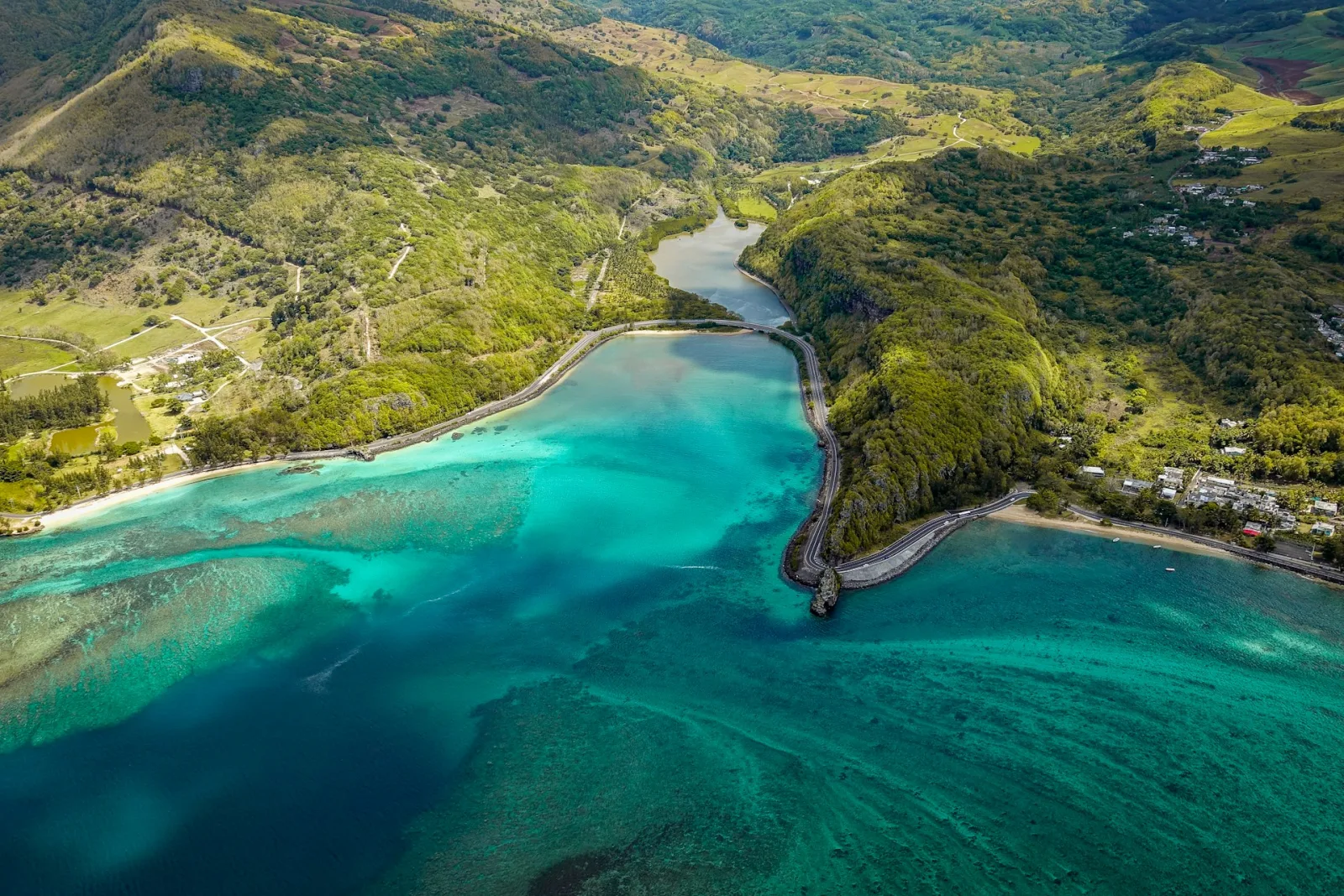
Aerial view of turquoise waters and white sandy beaches of Île aux Cerfs, Mauritius

Mauritius Travel Guide
for Indian Travelers

Visa, cost, itinerary & tips — your complete guide to planning a trip to Mauritius from India in 2026.

Updated for 2026 Travelers
Written by Vishal Narayan — Africa Travel Specialist
Reviewed by Veena Rathore · Africa Travel Reviewer
Last updated after reviewing:
  • Mauritius visa-free entry extended for Indian passport holders (up to 90 days)
  • New direct flight connectivity updates from Mumbai and Delhi to MRU in 2025-2026
  • Updated local transport and SIM card regulations for tourists in Mauritius 2026

Last updated: April 2026

Mauritius Trip Cost from India (Detailed Breakdown)
Realistic cost breakdown for flights, visa, hotels, food, and total budget for 2026

Cost Breakdown 2026

  • Return Flights: ₹25,000 – ₹45,000
  • Visa Fee: FREE (Visa-free for 90 days)
  • Hotels (per night): ₹3,500 – ₹10,000
  • Food (per day): ₹1,500 – ₹4,000
  • Local Transport (per day): ₹800 – ₹2,000
  • Activities & Entry Fees: ₹5,000 – ₹15,000 total
  • Travel Insurance: ₹1,000 – ₹2,500
  • Total (5–7 days): ₹60,000 – ₹1,20,000 per person

Mauritius offers excellent value for Indian travelers. While flights are a moderate expense, the absence of visa fees and affordable on-ground costs make it a highly budget-friendly international destination.

Best Departure Cities

  • Mumbai (BOM) — Direct flights available via Air Mauritius (~6 hrs 15 mins)
  • Delhi (DEL) — Connecting flights via Mumbai or Dubai (~8–10 hrs)
  • Chennai (MAA) — Connecting flights via Colombo or Mumbai
  • Bangalore (BLR) — Connecting flights via Mumbai or Middle East hubs

Mumbai offers the most seamless connectivity with direct flight options, saving both time and transit fatigue.

Ready to plan your Mauritius trip? Let us handle flights, visa, hotels, and tours.

View Mauritius Tour Packages →
Flight Routes from India to Mauritius
Flights from India to Mauritius are well-connected, with direct options available from major hubs.

Mumbai to Mauritius (Direct)

  • Route: BOM → MRU (Sir Seewoosagur Ramgoolam Int. Airport)
  • Airlines: Air Mauritius (Direct)
  • Duration: ~6 hours 15 minutes
  • Price Range: ₹25,000 – ₹40,000 (Round trip)

Delhi to Mauritius (Connecting)

  • Route 1: DEL → BOM → MRU (IndiGo / Air Mauritius)
  • Route 2: DEL → Dubai → MRU (Emirates)
  • Route 3: DEL → Colombo → MRU (SriLankan Airlines)
  • Duration: 8 to 12 hours (depending on layover)
  • Price Range: ₹30,000 – ₹45,000 (Round trip)

Note: Sir Seewoosagur Ramgoolam International Airport (MRU) is the only international airport in Mauritius. It is modern, efficient, and located about 48 km from the capital, Port Louis. Check Africa travel guides for more regional information.

Mauritius vs Maldives Cost for Indian Travelers
How does Mauritius compare to the Maldives on cost and experience? Here is a practical comparison for Indian travelers.
Expense Mauritius (5 days) Maldives (5 days)
Flights₹25K – ₹45K₹20K – ₹35K
VisaFREEFREE (On Arrival)
Hotels/night₹3.5K – ₹10K₹8K – ₹25K+
Food/day₹1.5K – ₹4K₹3K – ₹8K (Resort pricing)
Local Transport₹800 – ₹2K/day₹2K – ₹5K/day (Speedboat/Seaplane)
Total Trip₹60K – ₹1.2L₹80K – ₹2L+
Flights
Mauritius₹25K – ₹45K
Maldives₹20K – ₹35K
Visa
MauritiusFREE
MaldivesFREE
Hotels/night
Mauritius₹3.5K – ₹10K
Maldives₹8K – ₹25K+
Total Trip
Mauritius₹60K – ₹1.2L
Maldives₹80K – ₹2L+

Mauritius offers significantly better value for families and groups due to affordable off-resort dining, diverse activities beyond the beach, and cheaper local transport compared to the Maldives.

Best Time to Visit Mauritius from India
Mauritius can be visited year-round, but the best time depends on avoiding the cyclone season and seeking pleasant weather.
Month Mauritius Season Weather Activities India Travel Note
JanSummer / CycloneHot, humid, 28–33°CLimited water sportsAvoid due to cyclone risk
FebSummer / CycloneHot, humid, 28–33°CLimited water sportsAvoid due to cyclone risk
MarLate SummerWarm, 27–32°CBeach, sightseeingTransitioning to better weather
AprAutumn ✓Pleasant, 25–30°CExcellent for all activitiesGood post-Holi travel window
MayAutumn ✓✓Dry, mild, 22–28°CPeak season beginsIdeal time for Indian travelers
JunWinter ✓Cool, dry, 20–26°CHiking, sightseeingGreat escape from Indian summer
JulWinter ✓Cool, dry, 20–25°CWhale watching, hikingPeak Indian school holiday season
AugWinter ✓Cool, dry, 20–25°CWhale watching, hikingPeak Indian school holiday season
SepSpring ✓Warming, 22–27°CExcellent for all activitiesGood post-monsoon window
OctSpring ✓✓Warm, 24–29°CBeach, water sportsExcellent weather, fewer crowds
NovLate Spring ✓Warm, 25–30°CBeach, water sportsGood pre-Christmas window
DecSummer PeakHot, 27–32°CBeach, New Year eventsHigh demand, book 4 months ahead
5-Day Mauritius Itinerary for Indian Travelers
A perfect one-week Mauritius itinerary covering the capital, islands, and natural wonders.

Day-by-Day Plan

  • Day 1: Arrive at MRU Airport. Transfer to Port Louis. Explore Caudan Waterfront, Blue Penny Museum, and Aapravasi Ghat.
  • Day 2: Full-day trip to Île aux Cerfs. Enjoy catamaran cruise, snorkeling, and BBQ lunch on the island.
  • Day 3: South West excursion. Visit Chamarel Seven Coloured Earths, Chamarel Waterfall, and Rhumerie de Chamarel for rum tasting.
  • Day 4: North Coast exploration. Grand Baie beach, Cap Malheureux red church, and evening shopping at Grand Baie.
  • Day 5: Black River Gorges National Park for nature walks, followed by departure from MRU Airport.

Planning Notes

  • Transport: Hiring a private taxi for full-day excursions costs around ₹3,000–₹4,000 per day and is highly recommended for families.
  • Currency: Carry USD to exchange for Mauritian Rupees (MUR) at the airport or banks for the best rates.
  • Language: English is the official language, but French and Mauritian Creole are widely spoken. Hindi is understood in many tourist areas.
  • Connectivity: Purchase a tourist SIM (Emtel or MyT) at the airport for affordable 4G data.
  • Vegetarians: Indian vegetarian food is widely available, especially in Port Louis and Grand Baie. Most hotels offer Indian menus.
  • Book ahead: For December travel, book flights and hotels 4–6 months in advance due to high demand.

Want a hassle-free Mauritius trip? Our packages include flights, hotels, transfers, and guided tours.

Book Mauritius Tour Package →
Mauritius Visa for Indians — Complete Guide & Travel Essentials
Essential information for Indian travelers — from visa-free entry rules and time zones to plug adapters and local transport.

Tip: Carry USD cash — exchange rates are often better than using cards for small local purchases in Mauritius.

Mauritius Visa for Indians — 2026 Update

Update: Indian passport holders enjoy visa-free entry to Mauritius for up to 90 days for tourism. No prior visa application is required. Source: Government of Mauritius.

  • Visa Requirement: Visa-Free for up to 90 days
  • Where to get entry: Sir Seewoosagur Ramgoolam International Airport (MRU) upon arrival
  • Required Documents: Valid passport (6+ months validity), return flight tickets, proof of accommodation (hotel booking), and proof of sufficient funds (approx. USD 100 per day)
  • Immigration Form: Must be filled out online or on the flight before arrival
  • Duration permitted: Up to 90 days for tourism
  • Extension: Possible through the Passport and Immigration Office in Port Louis if needed
CLICK TO KNOW MORE ABOUT VISA DOCUMENTATION & FEES

Time Zone

Mauritius follows Mauritius Time (MUT), which is UTC+4 and 1.5 hours behind Indian Standard Time (IST). There is no daylight saving time.

  • Mauritius Time (MUT): UTC+4
  • Mauritius is 1.5 hours behind Indian Standard Time (IST)
  • When it is 12:00 PM in Mauritius, it is 1:30 PM in India
  • Mauritius does not observe Daylight Saving Time
  • Business hours typically run from 9 AM to 5 PM MUT on weekdays
  • Banks operate from 9:15 AM to 3:00 PM on weekdays
  • Most shopping malls open from 9:30 AM to 8:00 PM daily
  • Restaurants serve lunch from 12–2:30 PM and dinner from 7:00 PM onwards

Country Code

To call Mauritius from India, use the international dialing code +230 followed by the local number.

  • International Dialing Code: +230
  • To call Mauritius from India, dial: 00-230-XXXX-XXXX
  • Emergency services: 112 (Police/Ambulance/Fire)
  • Major telecom providers: Emtel, MyT (Mauritius Telecom), and Chill
  • Tourist SIM cards available at MRU Airport upon arrival
  • Free Wi-Fi available in most hotels, cafes, and public spaces

Socket & Plugs

Mauritius uses Type C and Type G electrical outlets with 230V at 50Hz. Indian travelers will need a plug adapter.

  • Type C and Type G — 230V, 50Hz
  • Mauritius uses Type C (European 2-pin) and Type G (British 3-pin rectangular) outlets
  • Standard voltage is 230V with a frequency of 50Hz
  • Indian Type C plugs (2-pin round) may work in some older hotels, but an adapter is recommended
  • Indian Type D (3-pin round) plugs require a universal travel adapter
  • Universal travel adapters are available at MRU Airport and local electronics shops
  • Most hotels provide adapters at the front desk on request
  • Most modern devices (laptops, phone chargers) support 100–240V

Indian High Commission in Mauritius

The High Commission of India in Port Louis provides consular services for Indian nationals.

  • Address: 4, Royal Road, Quatre Bornes, Mauritius
  • Contact: +230 454 4333 / 454 4334
  • Email: [email protected]
  • Emergency (24/7): +230 5251 4333
  • Working Hours: Mon–Fri, 9:00 AM – 5:00 PM
  • Services: passport renewal, emergency certificates, assistance to Indian nationals
  • Register with MADAD portal before travel for advisories and assistance

Mauritius High Commission in India

The High Commission of the Republic of Mauritius in New Delhi handles diplomatic and consular matters.

  • Address: 6, Dr. APJ Abdul Kalam Road, New Delhi 110011
  • Contact: +91-11-2301 2007 / 2301 2008
  • Email: [email protected]
  • Working Hours: Mon–Fri, 9:00 AM – 5:00 PM
  • Consular services are primarily handled in Mauritius upon arrival for tourists
  • For visa queries (though visa-free), contact the High Commission

Car Driving Orientation

Left-Hand Drive (Same as India)

  • Mauritius follows left-hand driving, identical to India's system
  • International Driving Permit (IDP) required along with valid home country license for rentals
  • Speed limits: 60 km/h in urban areas, 110 km/h on motorways
  • Seat belts mandatory for all passengers
  • Driving under influence strictly prohibited (zero tolerance)
  • Car rental available at MRU Airport and major towns
  • Road conditions are generally good, but traffic can be heavy in Port Louis during peak hours

App Based Taxi

Yugo and local taxi services are Primary Ride-Hailing Options

  • Yugo is the most popular ride-hailing app in Mauritius
  • Traditional taxis are widely available but do not use meters; always negotiate the fare beforehand
  • Average fare from MRU Airport to Grand Baie: ₹1,500 – ₹2,500
  • Public buses are very cheap (approx. ₹30–₹80 per ride) and connect most major towns
  • For full-day sightseeing, hiring a private taxi (approx. ₹3,000–₹4,000/day) is the most convenient option for families

Need help with Mauritius travel planning? Our team assists with flights, hotels, tours, and complete packages.

Mauritius Travel Assistance →
Mauritius Culture, Language & Local Customs
Understand Mauritian Creole, local customs, and cultural norms to connect better with locals.

Official Language

English — Official Language (used in government and business)

  • Mauritian Creole is the most widely spoken language in daily life
  • French is also widely spoken and used in media and newspapers
  • Due to the large Indo-Mauritian population, Hindi, Bhojpuri, Tamil, and Urdu are understood in many areas
  • English is the primary language of instruction in schools
  • Learning basic Mauritian Creole phrases greatly enhances the travel experience
  • Locals appreciate when tourists attempt to speak Creole or French
  • Translation apps work well in major cities with internet connectivity

Local Vocabulary

Understanding these Mauritian Creole terms helps connect with locals and understand culture better.

  • Bonzour — Good morning
  • Bonsoir — Good evening
  • Mersi — Thank you
  • Ki manier? — How are you?
  • Mo pe bien — I am fine
  • Ala — There / Here
  • Pei — Country
  • Largaz — Relax / Take it easy
  • Gateaux piment — Chili cakes (popular street food)
  • Alouda — Sweet, cold milk-based drink with basil seeds

Toilet Signs

Public restrooms are called "Toilettes" in Mauritius. Signs typically display "Toilettes" or "WC" with pictograms.

  • Men's toilets marked with "Hommes" or male symbol
  • Women's toilets marked with "Femmes" or female symbol
  • Public toilets in shopping malls and tourist areas are generally clean
  • Some public facilities charge a small fee (approx. ₹10–₹20)
  • Shopping malls, restaurants, and hotels have free restrooms
  • Always carry tissues as some public toilets may not have toilet paper
  • Western-style seated toilets are standard throughout Mauritius

Interesting Facts

Mauritius is a volcanic island nation known for its multicultural harmony and unique biodiversity.

  • Mauritius is the only African country to have Hinduism as a major religion (nearly 50% of the population)
  • The island was the only known home of the Dodo bird, which went extinct in the 7th century
  • Mauritius has no indigenous population; all residents are descendants of immigrants
  • The country is consistently ranked as the most peaceful and democratic nation in Africa
  • Mauritius has a high literacy rate of over 90%
  • The island is home to the world's third-largest coral reef
  • Mauritius gained independence from the United Kingdom in 1968
  • Sega is the traditional music and dance form, recognized by UNESCO
Mauritius Shopping & Markets Guide
From duty-free goods and textiles to traditional crafts and local markets.

Shopping Hours

Most Shops: 9:00 AM – 7:00 PM (Weekdays)

  • Shopping malls typically operate from 9:30 AM to 8:00 PM, seven days a week
  • Sunday shopping is common in malls but many independent shops and markets are closed
  • Caudan Waterfront and Bagatelle Mall are popular shopping destinations
  • Small boutiques may close for a midday break in smaller towns
  • Supermarkets open from 8 AM to 8 PM or later
  • Local markets (bazaars) operate in the mornings, typically 6 AM – 2 PM
  • Tax-free shopping available for tourists on purchases over a certain threshold at participating stores

Flea Markets & Bazaars

Mauritius's local markets offer unique souvenirs including textiles, spices, model ships, and artisanal crafts.

  • Port Louis Central Market — The largest and most vibrant market for spices, textiles, and street food
  • Caudan Waterfront — Upscale shopping with duty-free goods, jewelry, and souvenirs
  • Grand Baie Bazaar — Tourist-focused market for clothes, accessories, and beachwear
  • Quatre Bornes Market — Excellent for fresh produce, flowers, and local snacks
  • Cash (Mauritian Rupees) preferred at local markets, though cards are accepted in malls
  • Bargaining is acceptable and expected at local markets and bazaars, but not in established stores or malls

Famous Brands & Souvenirs

Shopping for textiles, model ships, and local rum offers excellent value and authentic cultural memories.

  • Textiles: High-quality cotton shirts, sarongs, and beachwear at affordable prices
  • Model Ships: Intricately crafted wooden model ships, a traditional Mauritian craft
  • Rum: Local rums from Rhumerie de Chamarel or Green Island (excellent quality)
  • Tea: Bois Chéri tea, a famous local brand with various flavored blends
  • Vanilla Products: Vanilla pods, extracts, and vanilla-flavored sweets
  • Spices: Saffron, cardamom, and local spice blends from Port Louis Market
  • Jewelry: Duty-free gold and precious stones at Caudan Waterfront

Supermarkets

Major supermarket chains like Super U, Intermart, and Winner offer wide product ranges with competitive prices.

  • Super U — Widespread, good prices, wide selection of local and imported goods
  • Intermart — Popular chain with many locations across the island
  • Winner — Competitive prices, good for everyday groceries
  • Smart — Hypermarket format with extensive product ranges
  • Most supermarkets open from 8 AM to 8 PM; some are open on Sundays
  • Local products like sugar, tea, and spices are affordable and high quality
  • Tap water is generally safe to drink in Mauritius, but bottled water is widely available and preferred by many tourists
Mauritius Food & Cuisine Guide
Mauritian cuisine is a vibrant fusion of Indian, Creole, Chinese, and French influences.

Do: Try local street food like Dholl Puri and Gateaux Piment — Mauritian cuisine is a highlight of the trip.

Famous Cuisines

Mauritian cuisine is a unique blend of Indian, Creole, Chinese, and French culinary traditions.

  • Dholl Puri — The unofficial national dish; flatbread stuffed with ground yellow split peas, served with curry
  • Mine Frite — Mauritian-style fried noodles, often with vegetables and egg (vegetarian-friendly)
  • Gateaux Piment — Spicy lentil fritters, a popular street food snack
  • Briyani — Mauritian biryani, distinct from Indian versions, often cooked with potatoes and a unique spice blend
  • Fried Rice — Chinese-influenced, widely available and very affordable
  • Rougaille — A tomato-based sauce served with eggs, fish, or meat
  • Alouda — A sweet, cold milk-based drink with basil seeds and agar-agar, perfect for hot days
  • Fresh Seafood — Grilled fish, octopus curry, and prawns are coastal staples

Famous Fruits

Tropical fruits are abundant and affordable in Mauritius, especially during the summer months.

  • Mangoes — Abundant in summer (Nov–Jan), incredibly sweet and juicy
  • Litchis — Peak season is December to January, a local favorite
  • Pineapples — Mauritius pineapples are smaller but exceptionally sweet
  • Coconuts — Fresh coconut water is available everywhere, perfect for hydration
  • Bananas — Small, sweet local varieties are widely available
  • Passion Fruit — Used in juices, desserts, and cocktails
  • Papaya — Available year-round, often eaten fresh or in fruit salads

National Dish — Dholl Puri

Dholl Puri is more than just food; it is a cultural institution and the most popular street food in Mauritius.

  • Made from a dough of wheat flour stuffed with ground yellow split peas (dholl)
  • Cooked on a flat griddle until golden brown
  • Typically served with bean curry (gros pois), rougaille (tomato sauce), and pickles
  • Vegetarian-friendly and widely available at street stalls and markets
  • Costs approximately ₹30–₹50 per piece, making it an incredibly affordable meal
  • Best enjoyed fresh and hot from a local vendor
  • A must-try for every visitor to Mauritius

Avg Cost Of Food

Budget travelers can eat very well for ₹1,500–₹3,000 per day at local eateries and street food stalls.

  • Street Food (Dholl Puri/Gateaux Piment): ₹30 – ₹100 per item
  • Local Restaurant Meal: ₹400 – ₹800 per person
  • Mid-range Restaurant: ₹1,000 – ₹2,000 per person
  • Fine Dining / Resort Restaurant: ₹2,500 – ₹5,000+ per person
  • Fresh Coconut Water: ₹50 – ₹100
  • Local Beer (Phoenix): ₹150 – ₹250

Tipping: 10% is customary in restaurants if a service charge is not already included in the bill.

Mauritius Weather & Packing Tips
Mauritius has a tropical climate. Pack for warm weather, but be prepared for occasional rain and cooler evenings.

Tip: Pack light, breathable clothing, but include a light jacket for air-conditioned spaces and cooler evenings.

Weather

Mauritius has a tropical climate with two main seasons: a warm, humid summer and a cooler, dry winter.

  • Summer (Nov–Apr): Warm and humid, 25–33°C. Higher chance of rain and cyclones (Jan–Feb).
  • Winter (May–Oct): Cooler and dry, 20–26°C. Ideal for sightseeing and outdoor activities.
  • Coastal areas: Generally warmer and more humid than the central plateau.
  • Central plateau: Can be 5–10°C cooler than the coast, especially in the evenings.
  • Rainfall: Most rain occurs during the summer months, often in short, heavy showers.
  • Best time overall: May to December for pleasant, dry weather.
  • Sea temperature: Remains warm year-round, 22–28°C, perfect for swimming.

Clothes To Wear

Mauritius is a beach destination, so casual, comfortable clothing is the norm. However, modest attire is expected when visiting religious sites.

For Beach & Daytime:

  • Light, breathable clothing (cotton, linen)
  • Swimwear and cover-ups
  • Sunglasses, wide-brimmed hat, and high-SPF sunscreen
  • Comfortable sandals or flip-flops

For Evenings & Sightseeing:

  • Light jacket or sweater for cooler evenings or air-conditioned spaces
  • Comfortable walking shoes for nature walks and city exploration
  • Modest clothing (covering shoulders and knees) for visiting temples, mosques, or churches
  • Light rain jacket or umbrella (especially if traveling between Nov–Apr)
Mauritius Heritage & Cultural Highlights
UNESCO sites, national symbols, and cultural experiences that capture Mauritius's unique identity.

UNESCO World Heritage Sites

Mauritius has 2 UNESCO World Heritage Sites, reflecting its rich history and natural beauty.

  • Le Morne Cultural Landscape (2008) — A rugged mountain that served as a refuge for runaway slaves (maroons) in the 18th and 19th centuries. A powerful symbol of freedom and resistance.
  • Aapravasi Ghat (2006) — The immigration depot in Port Louis where over half a million indentured laborers from India arrived between 1834 and 1920. A site of immense historical significance for the Indian diaspora.

National Symbols

Mauritius's national symbols reflect its unique biodiversity and cultural heritage.

  • National Bird: Dodo (Raphus cucullatus) — Extinct, but remains a powerful national symbol
  • National Flower: Trochetia (Bouteloua) — A rare endemic flowering plant
  • National Tree: Tambalacoque (Dodo Tree) — Believed to rely on the Dodo for seed germination
  • National Anthem: "Motherland" (composed by Philippe Gentil)
  • National Dance: Sega — A traditional, rhythmic dance with African and Malagasy roots, recognized by UNESCO
  • National Motto: "Stella Clavisque Maris Indici" (Star and Key of the Indian Ocean)

Cultural Festivals

Mauritius is a melting pot of cultures, and this is reflected in its vibrant, year-round festivals.

  • Maha Shivaratri (Feb/Mar) — The largest Hindu pilgrimage outside India, at Grand Bassin lake
  • Cavadee (Jan/Feb) — Tamil Hindu festival involving processions and piercings
  • Chinese Spring Festival (Jan/Feb) — Celebrated with dragon dances and family gatherings
  • Eid al-Fitr — Celebrated by the Muslim community with feasts and prayers
  • Christmas & New Year — Widely celebrated with fireworks, beach parties, and family meals
  • Sega Festivals — Regular events showcasing traditional music and dance

Souvenirs

Best places to shop for souvenirs: Caudan Waterfront, Port Louis Central Market, and airport duty-free.

  • Model Ships: Intricately crafted wooden models, a traditional Mauritian art form
  • Textiles: Colorful sarongs, shirts, and beachwear
  • Rum & Tea: Local rums (e.g., Green Island) and Bois Chéri tea
  • Spices: Vanilla pods, saffron, and local spice blends
  • Gateaux Piment: While best eaten fresh, some shops sell packaged versions
  • Handicrafts: Woven baskets, wooden carvings, and jewelry
Notable Highlights for Indian Travelers
From historical ties to unique natural phenomena, discover what makes Mauritius special.

Historical Figures & Connections

  • Mahatma Gandhi — Visited Mauritius in 1901, strengthening the bond between India and the island
  • Swami Vivekananda — Visited in 1899, leaving a lasting impact on the Hindu community
  • Indira Gandhi — Visited in 1970, further cementing diplomatic ties
  • Robert Edward Hart — Famous Mauritian poet known for his romantic verses about the island
  • Malcolm de Chazal — Renowned Mauritian writer and painter
  • Kaya — Famous Mauritian musician who popularized "Seggae" (Sega + Reggae)

Unique Natural Phenomena

Mauritius is home to several unique natural wonders that attract scientists and tourists alike.

  • Seven Coloured Earths (Chamarel): A geological formation of sand dunes comprising seven distinct colors, believed to be caused by the cooling of volcanic lava at different temperatures.
  • Underwater Waterfall (Le Morne): An optical illusion created by sand and silt deposits off the coast of Le Morne, visible from the air.
  • Black River Gorges: The largest remaining fragment of native forest in Mauritius, home to rare endemic species like the Mauritius Kestrel and Pink Pigeon.
  • Grand Bassin (Ganga Talao): A crater lake considered sacred by Hindus, featuring large statues of Shiva and Durga, and a temple complex.

Indian Cultural Influence

  • Over 50% of the Mauritian population is of Indian descent, primarily from Bihar, Uttar Pradesh, and Tamil Nadu
  • Hinduism is the largest religion in Mauritius
  • Maha Shivaratri is a national holiday and the largest pilgrimage outside India
  • Indian cuisine, particularly vegetarian dishes, is deeply integrated into the national food culture
  • Bhojpuri and Hindi are widely understood and spoken in many communities
  • Indian weddings and cultural practices are common and celebrated with great enthusiasm
  • Yoga and Ayurveda are popular and widely practiced across the island

Is Mauritius expensive for Indians? A 5-7 day trip costs ₹60,000–₹1,20,000 per person including flights, visa (FREE), hotels, and food.

Do Indians need a visa? No. Indian passport holders enjoy visa-free entry to Mauritius for up to 90 days for tourism.

Flight duration? Direct flights from Mumbai take approximately 6 hours and 15 minutes. Flights from Delhi take 8-10 hours with a layover.

Is Mauritius safe for Indian tourists? Yes, it is one of the safest African nations. Tourist areas are well-patrolled, and locals are welcoming.

Currency? Mauritian Rupee (MUR). Carry USD for better exchange rates. International cards are widely accepted.

Frequently Asked Questions — Mauritius Travel for Indians
Quick, honest answers to the most common Mauritius travel questions from Indian travellers
1Do Indians need a visa for Mauritius?
No. Indian passport holders enjoy visa-free entry to Mauritius for up to 90 days for tourism purposes. You only need a valid passport (6+ months validity), return flight tickets, proof of accommodation, and proof of sufficient funds.
2Is Mauritius expensive for Indian tourists?
A 5 to 7-day trip to Mauritius from India costs approximately ₹60,000 to ₹1,20,000 per person, including flights, mid-range hotels, food, and local transport. It is highly budget-friendly compared to European or even some other island destinations.
3How long is the flight from India to Mauritius?
Direct flights from Mumbai to Mauritius take approximately 6 hours and 15 minutes via Air Mauritius. Flights from Delhi usually take 8 to 10 hours with a layover in Mumbai or Dubai.
4What is the best time to visit Mauritius from India?
The best time to visit is from May to December. The weather is dry, pleasant, and ideal for beach activities and water sports, avoiding the humid cyclone season of January to March.
5Is Mauritius safe for Indian tourists?
Yes, Mauritius is one of the safest African nations for Indian tourists. Crime rates are low, locals are welcoming, and tourist areas like Grand Baie and Flic en Flac are well-patrolled and secure.
6What currency is used in Mauritius and can I use INR?
The local currency is the Mauritian Rupee (MUR). Indian Rupees (INR) are not widely accepted. It is best to carry USD or EUR to exchange, or use international credit/debit cards which are widely accepted in hotels and restaurants.
7What plug type is used in Mauritius?
Mauritius uses Type C (European 2-pin) and Type G (British 3-pin rectangular) electrical outlets at 230V, 50Hz. Indian travelers should carry a universal travel adapter.
8What is the national dish of Mauritius?
Dholl Puri is the unofficial national dish. It is a flatbread stuffed with ground yellow split peas, served with curry, rougaille (tomato sauce), and pickles. It is widely available and vegetarian-friendly.
9What is the time difference between India and Mauritius?
Mauritius is 1.5 hours behind Indian Standard Time (IST). Mauritius follows UTC+4, while India follows UTC+5:30. When it is 12:00 PM in Mauritius, it is 1:30 PM in India.
10Can vegetarian Indians find food in Mauritius?
Yes, absolutely. Due to the large Indo-Mauritian population, vegetarian food is widely available. Dholl puri, mine frit (vegetable noodles), and Indian-style curries are staples. Most hotels cater specifically to Indian dietary preferences.
11Do I need travel insurance for Mauritius?
While not strictly mandatory for visa-free entry, comprehensive travel insurance is highly recommended to cover medical emergencies, trip cancellations, and lost baggage.
12How do I get around in Mauritius?
Public buses are cheap and connect most major towns. Taxis are available but negotiate fares beforehand. For flexibility, renting a car or hiring a private taxi for the day (approx. ₹3,000–₹4,000) is a popular and affordable option for families.
13Is it easy to get a local SIM card in Mauritius?
Yes. Tourist SIM cards from providers like Emtel or MyT can be purchased at the airport upon arrival. You will need your passport for registration, and data packages are very affordable.
14What are the must-visit places in Mauritius?
Top attractions include Le Morne Brabant (UNESCO site), Black River Gorges National Park, Île aux Cerfs for water sports, Chamarel Seven Coloured Earths, Grand Baie, and the capital city, Port Louis.
15Does Destination To Plan offer group tour packages to Mauritius?
Yes. Destination To Plan offers customised group and family tour packages to Mauritius from India, including flights, hotels, guided tours, transfers, and 24/7 support. Contact us for a personalised quote.
Have more questions? Our Mauritius travel experts can help plan your perfect trip.

Talk to a Mauritius Travel Expert →

Note: Information provided is subject to change. Verify visa requirements, exchange rates, opening hours, and travel advisories before your trip. Prices are approximate and may vary based on location, season, and inflation.

About This Mauritius Travel Guide

This Mauritius travel guide covers everything Indian travelers need from visa-free entry rules and Port Louis travel tips to local food, weather, shopping, and top attractions. Researched, regularly updated, and trusted by group tour planners and independent travelers.

Expert Curated Content

Every section — from Mauritius visa rules to Grand Baie shopping hours — is verified by travel professionals with Africa and Indian Ocean experience.

Regularly Updated Information

Mauritius travel costs, visa rules, and embassy details are reviewed and refreshed to reflect current conditions and flight connectivity updates.

Trusted by Indian Travelers

Used by group tour organizers, corporate travel planners, and independent travelers from India researching Mauritius itineraries, family trips, and honeymoon packages.

Complete Mauritius Resource

One guide covering visa requirements, cost, flights, itinerary, food, culture, weather, shopping, and heritage — all with India-specific context and 2026 accuracy.

More Travel Guides

Explore Other Destinations

Plan Your Mauritius Trip from India

Fill out the enquiry form below and our travel experts will help you plan your Mauritius tour — visa, flights, hotels, and guided tours.

Get assistance with visa (FREE), flight bookings, Port Louis hotels, Île aux Cerfs and Chamarel tours, and complete Mauritius packages.

Enquire About This Package