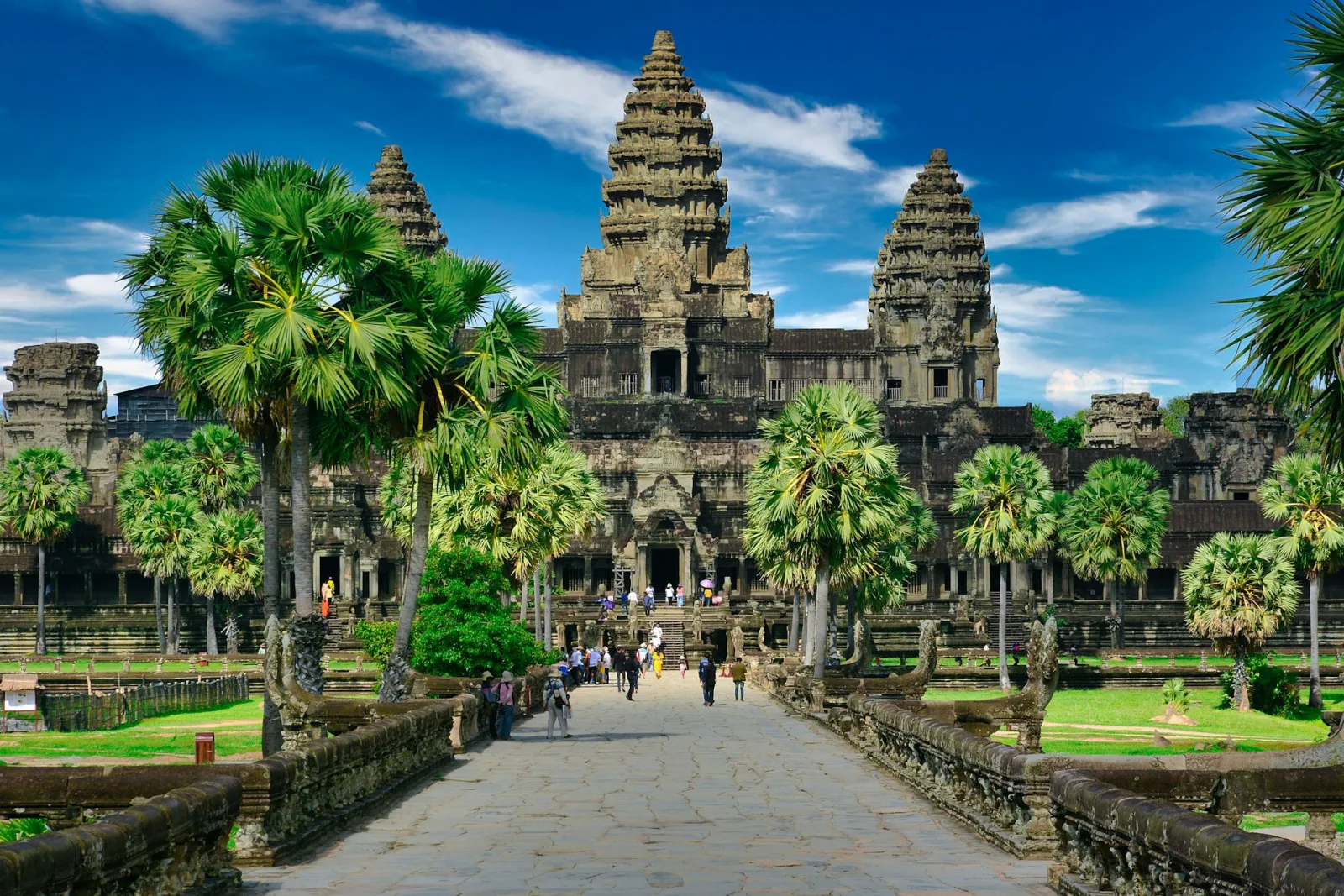
Sunrise over Angkor Wat reflecting in the lotus pond, Siem Reap, Cambodia

Cambodia Travel Guide
for Indian Travelers

Visa, cost, itinerary & tips — your complete guide to planning a trip to Cambodia from India in 2026.

Updated for 2026 Travelers
Written by Nisha Chaudhary — Asia Travel Specialist
Reviewed by Namrata Sethi · Asia Travel Reviewer
Last updated after reviewing:
  • Cambodia e-visa & visa-on-arrival update for Indian passport holders (2025)
  • Angkor Archaeological Park ticket price revision for foreign tourists
  • Direct & connecting flight routes from Delhi/Mumbai to Siem Reap & Phnom Penh

Last updated: April 2026

Cambodia Trip Cost from India (Detailed Breakdown)
Realistic cost breakdown for flights, visa, hotels, food, and total budget for 2026

Cost Breakdown 2026

  • Return Flights: ₹35,000 – ₹55,000 (via Bangkok/Kuala Lumpur)
  • Visa (Tourist): ~₹2,500 (USD 30–36 on arrival/e-visa)
  • Hotels (per night): ₹1,500 – ₹4,500 (3-star boutique)
  • Food (per day): ₹1,200 – ₹3,000
  • Local Transport: ₹500 – ₹1,500/day (tuk-tuks, buses)
  • Angkor Pass (3-day): ~₹5,200 (USD 62)
  • Activities: ₹3,000 – ₹6,000 total
  • Total (5–7 days): ₹65,000 – ₹1.2L per person

Cambodia is one of Southeast Asia's most affordable destinations. Daily costs are significantly lower than Thailand or Vietnam. Flights are the biggest expense but remain reasonable from India.

Best Departure Cities

  • Delhi (DEL) — Best connectivity via Bangkok, KL, Singapore
  • Mumbai (BOM) — Multiple daily options via SE Asia hubs
  • Kolkata (CCU) — Shortest flight time, fewer layovers
  • Chennai (MAA) — Good connections via Singapore or KL
  • Bangalore (BLR) — Increasing direct charter options in peak season

Delhi, Mumbai, and Kolkata offer the most frequent and competitive fares to Phnom Penh and Siem Reap.

Ready to explore Angkor Wat and beyond? We handle flights, visa, hotels, and local tours.

View Cambodia Tour Packages →
Flight Routes from India to Cambodia
Flights from India to Cambodia take 6–12 hours with one layover. Direct charter flights are seasonal.

Delhi/Mumbai to Siem Reap

  • Route 1: DEL/BOM → Bangkok → Siem Reap (Bangkok Airways / Thai Smile)
  • Route 2: DEL/BOM → Kuala Lumpur → Siem Reap (AirAsia / Malaysia Airlines)
  • Route 3: DEL/BOM → Singapore → Siem Reap (Singapore Airlines / Scoot)
  • Duration: 7–10 hours
  • Price Range: ₹35,000 – ₹55,000 return

India to Phnom Penh (PNH)

  • Route 1: DEL → Bangkok → PNH (IndiGo / Thai Airways)
  • Route 2: BOM → Kuala Lumpur → PNH (AirAsia / Malaysia Airlines)
  • Route 3: CCU → Yangon → PNH (Myanmar National — check visa rules)
  • Duration: 6–9 hours
  • Price Range: ₹30,000 – ₹50,000 return

Note: Siem Reap's new Sin Airport (SAI) replaced REP. Domestic buses or short 40-min flights connect PP and SR efficiently. Check Asia travel guides for more regional info.

Cambodia vs Thailand Cost for Indian Travelers
How does Cambodia compare to popular Southeast Asian destinations? Practical cost comparison.
Expense Cambodia (5 days) Thailand (5 days)
Flights₹35K – ₹55K₹18K – ₹35K
Visa₹2.5K (USD 30–36)₹2.5K (On arrival / E-visa)
Hotels/night₹1.5K – ₹4.5K₹2K – ₹5K
Food/day₹1.2K – ₹3K₹1.5K – ₹3.5K
Local Transport₹500 – ₹1.5K/day₹800 – ₹2K/day
Total Trip₹65K – ₹1.2L₹70K – ₹1.4L
Flights
Cambodia₹35K – ₹55K
Thailand₹18K – ₹35K
Visa
Cambodia₹2.5K
Thailand₹2.5K
Hotels/night
Cambodia₹1.5K – ₹4.5K
Thailand₹2K – ₹5K
Food/day
Cambodia₹1.2K – ₹3K
Thailand₹1.5K – ₹3.5K
Total Trip
Cambodia₹65K – ₹1.2L
Thailand₹70K – ₹1.4L

Cambodia offers excellent value on-ground. While flights are slightly higher than Thailand, daily costs (food, transport, activities) are lower. Angkor pass is the main premium expense but delivers unmatched cultural value.

Best Time to Visit Cambodia from India
Cambodia's tropical climate varies by season. Plan your visit based on weather and crowd levels.
Month Season Weather Temple Comfort Crowd Level India Travel Note
NovDry Peak ✓✓25–30°C, cool breezesExcellent for sunriseHighPost-Diwali window — ideal weather
DecDry Peak ✓✓22–29°C, pleasantBest month overallVery HighWinter holidays — book 3 months ahead
JanDry Peak ✓22–30°C, cool morningsGreat for all-day toursHighRepublic Day long weekend trips popular
FebLate Dry ✓25–32°C, warming upGood, start earlyModeratePre-Holi travel window
MarHot Season28–35°C, very hotChallenging middayModerateHoli travel — pack sunscreen & water
AprHottest Month30–37°C, humidHarsh, start at dawnLowSummer break budget option
MayPeak Heat28–36°C, humidTough afternoonsLowPre-monsoon budget window
JunMonsoon Start26–33°C, afternoon rainGood morningsLow-MedRain showers brief, lush greenery
JulMonsoon26–32°C, frequent rainMuddy paths, quietLowFewer crowds, lower hotel rates
AugWet Season26–32°C, heavy showersLimited temple accessLowGood for Tonle Sap & floating villages
SepLate Monsoon25–32°C, easing rainImproving conditionsLow-MedTransition month, great deals
OctDry Start ✓25–31°C, cooling downExcellentRisingNavratri/Dussehra travel window
6-Day Cambodia Itinerary for Indian Travelers
A balanced 6-day route covering Phnom Penh history, Angkor Wat temples, and coastal relaxation.

Day-by-Day Plan

  • Day 1: Arrive Phnom Penh — Royal Palace, Silver Pagoda, riverside sunset dinner
  • Day 2: Tuol Sleng Genocide Museum, Killing Fields memorial, Russian Market
  • Day 3: Fly/Bus to Siem Reap — Pub Street evening, local spa & rest
  • Day 4: Angkor Wat sunrise, Bayon temple, Ta Prohm (Tomb Raider temple)
  • Day 5: Banteay Srei, Tonle Sap floating village boat tour, cultural dance show
  • Day 6: Day trip to Koh Rong island (snorkeling, beaches) or depart from PNH/SRI

Planning Notes

  • Angkor Pass: Buy 3-day pass (USD 62) for optimal coverage. Start tours at 5 AM for sunrise.
  • Domestic Travel: Flight takes 40 mins (USD 40–80). Bus takes 6 hours (USD 10–15). Book reputable operators.
  • Currency: Carry crisp USD bills (small denominations). Riel used for change under USD 1.
  • Tuk-tuks: Hire remork-moto for city tours (~USD 5–10/day). Agree price before starting.
  • Safety: Keep bags closed. Avoid isolated areas at night in PP. Siem Reap is very tourist-friendly.
  • Dress Code: Shoulders & knees covered inside Angkor temples. Carry lightweight scarf.
  • Connectivity: Buy Smart or Cellcard SIM at airport (~USD 5 with data).

Want a seamless Angkor & coastal experience? Our packages include flights, hotels, guides & transfers.

Book Cambodia Tour Package →
Cambodia Visa for Indians — Complete Guide & Travel Essentials
Essential information for Indian travelers — visa process, time zone, plug adapters, and embassy contacts.

Tip: Keep USD cash handy — ATMs charge high fees (~USD 4–5 per withdrawal) and may dispense Riel.

Cambodia Visa for Indians — 2026 Update

Update (2025): Cambodia offers hassle-free E-Visa or Visa on Arrival for Indian passport holders. Processing is fast, requirements are minimal, and both grant 30-day single entry. Source: Cambodia E-Visa Official Portal.

  • E-Visa: Apply online at evisa.gov.kh. Upload passport scan & photo. Pay USD 36 via card. Receive PDF in ~3 days. Print & show at immigration.
  • Visa on Arrival: Available at PNH & SAI airports. Fill form, submit passport + photo + USD 30 cash. Stamped instantly.
  • Required Documents: Passport (6+ months validity, 2 blank pages), 4x6cm photo, proof of onward travel, hotel booking.
  • Extension: 30-day visa can be extended once at immigration offices for additional 30 days (USD 45–55).
  • Processing Time: E-visa ~3 business days. On arrival: immediate upon landing.
  • Currency for Visa: USD only. Crisp, unmarked bills preferred.
CLICK TO KNOW MORE ABOUT VISA DOCUMENTATION & FEES

Time Zone

Cambodia follows Indochina Time (ICT), UTC+7, which is 1.5 hours ahead of Indian Standard Time (IST). No daylight saving time.

  • Cambodia Time (ICT): UTC+7
  • Cambodia is 1.5 hours ahead of Indian Standard Time (IST)
  • When it is 12:00 PM in Phnom Penh, it is 10:30 AM in India
  • No Daylight Saving Time observed
  • Business hours: 8 AM to 5 PM (Mon–Fri)
  • Banking hours: 8:00 AM to 3:30 PM (weekdays)
  • Market hours: Early morning to evening daily
  • Restaurant dining: 6:30 PM to 10:00 PM (later on weekends)

Country Code

To call Cambodia from India, use the international dialing code +855 followed by the area code and local number.

  • International Dialing Code: +855
  • To call Cambodia from India, dial: 00-855-XX-XXX-XXX
  • Phnom Penh area code: 23
  • Siem Reap area code: 63
  • Emergency services: 117 (Police), 119 (Fire), 118 (Ambulance)
  • Major telecoms: Smart Axiata, Cellcard, Metfone, Seatel
  • Tourist SIM cards available at airport arrivals (USD 5 with 5GB data)
  • Free Wi-Fi common in hotels, cafes, and restaurants

Socket & Plugs

Cambodia uses Type A, C, and G outlets with 220V at 50Hz. Most modern Indian devices work with minor adapters.

  • Types A, C, G — 220V, 50Hz
  • Type C (European 2-pin round) and G (British 3-pin rectangular) are common
  • Standard voltage 220V — compatible with Indian appliances
  • Indian Type D plugs may need a universal adapter
  • Type C plugs often fit directly into local sockets
  • Adapters available at PP/SR airports & local electronics shops
  • Hotels often have multi-socket panels
  • Voltage stabilizers not required for modern electronics

Indian Embassy in Cambodia

The Embassy of India in Phnom Penh provides consular services and emergency assistance for Indian nationals.

  • Address: No. 4, Street 278, Phnom Penh 12205
  • Contact: +855 23 721 072 / 720 405
  • Email: [email protected]
  • Emergency (24/7): +855 12 951 917
  • Working Hours: Mon–Fri, 9:00 AM – 1:00 PM & 2:30 PM – 5:00 PM
  • Services: Passport/OCI renewal, emergency certificates, legal assistance
  • Register on MADAD portal before travel for safety alerts

Cambodia Embassy in India

The Embassy of the Kingdom of Cambodia in New Delhi handles diplomatic relations and provides visa guidance.

  • Embassy New Delhi: 2/52, Malcha Marg, Chanakyapuri, New Delhi 110021
  • Contact Delhi: +91-11-2687 5900
  • Email Delhi: [email protected]
  • Working Hours: Mon–Fri, 9:00 AM – 5:00 PM
  • Consular Services: Visa inquiries, business permits, legalization
  • Note: Tourist visas are processed at airports or online. Embassy visits rarely needed for tourists.
  • For urgent passport loss, contact Indian Embassy in Phnom Penh first.

Car Driving Orientation

Right-Hand Drive (Same as India)

  • Cambodia drives on the right side of the road, matching India's system
  • International Driving Permit (IDP) required for rental
  • Speed limits: 40–60 km/h in cities, 80–120 km/h on national highways
  • Helmet mandatory for motorbikes; seatbelts for cars
  • Road conditions: PP to SR highway is excellent. Rural roads vary.
  • Renting cars with drivers is common and affordable (USD 50–70/day)
  • Motorbike rental popular but exercise caution — traffic is chaotic
  • Tuk-tuks remain the safest & most convenient short-distance option

App Based Taxi

Grab and PassApp are Primary Ride-Hailing Apps

  • Grab dominates ride-hailing in Phnom Penh and Siem Reap
  • PassApp (local Cambodian app) offers competitive tuk-tuk rates
  • InDrive also available with price negotiation features
  • Payment: Cash (USD/Riel) or in-app card (limited)
  • Average ride cost: USD 1–3 for city trips
  • Traditional metered taxis rare — rely on apps or hotel-hired cars
  • Always confirm destination & price before boarding non-app rides
  • Bus companies: Giant Ibis, Mekong Express for intercity travel

Need help with Cambodia visa & itinerary? Our experts handle documentation, flights & temple guides.

Cambodia Visa & Planning →
Cambodia Culture, Language & Local Customs
Understand Khmer language basics, Buddhist etiquette, and social norms to travel respectfully.

Official Language

Khmer — Official Language

  • Khmer script is derived from ancient Indian Brahmi script
  • Tonal nuances exist but are less rigid than Thai or Vietnamese
  • English is widely understood in Siem Reap, Phnom Penh & tourist zones
  • Many older Cambodians speak basic French (colonial influence)
  • Younger generations increasingly learn Mandarin & Korean for tourism
  • Learning "Chomreab Suor" (Hello) and "Orkun" (Thank you) goes a long way
  • Politeness is highly valued — use "Bong" (older) / "Oun" (younger) respectfully
  • Hand gestures common; avoid pointing feet at people or Buddha images

Basic Khmer Phrases

Using these common Khmer expressions helps connect with locals and shows cultural respect.

  • Chomreab Suor — Hello (formal greeting)
  • Chum reap lea — Goodbye
  • Orkun — Thank you
  • Bat/Chas — Yes (male/female)
  • Te — No
  • Pong-man? — How much?
  • Knyom chong... — I want...
  • Sralanh — Delicious
  • Kompong — Not enough (useful for bargaining)
  • Chhngay — Expensive
  • Reah — Expensive / dear (context dependent)

Temple Etiquette

Cambodia is predominantly Theravada Buddhist. Respecting temple customs is mandatory and deeply appreciated.

  • Remove shoes before entering any temple or sacred space
  • Dress modestly: shoulders & knees must be covered at Angkor & pagodas
  • Do not climb on ruins or touch ancient carvings
  • Women must not touch monks directly
  • Keep voices low inside temples
  • Ask permission before photographing monks or locals
  • Do not point feet at Buddha images or people
  • Carry a lightweight scarf or shawl for quick coverage

Interesting Facts

Cambodia is home to the world's largest religious monument, Angkor Wat, and has a rich, resilient history.

  • Angkor Wat covers 162.6 hectares — largest religious structure globally
  • Appears on the Cambodian national flag and currency
  • The Apsara classical dance dates back to the 9th century
  • Cambodia has 30% of the Mekong River flowing through it
  • Killing Fields memorials honor victims of the Khmer Rouge (1975–1979)
  • Landmine Museum in Siem Reap showcases clearance efforts
  • Sugar palm trees line highways — national symbol
  • Phnom Penh sits at the confluence of Mekong, Tonle Sap, and Bassac rivers
Cambodia Shopping & Markets Guide
From Angkor silk and silverware to night markets and artisan workshops.

Shopping Hours

Markets: 7:00 AM – 7:00 PM (Daily)

  • Central markets (Russian, Old, Phsar Thmei) open early & close by 7 PM
  • Night markets (Pub Street area, Siem Reap) operate 5 PM – 12 AM
  • Boutique shops & malls: 10 AM to 9 PM (Mon–Sun)
  • Many shops close early on Pchum Ben & Khmer New Year
  • Artisan centers (Artisans Angkor) open 8 AM to 5:30 PM
  • Bargaining expected in markets, fixed prices in boutiques/malls
  • Tax-free shopping available at major airports for purchases >USD 50
  • ATMs accept Visa/Mastercard; cash preferred for market purchases

Night Markets & Bazaars

Cambodia's night markets offer vibrant atmospheres with street food, handicrafts, and live music.

  • Angkor Night Market (Siem Reap) — Souvenirs, massage, food stalls
  • Pub Street Market — Bars, crafts, late-night shopping & dining
  • Central Market (Phnom Penh) — Art Deco architecture, jewelry, spices
  • Russian Market (Tuol Tom Poung) — Authentic, local prices, clothing
  • Artisans Angkor Workshop — High-quality silk, stone, wood carvings
  • Cash (USD) preferred; some stalls accept card payments
  • Start bargaining at 50% of asking price, settle at 30–40% discount
  • Buy directly from cooperatives for ethical & authentic products

Famous Brands & Crafts

Cambodian craftsmanship is world-renowned, especially silk, silver, and stone carving traditions.

  • Angkor Silk — Ikat weaving, traditional scarves, saree fabrics
  • Silverware — Handcrafted bowls, jewelry, tea sets (Phsar Thmei)
  • Wood Carvings — Apsara figures, Buddha statues, home decor
  • Krama Scarves — Traditional checkered cotton scarf (versatile souvenir)
  • Pepper & Kampot Spices — World's finest pepper (PGI certified)
  • Shadow Puppets — Sbek Thom (UNESCO heritage art)
  • Ceramics — Battambang & Siem Reap artisan pottery
  • Essential Oils — Lemongrass, frangipani, jasmine blends

Supermarkets & Malls

Modern shopping centers in Phnom Penh and Siem Reap cater to expats & tourists with imported goods.

  • Aeon Malls — PP1 & PP2: International brands, cinema, food court
  • Chip Mong — Modern mall, local brands, electronics
  • Lucky Supermarket — Groceries, dairy, imported snacks
  • Caltex Mart / Circle K — 24/7 convenience stores
  • Open 8 AM – 10 PM daily; extended hours on weekends
  • Credit cards accepted; ATMs on ground floors
  • Taxi/Grab parking available; valet service at major malls
Cambodia Food & Cuisine Guide
Khmer cuisine blends fresh herbs, coconut milk, fermented flavors, and subtle spice — perfect for Indian palates.

Do: Try Fish Amok and Lok Lak — signature dishes that showcase Khmer flavor balance.

Famous Cuisines

Khmer food uses less chili than Thai, more herbs, and relies on kroeung (curry paste) and prahok (fermented fish) for depth.

  • Fish Amok — Steamed coconut curry with lemongrass & turmeric
  • Lok Lak — Sizzling beef/veg stir-fry, served with egg & lime pepper dip
  • Nom Banh Chok — Khmer rice noodles in green fish gravy (national breakfast)
  • Beef Salad — Mint, cucumber, onions, lime dressing
  • Spring Rolls — Fresh or fried, stuffed with vermicelli & herbs
  • Kuy Teav — Pork bone broth soup, noodles, morning street favorite
  • Bai Sach Chrouk — Grilled pork & rice, quick & cheap street meal
  • Prahok Ktiss — Coconut-fish dip with veggies (acquired taste)

Famous Fruits

Tropical fruits are abundant, cheap, and sold fresh from street carts & wet markets daily.

  • Mango — Sweet, green (with chili salt) or ripe (desserts)
  • Durian — King of fruits; polarizing smell, creamy texture
  • Mangosteen — Sweet, tangy, cooling — "Queen of fruits"
  • Dragon Fruit — Mild, hydrating, great post-temple snack
  • Rambutan — Hairy exterior, juicy sweet flesh inside
  • Jackfruit — Used in savory curries or sweet sticky rice
  • Coconut — Fresh water & flesh everywhere; USD 1–2 whole

National Dish — Fish Amok

Fish Amok is Cambodia's culinary crown jewel — a delicate, fragrant mousse steamed in banana leaf.

  • Considered the national dish; served on special occasions & restaurants
  • Combines river fish, coconut cream, kroeung paste, lime leaves
  • Steamed, not boiled — retains moisture & aromatic oils
  • Presentation: Banana leaf cup, often garnished with red pepper & cilantro
  • Vegan versions available in Siem Reap using tofu & mushrooms
  • Best enjoyed with jasmine rice & fresh cucumber salad
  • Look for restaurants using traditional clay pots for authentic texture
  • Cost: USD 3–6 per serving at local/mid-range eateries

Avg Cost Of Food

Street food is incredibly cheap. Mid-range restaurants offer excellent value. Tipping is optional but appreciated.

  • Street Noodles/Breakfast: USD 1–2
  • Amok/Lok Lak: USD 3–5
  • Pub Street Meal + Drink: USD 5–8
  • Mid-range Dinner (2 pax): USD 15–25
  • Fine Dining (Angkor resort): USD 30–60 pp
  • Coffee/Tea: USD 1–2.5
  • Bottle of Water (1.5L): USD 0.5–1
  • Beer (local Angkor/Draft): USD 1–1.5

Tipping: Not mandatory. Round up bills or leave 10% at restaurants. USD 1–2 for tuk-tuk guides appreciated.

Cambodia Weather & Packing Tips
Tropical climate with distinct wet & dry seasons. Pack light, breathable clothing & sun protection.

Tip: Carry a lightweight rain jacket & quick-dry towel — afternoon showers are common in monsoon.

Weather

Cambodia has a tropical monsoon climate with two main seasons: dry (Nov–Apr) and wet (May–Oct).

  • Phnom Penh/Siem Reap: Hot year-round. Dry: 25–35°C. Wet: 26–32°C with heavy rain.
  • Coastal (Sihanoukville/Islands): Humid. Dry: 28–33°C. Monsoon: June–Oct, rough seas.
  • Cardamom Mountains: Cooler (20–28°C), dense rainforest, eco-lodges.
  • Nov–Feb: Cool, dry, ideal for temples & sightseeing.
  • Mar–Apr: Hottest months (up to 40°C). Start tours before 7 AM.
  • May–Oct: Green season. Afternoon showers clear quickly. Fewer tourists, lower rates.
  • Humidity: 70–85% year-round. Carry hydrating spray & electrolytes.
  • UV Index: Extreme. SPF 50+, hat, sunglasses mandatory.

Clothes To Wear

Light, modest, quick-dry fabrics are best. Temple visits require coverage. Pack for heat & sudden rain.

For Temples & Cities:

  • Light cotton/linen shirts with sleeves (temple rules)
  • Long skirts/trousers covering knees
  • Comfortable walking sandals with grip
  • Light scarf/shawl for head/shoulders
  • Wide-brim hat for sun protection

For Coastal & Islands:

  • Swimwear & cover-ups
  • Rash guard for snorkeling
  • Quick-dry shorts & tank tops
  • Flip-flops & water shoes
  • Waterproof dry bag for boat trips
Cambodia Heritage & Cultural Highlights
Angkor temples, classical dance, Khmer architecture, and artisan traditions that define Southeast Asian heritage.

UNESCO & Historic Sites

Cambodia boasts three UNESCO World Heritage Sites, with Angkor being the crown jewel of Southeast Asian archaeology.

  • Angkor Archaeological Park (1992) — 1,000+ temples, Khmer Empire capital
  • Preah Vihear Temple (2008) — Mountaintop Hindu sanctuary, stunning views
  • Koh Ker & Beng Mealea — Jungle-clad ruins, less crowded alternatives
  • Choeung Ek Killing Fields — Memorial to Khmer Rouge victims
  • Phnom Sampeau Battambang — Hilltop pagodas, bat caves, sunset views
  • National Museum (Phnom Penh) — Largest Khmer art collection globally

National Symbols

Cambodia's symbols reflect Buddhist heritage, monarchy, and resilience. The Romduol flower represents natural beauty and grace.

  • National Flag: Blue-red-blue with white Angkor Wat center
  • National Flower: Romduol (fragrant, pale yellow bloom)
  • National Animal: Kouprey (rare wild ox, near-extinct)
  • National Tree: Sugar Palm (lines highways, sap used for wine)
  • National Sport: Bokator (ancient Khmer martial art, UNESCO-listed)
  • National Dance: Apsara (celestial nymph ballet)
  • National Motto: "Nation, Religion, King"

Films Shot in Cambodia

Cambodia's dramatic landscapes & ancient ruins have inspired global filmmakers & documentarians.

  • Lara Croft: Tomb Raider (2001) — Ta Prohm temple global fame
  • Alexander (2004) — Oliver Stone epic, shot near Siem Reap
  • First They Killed My Father (2017) — Netflix, directed by Angelina Jolie
  • The Missing Picture (2013) — Cannes winner, Khmer Rouge history
  • City of Ghosts (2002) — Drama set in post-war Cambodia

Documentaries: Cambodia: The Two Faces of War, A River Changes Course.

Festivals

Cambodian festivals blend Buddhist traditions, royal ceremonies, & agricultural cycles.

  • Kun Khmer Festival — April, traditional martial arts tournament
  • Chaul Chnam Thmey — Khmer New Year (April), 3 days of family & rituals
  • Pchum Ben — Ancestor festival (Sept/Oct), food offerings at pagodas
  • Water Festival — November, boat races, illuminated river processions

Check dates annually — lunar calendar shifts. Book hotels early during festivals.

Souvenirs

Authentic Cambodian crafts support local artisans & preserve centuries-old techniques.

  • Krama Scarf — Multi-use cotton checkered cloth
  • Silk Textiles — Handwoven ikat, natural dyes
  • Stone Carvings — Miniature Apsara & Buddha replicas
  • Silver Jewelry — Traditional filigree & temple motifs
  • Pepper & Spices — Kampot PDO pepper, palm sugar
  • Wooden Masks — Khmer theatre & dance props
  • Ceramic Bowls — Celadon glaze, Battambang style
Notable Highlights for Indian Travelers
From ancient Indianized kingdoms to modern revival, Cambodia's story resonates with Indian cultural roots.

Historical Icons

  • Jayavarman VII — Built Angkor Thom, Bayon, hospitals & roads (1181–1218)
  • Queen Kossamak — Modernized monarchy, cultural patron
  • King Norodom Sihanouk — Independence leader, architect of modern Cambodia
  • Preah Ang Chey — Legendary prince, folk hero of Khmer literature
  • Dith Pran — Survivor & journalist, inspired The Killing Fields film
  • Bun Chhay — Action star & director, popularized Khmer cinema
  • Kaen — Contemporary musician blending traditional Khmer instruments
  • Thou Savy — Olympic swimmer, broke records & inspired youth

Indian Influence

Cambodia's early kingdoms adopted Hindu-Buddhist philosophies, Sanskrit, & temple architecture from ancient India.

  • Funan & Chenla — Early Indianized states (1st–8th century CE)
  • Sanskrit Epigraphy — Hundreds of inscriptions at Angkor
  • Reamker — Khmer version of Ramayana, performed in shadow puppetry
  • Vishnu & Shiva Icons — Central to Angkor temple design
  • Brahmin Priests — Conducted royal consecration rites (Devaraja cult)
  • Maritime Trade — Indian merchants traded spices, gems, textiles via Mekong
  • Chola Expeditions — Tamil naval raids recorded in Khmer history

Shared heritage makes Indian visitors feel culturally connected to Khmer civilization.

Modern Achievements

  • Landmine clearance: Over 1 million mines removed since 1990s
  • Education: Literacy rose from 35% (1998) to 80% (2025)
  • Healthcare: Free maternal care for rural mothers
  • Tourism: 2.5M+ annual visitors pre-pandemic, recovering fast
  • E-commerce: PassApp & Grab transformed urban mobility
  • Textile industry: Garment exports employ 700,000+ workers
  • Solar energy: Floating panels on hydro reservoirs expanding
  • UN Peacekeeping: Top contributor in SE Asia

Is Cambodia expensive for Indians? A 5–7 day trip costs ₹65K–₹1.2L including flights, visa (~₹2.5K), hotels, food & Angkor pass. It is highly affordable.

Do Indians need a visa? Yes, but easy to get. E-visa (~USD 36 online) or Visa on Arrival (~USD 30 cash) for 30 days. Both are straightforward.

Flight duration? 6–12 hours from Delhi/Mumbai with one layover in Bangkok, KL, or Singapore.

Is Cambodia safe for Indian tourists? Yes. Phnom Penh & Siem Reap are tourist-friendly. Standard precautions apply. Use Grab/PassApp taxis.

Currency? Dual system: USD & Cambodian Riel. Carry crisp USD. Cards work in hotels. UPI not accepted.

Frequently Asked Questions — Cambodia Travel for Indians
Quick, honest answers to the most common Cambodia travel questions from Indian travellers
1Do Indians need a visa for Cambodia?
Yes, but it is very simple. Indian passport holders can obtain a Tourist Visa on Arrival (~USD 30) at Phnom Penh or Siem Reap airports, or apply online for an E-Visa (~USD 36) via the official government portal before travel. Both grant 30 days single entry. Requirements are minimal: passport with 6 months validity, 2 blank pages, and a passport photo.
2Is Cambodia expensive for Indian tourists?
Cambodia is highly budget-friendly. A 5–7 day trip typically costs ₹65,000 – ₹1.2 lakh per person, covering return flights, visa, hotels (3–4 star), food, local transport, and the Angkor Archaeological Park pass (USD 62). Daily expenses for food & transport are lower than Thailand or Vietnam.
3How long is the flight from India to Cambodia?
Flights from Delhi or Mumbai take 6–12 hours with one layover. Common transit hubs include Bangkok, Kuala Lumpur, and Singapore. Direct charter flights occasionally operate during peak tourist seasons (Nov–Jan). Kolkata offers the shortest routing (~5–6 hours with connection).
4What is the best time to visit Cambodia from India?
November to February is ideal. The weather is cool, dry, and perfect for temple exploration. March to May is extremely hot. June to October is monsoon season — heavy afternoon showers but lush landscapes, fewer crowds, and significant hotel discounts. October's Water Festival is a major cultural highlight.
5Is Cambodia safe for Indian tourists?
Yes, Cambodia is generally very safe for Indian travelers. Phnom Penh and Siem Reap have strong tourist police presence. Use registered taxis (Grab/PassApp), keep valuables secure, avoid isolated streets at night, and be cautious with bag snatching in crowded markets. Indian tourists consistently report positive, welcoming experiences.
6Can I use Indian Rupee or UPI in Cambodia?
No. Cambodia uses a dual currency system: US Dollars (USD) and Cambodian Riel (KHR). Carry crisp USD bills in small denominations ($1, $5, $10). Riel is used for change under $1. UPI is not accepted anywhere. International credit/debit cards work in hotels, malls, and larger restaurants. ATMs dispense USD but charge ~$4–5 per withdrawal.
7What is the Angkor Wat ticket price for Indians?
The Angkor Archaeological Park pass costs USD 37 (1-day), USD 62 (3-day valid 10 days), or USD 72 (7-day valid 1 month). Children under 12 enter free. Tickets are printed with your photo and checked at temple entrances. Purchase only at the official Angkor Ticket Center — avoid third-party sellers.
8What plug type is used in Cambodia?
Cambodia uses Type A (2-flat pin), Type C (2-round pin), and Type G (UK 3-pin) outlets at 220V, 50Hz. Indian Type D plugs usually require a universal adapter. Type C plugs often fit directly. Most hotels provide adapters. Modern laptops/chargers auto-switch voltage (100–240V) and work fine.
9What is the national dish of Cambodia?
Fish Amok — a steamed coconut curry made with river fish, lemongrass, galangal, turmeric, and lime leaves, traditionally served in a banana leaf cup. It is Cambodia's signature dish, showcasing the delicate balance of sweet, sour, and savory flavors unique to Khmer cuisine.
10What is the time difference between India and Cambodia?
Cambodia is 1.5 hours ahead of Indian Standard Time (IST). Cambodia follows ICT (UTC+7) year-round. When it is 10:00 AM in Phnom Penh, it is 8:30 AM in India. No daylight saving time observed.
11Can vegetarian Indians find food in Cambodia?
Yes, especially in Siem Reap and Phnom Penh. Many restaurants offer dedicated vegetarian/vegan menus. Look for tofu curries, fresh spring rolls, vegetable stir-fries, noodle bowls, and fruit smoothies. Specify "no prahok" (fermented fish) to ensure pure vegetarian preparation. Indian restaurants are also available in major cities.
12Which airport is best — Phnom Penh or Siem Reap?
It depends on your focus. Siem Reap (SAI) is best for Angkor Wat, temple tours, and cultural shows. Phnom Penh (PNH) suits history, royal palaces, and urban exploration. Most Indian tourists fly into one, take a 6-hour bus or 40-min flight to the other, and depart from either. Domestic flights cost USD 40–80.
13Is Cambodia good for family or honeymoon travel?
Absolutely. Families enjoy safe, walkable cities, interactive museums, river cruises, and Angkor's scale. Honeymooners love private island resorts (Koh Rong, Koh Rong Samloem), boutique colonial hotels, sunset temple visits, and spa treatments. Infrastructure is well-developed, English is widely spoken, and service standards are high.
14What language is spoken in Cambodia?
Khmer is the official language. English is widely spoken in tourist areas, hotels, restaurants, and by tour guides. French has historical presence. Basic Khmer greetings like "Chomreab Suor" (Hello) and "Orkun" (Thank you) are highly appreciated. Translation apps work well offline.
15Does Destination To Plan offer Cambodia tour packages?
Yes. We offer curated Cambodia group and family packages from India including return flights, e-visa assistance, 3–4 star hotels, licensed Angkor guides, airport transfers, domestic flights between Phnom Penh & Siem Reap, and optional island extensions. Contact us via the inquiry form below or visit our Cambodia tour packages page for detailed itineraries & pricing.
Have more questions? Our Cambodia travel experts can plan your perfect temple & coastal itinerary.

Talk to a Cambodia Travel Expert →

Note: Information provided is subject to change. Verify visa requirements, exchange rates, Angkor pass rules, opening hours, and travel advisories before your trip. Prices are approximate and may vary based on location, season, and currency fluctuations. Always carry crisp USD for visas & transport.

About This Cambodia Travel Guide

This Cambodia travel guide covers everything Indian travelers need from visa requirements & Angkor Wat tips to local food, weather, shopping, and temple etiquette. Researched, regularly updated, and trusted by group tour planners and independent travelers.

Expert Curated Content

Every section — from Cambodia e-visa rules to Siem Reap market bargaining tips — is verified by travel professionals with Southeast Asia experience.

Regularly Updated Information

Cambodia travel costs, visa rules, Angkor ticket pricing, and embassy details are reviewed and refreshed to reflect current 2026 conditions.

Trusted by Indian Travelers

Used by group tour organizers, corporate travel planners, and independent travelers from India researching Cambodia itineraries, Angkor temple routes, and family holiday options.

Complete Cambodia Resource

One guide covering visa requirements, cost, flights, itinerary, food, culture, weather, shopping, and heritage — all with India-specific context and 2026 accuracy.

More Travel Guides

Explore Other Destinations

Plan Your Cambodia Trip from India

Fill out the enquiry form below and our travel experts will help you plan your Cambodia tour — visa, flights, hotels, and Angkor guides.

Get assistance with e-visa (USD 36), flight bookings, Phnom Penh & Siem Reap hotels, island extensions, and complete Cambodia packages.

Enquire About This Package