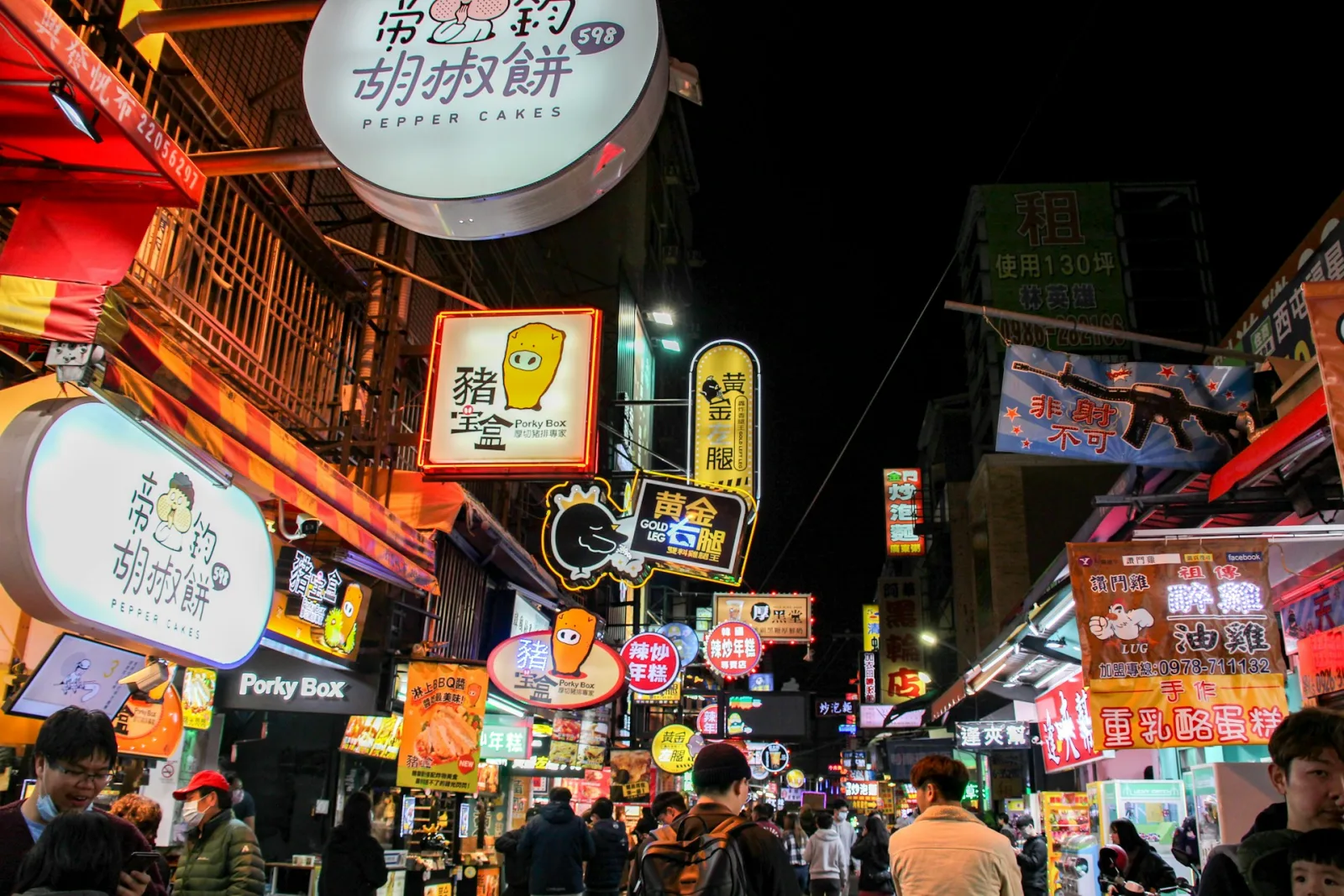
Colourful food stalls at a Taipei night market — Taiwan food guide for Indian travelers

Taiwan Food Guide
for Indian Travelers 2026

Must-try dishes, Buddhist vegetarian restaurants, bubble tea types, night market ordering, breakfast culture & food souvenirs — the complete Taiwan food guide for Indians.

Updated June 2026
Written by Nisha Chaudhary — Asia Travel Specialist
Reviewed by Namrata Sethi · Asia Travel Reviewer
Last updated after reviewing:
  • Din Tai Fung vegetarian menu confirmed available at Taipei and Taichung branches — April 2026
  • Tiger Sugar, 50 Lan, and Koi Café Taiwan branch locations verified operational — April 2026
  • Buddhist vegetarian restaurant density by MRT zone in Taipei cross-checked on Google Maps — April 2026

Vegetarian verdict: Taiwan is one of Asia's top vegetarian-friendly destinations. Buddhist su shi (素食) restaurants are found in every city — look for green lotus or Buddhist signage. Key phrase: "Wǒ shì sùshí (我是素食)" — I am vegetarian.

National dish: Braised Pork Rice (Lu Rou Fan, 滷肉飯) — TWD 50–120. Vegetarian version available at su shi restaurants.

Bubble tea: Invented in Taichung in the 1986. Best chains: Tiger Sugar, 50 Lan, Koi Café. Start at 50% sugar level.

Related guides: Taipei night market guide · Taiwan shopping guide · Full Taiwan guide

Last updated: April 2026

Must-Try Taiwanese Dishes for Indian Travelers
Taiwan's food culture rewards the curious — mild, layered flavours, fresh ingredients, and a deep tradition of street food perfected over generations.

Braised Pork Rice — Lu Rou Fan (滷肉飯)

Taiwan's most iconic comfort food — a bowl of steamed white rice crowned with slow-braised minced pork belly in soy sauce, rice wine, and five-spice.

  • Flavour: Deeply savoury, slightly sweet, rich umami — the braised pork practically melts into the rice
  • Cost: TWD 50–120 (₹140–₹335) at local canteens; widely available at any non-tourist restaurant
  • Vegetarian version: Available at Buddhist su shi restaurants — mushroom and tofu braise over rice; nearly identical texture and flavour profile
  • Best eaten at small hole-in-the-wall joints in Taipei's Wanhua or Datong districts — the decades-old family stalls use recipes passed down unchanged
  • Often served with a pickled vegetable side and a soft-boiled soy egg (optional for vegetarians)
Beef Noodle Soup (牛肉麵)

Taiwan's other national dish contender — a rich, slow-braised beef broth with thick wheat noodles, tender beef shank, and fresh scallions. Taipei hosts an annual Beef Noodle Festival.

  • Flavour: Deep, complex broth — either red braised (spicy soy-based) or clear (lighter, more delicate)
  • Cost: TWD 180–400 (₹500–₹1,115) at dedicated beef noodle restaurants
  • Not vegetarian — but vegetable noodle soup (蔬菜麵) is available at su shi restaurants as a direct equivalent
  • Best restaurants in Taipei: Yongkang Beef Noodle (永康牛肉麵, near Dongmen MRT) — queue but worth it; Lin Dong Fang Beef Noodles (林東芳牛肉麵, Zhongshan district)
  • Best in Taichung: Excellent at any of the local canteen restaurants near Taichung Train Station

Scallion Pancake (蔥油餅) — Naturally Vegetarian

A crispy, layered flatbread made with spring onion and sesame oil — one of Taiwan's most universally loved street foods, and completely vegetarian without asking.

  • Flavour: Savoury, slightly chewy inside with crispy exterior; spring onion and sesame flavour throughout
  • Cost: TWD 30–60 (₹85–₹170) at night market stalls
  • Available at virtually every night market and breakfast shop in Taiwan
  • Variations: plain, with egg (加蛋), with cheese, with kimchi — the plain version is always safe for vegetarians
  • The closest Taiwanese equivalent to Indian paratha — Indian travelers consistently rank this among their favourite Taiwan foods
  • Makes an excellent breakfast item with soy milk — the quintessential Taiwanese morning combination

Taiwan Fruits — Wax Apple, Mango, Guava

Taiwan's tropical and subtropical climate produces fruits largely unknown in India — all available fresh at night markets and morning fruit stalls year-round.

  • Wax Apple (蓮霧): Bell-shaped, candy-pink, crisp and mildly sweet — completely unique to Taiwan; grows nowhere else. Try it if you see it
  • Taiwan Mango (愛文芒果): Irwin and Aiwen varieties (May–September) — sweeter and less fibrous than Alphonso; considered among Asia's finest. Best at Tainan and Kaohsiung summer markets
  • Guava with Plum Powder (芭樂配梅粉): Green guava cut into wedges dipped in dried plum powder — a daily snack across Taiwan. The flavour combination is unusual but addictive
  • Wulong Tea Pineapple (金鑽鳳梨): Taiwan pineapple is exceptionally sweet — entirely different from the sharp Indian variety. The base of pineapple cake (the signature souvenir)
  • Night market fruit stalls offer fresh-cut portions from TWD 30–60 — try before committing to a full piece

Taro Ball Dessert (芋圓) — Vegetarian

Chewy taro and sweet potato balls served in a warm or cold sweet broth — the definitive Taiwanese dessert, and one of the best naturally vegetarian dishes at any night market.

  • Flavour: Mildly sweet, earthy taro flavour; satisfying chewy texture similar to mochi
  • Cost: TWD 50–80 (₹140–₹225) for a bowl with coconut milk or red bean broth
  • Jiufen is the spiritual home of taro balls — the original shops on the Old Street steps are the most atmospheric setting to eat them
  • Available in cold (summer) and warm (winter/autumn) versions — the warm version with red bean and peanut soup is exceptional in cool October–November weather
  • Completely vegetarian — no animal products; suitable for most Indian dietary requirements

Stinky Tofu (臭豆腐) — Approach with Curiosity

Taiwan's most notorious food — fermented tofu with a pungent smell that hits before you see the stall. One of the most divisive food experiences in Asia.

  • Smell: Extremely pungent — often compared to overripe cheese or compost. The smell is far worse than the taste
  • Flavour: Once past the smell, the taste is deeply savoury — crispy outside, soft creamy inside with a complex fermented depth
  • Start with the steamed version (蒸臭豆腐) which has a milder smell than the deep-fried version (炸臭豆腐)
  • Cost: TWD 50–80 at most night market stalls
  • Vegetarian-safe — tofu is the base; check the accompanying broth or sauce doesn't contain seafood
  • If you can get past the smell — which ~60% of Indian travelers manage — it is genuinely good food and an authentic Taiwan experience
Vegetarian Dining in Taiwan — Complete Guide for Indians
Taiwan has one of Asia's deepest Buddhist vegetarian restaurant cultures. This section is the most India-critical part of this food guide.

Key fact: Taiwan has over 6,000 registered Buddhist vegetarian (素食 sùshí) restaurants — one of the highest concentrations globally. Finding vegetarian food in any Taiwanese city is significantly easier than in Japan, Thailand, or South Korea.

Finding Vegetarian Restaurants

  • Look for the green sign: A green background with a lotus flower (蓮花), Buddhist wheel (法輪), or the characters 素食 (sùshí) identifies a vegetarian restaurant. These signs are not standardised but consistently green
  • Google Maps: Search "素食" from your current location — returns the nearest vegetarian restaurants with hours, ratings, and photos. Works throughout Taiwan
  • Happy Cow app: Lists Taiwan's vegetarian and vegan restaurants with user reviews — useful for finding English-reviewed options in tourist areas
  • Best Taipei zones: Yongkang Street (Dongmen MRT) — highest density in Taipei; Gongguan MRT (near NTU University); Zhongshan MRT (Linsen North Road area)
  • Vegetarian buffet (素食自助餐): A uniquely Taiwanese institution — display counter of 15–30 vegetarian dishes; you point and fill a plate; pay by weight. Cost: TWD 80–150 for a generous plate (₹225–₹420). These exist in every neighbourhood

Essential Vegetarian Phrases

These five phrases handle virtually every vegetarian dining situation in Taiwan:

  • "Wǒ shì sùshí" (我是素食) — I am vegetarian. The single most important phrase. Say this to any vendor and they understand immediately
  • "Sùshí" (素食) — Vegetarian (as an adjective). Hold up one finger and say this — universally understood at any food stall
  • "Bù yào ròu" (不要肉) — No meat please. Useful in regular restaurants
  • "Bù yào dà suàn, cōng" (不要大蒜,蔥) — No garlic, no spring onion. Essential for Jain travelers. Add: "yě bù yào jiǔcài (也不要韭菜)" — also no chives
  • "Yǒu méiyǒu sùshí?" (有沒有素食?) — Do you have a vegetarian option? Useful when entering a non-specialist restaurant
  • Save these phrases as screenshots on your phone — show the screen to vendors when needed; no pronunciation required

Naturally Vegetarian Taiwan Foods

These Taiwan foods require no special request — they are vegetarian by default:

  • Scallion Pancake (蔥油餅): Dough, spring onion, sesame oil — always vegetarian unless you add egg
  • Taro Balls (芋圓): Taro, sweet potato, tapioca — the dessert broth is also vegetarian
  • Fresh Fruit (新鮮水果): Every night market has cut fruit stalls — universally safe
  • Bubble Tea (珍珠奶茶): All standard bubble tea is vegetarian; tapioca pearls are plant-based
  • Sweet Potato (地瓜): Whole-roasted sweet potato at night markets — TWD 30–50
  • Corn on the Cob (玉米): Grilled corn — common at all night markets; vegetarian
  • Red Bean Soup (紅豆湯): Sweet azuki bean soup — a traditional Taiwanese dessert soup; entirely plant-based
  • Pineapple Cake (鳳梨酥): The souvenir — pastry, pineapple filling, butter. No meat. Safe for most Indian vegetarians (contains dairy)

Jain Travelers — Special Notes

Taiwan's Buddhist vegetarian culture excludes the "five pungent roots" (五辛 — garlic, onion, spring onion, chives, and shallots) in strict Buddhist practice — directly aligned with Jain dietary requirements.

  • Strict Buddhist vegetarian (全素 quán sù or 清素 qīng sù) restaurants also exclude the five pungent roots — these are the safest for Jain travelers
  • Look for "全素" or "清素" signs rather than just "素食" for strictest compliance
  • Show vendors the phrase: "不要大蒜、洋蔥、蔥、韭菜、薤 (bù yào dà suàn, yáng cōng, cōng, jiǔcài, xiè)" — No garlic, onion, spring onion, chives, or shallots
  • Scallion pancake (蔥油餅) contains spring onion — not suitable for strict Jain travelers
  • Taro balls, fresh fruit, red bean soup, pineapple cake, plain white rice, and plain tofu are safe across all Jain requirements
  • Inform your tour guide or hotel about Jain requirements before arrival — most Taipei hotels can arrange compliant meals with advance notice
Taiwan Bubble Tea Guide — Types, Chains & How to Order
Taiwan invented bubble tea. Knowing how to order properly makes the experience dramatically better — there are more choices than the menu suggests.

Types of Bubble Tea

  • Classic Pearl Milk Tea (珍珠奶茶): Black tea with milk and black tapioca pearls — the original 1986 formula. Start here on your first order
  • Brown Sugar Tiger Milk Tea (黑糖虎紋鮮奶): Fresh milk striped with brown sugar syrup; tapioca pearls marinated in brown sugar — richer and sweeter than classic; Tiger Sugar chain's signature
  • Taro Milk Tea (芋頭奶茶): Purple taro milk tea — mildly sweet, earthy, beautiful colour. Popular with Indian travelers who enjoy taro in other forms
  • Matcha Milk Tea (抹茶奶茶): Japanese green tea base with milk and pearls — earthy, slightly bitter, complemented well by the sweet pearls
  • Fruit Tea (水果茶): No milk base — green or black tea with fresh fruit, tapioca or popping boba. Lighter and refreshing; good for those who don't want a heavy milk-based drink
  • Popping Boba (果汁爆爆珠): Small spheres filled with fruit juice that pop in the mouth — used in fruit teas; lighter texture than classic tapioca pearls

How to Order — Sugar & Ice Levels

Every Taiwan bubble tea shop asks two customisation questions: sugar level and ice level. This is not optional — you will be asked every time.

  • Sugar levels offered: 0% (無糖 wú táng) · 25% (少少糖) · 50% (少糖 shǎo táng) · 70% · 100% (全糖 quán táng)
  • Indian recommendation: Start at 50% sugar — most Indian palates find 70–100% uncomfortably sweet after a few sips
  • Ice levels: No ice (去冰 qù bīng) · Less ice (少冰) · Normal ice · Extra ice
  • For autumn/winter visits: ask for warm (熱的 rè de) or room temperature (常溫 cháng wēn) — most chains offer hot versions of their classic teas
  • Tapioca pearls have a 2-hour optimal texture window — drink within 30 minutes of purchase for the best chew
  • Standard cup size: medium (M) is sufficient for most drinks; large (L) for very hot days

Best Bubble Tea Chains in Taiwan

  • Tiger Sugar (老虎堂): Famous for the brown sugar tiger stripe milk with fresh milk. Queue-worthy. Originated in Taichung. Branches island-wide; Ximending Taipei is most accessible
  • 50 Lan (五十嵐): Taiwan's most widespread chain; widest menu; consistently good quality. Green tea milk tea is underrated
  • Chun Shui Tang (春水堂 — Taichung): The original birthplace; more tea house than chain. Premium pricing; historical significance. Original Sichuan Road branch, Taichung
  • Koi Café (KOI Thé): Premium single-origin teas; serious quality control; higher price (TWD 80–150). Best for tea purists who want to taste the base without heavy sweetness
  • Each A Cup (一杯): Budget-friendly island-wide chain; reliable classic pearls; good for everyday ordering
  • Avoid at Taoyuan Airport: Most airport kiosks charge 30–50% premium over city prices — buy from any 7-Eleven adjacent shop in Taipei instead
Taiwan Breakfast Culture
Taiwan's breakfast culture is distinct from the rest of Asia — dedicated breakfast shops open at 5–6 AM and close by 11 AM. The soy milk and scallion pancake combination is a morning ritual.

Traditional Taiwanese Breakfast (早餐)

  • Soy Milk (豆漿 dòu jiāng): Warm, freshly pressed soy milk — sweet (甜豆漿) or savoury with vinegar (鹹豆漿). The savoury version curdles into a silky tofu-like consistency. TWD 25–40
  • Scallion Pancake with Egg (蔥油餅加蛋): The most popular breakfast item — crispy flatbread griddled with a beaten egg pressed in. Vegetarians can ask for the egg-free version (不要蛋 bù yào dàn)
  • Dan Bing (蛋餅): A thin egg crepe wrapped around filling — cheese, corn, tuna, or vegetable variations. The cheese and corn version is vegetarian-safe
  • Shao Bing You Tiao (燒餅油條): Sesame flatbread (shao bing) wrapped around a fried dough stick (you tiao) — Taiwan's equivalent of a breakfast wrap. Crispy, slightly oily, deeply satisfying
  • Where to find: Dedicated breakfast shops (早餐店 zǎocān diàn) open from 5:30 AM to 11 AM on most residential streets. Ask your hotel to point you to the nearest one. 7-Eleven also has breakfast sandwiches and hot foods from TWD 25

Taiwan Coffee & Café Culture

  • Taipei has an outstanding independent café scene — hand-drip coffee (手沖咖啡) culture is taken very seriously in Da'an, Zhongshan, and Yongkang Street areas
  • Cost: Single-origin pour-over coffee TWD 120–220 (₹335–₹615) at independent cafés; chain (Louisa Coffee, Cama) from TWD 60–100
  • 7-Eleven City Café (城市咖啡) sells freshly brewed Americano and Latte from TWD 45–55 — genuinely good quality for convenience store coffee
  • Taiwan's café culture embraces long stays — order a drink and most cafés are happy for you to sit for hours with your laptop
  • Vegetarian-safe: All coffee and tea drinks are plant-safe; specify oat milk (燕麥奶 yànmài nǎi) or soy milk (豆漿) if dairy-free required
  • Best café street: Yongkang Street off Dongmen MRT — 15+ independent cafés within a 10-minute walk
Night Market Ordering Guide for Indian Travelers
Night markets are Taiwan's most accessible food environment — but knowing how to navigate them confidently makes the experience significantly better.

Ordering System & Payment

  • Point and buy: Most night market stalls work on a point-and-gesture system — no Mandarin needed. Point at what you want; hold up fingers for quantity; pay the amount shown on a small screen or written slip
  • Payment: Night markets are almost entirely cash-only. Carry TWD 500–1,000 in cash per person per night market visit. ATMs are usually within 100m of every major market
  • No tips: Tipping at night market stalls is not a custom and may be refused — simply pay the stated price
  • Hygiene: Night market food in Taiwan is generally safe — high stall turnover means fresh food; Taiwan's health standards for street food are strictly enforced
  • Eat as you walk: Night markets are designed for walking and eating simultaneously — single-serve items in paper cups, skewers, or small bags are the format
  • Average spend per person per visit: TWD 200–400 (₹560–₹1,115) eating 4–6 items

Vegetarian at Night Markets — Practical Tips

  • Safe without asking: Scallion pancake stalls, taro ball stalls, fresh fruit stalls, sweet potato, BBQ corn, red bean dessert stalls, and bubble tea — all vegetarian without needing to clarify
  • Always clarify: Anything in a broth, sauce, or noodle soup — the stock is frequently pork or seafood-based even if the visible ingredients look vegetarian
  • The phrase: Hold up one finger, say "Sùshí (素食)" — vendor will either confirm it's vegetarian or point you to a vegetarian option or alternative stall
  • If a stall has a dedicated green 素食 sign: everything on the menu is vegetarian — order freely
  • Stinky tofu: The tofu itself is vegetarian; ask about the dipping sauce and broth used — some versions use pork broth
  • Build a note on your phone with the key phrase "我是素食" — showing the screen is faster than any spoken attempt at pronunciation
Taiwan Food Souvenirs — What to Buy & Which Brands
Taiwan's food souvenirs are genuinely good — not generic airport confectionery. These are the items worth seeking out and carrying back to India.

Pineapple Cake (鳳梨酥) — Top Pick

Taiwan's most iconic souvenir — a buttery pastry with a dense, sweet pineapple filling. Gift boxes available everywhere from convenience stores to premium boutiques.

  • Sunny Hills (微熱山丘): Premium brand; uses only Guanmiao pineapples; no preservatives; naturally flavoured. Flagship stores in Taipei, Taichung, Kaohsiung. Sample before you buy — offered free in-store. Best overall quality
  • SunCake (太陽堂): Taichung institution since 1954; the other strong contender for "best" — slightly drier, more traditional texture. Best bought at the original Ziyou Road store in Taichung
  • Yi Zhi Xuan (一之軒): Widely available chain with consistently good quality; accessible price point; shorter shelf life than Sunny Hills. Good for quantity gifting
  • Shelf life: 2–3 weeks at room temperature; 1 month if refrigerated. Well within India return journey timeframes
  • Available at: Taoyuan Airport duty-free (premium), convenience stores island-wide (Yi Zhi Xuan), and branded store locations

High Mountain Tea (高山茶)

  • Ali Shan Oolong (阿里山烏龍): Taiwan's most famous export tea — grown at 1,000–1,400m on Alishan mountain; light, floral, subtly creamy. Avoid buying at tourist traps — look for sealed HACCP-certified packaging from the tea garden directly
  • Li Shan Oolong (梨山烏龍): Higher altitude (2,000m+) than Alishan — rarer, more complex, higher price. Often considered Taiwan's finest oolong
  • Sun Moon Lake Red Tea (日月潭紅茶): Taiwan Assam black tea with a uniquely malty, full-bodied character unlike any Indian Assam. Available at Sun Moon Lake shops and Taoyuan Airport
  • How to buy: Look for vacuum-sealed canisters with farm name, harvest date, and HACCP certification. Any of these teas makes an exceptional personalised gift for tea-drinking family members
  • Price: Quality Ali Shan Oolong: TWD 500–1,500 (₹1,390–₹4,200) per 75g gift tin. Li Shan: TWD 1,500–4,000 (₹4,200–₹11,200) per 75g

Dried Fruit & Other Edible Souvenirs

  • Dried Mango Slices (芒果乾): Taiwan mango dried without additives — intensely fruity, light to pack, TSA-compliant. Best at night market stalls and Jiufen shops; avoid airport versions which are overpriced
  • Bubble Tea Kit: DIY pearl milk tea set including tapioca pearls, tea bags, and brown sugar syrup — widely available at 7-Eleven, FamilyMart, and gift shops. Cost: TWD 150–350 (₹420–₹975). The most universally appreciated gift for friends and family in India
  • Nougat (牛軋糖): Chewy milk nougat with peanuts or cranberries — a Jiufen and Taichung speciality. More unique than pineapple cake for younger recipients. Shelf life: 2–3 weeks
  • Taiwanese Chocolate (鳳梨巧克力): Local craft chocolate incorporating pineapple, oolong, and indigenous ingredients — Fuwan Chocolate from Pingtung is the premium brand
  • CUSTOMS NOTE: All food souvenirs listed are shelf-stable processed goods — acceptable under Indian customs. Fresh fruits, vegetables, and unpasteurised products are not permitted for import into India

Planning a Taiwan food tour? Our packages include night market walks, vegetarian restaurant guidance, bubble tea origin visits, and all Taiwan logistics.

Plan My Taiwan Trip →
Taiwan Food FAQ for Indian Travelers
Specific food and dietary questions answered
1Can Indian vegetarians find food easily in Taiwan?
Yes — Taiwan is genuinely one of Asia's best countries for Indian vegetarians. Buddhist vegetarian (素食 sùshí) restaurants operate in every city, marked with green lotus or Buddhist signage. The vegetarian buffet (素食自助餐) format — display counter of 15–30 dishes, point and fill your plate for TWD 80–150 — exists in virtually every neighbourhood. The key phrase: "Wǒ shì sùshí (我是素食)". Night markets offer naturally vegetarian options throughout. Jain travelers should additionally specify no garlic/onion using "bù yào dà suàn, cōng (不要大蒜,蔥)".
2What is the best bubble tea in Taiwan?
For the authentic original: Chun Shui Tang in Taichung (Sichuan Road original branch) — the most widely credited birthplace of bubble tea. For the best current chains: Tiger Sugar for brown sugar tiger stripe milk; 50 Lan for widest menu and consistent island-wide quality; Koi Café for premium single-origin tea quality. When ordering: specify 50% sugar as your starting point — most Indian palates find 70–100% uncomfortably sweet. Say "wǔ chéng táng (五成糖)" or just show the menu item "50%".
3What is Taiwan's national dish?
Braised Pork Rice (Lu Rou Fan, 滷肉飯) is widely considered Taiwan's national comfort dish — slow-braised minced pork belly with soy sauce and five-spice over steamed white rice; TWD 50–120 at local canteens. Beef Noodle Soup (牛肉麵) is the other strong contender — rich slow-braised beef broth with thick noodles. For vegetarians, both have excellent equivalents at Buddhist su shi restaurants (mushroom braise over rice; vegetable noodle soup). Bubble Tea is Taiwan's most globally famous food contribution — invented in Taichung in 1986.
4How spicy is Taiwanese food compared to Indian food?
Taiwanese food is significantly milder than Indian food — most dishes contain no chilli at all. Spice is optional and always declared separately on menus. When ordering, say "Bù là (不辣)" — not spicy — and vendors comply immediately. Taiwanese cuisine builds flavour through soy sauce, sesame oil, rice wine, and five-spice rather than chilli heat. Indian travelers who enjoy mild food will find Taiwan very accessible; those craving Indian-level spice can look for sichuan-style Taiwanese dishes (四川料理) marked with red chilli symbols, or pack a small supply of chilli condiments from home.
5What food souvenirs should I buy in Taiwan for family in India?
The best Taiwan food souvenirs for India: Pineapple cake (鳳梨酥) — best brands Sunny Hills and SunCake; shelf life 2–3 weeks; gift boxes widely available. Bubble tea DIY kit — tapioca pearls, tea bags, brown sugar syrup; available at 7-Eleven; the most appreciated gift for younger family members. Ali Shan or Li Shan Oolong tea in gift tins — excellent for tea-drinking adults. Dried mango slices — light, no additives, TSA-compliant. All available at Taoyuan Airport duty-free for last-minute buying.
6Where can I find the Taiwan shopping guide for non-food items?
For Taiwan shopping beyond food — pineapple cake gift stores, tea shops, electronics, ceramics, and night market clothing — see our Taiwan shopping & markets guide. For night market locations with MRT directions, see our Taipei city guide. The full Taiwan planning overview is in our Taiwan Travel Guide for Indians.

Planning a Taiwan trip that does justice to its food culture? Our packages include guided night market walks, vegetarian restaurant bookings, and Chun Shui Tang visits.

Enquire About Taiwan Tour Package →

Note: Restaurant operating hours and bubble tea chain branch locations change periodically — verify before visiting. Pineapple cake shelf life varies by brand — check packaging for exact dates. All food prices are approximate and based on April 2026 market conditions. For shopping guidance on non-food items, see our Taiwan shopping & markets guide.

More Travel Guides

Explore Other Destinations

Plan Your Taiwan Food Experience

Tell us your dietary requirements and travel dates — we will design a Taiwan itinerary that maximises food experiences including night markets, vegetarian restaurants, and the bubble tea origin visit.

We handle visa, flights, hotels, Taiwan Rail Pass, guided tours, and ensure vegetarian meals are arranged at every stop of your Taiwan itinerary.

Enquire About This Package