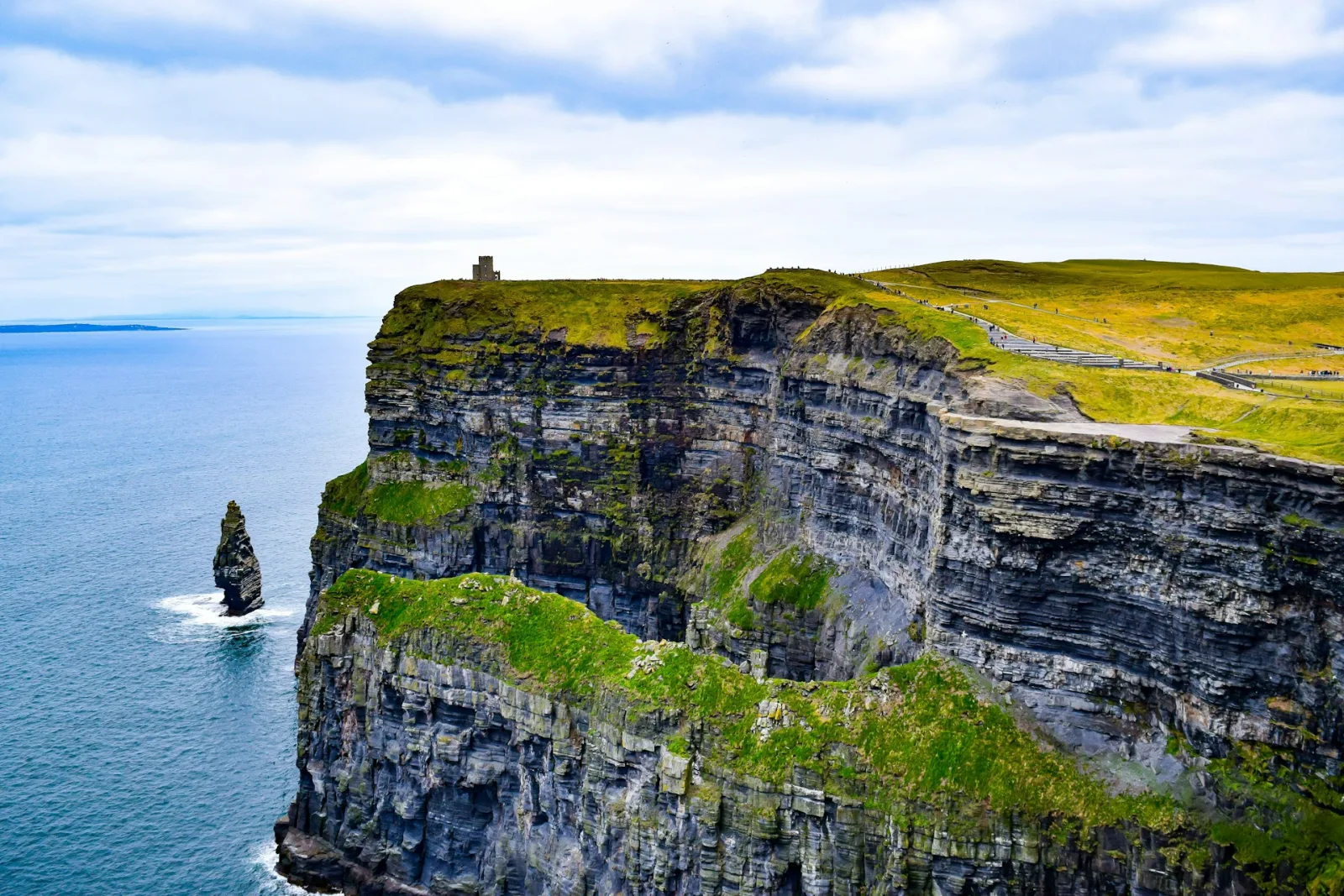
Aerial view of the Cliffs of Moher coastline and the Atlantic Ocean, Ireland

Ireland Travel Guide
for Indian Travelers

Visa, cost, itinerary & tips — your complete guide to planning a trip to Ireland from India in 2026.

Updated for 2026 Travelers
Written by Bilas Munda — Europe Travel Specialist
Reviewed by Vijay Prasad · Europe Travel Reviewer
Last updated after reviewing:
  • Irish Short Stay Visa processing times and VFS Global appointment availability for Indians (2026 update)
  • Direct and connecting flight route expansions to Dublin Airport (DUB) from Delhi and Mumbai
  • Updated Indian traveler advisories for road trips and car rentals in Ireland (Right-Hand Drive)

Last updated: April 2026

Ireland Trip Cost from India (Detailed Breakdown)
Realistic cost breakdown for flights, visa, hotels, food, and total budget for 2026

Cost Breakdown 2026

  • Return Flights: ₹60,000 – ₹90,000
  • Visa Fee: ₹7,500 – ₹8,500 (Short Stay 'C' Visa + VFS charges)
  • Hotels (per night): ₹8,000 – ₹18,000
  • Food (per day): ₹3,500 – ₹7,000
  • Local Transport (per day): ₹2,000 – ₹5,000 (car rental or trains)
  • Activities & Entry Fees: ₹15,000 – ₹30,000 total
  • Travel Insurance: ₹1,500 – ₹3,000
  • Total (7–10 days): ₹1.8L – ₹3.5L per person

Ireland is moderately priced compared to Western Europe. While Dublin accommodation can be expensive, rural areas offer better value. Car rentals are highly recommended for exploring the countryside.

Best Departure Cities

  • Delhi (DEL) — Best connectivity via London, Frankfurt, or Dubai
  • Mumbai (BOM) — Good connections via London or Middle East hubs
  • Bangalore (BLR) — Options via London or Frankfurt
  • Hyderabad (HYD) — Connections via Middle East or European hubs
  • Chennai (MAA) — Options via London or Middle East

Delhi and Mumbai offer the most competitive fares and seamless single-layover options to Dublin Airport (DUB).

Ready to plan your Ireland trip? Let us handle flights, visa, hotels, and tours.

View Ireland Tour Packages →
Flight Routes from India to Ireland
Flights from India to Dublin take 10–15 hours with one layover. Here are the most popular routes.

Delhi to Dublin

  • Route 1: DEL → London (LHR) → Dublin (DUB) (British Airways / Aer Lingus)
  • Route 2: DEL → Frankfurt (FRA) → Dublin (DUB) (Lufthansa)
  • Route 3: DEL → Dubai (DXB) → Dublin (DUB) (Emirates)
  • Duration: 11–14 hours
  • Price Range: ₹65,000 – ₹90,000

Mumbai to Dublin

  • Route 1: BOM → London (LHR) → Dublin (DUB) (British Airways / Aer Lingus)
  • Route 2: BOM → Dubai (DXB) → Dublin (DUB) (Emirates)
  • Route 3: BOM → Amsterdam (AMS) → Dublin (DUB) (KLM)
  • Duration: 12–15 hours
  • Price Range: ₹60,000 – ₹95,000

Note: Dublin Airport (DUB) is the main international gateway. For travelers visiting Northern Ireland (e.g., Giant's Causeway), Belfast International (BFS) or George Best Belfast City (BHD) are alternative entry points, though Dublin remains the most convenient for a full Ireland road trip.

Ireland vs UK Cost for Indian Travelers
How does Ireland compare to the UK on cost? Here is a practical comparison for Indian travelers planning a 7-10 day trip.
Expense Ireland (7 days) UK (7 days)
Flights₹60K – ₹90K₹55K – ₹85K
Visa₹7.5K – ₹8.5K₹10K – ₹12K
Hotels/night₹8K – ₹18K₹9K – ₹20K
Food/day₹3.5K – ₹7K₹4K – ₹8K
Local Transport₹2K – ₹5K/day₹2.5K – ₹6K/day
Total Trip₹1.8L – ₹3.5L₹2L – ₹3.8L
Flights
Ireland₹60K – ₹90K
UK₹55K – ₹85K
Visa
Ireland₹7.5K – ₹8.5K
UK₹10K – ₹12K
Hotels/night
Ireland₹8K – ₹18K
UK₹9K – ₹20K
Total Trip
Ireland₹1.8L – ₹3.5L
UK₹2L – ₹3.8L

Ireland offers a more compact, easier-to-navigate road trip experience compared to the UK. While daily costs are similar, the shorter distances between major attractions in Ireland make it highly efficient for a 7-10 day itinerary.

Best Time to Visit Ireland from India
Ireland can be visited year-round, but the best time depends on your tolerance for rain and desire for long daylight hours.
Month Ireland Season Dublin Countryside India Travel Note
JanWinterCold, rainy 4–8°CLimited daylight, some closuresBudget season, fewer crowds
FebWinterCold, rainy 4–8°CSt. Patrick's Day prep beginsModerate season
MarEarly SpringCool 6–10°CSt. Patrick's Day (March 17) — book early!High demand for March 17 week
AprSpring ✓Mild 7–12°C, bloomingGood, fewer crowdsGood shoulder window
MaySpring ✓✓Pleasant 9–15°CExcellent, long days, green landscapesIdeal time for Indian travelers
JunSummer PeakWarm 12–18°CBest access, longest daylight hoursIndia school holidays — book 4-6 months ahead
JulSummer PeakWarm 14–20°CPeak tourist season, vibrantIndia school holidays — peak demand
AugSummer PeakWarm 14–20°CBusy, festivals and eventsIndia school holidays end
SepAutumn ✓Mild 11–16°CExcellent, fewer crowds, autumn coloursGreat post-monsoon window from India
OctLate AutumnCool 8–13°CRain increases, rural closures beginModerate season
NovWinterCold 5–9°CShort days, rainyBudget season
DecWinter / FestiveCold 4–8°C, festive marketsLimited daylight, cozy pubsGood for Christmas markets, but cold
7-Day Ireland Itinerary for Indian Travelers
A perfect one-week Ireland itinerary covering Dublin, Galway, Cliffs of Moher, and the Ring of Kerry.

Day-by-Day Plan

  • Day 1: Arrive in Dublin — rest, explore Temple Bar and Trinity College (Book of Kells)
  • Day 2: Dublin city tour — Guinness Storehouse, Phoenix Park, evening traditional music
  • Day 3: Drive to Galway — stop at Clonmacnoise, explore Galway's Latin Quarter
  • Day 4: Cliffs of Moher and Burren day trip from Galway — return to Galway
  • Day 5: Drive to Killarney — explore Killarney National Park and Muckross House
  • Day 6: Ring of Kerry scenic drive — Dingle Peninsula, return to Killarney
  • Day 7: Return to Dublin via Rock of Cashel — depart from Dublin Airport

Planning Notes

  • Car Rental: Highly recommended for the countryside. Remember, Ireland drives on the left (like India).
  • Budget option: Use Irish Rail (Iarnród Éireann) and Bus Éireann if you prefer not to drive.
  • Currency: Euro (EUR). Cards are widely accepted, but carry some cash for rural pubs and small vendors.
  • Language: English is the primary language. Irish (Gaelic) is spoken in Gaeltacht regions but English is universally understood.
  • Connectivity: EU roaming applies; Indian travelers can buy a local Vodafone or Three Ireland SIM/eSIM at the airport.
  • Vegetarians: Dublin and Galway have excellent vegetarian/vegan options. Inform rural B&Bs in advance.
  • Book ahead: For June–August travel, book car rentals and accommodations 4–6 months in advance.

Want a hassle-free Ireland trip? Our packages include flights, hotels, transfers, and guided tours.

Book Ireland Tour Package →
Ireland Visa for Indians — Complete Guide & Travel Essentials
Essential information for Indian travelers — from Irish visa requirements and time zones to plug adapters and local transport apps.

Tip: Ireland is not part of the Schengen Area. A Schengen visa does not grant entry to Ireland. You must apply for a specific Irish visa.

Ireland Visa for Indians — 2026 Update

  • Visa Type: Short Stay 'C' Visa (Tourist) is required for Indian passport holders.
  • No Visa-Free Access: Unlike the UK or Schengen, Ireland does not currently offer visa-free entry or e-visas for Indians.
  • Where to apply: Applications are submitted online via the AVATS system, followed by a biometric appointment at VFS Global centres in New Delhi, Mumbai, or Bengaluru.
  • Documents: Valid passport (6+ months validity), completed online summary, cover letter, return flight tickets, hotel bookings, bank statements (last 6 months), and travel insurance.
  • Processing time: 4 to 8 weeks — apply at least 2-3 months before your travel date.
  • Duration permitted: Up to 90 days (single or multiple entry, at the discretion of the immigration officer).
  • Visa Fee: Approximately €60 (₹5,500) + VFS service charges (total ~₹7,500–₹8,500).
CLICK TO KNOW MORE ABOUT VISA DOCUMENTATION & FEES

Time Zone

Ireland follows Greenwich Mean Time (GMT, UTC+0) during standard time and Irish Standard Time (IST, UTC+1) during British Summer Time (late March to late October).

  • Standard Time (Winter): UTC+0 (4.5 hours behind Indian Standard Time)
  • Summer Time (Late Mar–Late Oct): UTC+1 (5.5 hours behind Indian Standard Time)
  • When it is 12:00 PM in Dublin (Summer), it is 5:30 PM in India.
  • Business hours typically run from 9 AM to 5:30 PM on weekdays.
  • Pubs are a central part of Irish culture and typically stay open until 11:30 PM or midnight.

Country Code

To call Ireland from India, use the international dialing code +353 followed by the area code (without the leading zero) and local number.

  • International Dialing Code: +353
  • To call Ireland from India, dial: 00-353-XX-XXXX-XXXX
  • Dublin area code: 1 (e.g., +353 1 XXX XXXX)
  • Cork area code: 21
  • Galway area code: 91
  • Emergency services: 112 or 999 (Police/Ambulance/Fire)
  • Major telecom providers: Vodafone, Three, and Eir
  • Tourist SIM cards and eSIMs are easily available at Dublin Airport.

Socket & Plugs

Ireland uses Type G electrical outlets (UK-style 3-pin rectangular) with 230V at 50Hz. Indian travelers will need a universal travel adapter.

  • Type G — 230V, 50Hz
  • Indian Type D (3-pin round) or Type C (2-pin round) plugs will NOT work without an adapter.
  • Standard voltage is 230V with a frequency of 50Hz.
  • Universal travel adapters are available at Dublin Airport and electronics shops.
  • Most hotels provide adapters at the front desk on request.
  • Most modern devices (laptops, phone chargers) support 100–240V and will work fine with just a plug adapter.

Indian Embassy in Ireland

The Embassy of India in Dublin provides consular services for Indian nationals.

  • Address: 51, Draycott Avenue, Claremont Road, Sidcup, Dublin (Note: Check official site for current operational address)
  • Contact: +353 1 288 2266
  • Email: [email protected]
  • Emergency (24/7): +353 87 238 5555
  • Working Hours: Mon–Fri, 9:30 AM – 1:00 PM (Consular services)
  • Services: passport renewal, emergency certificates, assistance to Indian nationals.
  • Register with MADAD portal before travel for advisories and assistance.

Ireland Embassy in India

The Embassy of Ireland in New Delhi handles diplomatic relations, while visa applications are processed via VFS Global.

  • Embassy New Delhi: N-32, Greater Kailash Part-I, New Delhi 110048
  • Contact Delhi: +91-11-4959 3000
  • Email: [email protected]
  • Visa Processing: Handled exclusively through VFS Global centres in New Delhi, Mumbai, and Bengaluru.
  • Working Hours: Mon–Fri, 9:00 AM – 5:00 PM

Car Driving Orientation

Left-Hand Drive (Same as India)

  • Ireland drives on the left side of the road, identical to India, making it easier for Indian drivers to adapt.
  • Valid Indian Driving License along with an International Driving Permit (IDP) is required for car rentals.
  • Speed limits: 50 km/h in urban areas, 80-100 km/h on regional roads, 120 km/h on motorways.
  • Seat belts mandatory for all passengers.
  • Driving under the influence is strictly prohibited with low legal limits.
  • Rural roads can be narrow and winding; drive cautiously and use designated passing places.

App Based Taxi

Uber, Free Now, and Local Taxis are Primary Options

  • Uber operates in Dublin and major cities.
  • Free Now is a highly popular and reliable ride-hailing app in Ireland.
  • Traditional black cabs and local taxi ranks are widely available and metered.
  • Payment options include credit/debit cards and cash.
  • Average fare from Dublin Airport to city center: €25–€35.
  • Public transport: Dublin has the Luas (tram), DART (commuter rail), and extensive bus networks (Leap Card recommended).

Need help with Ireland visa? Our visa team assists with documentation, application, and follow-up.

Ireland Visa Assistance →
Ireland Culture, Language & Local Customs
Understand Irish English, local slang, and cultural norms to connect better with locals.

Official Language

English and Irish (Gaelic) — Both are official languages.

  • English is the primary language spoken by virtually everyone.
  • Irish (Gaeilge) is taught in schools and used on road signs, especially in the west (Gaeltacht regions).
  • Irish English has a distinct, melodic accent and unique phrasing.
  • Learning a few basic Irish phrases (like "Sláinte" for cheers) is greatly appreciated by locals.
  • Translation apps are rarely needed for English speakers, but useful for Irish language signs.

Local Vocabulary

Understanding these Irish slang terms helps connect with locals and understand the culture better.

  • Craic — Fun, entertainment, or good conversation ("What's the craic?")
  • Grand — Fine, okay, or good ("I'm grand, thanks")
  • Sláinte — Cheers / Good health (pronounced "slawn-cha")
  • Yoke — A thing or object ("Hand me that yoke")
  • Story? — How are you? / What's up?
  • Sound — A good, reliable person ("He's a sound lad")
  • Eejit — Fool or idiot (usually used affectionately)
  • Feck — A milder, acceptable alternative to a stronger swear word

Toilet Signs

Public restrooms are called "Toilets" or "Bathrooms" in Ireland. Signs typically display "Gents" and "Ladies" with pictograms.

  • Public toilets in cities and major tourist sites are generally clean and well-maintained.
  • Some public facilities, especially at scenic stops or older pubs, may charge a small fee (€0.50–€1.00).
  • Shopping centres, restaurants, and hotels have free restrooms for customers.
  • Always carry tissues or hand sanitizer, as some rural facilities may lack supplies.
  • Western-style seated toilets are standard throughout Ireland.

Interesting Facts

Ireland is known as the "Emerald Isle" due to its lush green landscapes, maintained by frequent rainfall.

  • Ireland has no snakes; legend says St. Patrick banished them, but scientifically, it was too cold after the Ice Age.
  • Halloween originated from the ancient Celtic festival of Samhain in Ireland.
  • Ireland has produced four Nobel Prize winners in Literature (Yeats, Shaw, Beckett, Heaney).
  • The Guinness Storehouse in Dublin is the most visited paid tourist attraction in Ireland.
  • Ireland was the first country in the world to legalize same-sex marriage by popular vote (2015).
Ireland Shopping & Markets Guide
From traditional woolen goods and Waterford crystal to local crafts and vibrant weekend markets.

Shopping Hours

Most Shops: 9:00 AM – 6:00 PM (Weekdays)

  • Shopping centres typically operate from 9:00 AM to 7:00 PM, with late-night shopping on Thursdays or Fridays.
  • Sunday trading hours are usually 11:00 AM to 6:00 PM or 7:00 PM.
  • Small independent shops in rural areas may close for lunch or on Mondays/Tuesdays.
  • Supermarkets open from 7 AM to 10 PM or later; some 24-hour outlets exist in cities.
  • Tax-Free Shopping: Non-EU residents can claim VAT refunds on purchases over €90 at participating stores.

Flea & Farmers Markets

Ireland's weekend markets offer unique souvenirs, local produce, and artisanal crafts.

  • Temple Bar Food Market (Dublin): Saturdays, excellent local produce and street food.
  • George's Street Arcade (Dublin): Historic covered market with vintage goods, crafts, and cafes.
  • Galway Market: Saturdays and Sundays, featuring local crafts, jewelry, and organic food.
  • English Market (Cork): A historic, covered food market operating since 1788.
  • Cash and cards are widely accepted, though some small vendors prefer contactless card payments or exact cash.

Famous Brands & Souvenirs

Shopping for traditional Irish goods offers excellent quality and authentic cultural value.

  • Aran Woolen Sweaters: Authentic, hand-knitted sweaters from the Aran Islands.
  • Waterford Crystal: World-renowned glassware and crystal (visit the factory in Waterford or shops in Dublin).
  • Belleek Pottery: Fine, delicate porcelain from County Fermanagh.
  • Irish Whiskey: Jameson, Teeling, or Redbreast (purchase at airport duty-free for best prices).
  • Book of Kells Merchandise: High-quality prints, journals, and gifts from Trinity College.
  • Claddagh Rings: Traditional Irish ring symbolizing love, loyalty, and friendship.

Supermarkets

Major supermarket chains offer wide product ranges with competitive prices for self-catering travelers.

  • Tesco and Dunnes Stores: Widespread, good prices, and own-brand quality products.
  • SuperValu: Strong focus on local Irish produce and meats.
  • Lidl and Aldi: Budget-friendly options with surprisingly high-quality bakery and fresh produce sections.
  • Tap water is safe to drink throughout Ireland, saving money on bottled water.
Ireland Food & Cuisine Guide
Irish cuisine has evolved from traditional hearty fare to a modern, award-winning food scene focused on local, sustainable ingredients.

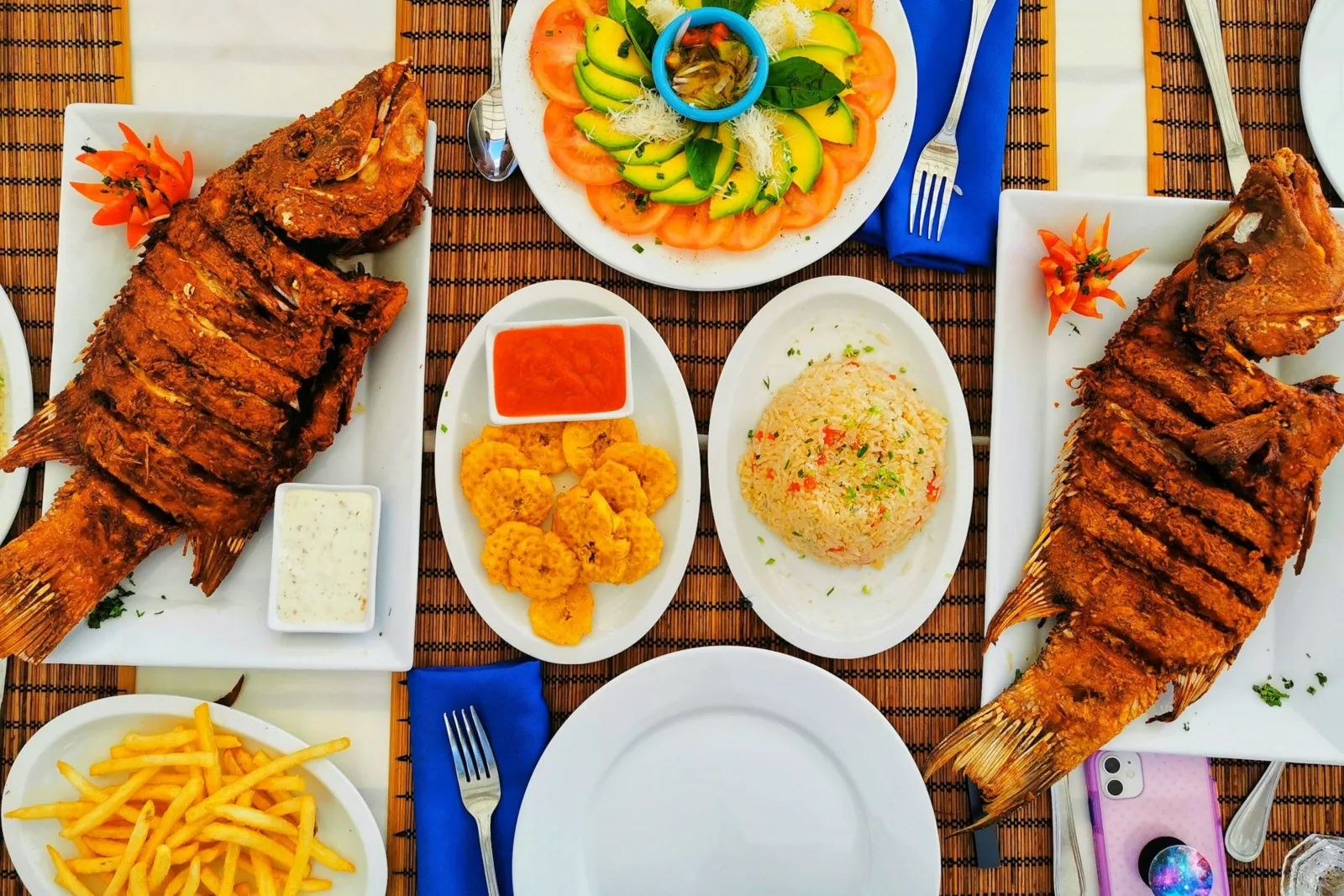
Do: Try traditional Irish stew, fresh Atlantic seafood, and a pint of Guinness in a local pub.

Famous Cuisines

Irish cuisine is known for its hearty, comforting dishes and exceptional dairy and meat products.

  • Irish Stew: Traditional dish made with lamb or mutton, potatoes, onions, and carrots.
  • Colcannon: Creamy mashed potatoes mixed with kale or cabbage and butter.
  • Boxty: Traditional Irish potato pancake, served savory or sweet.
  • Fish and Chips: Fresh Atlantic cod or haddock, best enjoyed in coastal towns like Galway or Howth.
  • Soda Bread: Dense, wholesome bread made with buttermilk and baking soda, served with butter.
  • Seafood Chowder: Creamy soup packed with local salmon, mussels, and prawns.
  • Full Irish Breakfast: Eggs, bacon, sausage, black and white pudding, grilled tomatoes, and mushrooms.

Famous Fruits & Produce

Ireland's mild climate is perfect for growing root vegetables, berries, and apples.

  • Apples: Bramley cooking apples and eating varieties like Russet are widely grown.
  • Strawberries & Raspberries: Irish summer berries are exceptionally sweet and featured in many desserts.
  • Potatoes: The cornerstone of Irish agriculture, with heritage varieties celebrated in gourmet cooking.
  • Rhubarb: Commonly used in traditional Irish crumbles and tarts.

Drinks & Pubs

The Irish pub is a cultural institution, serving as a community hub for food, drink, and live music.

  • Guinness: The iconic dry stout, best tasted in Dublin where it is poured perfectly.
  • Irish Whiskey: Smooth and triple-distilled. Popular brands include Jameson, Bushmills, and Teeling.
  • Irish Coffee: Hot coffee, Irish whiskey, sugar, and topped with thick cream (invented at Foynes Airport).
  • Baileys Irish Cream: A popular liqueur made with Irish whiskey and cream.
  • Many pubs serve excellent "pub grub" (hearty, traditional meals) until 9:00 PM.

Avg Cost Of Food

Budget travelers can eat well for €25–€40 per day at casual eateries. Tipping 10-15% is customary in sit-down restaurants if service is not included.

  • Pub Meal / Sandwich: €12–€18
  • Menu del Dia / Lunch Special: €15–€25
  • Mid-range Restaurant (per person): €25–€45
  • Fine Dining (per person): €60–€100+
  • Coffee / Tea: €3–€4
  • Pint of Guinness: €5.50–€7.00 (slightly higher in Temple Bar)
Ireland Weather & Packing Tips
Ireland's weather is famously unpredictable. Pack for all seasons in a single day, focusing on layers and waterproofs.

Tip: "There is no such thing as bad weather, only inappropriate clothing." Pack a high-quality waterproof jacket.

Weather

Ireland has a mild, temperate maritime climate with no extreme temperatures, but frequent rain and wind.

  • Spring (Mar-May): 8–15°C. Unpredictable, mix of sun and rain showers. Landscapes are vividly green.
  • Summer (Jun-Aug): 15–20°C. Warmest and driest period, but rain is still possible. Long daylight hours (up to 17 hours in June).
  • Autumn (Sep-Nov): 8–14°C. Crisp air, beautiful autumn foliage, increasing rainfall.
  • Winter (Dec-Feb): 4–8°C. Cold, damp, and short daylight hours (sunset around 4:30 PM). Rare snow.
  • Wind is a constant factor, especially on the west coast (Cliffs of Moher, Ring of Kerry).

Clothes To Wear

Layering is the key to comfort in Ireland. Avoid umbrellas, as the wind will break them; opt for a hooded waterproof jacket instead.

Essential Packing List:

  • Waterproof Jacket: A high-quality, windproof, and waterproof outer shell with a hood.
  • Layers: Thermal base layers, fleece or wool sweaters, and light jackets for easy adjustment.
  • Footwear: Sturdy, waterproof walking shoes or boots with good grip for muddy or wet trails.
  • Accessories: Scarf, gloves, and a warm hat (even in summer, coastal winds are chilly).
  • Smart-Casual Attire: For nice dinners or theatre visits in Dublin (jeans and a collared shirt or blouse are generally acceptable).
  • Adapter: Type G (UK-style 3-pin) plug adapter.
Ireland Heritage & Cultural Highlights
UNESCO sites, national symbols, and cultural touchstones that capture Ireland's rich history.

UNESCO World Heritage Sites

Ireland boasts several UNESCO World Heritage Sites, reflecting its deep historical and natural significance.

  • Brú na Bóinne (1993): Prehistoric passage tombs of Newgrange, Knowth, and Dowth (older than Stonehenge and the Pyramids).
  • Skellig Michael (1996): Dramatic rocky island with a 6th-century monastic settlement (featured in Star Wars).
  • The Paleobiological Site of the Burren: Unique karst landscape with rich archaeological remains.
  • Western Stone Forts: Ancient defensive structures on the Aran Islands.

National Symbols

Ireland's symbols are deeply tied to its mythology, religion, and natural landscape.

  • National Emblem: The Harp (featured on coins, government documents, and the Guinness logo).
  • National Flower: The Shamrock (used by St. Patrick to explain the Holy Trinity).
  • National Colours: Green and Orange (representing Gaelic tradition and Protestant tradition, respectively, with white for peace).
  • National Animal: The Irish Hare (and mythologically, the Stag).
  • National Sport: Gaelic Football and Hurling (governed by the GAA).

Films Shot in Ireland

Ireland's dramatic landscapes and historic architecture make it a popular filming location.

  • Braveheart (1995): Filmed in County Meath and other locations.
  • Star Wars: The Force Awakens & The Last Jedi (2015, 2017): Skellig Michael and Ceann Sibeal (County Kerry).
  • Harry Potter and the Half-Blood Prince (2009): Cliffs of Moher (as the exterior of the Horcrux cave).
  • The Quiet Man (1952): Classic film shot in Cong, County Mayo.
  • PS I Love You (2007): Various locations including Wicklow and Kerry.

Souvenirs

Best places to shop for souvenirs: Dublin's Grafton Street, Galway's Shop Street, and airport duty-free.

  • Aran Sweaters: Authentic, hand-knitted wool (look for the "Séafra" or similar authentic marks).
  • Waterford Crystal: High-end glassware and ornaments.
  • Claddagh Rings: Traditional rings symbolizing love, loyalty, and friendship.
  • Irish Whiskey & Baileys: Best purchased at Dublin Airport duty-free.
  • Book of Kells Merchandise: High-quality prints and journals from Trinity College.
  • Local Food Products: Irish butter (Kerrygold), shortbread, and artisanal chocolates.
Notable Highlights for Indian Travelers
From literary giants to groundbreaking cultural exports, discover what makes Ireland unique on the global stage.

Famous People

  • Oscar Wilde (1854–1900): Renowned playwright and poet, born in Dublin.
  • James Joyce (1882–1941): Modernist writer, author of *Ulysses*, set in Dublin.
  • W.B. Yeats (1865–1939): Nobel Prize-winning poet and one of the foremost figures of 20th-century literature.
  • Bono (1960–): Lead vocalist of the globally successful rock band U2.
  • Enya (1961–): Grammy Award-winning singer and composer.
  • Conor McGregor (1988–): Famous mixed martial artist and former UFC champion.
  • Michael Fassbender (1977–): Academy Award-nominated actor.

Famous Inventions & Contributions

Ireland has a strong tradition in scientific, medical, and literary innovation.

  • Transatlantic Telegraph Cable: Laid from Valentia Island, County Kerry, connecting Europe and North America (1858).
  • Modern Tractor: Harry Ferguson, an Irishman, invented the modern agricultural tractor and the three-point hitch system.
  • Nitroglycerin for Heart Conditions: Irish physician William Murrell pioneered its medical use.
  • Boyle's Law: Formulated by Robert Boyle, a foundational principle of modern chemistry and physics.
  • Literary Legacy: Four Nobel Prizes in Literature, more than any other country per capita.

National Dish — Irish Stew

  • Irish Stew is the quintessential comfort food of Ireland.
  • Traditionally made with mutton or lamb, potatoes, onions, and parsley.
  • Modern variations may include carrots, barley, or Guinness for added depth.
  • It reflects Ireland's agricultural history, utilizing readily available, hearty ingredients.
  • Best enjoyed in a traditional pub on a cool, rainy evening.
  • Often served with a slice of brown soda bread and butter.

Is Ireland expensive for Indians? A trip costs ₹1.8L–₹3.5L for 7–10 days including flights, visa, hotels, and food.

Do Indians need a visa? Yes, Indian nationals require a Short Stay 'C' Visa. Processing takes 4-8 weeks via VFS Global.

Flight duration? Flights from India to Dublin typically take 10–15 hours with one layover.

Is Ireland safe for Indian tourists? Yes, Ireland is consistently ranked among the safest countries globally. Standard precautions apply in crowded city areas.

Currency? Euro (EUR). Cards are widely accepted. Carry a small amount of cash for rural areas. UPI is not available.

Frequently Asked Questions — Ireland Travel for Indians
Quick, honest answers to the most common Ireland travel questions from Indian travellers
1Do Indians need a visa for Ireland?
Yes, Indian nationals require a standard Irish Short Stay 'C' Visa for tourism. There is currently no visa-free or visa-on-arrival facility for Indian passport holders. You must apply online and submit biometrics at a VFS Global centre.
2Is Ireland expensive for Indian tourists?
A 7–10 day Ireland trip from India costs approximately ₹1.8L–₹3.5L per person including flights (₹60K–₹90K), visa (₹7.5K–₹8.5K), hotels (₹8K–₹18K/night), food, and activities. It is moderately priced compared to Western Europe.
3How long is the flight from India to Ireland?
Flights take 10–15 hours with one layover, typically via London, Frankfurt, Dubai, or Amsterdam. There are currently no direct flights from India to Dublin.
4What is the best time to visit Ireland from India?
May to September is ideal, offering the warmest weather and longest daylight hours. July and August are peak tourist months, while May and September offer fewer crowds and pleasant conditions.
5Is Ireland safe for Indian tourists?
Yes, Ireland is consistently ranked as one of the safest countries in the world. Violent crime against tourists is extremely rare. Standard precautions apply in crowded tourist areas in Dublin, such as watching for pickpockets.
6Do Indians need a transit visa for Ireland flights?
If transiting through the UK, Indian passport holders require a UK Direct Airside Transit Visa (DATV) or a standard UK visitor visa. Transit via Schengen countries (Frankfurt, Amsterdam) or the Middle East (Dubai) does not require a separate transit visa.
7What is the Ireland tourist visa fee for Indians?
The Irish Short Stay 'C' Visa fee is approximately €60 (around ₹5,500), plus VFS Global service charges, bringing the total to roughly ₹7,500–₹8,500. Processing time is 4 to 8 weeks.
8What plug type is used in Ireland?
Ireland uses Type G electrical outlets (UK-style 3-pin rectangular) with 230V at 50Hz. Indian travelers will need a universal travel adapter, as Indian Type D or C plugs will not fit.
9Can I use Indian Rupee or UPI in Ireland?
No. The local currency is the Euro (EUR). UPI is not available. Carry an international credit/debit card (Visa/Mastercard) and a small amount of Euro cash for minor expenses. Cards are widely accepted everywhere.
10What is the national dish of Ireland?
Irish Stew is the traditional national dish, made with lamb or mutton, potatoes, onions, and carrots. Colcannon (mashed potatoes with kale) and Boxty (potato pancake) are also iconic.
11What is the time difference between India and Ireland?
Ireland is 4.5 hours behind Indian Standard Time (IST) during standard time (UTC+0) and 5.5 hours behind during British Summer Time (UTC+1, late March to late October).
12Can vegetarian Indians find food in Ireland?
Yes, Dublin and major cities like Galway and Cork have excellent vegetarian and vegan options, including dedicated restaurants and Indian cuisine. Traditional pubs also offer vegetarian soups, salads, and cheese options, though rural areas may have limited choices.
13Which is better for first-time visitors — Dublin or the countryside?
A first Ireland trip should combine both. Spend 2 days in Dublin for history, museums, and culture, and 4-5 days exploring the countryside (Galway, Cliffs of Moher, Ring of Kerry) for breathtaking natural landscapes.
14Is Ireland better than the UK for Indian tourists on budget?
Ireland and the UK have similar cost structures, though Ireland can be slightly more expensive for car rentals and rural accommodation. However, Ireland offers a more compact, easier-to-navigate road trip experience for a 7-10 day itinerary.
15Does Destination To Plan offer group tour packages to Ireland?
Yes. Destination To Plan offers customised group and family tour packages to Ireland from India — including return flights, hotels, guided city tours, Cliffs of Moher and Ring of Kerry excursions, airport transfers, and visa assistance. Contact us for details.
Have more questions? Our Ireland travel experts can help plan your perfect trip.

Talk to an Ireland Travel Expert →

Note: Information provided is subject to change. Verify visa requirements, exchange rates, opening hours, and travel advisories before your trip. Prices are approximate and may vary based on location, season, and inflation. Ireland experiences moderate inflation; costs can change.

About This Ireland Travel Guide

This Ireland travel guide covers everything Indian travelers need from Irish visa requirements and Dublin travel tips to local food, weather, shopping, and top attractions. Researched, regularly updated, and trusted by group tour planners and independent travelers.

Expert Curated Content

Every section — from Ireland visa rules to Dublin shopping hours — is verified by travel professionals with Europe experience.

Regularly Updated Information

Ireland travel costs, visa rules, and embassy details are reviewed and refreshed to reflect current conditions and VFS processing times.

Trusted by Indian Travelers

Used by group tour organizers, corporate travel planners, and independent travelers from India researching Ireland itineraries and road trips.

Complete Ireland Resource

One guide covering visa requirements, cost, flights, itinerary, food, culture, weather, shopping, and heritage — all with India-specific context and 2026 accuracy.

More Travel Guides

Explore Other Destinations

Plan Your Ireland Trip from India

Fill out the enquiry form below and our travel experts will help you plan your Ireland tour — visa, flights, hotels, and guided tours.

Get assistance with visa, flight bookings, Dublin hotels, Cliffs of Moher and Ring of Kerry tours, and complete Ireland packages.

Enquire About This Package