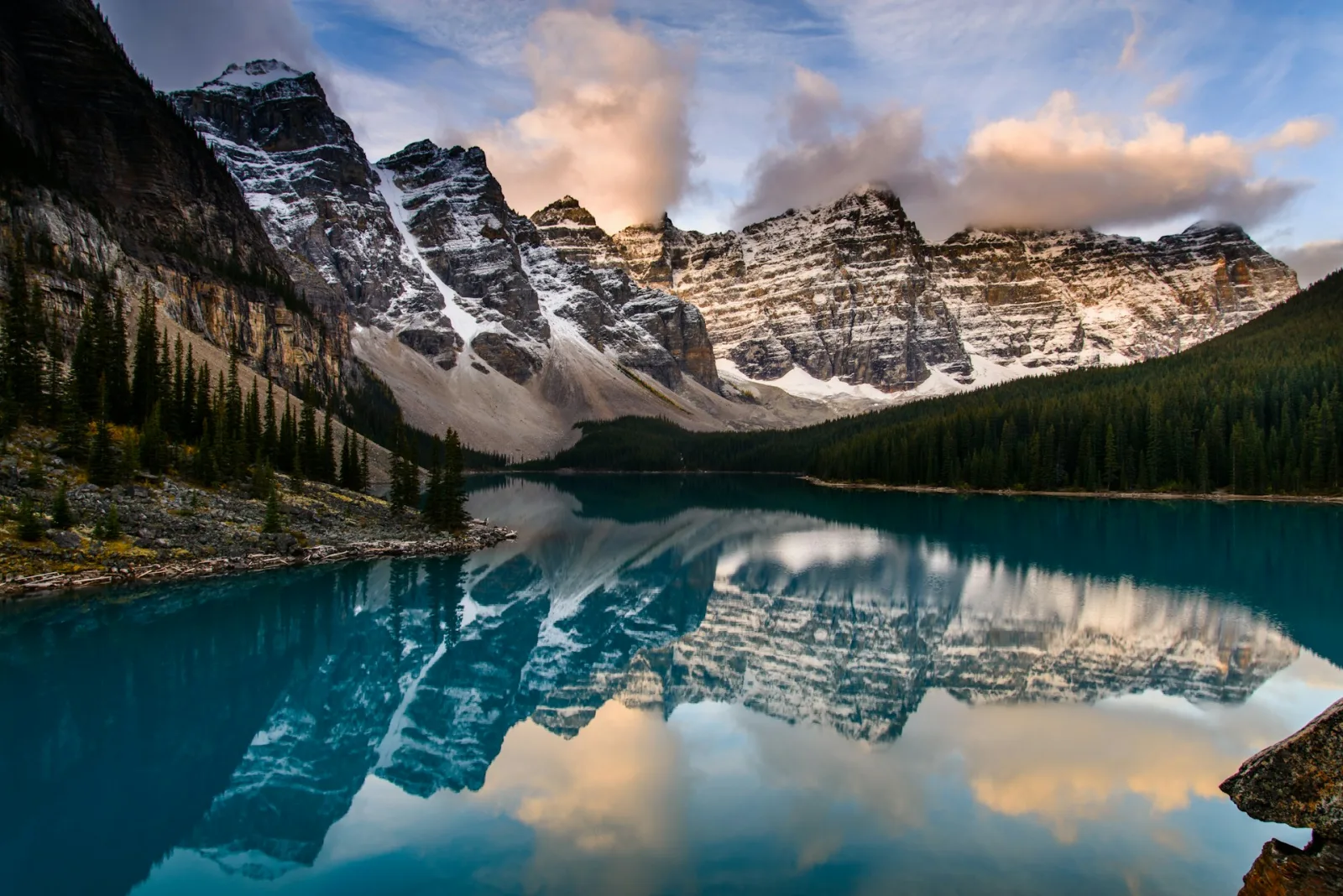
Aerial view of Lake Louise and the Rocky Mountains in Banff National Park, Canada

Canada Travel Guide
for Indian Travelers

Visa, cost, itinerary & tips — your complete guide to planning a trip to Canada from India in 2026.

Updated for 2026 Travelers
Written by Sunita Lal — North America Travel Specialist
Reviewed by Anita Pattigili · North America Travel Reviewer
Last updated after reviewing:
  • Canada eTA eligibility expansion for Indians with valid US visas (June 2023 update)
  • Toronto Pearson (YYZ) and Vancouver (YVR) direct flight route expansions from Delhi and Mumbai
  • 2026 Canadian tourist visa processing times and biometric fee updates for Indian applicants

Last updated: April 2026

Canada Trip Cost from India (Detailed Breakdown)
Realistic cost breakdown for flights, visa, hotels, food, and total budget for 2026

Cost Breakdown 2026

  • Return Flights: ₹1,00,000 – ₹1,60,000
  • Visa / eTA Fee: ₹450 (eTA) or ₹11,500 (TRV + Biometrics)
  • Hotels (per night): ₹6,000 – ₹15,000
  • Food (per day): ₹3,000 – ₹7,000
  • Local Transport (per day): ₹1,500 – ₹4,000
  • Activities & Entry Fees: ₹15,000 – ₹30,000 total
  • Travel Insurance: ₹1,500 – ₹3,500
  • Total (7–10 days): ₹1.8L – ₹3.5L per person

Canada offers excellent value for nature and infrastructure. While flights are a significant component, on-ground costs are manageable, especially with access to affordable Indian cuisine in major cities.

Best Departure Cities

  • Delhi (DEL) — Direct flights to Vancouver (YVR) and Toronto (YYZ) via Air Canada and Air India
  • Mumbai (BOM) — Excellent connections via Europe (Lufthansa, British Airways) or Middle East
  • Bangalore (BLR) — Connecting flights via Europe or Middle East hubs
  • Chennai (MAA) — Options via Singapore, Dubai, or European hubs

Delhi offers the most seamless direct connectivity to Canada, saving 4-6 hours of travel time compared to connecting flights.

Ready to plan your Canada trip? Let us handle flights, visa, hotels, and tours.

View Canada Tour Packages →
Flight Routes from India to Canada
Flights from India to Canada take 15–24 hours depending on the route. Direct flights are available from Delhi.

Delhi to Canada

  • Route 1 (Direct): DEL → YVR (Vancouver) via Air Canada (15.5 hours)
  • Route 2 (Direct): DEL → YYZ (Toronto) via Air India (15 hours)
  • Route 3: DEL → Frankfurt → YYZ (Lufthansa)
  • Route 4: DEL → London → YYZ (British Airways)
  • Price Range: ₹1,00,000 – ₹1,50,000

Mumbai to Canada

  • Route 1: BOM → Frankfurt → YYZ (Lufthansa)
  • Route 2: BOM → London → YYZ (British Airways)
  • Route 3: BOM → Dubai → YYZ (Emirates)
  • Duration: 20–24 hours
  • Price Range: ₹1,10,000 – ₹1,60,000

Note: Toronto Pearson (YYZ) and Vancouver (YVR) are the primary international gateways. Domestic flights via Air Canada or WestJet connect to cities like Calgary (for Banff) or Montreal.

Canada vs Europe Cost for Indian Travelers
How does Canada compare to popular European destinations on cost and convenience? Here is a practical comparison.
Expense Canada (7 days) Europe (7 days)
Flights₹1L – ₹1.6L₹60K – ₹1L
Visa₹450 (eTA) or ₹11.5K (TRV)₹7K – ₹9K (Schengen)
Hotels/night₹6K – ₹15K₹8K – ₹20K
Food/day₹3K – ₹7K₹5K – ₹12K
Local Transport₹1.5K – ₹4K/day₹2K – ₹5K/day
Total Trip₹1.8L – ₹3.5L₹2L – ₹4.5L
Flights
Canada₹1L – ₹1.6L
Europe₹60K – ₹1L
Visa
Canada₹450 (eTA) or ₹11.5K
Europe₹7K – ₹9K
Hotels/night
Canada₹6K – ₹15K
Europe₹8K – ₹20K
Total Trip
Canada₹1.8L – ₹3.5L
Europe₹2L – ₹4.5L

Canada offers comparable on-ground value to Western Europe, but with easier English communication, abundant Indian food options, and a streamlined eTA process for eligible travelers.

Best Time to Visit Canada from India
Canada's vast size means diverse climates. The best time depends on your preferred activities.
Month Canada Season Toronto / East Banff / West India Travel Note
JanWinterCold, snowy -5 to -15°CPeak ski season, Northern LightsIndia winter holidays — book early
FebWinterCold, winter festivalsExcellent skiing, coldGood for winter sports enthusiasts
MarEarly SpringThawing, 0 to 10°CStill snowy, transitioningModerate season, lower prices
AprSpringMild, 5 to 15°C, rainSnow melting, trails openingShoulder season, good value
MayLate Spring ✓Warm, 10 to 20°C, bloomingExcellent, lakes thawingPre-summer window, fewer crowds
JunSummer Peak ✓✓Warm, 20 to 30°C, vibrantPerfect, all parks openPeak Indian travel month — book 4 months ahead
JulSummer PeakHot, humid, festivalsBusy, ideal hiking weatherIndia school holidays — high demand
AugLate SummerWarm, 20 to 28°CGreat, start of fall colorsGood post-monsoon window
SepFall ✓✓Mild, 15 to 22°C, foliageStunning fall colors, crispBest overall month for photography
OctFall ✓Cool, 5 to 15°C, foliage endsCold, possible early snowExcellent shoulder season value
NovLate FallCold, 0 to 8°C, rainy/snowySki resorts openingBudget season, fewer tourists
DecWinter / HolidaysCold, festive markets, snowPeak winter wonderlandIndia school holidays — peak demand
7-Day Canada Itinerary for Indian Travelers
A perfect one-week Canada itinerary covering Toronto, Niagara Falls, Vancouver, and Banff highlights.

Day-by-Day Plan

  • Day 1: Arrive in Toronto — rest, explore Distillery District and CN Tower
  • Day 2: Toronto city tour — Royal Ontario Museum, Kensington Market, St. Lawrence Market
  • Day 3: Day trip to Niagara Falls — Hornblower boat cruise, Clifton Hill, evening illumination
  • Day 4: Fly to Vancouver — explore Stanley Park and Granville Island
  • Day 5: Vancouver highlights — Capilano Suspension Bridge, Gastown, Canada Place
  • Day 6: Fly to Calgary, drive to Banff — Lake Louise and Moraine Lake excursion
  • Day 7: Banff townsite, gondola ride — fly back to Toronto/Vancouver for departure

Planning Notes

  • Domestic flights: Book Toronto–Vancouver and Vancouver–Calgary on Air Canada or WestJet in advance
  • Budget option: Skip Banff — Toronto + Niagara + Vancouver is the most cost-effective 6-day combination
  • Currency: Carry a mix of CAD cash and international credit cards (Visa/Mastercard widely accepted)
  • Language: English is dominant; French is primary in Quebec. No language barrier for Indian travelers.
  • Connectivity: Purchase a local SIM (Rogers, Bell, or Fido) or use an international eSIM upon arrival.
  • Vegetarians: Toronto and Vancouver have exceptional Indian vegetarian and vegan restaurant scenes.
  • Book ahead: For June–August travel, book flights, hotels, and Banff park passes 4–6 months in advance.

Want a hassle-free Canada trip? Our packages include flights, hotels, transfers, and guided tours.

Book Canada Tour Package →
Canada Visa for Indians — Complete Guide & Travel Essentials
Essential information for Indian travelers — from Canada visa requirements and time zones to plug adapters and local transport.

Tip: Notify your Indian bank of your travel dates to prevent international transaction blocks on your credit/debit cards.

Canada Visa for Indians — 2026 Update

Update (June 2023): Indian nationals holding a valid US non-immigrant visa or who have held a Canadian visa in the last 10 years are eligible to apply for an eTA (Electronic Travel Authorization) instead of a full visitor visa. Source: Immigration, Refugees and Citizenship Canada (IRCC).

  • With valid US visa or past Canadian visa: Apply for eTA online — costs CAD 7 (approx. ₹450), approved in minutes to days.
  • Without US/past Canadian visa: Apply for a Temporary Resident Visa (TRV) — costs CAD 100 + CAD 85 biometric fee.
  • Where to apply: TRV applications are submitted online via the IRCC portal, with biometrics given at VFS Global centres across India.
  • Documents: Valid passport, financial proof (6 months bank statements), employment letter, travel itinerary, and invitation letter (if applicable).
  • Processing time: eTA: minutes to 72 hours. TRV: 3–4 weeks (can vary based on volume).
  • Duration permitted: Up to 6 months per entry for tourists.
CLICK TO KNOW MORE ABOUT VISA DOCUMENTATION & FEES

Time Zone

Canada spans six time zones. Eastern Time (Toronto) is 9.5 hours behind IST, while Pacific Time (Vancouver) is 12.5 hours behind IST. Canada observes Daylight Saving Time.

  • Eastern Time (Toronto): UTC-5 (UTC-4 during DST)
  • Pacific Time (Vancouver): UTC-8 (UTC-7 during DST)
  • When it is 12:00 PM in Toronto, it is 9:30 PM in India
  • Business hours typically run from 9 AM to 5 PM local time on weekdays
  • Most shopping malls open from 10 AM to 9 PM daily
  • Restaurants serve dinner from 6 PM onwards (earlier than European norms)

Country Code

To call Canada from India, use the international dialing code +1 followed by the 3-digit area code and 7-digit local number.

  • International Dialing Code: +1 (shared with USA)
  • To call Canada from India, dial: 00-1-XXX-XXX-XXXX
  • Toronto area code: 416, 647, 437
  • Vancouver area code: 604, 778, 236
  • Emergency services: 911 (Police/Ambulance/Fire)
  • Major telecom providers: Rogers, Bell, Telus, and Fido
  • Tourist SIM cards available at major airports upon arrival
  • Free Wi-Fi widely available in hotels, cafes, and public libraries

Socket & Plugs

Canada uses Type A (2 flat parallel pins) and Type B (2 flat pins + round grounding pin) electrical outlets at 120V, 60Hz.

  • Type A and Type B — 120V, 60Hz
  • Indian Type D (3-pin round) plugs will NOT work without an adapter
  • Indian Type C (2-pin round) plugs may fit loosely in Type A, but a proper Type A/B adapter is recommended
  • Standard voltage is 120V. Check your devices (laptops, phone chargers) to ensure they support 100–240V (most modern ones do)
  • Universal travel adapters are available at Indian airports and Canadian electronics stores

Indian Embassy in Canada

The High Commission of India in Ottawa and Consulates in Toronto and Vancouver provide consular services for Indian nationals.

  • High Commission (Ottawa): 10 Springfield Road, Ottawa, ON K1M 1C9
  • Contact Ottawa: +1 613 744 3751
  • Consulate General (Toronto): 215 Bloor Street East, Toronto, ON M4W 1A7
  • Consulate General (Vancouver): 1177 West Pender Street, Vancouver, BC V6E 2R1
  • Emergency (24/7): Available via High Commission website
  • Services: passport renewal, OCI services, emergency assistance
  • Register with MADAD portal before travel for advisories and assistance

Canada High Commission in India

The High Commission of Canada in New Delhi oversees visa and immigration matters for India.

  • Address: 7/8 Shantipath, Chanakyapuri, New Delhi 110021
  • Contact: +91-11-4178-2000
  • Email: [email protected]
  • Visa Application: Processed online via IRCC; biometrics at VFS Global centres (Delhi, Mumbai, Chennai, Bangalore, Chandigarh, Jalandhar, Ahmedabad, Pune, Kolkata)
  • Working Hours: Mon–Fri, 8:30 AM – 5:00 PM

Car Driving Orientation

Right-Hand Drive (Opposite to India)

  • Canada follows right-hand driving, opposite to India's left-hand system
  • International Driving Permit (IDP) required along with valid home country license
  • Speed limits: 50 km/h in urban areas, 100–110 km/h on highways
  • Seat belts mandatory for all passengers; child car seats required for young children
  • Winter driving requires mandatory winter tires in provinces like Quebec and BC
  • Car rental widely available in major cities and airports
  • Public transit (TTC in Toronto, SkyTrain in Vancouver) is highly efficient and recommended in cities

App Based Taxi

Uber and Lyft are Primary Ride-Hailing Apps

  • Uber operates extensively in Toronto, Vancouver, Montreal, and other major cities
  • Lyft is also available in select cities as a competitive alternative
  • Payment options include credit/debit cards linked to the app
  • Average fare from Toronto Airport (YYZ) to downtown: CAD 60–80
  • Traditional taxis are available at airport ranks and can be hailed on the street
  • Public transit (subways, streetcars, buses) is clean, safe, and economical
  • Presto Card (Toronto) or Compass Card (Vancouver) recommended for seamless transit travel

Need help with Canada visa? Our visa team assists with documentation, application, and follow-up.

Canada Visa Assistance →
Canada Culture, Language & Local Customs
Understand Canadian English/French, local etiquette, and cultural norms to connect better with locals.

Official Languages

English and French — Official Languages

  • English is the primary language in most provinces, including Ontario, BC, and Alberta
  • French is the official language of Quebec and widely spoken in New Brunswick
  • Canadian English has unique vocabulary (e.g., "washroom" instead of "restroom", "loonie/toonie" for coins)
  • Canadians are known for their politeness; "sorry" is used frequently, even when not at fault
  • Major cities have large South Asian communities, so Hindi, Punjabi, and Tamil are often understood in specific neighborhoods
  • Learning basic French phrases (Bonjour, Merci) is appreciated when visiting Quebec

Local Vocabulary

Understanding these Canadian terms helps you navigate daily life and connect with locals.

  • Loonie / Toonie: CAD 1 and CAD 2 coins
  • Washroom: Restroom or toilet
  • Eh?: A conversational filler meaning "right?" or "don't you agree?"
  • Double-Double: Coffee with two creams and two sugars (Tim Hortons staple)
  • Keener: Someone who is overly eager or enthusiastic (often used for students)
  • Toque: A knitted winter hat or beanie
  • Hydro: Electricity (e.g., "pay the hydro bill")
  • Give'r: To put in maximum effort (common in Western Canada)

Toilet Signs

Public restrooms are universally called "Washrooms" in Canada. Signs typically display "Washroom" or "Restroom" with universal pictograms.

  • Gender-neutral and family washrooms are increasingly common in public spaces
  • Public facilities in malls, airports, and major attractions are generally very clean and free
  • Some older public facilities or transit stations may charge a small fee (CAD 1–2)
  • Toilet paper and hand dryers are standard; carrying tissues is rarely necessary
  • Western-style seated toilets are standard throughout Canada

Interesting Facts

Canada is the second-largest country in the world by total area and has the longest coastline of any nation.

  • Canada has more lakes than the rest of the world's lakes combined
  • Ice hockey is the official winter sport; lacrosse is the official summer sport
  • Canadians consume more macaroni and cheese (Kraft Dinner) per capita than any other country
  • The world's longest street, Yonge Street, is located in Toronto (1,896 km)
  • Canada invented basketball, basketball, and the IMAX film format
  • Tipping 15–20% is standard practice in restaurants, as server wages are lower than minimum wage
Canada Shopping & Markets Guide
From maple syrup and winter gear to indigenous art and duty-free finds.

Shopping Hours

Most Shops: 10:00 AM – 9:00 PM (Weekdays & Weekends)

  • Major shopping malls (Eaton Centre, Pacific Centre) operate 7 days a week
  • Independent boutiques may close earlier (6:00 PM) in smaller towns
  • Grocery stores and supermarkets often open from 8:00 AM to 11:00 PM, with some 24-hour locations
  • Statutory holidays (e.g., Canada Day, Thanksgiving) may result in reduced hours or closures
  • Tax-free shopping is NOT available for general tourists, but duty-free applies at airports for departing passengers
  • Sales events: Boxing Day (Dec 26) and Black Friday (November) offer the deepest discounts

Flea Markets & Art

Canada's markets offer unique souvenirs including indigenous art, vintage finds, and local crafts.

  • St. Lawrence Market (Toronto): Voted one of the world's best food markets, open Tue–Sat
  • Granville Island Public Market (Vancouver): Artisan foods, crafts, and local produce
  • ByWard Market (Ottawa): Historic market with food vendors, boutiques, and street performers
  • Indigenous Art Galleries: Look for authentic, certified indigenous art in Vancouver and Toronto (avoid mass-produced imports)
  • Credit cards are widely accepted, but carrying small CAD bills is useful for market vendors

Famous Brands & Souvenirs

Shopping for winter gear and local delicacies offers excellent value and authentic Canadian memories.

  • Maple Syrup: Pure Canadian maple syrup (look for "100% Pure" grade)
  • Winter Apparel: Canada Goose, Arc'teryx, Roots (often cheaper in Canada than abroad)
  • Ice Wine: Premium dessert wine produced in Niagara Region and BC Okanagan
  • Indigenous Crafts: Dreamcatchers, soapstone carvings, and beadwork (buy from certified artists)
  • Canadian Chocolate: Purdy's Chocolates or Soma Chocolatemaker
  • Sporting Goods: NHL merchandise, especially Toronto Maple Leafs or Vancouver Canucks gear

Supermarkets

Major supermarket chains offer wide product ranges, including extensive South Asian grocery sections in urban areas.

  • Loblaws / Real Canadian Superstore: Widespread, good prices, large selection
  • Metro / Sobeys: Premium options with high-quality produce and bakery items
  • No Frills / FreshCo: Budget-friendly chains for everyday essentials
  • South Asian Grocers: Patel Brothers, FreshChoice, and local independent stores in Toronto/Vancouver offer Indian spices, lentils, and fresh roti at competitive prices
  • Bottled water is safe, but tap water is universally potable and of excellent quality across Canada
Canada Food & Cuisine Guide
Canadian cuisine blends indigenous traditions, French heritage, and massive global immigration, resulting in a diverse food scene.

Do: Try poutine, butter tarts, and explore the vibrant Indian restaurant scenes in Toronto and Vancouver.

Famous Cuisines

Canadian food is hearty, comforting, and heavily influenced by its climate and multicultural population.

  • Poutine: French fries, cheese curds, and brown gravy (Quebec origin)
  • Butter Tarts: Sweet pastry shells filled with butter, sugar, syrup, and egg
  • Nanaimo Bars: No-bake dessert bars with crumb base, custard icing, and chocolate ganache
  • Tourtière: Traditional French-Canadian meat pie, often served during holidays
  • Montreal Bagels: Sweeter, denser, and wood-fired, distinct from New York style
  • Peameal Bacon: Canadian "bacon," cured and rolled in cornmeal, a Toronto specialty
  • Atlantic Seafood: Fresh lobster, snow crab, and mussels in the Maritime provinces
  • Indian Cuisine: Exceptional quality and authenticity in Toronto (Gerrard Street India Bazaar) and Vancouver (Punjabi Market)

Famous Fruits & Produce

Summer and early autumn offer the best local produce. Farmers' markets are popular weekend destinations.

  • Apples: Ontario and BC produce world-class apples (Honeycrisp, Gala)
  • Berries: BC is famous for blueberries, raspberries, and cranberries
  • Cherries: BC Okanagan Valley produces sweet cherries in July
  • Maple Products: Beyond syrup, try maple taffy (tire d'érable) poured on snow
  • Saskatoon Berries: Native prairie berry, often used in pies and jams

National Dish — Poutine

Poutine is Canada's most iconic culinary export, originating in rural Quebec in the1950s.

  • Authentic poutine requires fresh, squeaky cheese curds (not shredded mozzarella)
  • Hot brown gravy is poured over the fries and curds, melting the cheese slightly
  • Gourmet variations include toppings like pulled pork, foie gras, or vegetarian mushroom gravy
  • Best enjoyed at a traditional "cantine" (diner) in Quebec or dedicated poutine shops in major cities
  • La Banquise in Montreal is famously open 24/7 and offers over 30 poutine varieties

Avg Cost Of Food

Budget travelers can eat well for CAD 40–70 per day at casual eateries. Tipping 15–20% is customary in sit-down restaurants.

  • Fast Food / Food Truck: CAD 12–18 per meal
  • Casual Dining (e.g., diner, pub): CAD 20–35 per person
  • Mid-range Restaurant: CAD 40–70 per person
  • Fine Dining: CAD 100–200+ per person
  • Coffee (Tim Hortons/Starbucks): CAD 3–6
  • Beer (Pint): CAD 7–10

Tipping: 15% is standard for adequate service; 18–20% is expected for good service. Taxes (5–15% depending on province) are added at the register, not included in menu prices.

Canada Weather & Packing Tips
Canada spans multiple climate zones. Pack for your specific destinations — from humid Toronto summers to freezing Banff winters.

Tip: Layering is essential year-round. Indoor spaces are heavily heated in winter, so you need to be able to remove layers easily.

Weather

Canada has diverse climates due to its massive geographic size.

  • Toronto / East: Humid continental. Summers are hot and humid (25–30°C); winters are cold and snowy (-10 to -20°C with wind chill).
  • Vancouver / West Coast: Oceanic climate. Mild, rainy winters (5–10°C) and warm, dry summers (20–25°C). Rarely snows.
  • Banff / Rockies: Alpine climate. Cool summers (15–20°C) and long, harsh winters (-15 to -30°C) with heavy snow.
  • Best time overall: September to October (Fall) for mild weather and foliage; June to August (Summer) for national parks.

Clothes To Wear

Canadians dress practically but neatly. Pack according to your specific destinations and season.

For Summer (Jun–Aug):

  • Light, breathable clothing (t-shirts, shorts, light dresses)
  • Light jacket or sweater for cool evenings
  • Comfortable walking shoes or sneakers
  • Sunglasses, sunscreen, and a hat (sun can be strong)
  • Rain jacket or compact umbrella (especially for Vancouver)

For Winter (Nov–Mar):

  • Heavy, insulated winter coat (down or synthetic fill)
  • Thermal base layers (top and bottom)
  • Waterproof, insulated winter boots with good grip
  • Warm accessories: toque (beanie), insulated gloves, thick scarf
  • Hand and toe warmers for extended outdoor activities
Canada Heritage & Cultural Highlights
UNESCO sites, national symbols, films, and souvenirs that capture Canada's cultural identity.

UNESCO World Heritage Sites

Canada has 22 UNESCO World Heritage Sites, showcasing its natural beauty and indigenous history.

  • Canadian Rocky Mountain Parks (1984) — Includes Banff, Jasper, Yoho, and Kootenay National Parks
  • Historic District of Old Québec (1985) — Walled city with European architecture
  • Head-Smashed-In Buffalo Jump (1981) — Indigenous hunting site used for 6,000 years
  • Gros Morne National Park (1987) — Stunning geological formations in Newfoundland
  • Miguasha National Park (1999) — Best fossil site of the Devonian period
  • Writing-on-Stone / Áísínai'pi (2019) — Sacred Blackfoot landscape with rock art

National Symbols

Canada's symbols reflect its natural environment and indigenous heritage.

  • National Animal: Beaver (symbol of industriousness) and Canadian Horse
  • National Bird: Common Loon (featured on the CAD 1 coin, the "Loonie")
  • National Tree: Maple Tree (source of maple syrup and the flag's emblem)
  • National Sport: Ice Hockey (winter) and Lacrosse (summer)
  • National Dish: Poutine
  • National Motto: "A Mari Usque Ad Mare" (From Sea to Sea)

Films Shot in Canada

Canada, particularly Toronto and Vancouver, is a major hub for film and television production ("Hollywood North").

  • The Shape of Water (2017) — Partially filmed in Toronto
  • Interstellar (2014) — Alberta landscapes stood in for alien planets
  • The Revenant (2015) — Shot in the Canadian Rockies (Kananaskis, Alberta)
  • Deadpool (2016) — Extensively filmed in Vancouver
  • Suicide Squad (2016) — Toronto doubled for Midway City

Film Festivals

Canada hosts world-renowned film festivals that attract global cinema talent.

  • Toronto International Film Festival (TIFF): September, one of the largest publicly attended film festivals in the world
  • Vancouver International Film Festival (VIFF): September/October, focuses on Asian and Pacific Rim cinema
  • Fantasia International Film Festival: July/August in Montreal, dedicated to genre films (horror, sci-fi, fantasy)
  • Hot Docs Canadian International Documentary Festival: April/May in Toronto, the largest documentary festival in North America

Souvenirs

Best places to shop for souvenirs: St. Lawrence Market, Granville Island, and airport duty-free.

  • Maple Syrup: Pure Canadian grade A or B syrup
  • Ice Wine: Premium dessert wine (check customs limits for your home country)
  • Indigenous Art: Authentic, certified carvings, prints, or jewelry
  • Winter Gear: Roots apparel, Canada Goose accessories, or Arc'teryx
  • Canadian Chocolates: Purdy's, Soma, or local artisan brands
  • Sporting Merchandise: NHL team jerseys or Canadian Olympic gear
Notable Highlights for Indian Travelers
From famous personalities to groundbreaking inventions, discover what makes Canada unique on the global stage.

Famous People

  • Terry Fox (1958–1981) — National hero who ran across Canada on one leg to raise money for cancer research
  • Celine Dion (1968–) — Global music icon from Quebec
  • Dr. Norman Bethune (1890–1939) — Pioneering thoracic surgeon and medical innovator
  • Leonard Cohen (1934–2016) — Renowned poet, novelist, and singer-songwriter
  • Wayne Gretzky (1961–) — Widely considered the greatest ice hockey player of all time
  • Dr. Charles Best (1899–1978) — Co-discoverer of insulin (with Frederick Banting) at the University of Toronto
  • Jim Carrey (1962–) — Acclaimed actor and comedian, born in Newmarket, Ontario
  • Dr. Roberta Bondar (1945–) — Canada's first female astronaut and neurologist

Famous Inventions

Canada has a strong tradition in medical, scientific, and technological innovation.

  • Insulin: Discovered by Frederick Banting and Charles Best in Toronto (1921), revolutionizing diabetes treatment
  • The Telephone: Alexander Graham Bell invented and patented the first practical telephone in Brantford, Ontario (1876)
  • Basketball: Invented by Dr. James Naismith, a Canadian physical educator, in Springfield, Massachusetts (1891)
  • IMAX Film Format: Developed by a team of Canadian filmmakers in the late 1960s
  • Canadarm: The iconic robotic arm used on the Space Shuttle and International Space Station
  • Wonderbra: The modern push-up bra was designed and patented in Canada (1964)

National Dish — Poutine

  • Poutine originated in rural Quebec in the late 1950s
  • The name is believed to come from a Quebec slang term meaning "a mess"
  • Authentic poutine requires fresh, squeaky cheese curds, not shredded cheese
  • Hot brown gravy is poured over the fries and curds, melting the cheese slightly
  • It has evolved from a fast-food staple to a gourmet dish featured in high-end restaurants
  • La Banquise in Montreal is famously open 24/7 and offers over 30 poutine varieties
  • Vegetarian and vegan poutine options are widely available in major cities

Is Canada expensive for Indians? A trip costs ₹1.8L–₹3.5L for 7–10 days including flights, visa (eTA is only ₹450 if eligible), hotels, and food.

Do Indians need a visa? Indians with a valid US non-immigrant visa or past Canadian visa (last 10 years) can apply for a simple eTA. Others need a Temporary Resident Visa (TRV).

Flight duration? Direct flights from Delhi to Vancouver or Toronto take about 15–16 hours. Connecting flights take 18–24 hours.

Is Canada safe for Indian tourists? Yes, Canada is consistently ranked among the safest countries globally, with a highly welcoming attitude toward Indian visitors.

Currency? Canadian Dollar (CAD). International credit/debit cards are widely accepted. UPI is not available.

Frequently Asked Questions — Canada Travel for Indians
Quick, honest answers to the most common Canada travel questions from Indian travellers
1Do Indians need a visa for Canada? Has anything changed recently?
Most Indian nationals need a Temporary Resident Visa (TRV). However, a major update in June 2023 allows Indians holding a valid US non-immigrant visa or who have held a Canadian visa in the last 10 years to apply for a simpler, cheaper Electronic Travel Authorization (eTA) instead of a full TRV. The eTA costs only CAD 7 (approx. ₹450) and is often approved within minutes.
2Is Canada expensive for Indian tourists?
A 7–10 day Canada trip from India costs approximately ₹1.8L–₹3.5L per person including flights (₹1L–₹1.6L), visa, hotels (₹6K–₹15K/night), food (₹3K–₹7K/day), and activities. While flights are a significant cost, on-ground expenses are comparable to Western Europe but offer excellent value in nature, infrastructure, and abundant, affordable Indian food options.
3How long is the flight from India to Canada?
Direct flights from Delhi to Vancouver (YVR) or Toronto (YYZ) take about 15–16 hours. Flights from Mumbai or with layovers (via Europe or the Middle East) take 18–24 hours. Air Canada and Air India operate the direct routes from Delhi.
4What is the best time to visit Canada from India?
September to October (Fall) is ideal, offering stunning foliage, mild weather, and fewer crowds. June to August (Summer) is perfect for exploring national parks like Banff and outdoor activities. Winter (December to February) is best for skiing, winter festivals, and viewing the Northern Lights.
5Is Canada safe for Indian tourists?
Yes, Canada is consistently ranked among the safest countries in the world. Major cities are well-policed, public transport is safe, and the local population is highly welcoming and accustomed to Indian tourists. Standard urban precautions (watching valuables in crowded areas) are always recommended.
6Do Indians need a transit visa for Canada flights?
Yes, if your flight connects through a Canadian airport, you must have a valid Canadian visa or eTA, even if you do not leave the airport. To avoid this, Indian travelers often prefer routing via Europe (London, Frankfurt) or the Middle East (Dubai, Doha), which do not require a Canadian transit visa.
7What is the Canada tourist visa fee for Indians?
If eligible for an eTA, the fee is CAD 7 (approx. ₹450). If you must apply for a Temporary Resident Visa (TRV), the fee is CAD 100 (approx. ₹6,200) plus a mandatory CAD 85 (approx. ₹5,300) biometric fee, totaling around ₹11,500. Biometrics must be provided in person at a VFS Global centre in India.
8What plug type is used in Canada?
Canada uses Type A (2 flat parallel pins) and Type B (2 flat pins + round grounding pin) outlets at 120V, 60Hz. Indian Type D (3-pin round) plugs will not work without a universal travel adapter. Most modern chargers support 100–240V, so only a physical plug adapter is needed.
9Can I use Indian Rupee or UPI in Canada?
No. The local currency is the Canadian Dollar (CAD), and UPI is not available. International Visa and Mastercard credit/debit cards are widely accepted everywhere. It is recommended to carry a small amount of CAD cash for tips or small vendors, and to notify your Indian bank of your travel dates to prevent card blocks.
10What is the national dish of Canada?
Poutine is the iconic Canadian dish, originating in Quebec. It consists of french fries topped with fresh, squeaky cheese curds and rich brown gravy. Other national favorites include butter tarts, Nanaimo bars, and maple syrup products.
11What is the time difference between India and Canada?
Canada spans six time zones. Eastern Time (Toronto) is 9.5 hours behind IST, while Pacific Time (Vancouver) is 12.5 hours behind IST. Canada observes Daylight Saving Time (March to November), which temporarily reduces the time difference by 1 hour.
12Can vegetarian Indians find food in Canada?
Yes, very easily. Major cities like Toronto and Vancouver have massive Indian diasporas, offering abundant vegetarian and vegan options. You will find dedicated Indian restaurants, grocery stores (like Patel Brothers), and clearly marked vegetarian menus in most mainstream restaurants. Smaller towns may have fewer options, but basic vegetarian fare (salads, pasta, cheese sandwiches) is always available.
13Which is better for first-time visitors — Toronto or Vancouver?
Both are excellent but offer different experiences. Toronto provides iconic landmarks (CN Tower, Niagara Falls), vibrant urban culture, and world-class museums. Vancouver offers stunning coastal mountains, a milder climate, and immediate access to nature (Stanley Park, Capilano). A first trip often combines both, connected by a short domestic flight.
14Is Canada better than Europe for Indian tourists on budget?
Canada is similarly priced to Western Europe. However, Canada offers distinct advantages for Indian travelers: easier English communication, a massive and authentic Indian food scene, and a streamlined eTA visa process for eligible travelers, making it highly convenient and comfortable.
15Does Destination To Plan offer group tour packages to Canada?
Yes. Destination To Plan offers customised group and family tour packages to Canada from India — including return flights, hotels, guided city tours, Niagara Falls excursions, Banff national park visits, airport transfers, and visa assistance. Contact us via the inquiry form below or visit our Canada tour packages page for details and pricing.
Have more questions? Our Canada travel experts can help plan your perfect trip.

Talk to a Canada Travel Expert →

Note: Information provided is subject to change. Verify visa requirements, exchange rates, opening hours, and travel advisories before your trip. Prices are approximate and may vary based on location, season, and inflation. Canada experiences moderate inflation; costs can change gradually.

About This Canada Travel Guide

This Canada travel guide covers everything Indian travelers need from Canada visa rules and Toronto travel tips to local food, weather, shopping, and top attractions. Researched, regularly updated, and trusted by group tour planners and independent travelers.

Expert Curated Content

Every section — from Canada eTA rules to Toronto shopping hours — is verified by travel professionals with North America experience.

Regularly Updated Information

Canada travel costs, visa rules, and embassy details are reviewed and refreshed to reflect current conditions including the June 2023 eTA eligibility update.

Trusted by Indian Travelers

Used by group tour organizers, corporate travel planners, and independent travelers from India researching Canada itineraries, Banff trips, and Toronto city breaks.

Complete Canada Resource

One guide covering visa requirements, cost, flights, itinerary, food, culture, weather, shopping, and heritage — all with India-specific context and 2026 accuracy.

More Travel Guides

Explore Other Destinations

Plan Your Canada Trip from India

Fill out the enquiry form below and our travel experts will help you plan your Canada tour — visa, flights, hotels, and guided tours.

Get assistance with visa (eTA/TRV), flight bookings, Toronto hotels, Niagara and Banff tours, and complete Canada packages.

Enquire About This Package