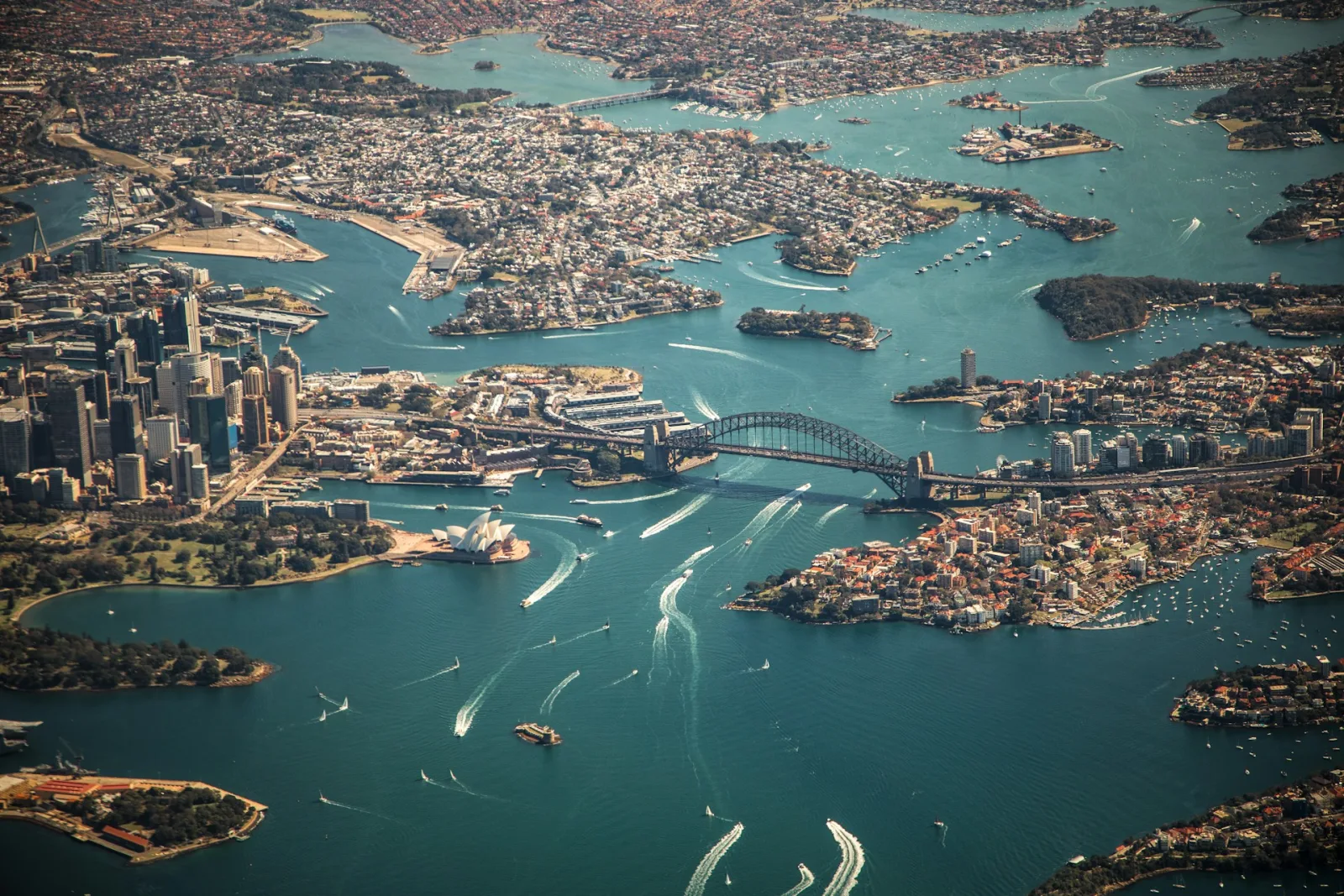
Aerial view of Sydney Harbour Bridge and Opera House at sunset, Australia

Australia Travel Guide
for Indian Travelers

Visa, cost, itinerary & tips — your complete guide to planning a trip to Australia from India in 2026.

Updated for 2026 Travelers
Written by Keerthi Reddy — Oceania Travel Specialist
Reviewed by Monika Kulkarni · Oceania Travel Reviewer
Last updated after reviewing:
  • Australia Visitor visa (subclass 600) online processing updates 2026
  • Qantas/Air India direct flight route expansions from India
  • Indian traveler seasonal advisories for Australia summer/bushfire alerts

Last updated: April 2026

Australia Trip Cost from India (Detailed Breakdown)
Realistic cost breakdown for flights, visa, hotels, food, and total budget for 2026

Cost Breakdown 2026

  • Return Flights: ₹75,000 – ₹1,40,000
  • Visa Fee: ~AUD 150 (approx. ₹8,500-₹10,000 for subclass 600)
  • Hotels (per night): ₹6,000 – ₹15,000
  • Food (per day): ₹3,000 – ₹7,000
  • Local Transport (per day): ₹1,500 – ₹4,000
  • Activities & Entry Fees: ₹12,000 – ₹30,000 total
  • Travel Insurance: ₹2,000 – ₹4,000
  • Total (7–10 days): ₹1.5L – ₹3.5L per person

Australia offers a unique blend of urban sophistication and wilderness. While daily costs are higher than Southeast Asia, direct flights from India are frequent, and the experience of iconic landmarks and natural wonders is unmatched.

Best Departure Cities

  • Delhi (DEL) — Direct flights to Melbourne, Sydney, Brisbane
  • Mumbai (BOM) — Strong connectivity via Singapore, Bangkok, Kuala Lumpur
  • Bangalore (BLR) — Good options via Middle East or Singapore
  • Chennai (MAA) — Growing routes via Malaysia and Sri Lanka
  • Kolkata (CCU) — Options via Bangkok or Singapore

Delhi and Mumbai dominate direct flight options. Major Indian metros connect seamlessly via Star Alliance, SkyTeam, or Oneworld partners.

Ready to plan your Australia trip? Let us handle flights, visa, hotels, and tours.

View Australia Tour Packages →
Flight Routes from India to Australia
Flights from India to Australia take 12–20 hours. Direct flights are available from Delhi and Mumbai.

Delhi to Sydney / Melbourne

  • Route 1: DEL → Singapore → SYD/MEL (Singapore Airlines)
  • Route 2: DEL → Kuala Lumpur → SYD/MEL (Malaysia Airlines)
  • Route 3: DEL → Bangkok → SYD/MEL (Thai Airways)
  • Route 4 (Direct): DEL → MEL / SYD (Air India / Qantas)
  • Duration: 12–18 hours (direct), 14–20 hours (connecting)
  • Price Range: ₹75,000 – ₹1,40,000

Mumbai to Sydney / Melbourne

  • Route 1: BOM → Singapore → SYD/MEL (Singapore Airlines)
  • Route 2: BOM → Kuala Lumpur → SYD/MEL (Malaysia Airlines)
  • Route 3: BOM → Colombo → SYD (SriLankan Airlines)
  • Route 4: BOM → Dubai → SYD (Emirates)
  • Duration: 14–20 hours
  • Price Range: ₹80,000 – ₹1,50,000

Note: Sydney (SYD) and Melbourne (MEL) are the primary international gateways. Domestic flights within Australia use Jetstar, Virgin Australia, and Qantas. Check Oceania travel guides for more regional information.

Australia vs Europe Cost for Indian Travelers
How does Australia compare to popular European destinations on cost? Here is a practical comparison for Indian travelers.
Expense Australia (7 days) Europe (7 days)
Flights₹75K – ₹1.4L₹60K – ₹1L
Visa~₹9,000 (Visitor 600)₹7K – ₹9K (Schengen)
Hotels/night₹6K – ₹15K₹8K – ₹20K
Food/day₹3K – ₹7K₹5K – ₹12K
Local Transport₹1.5K – ₹4K/day₹2K – ₹5K/day
Total Trip₹1.5L – ₹3.5L₹2L – ₹4.5L
Flights
Australia₹75K – ₹1.4L
Europe₹60K – ₹1L
Visa
Australia~₹9,000
Europe₹7K – ₹9K
Hotels/night
Australia₹6K – ₹15K
Europe₹8K – ₹20K
Food/day
Australia₹3K – ₹7K
Europe₹5K – ₹12K
Total Trip
Australia₹1.5L – ₹3.5L
Europe₹2L – ₹4.5L

Australia offers competitive pricing compared to Western Europe. Flight costs are similar, but daily expenses are often lower, and the visa process is more straightforward online.

Best Time to Visit Australia from India
Australia can be visited year-round, but the best time depends on the region and your travel goals.
Month Australia Season Sydney/Melbourne Great Barrier Reef Uluru / Outback India Travel Note
JanSummer PeakWarm, 18–30°CExcellent visibilityExtremely hot (40°C+)India school holidays — book early
FebSummer PeakWarm, 18–30°CStinger season alertVery hot, dryIndia school holidays end
MarAutumn ✓Mild, 15–25°CGreat, fewer crowdsWarm, pleasant daysGood post-Holi window
AprAutumn ✓Mild, 13–22°CExcellent weatherIdeal, 30°CGood shoulder window
MayLate AutumnCool, 10–19°CGood, dry season startsPleasant, mild nightsModerate season
JunWinterCool, 8–16°CDry season, best divingBest weather (day 20°C)Budget season from India
JulWinterChilly, 6–14°CDry season, clearExcellent (15–20°C days)India school summer hols — ski option in NZ
AugLate WinterChilly, 6–15°CGood, dryWarm, pleasantGood for Red Centre exploration
SepSpring ✓Warming, 11–20°CExcellent visibilityWarm daysGood post-monsoon window
OctSpring ✓✓Warm, 15–24°CPeak diving seasonPerfect, wildflowersPeak Indian travel month — book ahead
NovLate Spring ✓Warm, 17–26°CWarm water, clearHot, sunnyGood pre-Christmas window
DecSummer PeakWarm, 18–28°CWet season begins northHot (35°C+)India school holidays — peak demand
7-Day Australia Itinerary for Indian Travelers
A perfect one-week Australia itinerary covering Sydney, Gold Coast, and Melbourne highlights.

Day-by-Day Plan

  • Day 1: Arrive in Sydney — rest, evening stroll at Darling Harbour
  • Day 2: Sydney city tour — Opera House, Harbour Bridge, Circular Quay
  • Day 3: Bondi to Coogee coastal walk, optional Blue Mountains day trip
  • Day 4: Fly to Gold Coast — Surfers Paradise, beach time, optional theme park
  • Day 5: Gold Coast hinterland (Springbrook or Tamborine) — waterfalls
  • Day 6: Fly to Melbourne — Great Ocean Road day tour (Twelve Apostles)
  • Day 7: Melbourne laneways, Federation Square — depart from MEL

Planning Notes

  • Domestic flights: Book Sydney–Gold Coast and Gold Coast–Melbourne on Qantas or Jetstar in advance
  • Budget option: Skip Gold Coast — Sydney + Melbourne is the most cost-effective 5-day combination
  • Currency: Australian Dollars (AUD). Credit cards widely accepted; tap-to-pay standard
  • Language: English is official. Australian slang ("G'day", "Mate") is friendly and easy to pick up
  • Connectivity: eSIM or local SIM available at airports. 5G coverage is excellent nationwide
  • Vegetarians: Melbourne and Sydney have extensive vegan/vegetarian cafe cultures
  • Book ahead: For Dec–Jan travel, book flights and hotels 4–6 months in advance

Want a hassle-free Australia trip? Our packages include flights, hotels, transfers, and guided tours.

Book Australia Tour Package →
Australia Visa for Indians — Complete Guide & Travel Essentials
Essential information for Indian travelers — from Australia visa requirements and time zones to plug adapters and local transport apps.

Tip: Apply online via ImmiAccount for the Visitor visa (subclass 600). Keep digital and physical copies of your visa grant notice.

Australia Visa for Indians — 2026 Update

Update (2026): Indian nationals typically apply for a Visitor visa (subclass 600). Applications are processed entirely online via ImmiAccount. Processing time is usually 14-30 days. No embassy visit required. Source: Department of Home Affairs.

  • Visa Type: Visitor visa (subclass 600) — Stream: Tourist
  • Application Method: 100% online via ImmiAccount
  • Visa Fee: AUD 150 (non-refundable)
  • Documents: Passport, bank statements (3-6 months), employment proof, travel itinerary, accommodation, health insurance
  • Processing Time: 14–30 days — apply 6-8 weeks before travel
  • Validity: Up to 12 months, multiple or single entry
  • Biometrics: May be required at VFS Global centres in Delhi, Mumbai, Chennai, or Kolkata
CLICK TO KNOW MORE ABOUT VISA DOCUMENTATION & FEES

Time Zone

Australia has multiple time zones. Standard time ranges from UTC+8 to UTC+10.5. Daylight saving time applies to southern states.

  • Sydney/Melbourne (AEST): UTC+10 (UTC+11 with DST)
  • Adelaide/Brisbane: UTC+9.5 / UTC+10
  • Perth (AWST): UTC+8
  • Australia is 4.5 to 6.5 hours ahead of Indian Standard Time (IST)
  • Daylight Saving Time: First Sunday in Oct to First Sunday in April (NSW, VIC, SA, TAS, ACT)
  • Business hours typically run from 9 AM to 5 PM local time
  • Banks operate from 9 AM to 4 PM on weekdays
  • Shopping centres open from 9 AM to 5:30 PM (Thu: late till 9 PM)
  • Restaurants serve dinner from 6 PM onwards (early compared to Europe)

Country Code

To call Australia from India, use the international dialing code +61 followed by the area code (drop the leading 0).

  • International Dialing Code: +61
  • To call Australia from India, dial: 00-61-XX-XXXX-XXXX
  • Sydney area code: 2 (dial +61 2 XXXX XXXX)
  • Melbourne area code: 3
  • Brisbane area code: 7
  • Emergency services: 000 (Police/Ambulance/Fire)
  • Non-emergency police: 131 444
  • Major telecom providers: Telstra, Optus, Vodafone
  • Tourist SIM cards available at airport kiosks
  • Free Wi-Fi available in most hotels, cafes, and libraries

Socket & Plugs

Australia uses Type I electrical outlets (3-pin flat, angled) with 230V at 50Hz. Indian travelers will need a plug adapter.

  • Type I — 230V, 50Hz
  • Australia uses Type I (Australian 3-pin angled) outlets
  • Standard voltage is 230V with a frequency of 50Hz
  • Indian Type D or C plugs require an adapter
  • Universal travel adapters available at airports and electronics shops
  • Most hotels provide adapters at the front desk on request
  • Most modern devices (laptops, phone chargers) support 100–240V
  • Power outages are rare and quickly restored in urban areas

Indian Embassy in Australia

The High Commission of India in Canberra provides consular services for Indian nationals.

  • Address: 3-5 Moonah Place, Yarralumla, Canberra ACT 2600
  • Contact: +61 2 6273 3999
  • Email: [email protected]
  • Emergency (24/7): +61 419 240 526
  • Working Hours: Mon–Fri, 9:00 AM – 5:30 PM
  • Services: passport renewal, emergency certificates, assistance to Indian nationals
  • Register with MADAD portal before travel for advisories and assistance

Australian Embassy in India

The Australian High Commission in New Delhi processes visa inquiries and diplomatic relations. Visa applications are processed online.

  • Embassy New Delhi: 1/50 G Shantipath, Chanakyapuri, New Delhi 110021
  • Contact Delhi: +91-11-4139-9900
  • Email Delhi: [email protected]
  • Visa Inquiries: Online only via ImmiAccount
  • VFS Global Centres: Delhi, Mumbai, Kolkata, Chennai (for biometrics)
  • Note: All tourist visa applications are submitted online
  • Visa fee: AUD 150 (approx. ₹9,000)
  • Working Hours: Mon–Fri, 9:00 AM – 5:00 PM

Car Driving Orientation

Left-Hand Drive (Same as India)

  • Australia follows left-hand driving, identical to India
  • International Driving Permit (IDP) required along with valid home country license
  • Speed limits: 40–50 km/h in urban areas, 100–110 km/h on highways
  • Seat belts mandatory for all passengers
  • Driving under influence strictly prohibited (BAC limit 0.05)
  • Car rental available in major cities and airports
  • Public transport recommended in Sydney and Melbourne CBD due to traffic and parking costs
  • Road conditions excellent nationwide; toll roads common in major cities (use E-Tag or rental car tag)

App Based Taxi

Uber, DiDi, and 13cabs are Primary Ride-Hailing Apps

  • Uber operates extensively in Sydney, Melbourne, Brisbane, Perth
  • DiDi is popular and often slightly cheaper than Uber
  • 13cabs is Australia's largest local taxi network with app booking
  • Payment options include credit/debit cards, Apple Pay, Google Pay
  • Average fare from Sydney Airport to CBD: AUD 45–65
  • Traditional taxis (Silver Service, Yellow Cabs) metered and widely available
  • Always use registered taxis or apps for safety and transparent pricing
  • Public transport: Opal card (Sydney), Myki (Melbourne), Go Card (Brisbane/Gold Coast)

Need help with Australia visa? Our visa team assists with documentation, application, and follow-up.

Australia Visa Assistance →
Australia Culture, Language & Local Customs
Understand Australian English, local slang, and cultural norms to connect better with locals.

Official Language

English — Official Language (Australian English)

  • Australian English is a distinct dialect with unique vocabulary and pronunciation
  • "Strine" or Aussie slang is widely used casually (e.g., "Arvo" for afternoon)
  • Pronunciation differs from British/American English — vowels are more drawn out
  • English is universally spoken. No language barriers for Indian travelers
  • Over 300 indigenous languages spoken historically, many preserved today
  • Learning basic slang enhances cultural immersion but not required
  • Australians appreciate direct, polite communication
  • Translation apps rarely needed except in remote indigenous communities

Local Vocabulary

Understanding these Australian slang terms helps connect with locals and understand culture better.

  • G'day — Hello / Good day
  • Mate — Friend / Buddy
  • No worries — It's okay / You're welcome
  • Arvo — Afternoon
  • Brekkie — Breakfast
  • Barbie — Barbecue
  • Thongs — Flip-flops / Sandals
  • Ute — Utility vehicle / Pickup truck
  • Servo — Service station / Gas station
  • Bottle-o — Liquor store
  • Budgie smugglers — Tight swimming trunks (humorous)

Toilet Signs

Public restrooms are called "Toilets" or "Ladies / Gents" in Australia. Signs typically display pictograms or "Ladies" and "Gents" text.

  • Men's toilets marked with "Gents" or male symbol
  • Women's toilets marked with "Ladies" or female symbol
  • Public toilets in cities are generally clean, free, and well-maintained
  • Some public facilities are fully automatic self-cleaning (Cubicle)
  • Shopping malls, restaurants, and pubs have free restrooms
  • Toilet paper is always provided
  • Western-style seated toilets are standard throughout Australia
  • Accessible/disabled toilets widely available in modern facilities

Interesting Facts

Australia is the smallest continent and the largest island. It has the highest number of venomous snakes and deadliest spiders in the world.

  • Australia is home to the Great Barrier Reef, the world's largest coral reef system
  • Over 90% of Australian wildlife is found nowhere else on Earth
  • The country has the largest cattle station (Anna Creek) in the world
  • Sidney is the largest city, but Canberra is the capital
  • More than 85% of Australians live within 50km of the coast
  • The Dingo Fence is the longest fence in the world (5,614 km)
  • Australia invented Wi-Fi technology (CSIRO research in the 1990s)
  • It's the only continent that is also a country
Australia Shopping & Markets Guide
From opals and wool to weekend markets and Aboriginal art.

Shopping Hours

Most Shops: 9:00 AM – 5:30 PM (Weekdays)

  • Shopping malls typically operate from 9:00 AM to 5:30 PM, with late shopping on Thursdays till 9:00 PM
  • Sunday shopping is common in major malls, usually 10:00 AM – 4:00 PM
  • Pitt Street Mall (Sydney) and Chadstone (Melbourne) are premier retail destinations
  • Weekend markets operate Saturday/Sunday mornings, closing by 4:00 PM
  • Supermarkets (Woolworths, Coles) open 7 AM – 9 PM, some 24 hours
  • Tax-free shopping available via TRS at airports for purchases over AUD 300
  • Best shopping season: Boxing Day (Dec 26) and End-of-Financial-Year (June/July) sales

Flea Markets

Australia's weekend markets offer fresh produce, artisan crafts, vintage clothing, and Aboriginal art.

  • Paddy's Markets (Sydney) — Bargain hunter's paradise, souvenirs, crafts (Thu-Sun)
  • Queen Victoria Market (Melbourne) — Historic market, fresh food, gourmet items (closed Mon/Wed)
  • Paddington Markets (Sydney) — Fashion, jewellery, handmade goods (Saturdays)
  • South Melbourne Market — Fresh produce, delicatessen, vintage items (daily except Mon/Wed)
  • Finders Keepers Design Fair — Contemporary Australian designers (quarterly)
  • Most vendors accept cards, but cash is preferred at smaller stalls
  • Bargaining is uncommon except at flea markets; prices are fixed in shops

Famous Brands

Shopping for opals, merino wool, and skincare offers excellent quality and value. Local Australian brands are globally recognized.

  • Australian Opals: World's finest opals from Coober Pedy and Lightning Ridge
  • Merino Wool: UGG boots, woolen scarves, blankets (high quality)
  • Skincare: Aesop, Sukin, Jurlique — natural, Australian-made products
  • Tim Tam: Iconic chocolate biscuit (Arnott's brand)
  • Vegemite: Savory yeast extract spread (national staple)
  • Bonds / Billabong: Local fashion and surfwear brands
  • Football Jerseys: AFL or NRL team jerseys (culturally significant)
  • Wine: Penfolds, Jacob's Creek, Yellow Tail — world-class Australian wine

Supermarkets

Major supermarket chains like Coles, Woolworths, and Aldi offer wide product ranges with competitive prices.

  • Coles — Widespread, good prices, wide selection
  • Woolworths — Premium range, extensive fresh produce
  • Aldi — Budget-friendly, high quality private labels
  • IGA — Local, independent supermarkets in suburbs
  • Most supermarkets open from 7 AM to 9 PM; some 24-hour outlets
  • Local products affordable and high quality (wine, lamb, dairy, fruits)
  • Tap water is safe to drink nationwide in urban areas
Australia Food & Cuisine Guide
Australian cuisine is known for fresh seafood, multicultural influences, coffee culture, and iconic snacks.

Do: Try a traditional Aussie breakfast and visit a local cafe for flat white coffee.

Famous Cuisines

Australian cuisine is a fusion of British, Mediterranean, and Asian influences, emphasizing fresh, local ingredients.

  • Meat Pie — Flaky pastry filled with minced meat and gravy (iconic street food)
  • Fish & Chips — Freshly battered fish with fries, a coastal classic
  • Vegemite on Toast — Savory yeast extract spread, breakfast staple
  • BBQ (Barbie) — Sausages ("snags"), steak, grilled veggies at backyard or beach
  • Lamingtons — Sponge cake squares coated in chocolate and coconut
  • Pavlova — Meringue dessert with fresh fruit (claimed by NZ, popular in AU)
  • Sunday Roast — Roast meat, potatoes, gravy, Yorkshire pudding (British influence)
  • Multicultural Food — Excellent Thai, Vietnamese, Greek, Lebanese, and Indian restaurants in cities
  • Coffee Culture — Flat white, cappuccino, and long black are daily rituals

Famous Fruits

Summer (December–February) offers the best tropical fruit variety. Regional farmers' markets offer fresh, local produce at good prices.

  • Mangoes — Kensington Pride variety famous in summer (Queensland)
  • Bananas — Cavendish bananas grown extensively in tropical north
  • Strawberries — Winter crop in Queensland, summer in southern states
  • Macadamia Nuts — Native nut, widely cultivated and exported
  • Citrus — Oranges, mandarins grown in Murray-Darling basin
  • Avocados — Grown year-round in QLD and NSW
  • Cherries — Summer treat, harvested in Dec-Jan

National Dish — Meat Pie

The meat pie is Australia's unofficial national dish — a handheld pastry staple at sports events, bakeries, and barbecues.

  • More than food — it's a cultural icon and quick lunch solution
  • Consists of minced meat, gravy, sometimes mushrooms, in a flaky pastry shell
  • Traditional serving: topped with tomato sauce (ketchup)
  • Baked fresh daily at local bakeries nationwide
  • Annual "Great Aussie Pie Competition" crowns the best regional pies
  • Popular variations: pepper steak, chicken & vegetable, curry beef
  • Best bakeries: Harry's Cafe de Wheels (Sydney), Floreat Bakery (Perth)
  • Vegetarian options available (pumpkin & cheese, spinach & feta)

Avg Cost Of Food

Budget travelers can eat well for AUD 40–60 per day at local eateries. Tipping is optional but 10% is customary for excellent service.

  • Meat Pie / Bakery Item: AUD 5–8
  • Fish & Chips: AUD 12–18
  • Cafe Breakfast / Brunch: AUD 18–25
  • Pub Meal (Parma/Schnitzel): AUD 15–25
  • Mid-range Restaurant: AUD 25–45 per person
  • Fine Dining: AUD 80–150+ per person
  • Coffee (Flat White): AUD 4.50–6.00
  • Beer (Glass/Pint): AUD 7–12

Tipping: Not mandatory. Round up the bill or leave 10% for exceptional service. Service charge rarely added.

Australia Weather & Packing Tips
Australia spans tropical north, temperate south, and arid outback. Pack for your specific destinations.

Tip: Australia's UV levels are among the highest globally. Sunscreen, hats, and sunglasses are essential year-round.

Weather

Australia has diverse climates spanning tropical, temperate, desert, and alpine zones.

  • Sydney/Melbourne: Temperate, warm summers (25–30°C), mild winters (8–18°C)
  • Tropical North (Cairns/Darwin): Hot, humid, monsoon season Nov–Apr
  • Outback (Uluru): Arid, extremely hot summers (35–45°C), cool winter nights
  • Tasmania: Cool climate, mild summers (15–20°C), cold winters (2–12°C)
  • Perth: Mediterranean, hot dry summers, cool wet winters
  • Best time overall: Spring (Sep–Nov) and Autumn (Mar–May)
  • Summer (Dec–Feb): Beach weather, school holidays, peak tourism
  • Winter (Jun–Aug): Best for Outback and northern regions; ski in Alpine NSW/VIC

Clothes To Wear

Australians dress casually but neatly. "Smart casual" is the standard for restaurants and tours. Pack for the specific climate zone.

For Sydney & Melbourne (Temperate):

  • Light, breathable clothing for summer (cotton, linen)
  • Layers for spring/autumn (light jacket, sweater)
  • Warm coat, scarf, gloves for winter (June–August)
  • Comfortable walking shoes (cities involve lots of walking)
  • Rain jacket or umbrella (weather changes quickly)

For Tropical North & Outback:

  • Loose, light-colored long sleeves for sun protection
  • Wide-brim hat, high SPF sunscreen, sunglasses (essential!)
  • Sturdy closed-toe shoes for hiking or desert walks
  • Insect repellent (mosquitoes common in tropics)
  • Light rain jacket (Dec–Apr in far north)
Australia Heritage & Cultural Highlights
UNESCO sites, national symbols, films, and souvenirs that capture Australia's cultural identity.

UNESCO World Heritage Sites

Australia has 20 UNESCO World Heritage Sites total. Many sites offer guided tours, visitor centers, and indigenous cultural experiences.

  • Great Barrier Reef (1981) — Largest coral reef system, marine biodiversity hotspot
  • Sydney Opera House (2007) — Iconic architectural masterpiece
  • Uluru-Kata Tjuta National Park (1987) — Sacred Aboriginal site, stunning desert landscapes
  • Kakadu National Park (1981) — Ancient rock art, diverse ecosystems
  • Blue Mountains (part of Greater Blue Mountains Area, 2000)
  • Gondwana Rainforests — World's oldest subtropical rainforests

National Symbols

The kangaroo and emu appear on the coat of arms because neither animal can walk backward easily, symbolizing forward progress.

  • National Animal: Kangaroo (Red Kangaroo)
  • National Bird: Emu — second-largest bird in the world
  • National Flower: Golden Wattle (Acacia pycnantha)
  • National Sport: Cricket (summer) / Australian Rules Football (winter)
  • National Drink: Flat White coffee / Australian wine
  • National Dish: Meat Pie / Lamingtons
  • National Gemstone: Opal (supplies 90% of world's precious opals)

Films Shot in Australia

Australia is a popular filming location for its diverse landscapes, from outback deserts to tropical rainforests.

  • Mission: Impossible II (2000) — Sydney Harbour, coastal cliffs
  • Mad Max: Fury Road (2015) — Namibia, but culturally iconic Aussie franchise
  • The Great Gatsby (2013) — Sydney's Centennial Park, Fox Studios
  • Hacksaw Ridge (2016) — Filmed in rural NSW
  • Thor: Ragnarok (2017) — Filmed at Village Roadshow Studios, Gold Coast
  • Australia (2008) — Baz Luhrmann epic, filmed across Northern Territory & Queensland

Film & Arts Festivals

Australia hosts vibrant cultural festivals celebrating film, music, and indigenous art throughout the year.

  • Sydney Film Festival — June, major international premieres
  • Melbourne International Film Festival (MIFF) — August/September, longest running in AU
  • Adelaide Festival — Biennial, multidisciplinary arts (March)
  • Dreaming Festival — Indigenous arts and culture (Alice Springs, June)
  • Fringe Festivals — Edinburgh-style open arts events in Adelaide, Melbourne, Sydney

Australia has a thriving contemporary arts scene with world-class galleries, indigenous art centers, and performance venues.

Souvenirs

Best places to shop for souvenirs: Queen Victoria Market (Melbourne), The Rocks Markets (Sydney), airport duty-free.

  • Opal Jewellery: Genuine Australian opals from Coober Pedy or Lightning Ridge
  • Ugg Boots / Sheepskin Products: Authentic Australian-made merino wool items
  • Tim Tams: Iconic chocolate biscuits (buy multi-packs)
  • Vegemite: Savory spread (starter packs with butter included)
  • Aboriginal Art: Paintings, didgeridoos, boomerangs (ensure authentic indigenous sourcing)
  • Wine: Barossa or Margaret River bottles
  • AFL/NRL Merch: Sports jerseys and scarves
  • Skincare: Aesop, Jurlique, Lanolips (sheep-derived skincare)
Notable Highlights for Indian Travelers
From famous personalities to groundbreaking inventions, discover what makes Australia unique on the global stage.

Famous People

  • Hugh Jackman (1968–) — Internationally acclaimed actor (Wolverine, The Greatest Showman)
  • Cate Blanchett (1969–) — Oscar-winning actress
  • Steve Irwin (1962–2006) — Legendary wildlife expert, "Crocodile Hunter"
  • Nicole Kidman (1967–) — Academy Award-winning actress
  • Shane Warne (1969–2022) — Cricket legend, one of greatest bowlers ever
  • Paul Hogan (1939–) — Actor & comedian, "Crocodile Dundee"
  • Kylie Minogue (1968–) — Global pop icon, singer, actress
  • Tim Cahill (1979–) — Legendary Socceroos footballer

Famous Inventions

Australia has a strong tradition in medical and scientific innovation, with 12 Nobel Prize winners in science and medicine.

  • Wi-Fi Technology — CSIRO developed core wireless networking tech in the 1990s
  • Cochlear Implant — Graeme Clark invented the multi-channel cochlear implant (1970s)
  • Penicillin Discovery — Howard Florey (with Fleming & Chain) developed clinical penicillin
  • Black Box Flight Recorder — Dr. David Warren invented after 1953 Comet crashes
  • Ultrasound Technology — David Robinson and George Kossoff pioneered diagnostic ultrasound

Australia has a strong innovation culture in agriculture, medical research, and environmental science.

Cultural Icon — The BBQ (Barbie)

  • The Aussie "Barbie" is a weekend social tradition, not just cooking method
  • Usually held in backyards, parks, or beaches on public grills
  • Traditional menu: "snags" (sausages), steaks, chicken, prawns, grilled veggies
  • BYOB is common — guests bring drinks or sides to share
  • The "Barbie" culture emphasizes egalitarianism and relaxed socializing
  • Served with tomato sauce, salads, bread rolls, and cold beer
  • Public electric BBQs are available in many parks and reserves
  • Summer Christmas "Barbies" are iconic (replacing traditional roast)

Is Australia expensive for Indians? A trip costs ₹1.5–3.5 lakh for 7–10 days including flights, visa (AUD 150), hotels, and food. Comparable to Europe, but offers unique wildlife and landscapes.

Do Indians need a visa? Yes. Indian passport holders require a Visitor visa (subclass 600) applied online via ImmiAccount. Processing takes 14-30 days.

Flight duration? Direct flights take 12-14 hours. Connecting flights via Singapore or Bangkok take 15-20 hours.

Is Australia safe for Indian tourists? Very safe with strict laws. Standard city precautions apply. Wildlife requires guided supervision.

Currency? Australian Dollar (AUD). Cards widely accepted. Tap-to-pay standard. UPI not available.

Frequently Asked Questions — Australia Travel for Indians
Quick, honest answers to the most common Australia travel questions from Indian travellers
1Do Indians need a visa for Australia?
Yes. Indian passport holders must obtain a Visitor visa (subclass 600) before traveling. Applications are submitted 100% online via the ImmiAccount portal. Processing typically takes 14–30 days. An ETA is not available for standard Indian citizens.
2Is Australia expensive for Indian tourists?
A 7–10 day Australia trip costs approximately ₹1.5–₹3.5 lakh per person including flights (₹75K–₹1.4L), visa (~AUD 150), hotels (₹6K–₹15K/night), food (₹3K–₹7K/day), and activities. Costs are similar to Western Europe but offer higher value in terms of unique wildlife, landscapes, and safety.
3How long is the flight from India to Australia?
Direct flights from Delhi or Mumbai to Sydney/Melbourne take 12–14 hours. Connecting flights via Singapore, Bangkok, or Kuala Lumpur take 15–20 hours. Airlines include Air India, Qantas, Singapore Airlines, and Malaysia Airlines.
4What is the best time to visit Australia from India?
September to November and March to May are ideal for most regions, offering mild weather. December to February is peak summer (great for beaches but expensive). June to August is winter (best for Outback and northern regions, plus skiing in the Alps).
5Is Australia safe for Indian tourists?
Yes, Australia is highly safe with strict law enforcement and low violent crime rates. Major cities are well-lit and patrolled. Standard precautions against pickpockets in tourist areas apply. Always follow wildlife safety guidelines (swim between flags, heed warning signs).
6Do Indians need a transit visa for Australia flights?
If transiting through Australia for less than 8 hours without leaving the transit area, an ETA or transit visa may still be required depending on your nationality and terminal change. Check your specific routing with the airline. Most Indian travelers transiting Singapore or Bangkok do not need an Australian visa unless entering.
7What is the Australia tourist visa fee for Indians?
The Visitor visa (subclass 600) costs approximately AUD 150 (roughly ₹8,500–₹10,000 depending on exchange rates). The fee is non-refundable and paid online via credit card during the ImmiAccount application. Additional costs may apply for biometrics at VFS Global centres.
8What plug type is used in Australia?
Australia uses Type I outlets (3-pin flat, angled) with 230V, 50Hz. Indian Type D (round pins) plugs require a travel adapter. Most modern chargers (laptops, phones) support 100–240V and will work fine with an adapter. Type C (European) plugs also require an adapter.
9Can I use Indian Rupee or UPI in Australia?
No. The local currency is Australian Dollar (AUD). Indian Rupees are not accepted. UPI is not available. Credit/debit cards (Visa, Mastercard, Amex) are widely accepted via tap-and-go. Carry a small amount of AUD cash for markets or small vendors, but cards dominate.
10What is the national dish of Australia?
The Meat Pie is Australia's unofficial national dish — a flaky pastry filled with minced meat and gravy. The Vegemite sandwich and BBQ (Barbie) are also deeply ingrained cultural staples. Pavlova and Lamingtons are iconic desserts.
11What is the time difference between India and Australia?
Australia has multiple time zones. Sydney/Melbourne (AEST) are 4.5 to 6.5 hours ahead of IST, depending on Daylight Saving Time. When it is 12:00 PM in Sydney (summer), it is 5:30 AM or 6:30 AM in India. Adjust sleep schedules upon arrival.
12Can vegetarian Indians find food in Australia?
Yes. Major cities like Sydney and Melbourne have extensive vegetarian and vegan options, including Indian restaurants, health cafes, and dedicated plant-based menus. Supermarkets stock tofu, tempeh, and vegan dairy alternatives. Rural areas may have fewer options.
13Which is better for first-time visitors — Sydney or Melbourne?
Combine both for the best experience. Spend 3 days in Sydney for iconic landmarks (Opera House, Harbour Bridge, Bondi Beach), then 2-3 days in Melbourne for coffee culture, laneways, and the Great Ocean Road drive. They are connected by 1.5-hour direct flights or 11-hour scenic train.
14Is Australia better than Europe for Indian tourists on budget?
Overall, Australia costs roughly similar to Western Europe for flights and hotels. However, the visa process is more straightforward online, food and transport costs are comparable, and the unique wildlife and landscapes offer a different value proposition. Both are premium destinations.
15Does Destination To Plan offer group tour packages to Australia?
Yes. Destination To Plan offers customised group and family tour packages to Australia from India — including flights, visa assistance, hotels, guided tours of Sydney, Great Barrier Reef, Melbourne, and airport transfers. Contact us for a personalised quote.

Have more questions? Our Australia travel experts can help plan your perfect trip.

Talk to an Australia Travel Expert →

Note: Information provided is subject to change. Verify visa requirements, exchange rates, opening hours, and travel advisories before your trip. Prices are approximate and may vary based on location, season, and inflation. Australian prices are indexed and adjust periodically.

About This Australia Travel Guide

This Australia travel guide covers everything Indian travelers need from Australia visa requirements and Sydney travel tips to local food, weather, shopping, and top attractions. Researched, regularly updated, and trusted by group tour planners and independent travelers.

Expert Curated Content

Every section — from Australia visa rules to Melbourne cafe culture — is verified by travel professionals with Oceania experience.

Regularly Updated Information

Australia travel costs, visa rules, and embassy details are reviewed and refreshed to reflect current conditions including 2026 ImmiAccount processing times.

Trusted by Indian Travelers

Used by group tour organizers, corporate travel planners, and independent travelers from India researching Australia itineraries, Great Barrier Reef trips, and Sydney city breaks.

Complete Australia Resource

One guide covering visa requirements, cost, flights, itinerary, food, culture, weather, shopping, and heritage — all with India-specific context and 2026 accuracy.

More Travel Guides

Explore Other Destinations

Plan Your Australia Trip from India

Fill out the enquiry form below and our travel experts will help you plan your Australia tour — visa, flights, hotels, and guided tours.

Get assistance with visa (subclass 600), flight bookings, Sydney hotels, Great Barrier Reef and Melbourne tours, and complete Australia packages.

Enquire About This Package