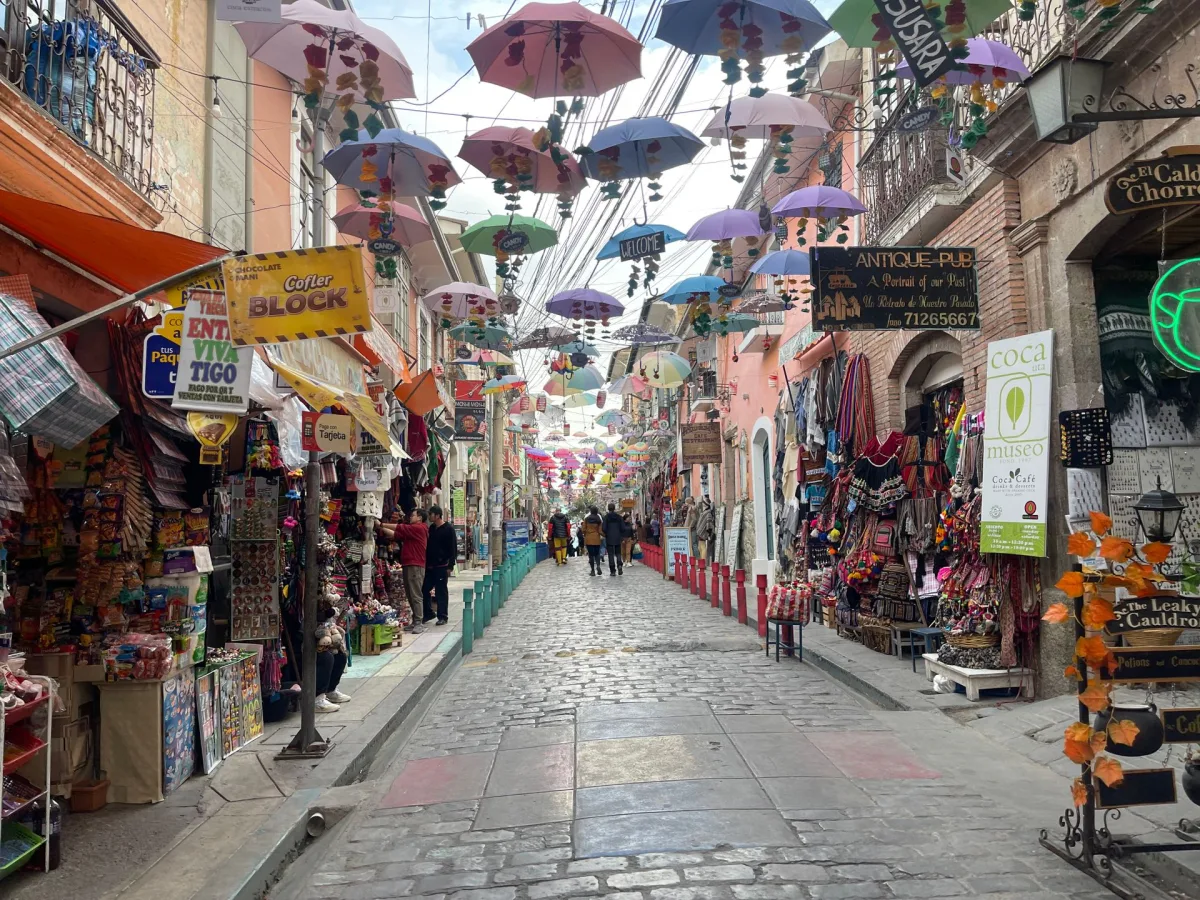

Colorful alpaca wool textiles and traditional crafts displayed at Mercado de las Brujas in La Paz, Bolivia

Bolivia Shopping & Markets Guide

Alpaca wool, silver jewelry, traditional crafts & bargaining tips for Indian travelers exploring Bolivian markets.

Written by Abbhay Singh — South America Travel Specialist
Reviewed by Abhilash Dutta · South America Travel Reviewer
Last updated after reviewing:
  • Mercado de las Brujas opening hours & cultural etiquette updates (2026)
  • Alpaca wool authenticity verification tips for Indian shoppers
  • Bolivia export rules for traditional crafts & textiles 2026
Top Markets in Bolivia for Indian Travelers
Authentic shopping experiences combining traditional crafts, local culture, and fair pricing.

India Traveler Tip: Carry small Boliviano bills (10, 20, 50 BOB) for easier transactions at markets. Vendors often lack change for larger notes.

Mercado de las Brujas (Witches Market) — La Paz

Bolivia's most famous market for traditional Andean crafts, herbal remedies, amulets, and llama fetuses used in Aymara rituals. Open daily 9 AM–6 PM. Respectful photography encouraged (always ask first). Great for alpaca wool souvenirs. Bargaining expected.

Mercado Rodríguez — La Paz

Preferred by locals for authentic alpaca wool textiles, silver jewelry, and handwoven goods. Less touristy than the Witches Market, with better prices and quality verification. Open Mon–Sat 8 AM–7 PM. Look for cooperative labels guaranteeing 100% alpaca.

Tarabuco Sunday Market — Near Sucre

Traditional indigenous market operating only on Sundays. Vibrant textiles, ceremonial garments, live folk music, and authentic cultural immersion. 64km from Sucre (1.5 hours by bus). Bargaining expected; carry cash. Respectful photography only after asking permission.

Cancha Market — Cochabamba

One of South America's largest open-air markets. Massive selection of textiles, spices, handicrafts, and local produce. Overwhelming but rewarding for patient shoppers. Open daily; busiest on weekends. Practice basic Spanish phrases for smoother transactions.

24th Street Market — Cochabamba

Artisan-focused market with higher-quality textiles, silver jewelry, and traditional clothing. More curated than Cancha, with fixed prices in some stalls. Ideal for travelers seeking verified authentic pieces. Open Tue–Sun 9 AM–6 PM.

What to Buy in Bolivia: Authentic Souvenirs for Indians
High-value, culturally meaningful purchases that travel well and support local artisans.

Alpaca Wool Textiles

Bolivia is renowned for soft, warm, lightweight alpaca wool. Look for:

  • Sweaters & Ponchos: ₹2,000–₹8,000 for 100% alpaca; verify labels from registered cooperatives
  • Scarves & Shawls: ₹800–₹3,000; ideal gifts, pack easily
  • Blankets: ₹3,000–₹10,000; heavy but durable heirloom pieces
  • Ch'uspas (Traditional Pouches): ₹300–₹1,200; woven bags for carrying coca leaves, now popular as small purses

Authenticity Tip: Genuine alpaca feels soft, lightweight, and warm. Burn test: real alpaca smells like burning hair, melts to ash; acrylic smells like plastic, forms hard beads.

Silver Jewelry & Crafts

Potosí silver is world-famous for quality and craftsmanship:

  • Earrings & Pendants: ₹500–₹2,500; look for ".925" hallmark
  • Andean Motif Jewelry: Sun, condor, chakana (Andean cross) designs
  • Charangos (Miniature Instruments): ₹1,500–₹5,000; traditional stringed instruments, decorative or playable
  • Wiphala Flags & Scarves: ₹200–₹800; colorful checkered patterns representing indigenous identity

Buying Tip: Purchase from registered artisan cooperatives or Mercado Rodríguez for verified quality and fair pricing.

Planning a Bolivia trip with shopping on your itinerary? Our packages include guided market visits and artisan cooperative tours.

← Back to Full Bolivia Travel Guide
Bargaining Etiquette & Tips for Indian Travelers
Navigate Bolivian markets confidently with respectful negotiation strategies.

When Bargaining is Expected:

  • Informal markets: Mercado de las Brujas, Tarabuco Sunday Market, Cancha Market
  • Street vendors and independent artisan stalls
  • Items without fixed price tags

When Prices are Fixed:

  • Registered stores, malls, and cooperative shops
  • Items with printed price tags or barcodes
  • Tour agencies and licensed operators

Bargaining Strategy for Indians:

  1. Start at 50–60% of the asking price — vendors expect negotiation
  2. Be respectful and friendly — bargaining is a social interaction, not a confrontation
  3. Use basic Spanish phrases: "¿Cuánto cuesta?" (How much?), "¿Me hace un precio?" (Can you give me a better price?)
  4. Carry small bills — vendors often lack change for 100 or 200 BOB notes
  5. Walk away politely if the price doesn't meet your budget — vendors may call you back with a better offer
  6. Buy multiple items from one vendor for bundle discounts

Cultural Note: Bolivian vendors appreciate when tourists show genuine interest in their crafts. Ask about the weaving techniques, materials, or cultural significance — this often leads to better prices and a more meaningful experience.

Export Rules & Customs for Indian Travelers
Ensure your Bolivian souvenirs clear Indian customs smoothly.

Key Rule: Keep all purchase receipts for customs declaration. Items over ₹50,000 total value may attract Indian customs duty.

Allowed Exports

  • ✓ Alpaca wool textiles, clothing, blankets
  • ✓ Silver jewelry (with .925 hallmark)
  • ✓ Wooden crafts, charangos, decorative items
  • ✓ Quinoa, amaranth, and packaged food items (sealed, commercially labeled)
  • ✓ Coca tea, candies, lotions (legal in Bolivia; verify Indian import rules)

Restricted or Prohibited Items

  • ✗ Archaeological artifacts, pre-Columbian pottery, or items from protected sites
  • ✗ Wildlife products: feathers, animal skins, or items containing protected species
  • ✗ Raw coca leaves (processed products like tea are generally permitted)
  • ✗ Items made from endangered woods or protected materials
  • ✗ Large quantities of identical items (may be considered commercial import)

When in doubt: Ask vendors about export permissions, keep receipts, and declare items at Bolivian customs (Aduana Nacional) before departure.

Need help planning a Bolivia itinerary with shopping included? Our South America experts can arrange guided market visits and artisan cooperative tours.

Plan Your Bolivia Trip →
Frequently Asked Questions — Bolivia Shopping for Indians
Quick answers to common shopping questions from Indian travelers.
1What are the best markets to visit in Bolivia for Indian travelers?
Mercado de las Brujas (Witches Market) in La Paz for traditional crafts, Mercado Rodríguez for alpaca wool, Tarabuco Sunday Market for indigenous textiles, and Cancha Market in Cochabamba for local goods. All offer authentic experiences with bargaining opportunities.
2How do I verify authentic alpaca wool in Bolivia?
Genuine alpaca is soft, lightweight, and warm. Look for labels stating "100% alpaca" from registered cooperatives. Authentic pieces cost ₹2,000–₹8,000 for sweaters. Avoid suspiciously cheap items — they may be acrylic blends. Buy from Mercado Rodríguez or certified artisan shops.
3Is bargaining expected in Bolivian markets?
Yes, bargaining is expected and encouraged at informal markets like Mercado de las Brujas and Tarabuco. Start at 50–60% of the asking price and negotiate respectfully. Fixed prices apply in registered stores, malls, and tour agencies. Carry small Boliviano bills for easier transactions.
4Can I export traditional Bolivian crafts to India?
Most textiles, jewelry, and crafts can be exported freely. However, items containing protected wildlife products (certain feathers, animal parts) or archaeological artifacts require permits. Keep receipts for customs declaration. When in doubt, ask vendors or consult Bolivian customs (Aduana Nacional).

Want authentic Bolivian souvenirs without the hassle? Our Bolivia packages include guided shopping experiences with trusted artisan cooperatives.

← Back to Full Bolivia Travel Guide

Market hours, prices, and export rules are subject to change. Verify current information with local operators and customs authorities before travel. Bargaining is cultural practice — always negotiate respectfully.

Ready to Explore?

Contact us today to book your dream vacation. Our travel experts will help customize your itinerary.

Experience the perfect blend of adventure and relaxation.

Enquire About This Package