Aerial view of the Okavango Delta with winding waterways and lush green vegetation, Botswana

Botswana Travel Guide
for Indian Travelers

Visa, cost, safari itineraries & tips — your complete guide to planning a trip to Botswana from India in 2026.

Updated for 2026 Travelers
Written by Vishal Narayan — Africa Travel Specialist
Reviewed by Veena Rathore · Africa Travel Reviewer
Last updated after reviewing:
  • Botswana visa-free entry confirmed for Indian nationals (up to 90 days)
  • Updated 2026 Okavango Delta conservation and park entry fees
  • New flight routing optimizations via Middle East hubs to Maun (MUB)

Last updated: April 2026

Botswana Trip Cost from India (Detailed Breakdown)
Realistic cost breakdown for flights, visa, luxury safari lodges, and total budget for 2026

Cost Breakdown 2026

  • Return Flights: ₹80,000 – ₹1,20,000
  • Visa Fee: FREE (90 days visa-free for Indians)
  • Safari Lodges (per night): ₹15,000 – ₹40,000+ (all-inclusive)
  • Food & Drinks: Included in most safari packages
  • Local Transport: Included (charter flights or 4x4 transfers)
  • Activities & Park Fees: Included in lodge packages
  • Travel Insurance: ₹2,000 – ₹4,000
  • Total (7–10 days): ₹2.5L – ₹4.5L per person

Botswana follows a "high-value, low-volume" tourism model. While on-ground costs are higher than Kenya or South Africa, the exclusive, uncrowded safari experience and all-inclusive lodge pricing offer exceptional value.

Best Departure Cities

  • Delhi (DEL) — Best connectivity via Dubai or Doha to Gaborone (GBE) or Maun (MUB)
  • Mumbai (BOM) — Excellent options via Middle East hubs
  • Bangalore (BLR) — Good connections via Doha or Dubai
  • Hyderabad (HYD) — Viable options via Middle East

Most Indian travelers fly into Johannesburg (JNB) and take a short connecting flight to Maun (MUB), the gateway to the Okavango Delta.

Ready to plan your Botswana safari? Let us handle flights, luxury lodges, and guided game drives.

View Botswana Tour Packages →
Flight Routes from India to Botswana
Flights from India to Botswana take 20–26 hours with one or two layovers. Here are the most popular routes.

Delhi to Gaborone / Maun

  • Route 1: DEL → Dubai (DXB) → Johannesburg (JNB) → Maun (MUB) (Emirates + Airlink)
  • Route 2: DEL → Doha (DOH) → Johannesburg (JNB) → Maun (MUB) (Qatar Airways + Airlink)
  • Route 3: DEL → Dubai (DXB) → Gaborone (GBE) (Emirates + Air Botswana)
  • Duration: 20–26 hours
  • Price Range: ₹80,000 – ₹1,20,000

Mumbai to Gaborone / Maun

  • Route 1: BOM → Doha (DOH) → Johannesburg (JNB) → Maun (MUB) (Qatar Airways + Airlink)
  • Route 2: BOM → Dubai (DXB) → Gaborone (GBE) (Emirates + Air Botswana)
  • Duration: 22–28 hours
  • Price Range: ₹85,000 – ₹1,25,000

Note: Maun Airport (MUB) is the primary gateway for Okavango Delta safaris. Gaborone (GBE) is the capital's international airport. Check Africa travel guides for more regional information.

Botswana vs Kenya Cost for Indian Travelers
How does Botswana compare to Kenya, the classic African safari destination? Here is a practical comparison for Indian travelers.
Expense Botswana (7 days) Kenya (7 days)
Flights₹80K – ₹1.2L₹60K – ₹90K
VisaFREE (90 days)₹2.5K – ₹3.5K (e-Visa)
Lodges/night₹15K – ₹40K+ (All-inclusive)₹8K – ₹20K (Varies widely)
Food/dayIncluded in lodge₹2K – ₹5K
Local TransportIncluded (4x4/Charter)₹3K – ₹6K/day
Total Trip₹2.5L – ₹4.5L₹1.5L – ₹3L
Flights
Botswana₹80K – ₹1.2L
Kenya₹60K – ₹90K
Visa
BotswanaFREE
Kenya₹2.5K – ₹3.5K
Lodges/night
Botswana₹15K – ₹40K+
Kenya₹8K – ₹20K
Total Trip
Botswana₹2.5L – ₹4.5L
Kenya₹1.5L – ₹3L

Botswana is more expensive but offers an exclusive, low-density safari experience with all-inclusive pricing. Kenya offers more budget flexibility but with higher vehicle density in popular parks.

Best Time to Visit Botswana from India
Botswana can be visited year-round, but the dry season offers the most spectacular wildlife viewing.
Month Botswana Season Okavango Delta Chobe National Park Makgadikgadi Pans India Travel Note
JanWet SeasonHigh water, lush greenGood, but scattered wildlifeZebra migration beginsIndia school holidays — book early
FebWet SeasonHigh water, birding excellentRainy, fewer crowdsCalving seasonModerate travel window
MarShoulderWater levels peakRain decreasesGood birdingGood post-Holi window
AprShoulder ✓Flooding begins, scenicImproving game viewingGreen landscapesGood shoulder window
MayDry Season ✓✓Excellent game viewing startsElephants gather at riverDry, clear skiesPeak Indian travel month — book 4 months ahead
JunDry Season ✓✓Premium wildlife viewingMassive herds, dry & coolDry, stark beautyExcellent time, pleasant weather
JulPeak DryAbsolute peak safari seasonPeak elephant concentrationsDry, cold nightsIndia school summer hols — high demand
AugPeak DryAbsolute peak safari seasonPeak elephant concentrationsDry, cold nightsHigh demand, book well in advance
SepLate Dry ✓Excellent, very dryExcellent, very dryHot, wildlife at pansGood post-monsoon window
OctHot DryVery hot, wildlife concentratedVery hot, intense game viewingVery hotHot in India, hot in Botswana
NovShoulderFirst rains, landscapes greenRains begin, birding improvesFirst rainsGood pre-Christmas window
DecWet SeasonGreen, newborn animalsRainy, lush sceneryGreen, zebra migrationIndia school holidays — peak demand
7-Day Botswana Safari Itinerary for Indian Travelers
A perfect one-week Botswana itinerary covering Maun, the Okavango Delta, and Chobe National Park.

Day-by-Day Plan

  • Day 1: Arrive in Maun (MUB) via Johannesburg. Transfer to your Okavango Delta lodge.
  • Day 2: Okavango Delta — Morning mokoro (dugout canoe) safari, afternoon game drive.
  • Day 3: Okavango Delta — Full day game drive in Moremi Game Reserve, sunset boat cruise.
  • Day 4: Morning flight or drive to Chobe National Park. Afternoon game drive.
  • Day 5: Chobe National Park — Morning boat safari on the Chobe River (famous for massive elephant herds).
  • Day 6: Chobe National Park — Final morning game drive, visit to local village or craft market.
  • Day 7: Transfer to Kasane or Maun for your international departure flight.

Planning Notes

  • Internal flights: Light aircraft transfers between Maun, Delta camps, and Kasane are highly recommended and often included in packages.
  • Budget option: Focus solely on Chobe National Park for a more affordable 4-5 day safari base from Kasane.
  • Currency: Carry USD cash for tips and small purchases, though cards are widely accepted.
  • Language: English is the official language and widely spoken in all tourist areas.
  • Health: Malaria prophylaxis is essential. Consult your doctor in India before travel.
  • Book ahead: For May–October travel, book luxury lodges 6–9 months in advance due to limited capacity.

Want a hassle-free Botswana safari? Our packages include flights, luxury lodges, transfers, and guided game drives.

Book Botswana Safari Package →
Botswana Visa for Indians — Complete Guide & Travel Essentials
Essential information for Indian travelers — from Botswana visa requirements and time zones to plug adapters and local transport.

Tip: Botswana follows a high-value, low-volume tourism model. Book lodges well in advance, especially for the May–October peak season.

Botswana Visa for Indians — 2026 Update

Update: Indian passport holders can enter Botswana visa-free for up to 90 days for tourism. No e-Visa or embassy visit required. Source: Government of Botswana.

  • Visa requirement: VISA-FREE for up to 90 days for Indian citizens.
  • Passport validity: Must be valid for at least 6 months beyond the intended date of departure, with at least two blank pages.
  • Required documents: Return or onward flight tickets, proof of accommodation (lodge bookings), and proof of sufficient funds.
  • Yellow Fever: Certificate required only if transiting through or arriving from a Yellow Fever endemic country.
  • Entry points: Sir Seretse Khama International Airport (Gaborone), Maun Airport, or land borders.
CLICK TO KNOW MORE ABOUT VISA DOCUMENTATION & FEES

Time Zone

Botswana follows Central Africa Time (CAT), which is UTC+2 and 3.5 hours behind Indian Standard Time (IST). There is no daylight saving time.

  • Botswana Time (CAT): UTC+2
  • Botswana is 3.5 hours behind Indian Standard Time (IST)
  • When it is 12:00 PM in Botswana, it is 3:30 PM in India
  • Botswana does not observe Daylight Saving Time
  • Business hours typically run from 8 AM to 5 PM CAT on weekdays
  • Safari game drives typically start at 5:30 AM and 4:00 PM to avoid midday heat

Country Code

To call Botswana from India, use the international dialing code +267 followed by the local number.

  • International Dialing Code: +267
  • To call Botswana from India, dial: 00-267-XXXX-XXXX
  • Emergency services: 997 (Police), 998 (Fire), 991 (Ambulance)
  • Major telecom providers: Mascom, Orange, and BTC
  • Tourist SIM cards available at Maun and Gaborone airports
  • Free Wi-Fi available in most safari lodges and hotels

Socket & Plugs

Botswana uses Type D, Type G, and Type M electrical outlets with 230V at 50Hz. Indian travelers are in luck.

  • Type D, Type G, Type M — 230V, 50Hz
  • Indian Type D plugs (3-pin round) work perfectly without an adapter ✅
  • Type G (UK 3-pin rectangular) is also common in newer lodges
  • Standard voltage is 230V with a frequency of 50Hz
  • Universal travel adapters are useful if you have Type C or M devices
  • Most luxury safari lodges provide universal adapters on request
  • Most modern devices (laptops, phone chargers) support 100–240V

Indian Embassy in Botswana

The High Commission of India in Gaborone provides consular services for Indian nationals.

  • Address: Plot 54380, Independence Avenue, Gaborone
  • Contact: +267 395 2991 / 395 2992
  • Email: [email protected]
  • Working Hours: Mon–Fri, 9:00 AM – 5:00 PM
  • Services: passport renewal, emergency certificates, assistance to Indian nationals
  • Register with MADAD portal before travel for advisories and assistance

Botswana High Commission in India

The High Commission of the Republic of Botswana in New Delhi handles diplomatic relations. Visa-free entry means no consular visits required for tourists.

  • Address: C-3/2, Vasant Vihar, New Delhi 110057
  • Contact: +91-11-4166 4133 / 4166 4134
  • Email: [email protected]
  • Working Hours: Mon–Fri, 9:00 AM – 5:00 PM
  • Note: Tourist visits do not require visa processing, but the High Commission can assist with official queries.

Car Driving Orientation

Left-Hand Drive (Same as India)

  • Botswana follows left-hand driving, identical to India's system
  • International Driving Permit (IDP) required along with valid home country license
  • Speed limits: 60 km/h in urban areas, 100–120 km/h on highways
  • Seat belts mandatory for all passengers
  • Driving under influence strictly prohibited
  • Self-drive safaris are popular but require a 4x4 vehicle and experience
  • Road conditions are generally excellent on major highways (A1, A2)

Local Transport

Safari Transfers and Local Taxis

  • Most tourists rely on lodge-arranged 4x4 transfers or light aircraft charters
  • Local taxis are available in Gaborone and Maun, but agree on fares beforehand
  • Combivans (shared minibus taxis) are the primary mode of transport for locals
  • Car rental is available at major airports (Avis, Europcar, Thrifty)
  • Self-drive requires careful planning for fuel and supplies in remote areas
  • Always carry extra water and a spare tire when driving outside major towns

Need help with your Botswana safari planning? Our travel experts can assist with flights, lodges, and itineraries.

Botswana Travel Assistance →
Botswana Culture, Language & Local Customs
Understand Setswana, the Ubuntu philosophy, and cultural norms to connect better with locals.

Official Language

English and Setswana — Official Languages

  • English is the official language of government and business, widely spoken in tourist areas.
  • Setswana is the national language, spoken by the majority of the population.
  • Other minority languages include Kalanga, Sekgalagadi, and Shona.
  • Greetings are very important in Setswana culture. "Dumela" (Hello) is the standard greeting.
  • "Dumela rra" (Hello sir) and "Dumela mma" (Hello ma'am) show respect.
  • Learning a few basic Setswana phrases is highly appreciated by locals.

Local Vocabulary

Understanding these Setswana terms helps connect with locals and understand the culture better.

  • Dumela — Hello / Greetings
  • Rra — Sir / Father (term of respect for men)
  • Mma — Ma'am / Mother (term of respect for women)
  • Ke a leboga — Thank you
  • Salang sentle — Goodbye (said to the person staying)
  • Tsamayang sentle — Goodbye (said to the person leaving)
  • Kgotla — Traditional community meeting place / court
  • Bogadi — Traditional bride price / dowry
  • Ubuntu — "I am because we are" (philosophy of human kindness)

Toilet Signs

Public restrooms are called "Dintlo" or simply marked with universal male/female pictograms.

  • Men's toilets marked with "Banna" or male symbol
  • Women's toilets marked with "Basadi" or female symbol
  • Public toilets in cities and major parks are generally clean and well-maintained
  • Some public facilities at bus ranks or markets may charge a small fee (BWP 2–5)
  • Safari lodges and hotels have excellent, modern restroom facilities
  • Western-style seated toilets are standard throughout Botswana

Interesting Facts

Botswana is one of Africa's most stable democracies and has transformed from one of the poorest countries to an upper-middle-income nation.

  • Botswana has been a continuous democracy since independence in 1966.
  • It is the world's largest producer of diamonds by value.
  • Over 70% of Botswana's land is dedicated to wildlife conservation and national parks.
  • The country has one of the highest densities of elephants in the world (approx. 130,000).
  • Botswana is home to the largest inland delta in the world (Okavango Delta).
  • Traditional governance still plays a role through the Ntlo ya Dikgosi (House of Chiefs).
Botswana Shopping & Markets Guide
From ethically sourced diamonds and leather crafts to traditional basket weaving.

Shopping Hours

Most Shops: 8:00 AM – 5:00 PM (Weekdays), 8:00 AM – 1:00 PM (Saturdays)

  • Shopping malls (like Game City in Gaborone) operate from 9:00 AM to 7:00 PM, seven days a week.
  • Sunday shopping is common in malls, but many independent shops and markets are closed.
  • Small boutiques and craft markets may have irregular hours, especially in rural areas.
  • Supermarkets open from 8 AM to 8 PM or later.
  • Craft markets near tourist hubs (Maun, Kasane) operate daily during peak season.
  • Tax-free shopping is not widely structured for tourists, but prices are generally fair.

Craft Markets

Botswana's craft markets offer unique, high-quality souvenirs made by local artisans.

  • Maun Craft Market: Best for Okavango Delta-inspired art, wood carvings, and textiles.
  • Kasane Craft Market: Ideal for last-minute souvenirs before departure, featuring beadwork and baskets.
  • Gaborone Main Mall: Various vendors selling traditional crafts, clothing, and accessories.
  • Thamaga Pottery: Famous for high-quality, handcrafted ceramic tableware (a bit of a drive, but worth it).
  • Cash (Botswana Pula) is preferred at small markets, though cards are accepted in larger craft shops.
  • Moderate bargaining is acceptable at informal markets, but not in established galleries.

Famous Products

Shopping in Botswana is renowned for specific high-value and culturally significant items.

  • Diamonds: Botswana is a top global producer. Buy only from certified, reputable dealers (e.g., Okavango Diamond Company).
  • Basket Weaving: Intricately woven palm-leaf baskets (especially from the Thamaga and Maun areas) are world-famous.
  • Leather Goods: High-quality ostrich leather products, belts, and bags.
  • Wood Carvings: Sculptures of local wildlife (elephants, lions) and traditional figures.
  • Textiles: Colorful fabrics and clothing featuring traditional Setswana patterns.
  • Art: Contemporary and traditional paintings depicting African landscapes and wildlife.

Supermarkets

Major supermarket chains offer wide product ranges, including imported goods for travelers.

  • Choppies: The most widespread and popular supermarket chain in Botswana.
  • Spar: Offers a good selection of fresh produce, meats, and imported items.
  • Woolworths: Premium supermarket (in Gaborone) with high-quality food and clothing.
  • Food Lover's Market: Excellent for fresh produce, gourmet items, and bakery goods.
  • Most supermarkets open from 8 AM to 8 PM; some are open on Sundays.
  • Bottled water is recommended for travel outside major cities, though tap water in Gaborone is generally safe.
Botswana Food & Cuisine Guide
Botswana cuisine is hearty, meat-centric, and deeply rooted in traditional agricultural and pastoral practices.

Do: Try Seswaa and Vetkoek — they are the quintessential Botswana comfort foods.

Famous Cuisines

Botswana cuisine relies heavily on beef, sorghum, and indigenous vegetables.

  • Seswaa: The national dish — pounded beef or goat meat, slow-cooked until tender, served with pap.
  • Bogobe (Pap): A stiff porridge made from sorghum or maize meal, the staple carbohydrate.
  • Morogo: Wild spinach or leafy greens, often cooked with onions and tomatoes.
  • Vetkoek: Deep-fried dough bread, often served with mince or jam (popular street food).
  • Magwinya: Another name for vetkoek, commonly eaten for breakfast.
  • Mopane Worms: Dried and fried caterpillars, a protein-rich traditional delicacy (for the adventurous!).
  • Boerewors: A coiled, spiced sausage of South African origin, widely popular and grilled at braais (barbecues).

Famous Fruits

Local fruits are seasonal and highly refreshing in the hot climate.

  • Melon (Lerotse): A type of wild cucumber/melon, very refreshing and widely available.
  • Baobab Fruit (Monowana): Used to make a refreshing, vitamin C-rich drink.
  • Marula: A fruit used to make jams, beer, and the famous Amarula liqueur.
  • Mangoes: Abundant during the summer months (November–January).
  • Citrus: Oranges and grapefruits are grown in the eastern parts of the country.

National Dish — Seswaa

Seswaa is Botswana's pride and culinary cornerstone, traditionally prepared for weddings, funerals, and national celebrations.

  • Made from beef or goat meat, cooked slowly in a three-legged pot (potjie) with only salt and water.
  • Once tender, the meat is pounded with a wooden stick until it shreds.
  • Served hot with Bogobe (sorghum porridge) and Morogo (wild spinach).
  • The slow cooking process makes the meat incredibly tender and flavorful.
  • It is a communal dish, symbolizing unity and shared celebration.
  • Available at most traditional restaurants and cultural villages.

Avg Cost Of Food

Food costs vary widely. Safari lodges are all-inclusive, while city dining is moderately priced.

  • Street Food (Vetkoek): BWP 10–20 (₹60–₹120)
  • Local Restaurant Meal: BWP 80–150 (₹500–₹900)
  • Mid-range Restaurant: BWP 200–400 per person (₹1,200–₹2,400)
  • Fine Dining (Gaborone): BWP 500–800+ per person (₹3,000–₹4,800)
  • Coffee: BWP 25–40 (₹150–₹240)
  • Local Beer (St Louis / Cocopan): BWP 20–30 (₹120–₹180)

Tipping: 10% is customary in restaurants if a service charge is not included.

Botswana Weather & Packing Tips
Botswana has a semi-arid climate. Pack for hot days, cool nights, and dusty safari conditions.

Tip: Pack layers — safari mornings and evenings can be surprisingly cold, even in summer.

Weather

Botswana has a semi-arid climate with distinct wet and dry seasons.

  • Dry Season (May–October): Sunny days (25–30°C), cool to cold nights (5–15°C). Minimal rain. Best for wildlife viewing.
  • Wet Season (November–April): Hot and humid (30–40°C), with afternoon thunderstorms. Lush green landscapes.
  • Okavango Delta: Slightly more humid due to water presence, but temperatures are moderated by the delta.
  • Kalahari Desert: Extreme temperatures — very hot in summer, freezing at night in winter.
  • Best time overall: June to September for optimal safari conditions.

Clothes To Wear

Safari dressing is about practicality, comfort, and neutral colors to blend with the environment.

For Safari Game Drives:

  • Neutral-colored clothing (khaki, olive, beige, brown) — avoid bright colors and camouflage (reserved for military).
  • Lightweight, breathable long-sleeved shirts and trousers (protection from sun, dust, and insects).
  • Warm fleece or down jacket for early morning and evening game drives (open vehicles get cold).
  • Sturdy, closed-toe shoes or hiking boots.
  • Wide-brimmed hat, sunglasses, and high-SPF sunscreen.
  • Binoculars and a camera with a good zoom lens.

For Cities (Gaborone/Maun):

  • Smart-casual attire is acceptable for restaurants and hotels.
  • Light, comfortable clothing for the heat.
Botswana Heritage & Cultural Highlights
UNESCO sites, national symbols, and cultural experiences that capture Botswana's identity.

UNESCO World Heritage Sites

Botswana boasts two stunning UNESCO World Heritage Sites that showcase its natural and cultural wealth.

  • Okavango Delta (2014): Recognized as a natural World Heritage site for its unique inland delta ecosystem and biodiversity.
  • Tsodilo Hills (2001): Known as the "Louvre of the Desert," featuring over 4,500 rock paintings spanning 100,000 years of human history.

National Symbols

Botswana's national symbols reflect its natural heritage and cultural values.

  • National Animal: Zebra (featured on the coat of arms, symbolizing water and life).
  • National Bird: Kori Bustard (one of the heaviest flying birds in the world).
  • National Tree: Camel Thorn tree (Acacia erioloba), a vital resource in the Kalahari.
  • National Motto: "Pula" (Setswana for "Rain" and also the name of the currency, symbolizing life and prosperity).
  • National Dish: Seswaa.

Cultural Experiences

Engaging with local communities adds profound depth to a Botswana safari.

  • San Bushmen Walk: Learn ancient tracking and foraging skills from the indigenous San people in the Kalahari.
  • Village Tours: Visit traditional settlements to see the Kgotla (community meeting place) and experience local hospitality.
  • Traditional Dance: Watch performances of the Setapa or Phathisi dances, characterized by rhythmic foot-stomping.
  • Craft Workshops: Participate in basket weaving or pottery making with local artisan cooperatives.

Souvenirs

Best places to shop for souvenirs: Maun Craft Market, Kasane Craft Market, and reputable galleries in Gaborone.

  • Woven Baskets: Intricate, colorful palm-leaf baskets (Thamaga style).
  • Diamonds: Only from certified, reputable dealers (ask for a certificate of authenticity).
  • Wood Carvings: Local wildlife and traditional figures.
  • Leather Goods: Ostrich leather belts, wallets, and bags.
  • Textiles: Clothing and fabrics with traditional Setswana patterns.
  • Art: Paintings and prints depicting African landscapes and wildlife.
Notable Highlights for Indian Travelers
From visionary leadership to world-renowned conservation, discover what makes Botswana unique.

Famous People

  • Sir Seretse Khama (1921–1980): First President of Botswana, visionary leader who guided the country from poverty to prosperity.
  • Quett Masire (1925–2017): Second President, continued the legacy of stability and development.
  • Festus Mogae (1939–): Third President, praised for his handling of the HIV/AIDS epidemic.
  • Ian Khama (1953–): Fourth President, son of Seretse Khama, known for strong conservation policies.
  • Mma Precious Ramotswe: The beloved fictional detective from Alexander McCall Smith's "No. 1 Ladies' Detective Agency" series, embodying Botswana's warmth and wisdom.

Conservation Leadership

Botswana is a global leader in wildlife conservation and sustainable tourism.

  • High-Value, Low-Volume Tourism: A deliberate policy to limit tourist numbers, protecting the environment while providing high-quality experiences.
  • Anti-Poaching Success: Botswana has one of the most effective anti-poaching units in Africa, leading to a growing elephant population.
  • Community-Based Natural Resource Management (CBNRM): Empowering local communities to benefit directly from wildlife conservation through tourism revenue.
  • Kgalagadi Transfrontier Park: A pioneering cross-border conservation area shared with South Africa.

The Big Five

Botswana is one of the best places in Africa to see the "Big Five" in a single trip.

  • Lion: Abundant, especially in the Okavango Delta and Chobe.
  • Leopard: Frequently spotted in the Moremi Game Reserve.
  • Elephant: Botswana has the largest elephant population in the world (approx. 130,000), especially in Chobe.
  • Rhino: Black and white rhinos are carefully protected in fenced sanctuaries like Khama Rhino Sanctuary.
  • Buffalo: Massive herds are a common sight, particularly in the Delta and Chobe.

Is Botswana expensive for Indians? A 7–10 day safari trip costs ₹2.5L–₹4.5L per person, including flights, visa-free entry, and all-inclusive luxury lodges.

Do Indians need a visa? No. Indian passport holders can enter Botswana visa-free for up to 90 days for tourism.

Flight duration? Flights from India to Botswana typically take 20–26 hours with one or two layovers via the Middle East or Johannesburg.

Is Botswana safe for Indian tourists? Yes, Botswana is one of the safest and most stable countries in Africa, with a well-developed tourism infrastructure.

Currency? Botswana Pula (BWP). Carry USD for exchange, though international cards are widely accepted in lodges.

Frequently Asked Questions — Botswana Travel for Indians
Quick, honest answers to the most common Botswana travel questions from Indian travellers
1Do Indians need a visa for Botswana?
No. Indian passport holders can enter Botswana visa-free for tourism for up to 90 days. Ensure your passport is valid for at least 6 months beyond your intended stay and has blank pages for entry stamps.
2Is Botswana expensive for Indian tourists?
Botswana is a premium safari destination. A 7–10 day trip typically costs ₹2.5L to ₹4.5L per person. This includes flights, visa-free entry, luxury or mid-range all-inclusive safari lodges, meals, and guided game drives. While more expensive than Kenya, the exclusive, uncrowded experience offers exceptional value.
3How long is the flight from India to Botswana?
Flights from Delhi or Mumbai to Gaborone (GBE) or Maun (MUB) take approximately 20–26 hours with one or two layovers, typically via Dubai, Doha, or Johannesburg.
4What is the best time to visit Botswana from India?
May to October (the dry season) is the absolute best time. Wildlife congregates around permanent water sources, making game viewing exceptional. The weather is also mild and pleasant, with sunny days and cool nights.
5Is Botswana safe for Indian tourists?
Yes, Botswana is widely regarded as one of the safest and most stable countries in Africa. It has a strong democracy, low crime rates, and a highly professional, well-developed tourism infrastructure that caters specifically to international visitors.
6Do I need malaria medication for Botswana?
Yes, malaria is prevalent in many parts of Botswana, especially in the Okavango Delta and Chobe National Park. It is highly recommended to consult your doctor in India before traveling to get appropriate prophylaxis and to use insect repellent.
7What currency is used in Botswana?
The local currency is the Botswana Pula (BWP). It is advisable to carry USD or Euros in cash to exchange locally at banks or airports. Major international credit and debit cards are widely accepted in safari lodges and larger towns.
8What plug type is used in Botswana?
Botswana uses Type D (Indian 3-pin round), Type G (UK 3-pin rectangular), and Type M outlets at 230V, 50Hz. Indian Type D plugs work perfectly without an adapter, making it very convenient for Indian travelers.
9Can vegetarian Indians find food in Botswana?
Yes, but you must inform your safari lodge or tour operator in advance. While traditional Batswana cuisine is meat-heavy (Seswaa), luxury and mid-range lodges are highly accustomed to catering to vegetarian, vegan, and other specific dietary requirements with advance notice.
10What is the national dish of Botswana?
Seswaa is the national dish. It consists of beef or goat meat slow-cooked in a traditional three-legged pot with only salt and water until tender, then pounded and served with Bogobe (sorghum porridge) and Morogo (wild spinach).
11What is the time difference between India and Botswana?
Botswana is 3.5 hours behind Indian Standard Time (IST). Botswana follows Central Africa Time (CAT), which is UTC+2, and does not observe Daylight Saving Time.
12Do I need a Yellow Fever vaccine for Botswana?
A Yellow Fever vaccination certificate is only required if you are arriving from or have transited through a country with a risk of Yellow Fever transmission (e.g., parts of South America or Africa). Direct flights from the Middle East or India do not require it.
13Can I use UPI or Indian Rupees in Botswana?
No. UPI is not available, and Indian Rupees are not accepted for exchange or transactions. Carry USD or Euros to exchange for Botswana Pula, or rely on international credit/debit cards.
14What should I pack for a Botswana safari?
Pack neutral-colored clothing (khaki, olive, beige), a warm fleece or down jacket for early morning game drives, a wide-brimmed hat, sunglasses, high-SPF sunscreen, binoculars, and a good camera with a zoom lens. Avoid bright colors and camouflage.
15Does Destination To Plan offer group tour packages to Botswana?
Yes. Destination To Plan offers customized group and family safari packages to Botswana from India. These include return flights, luxury lodge accommodations, guided game drives, internal transfers, and travel assistance. Contact us for a personalized itinerary and quote.
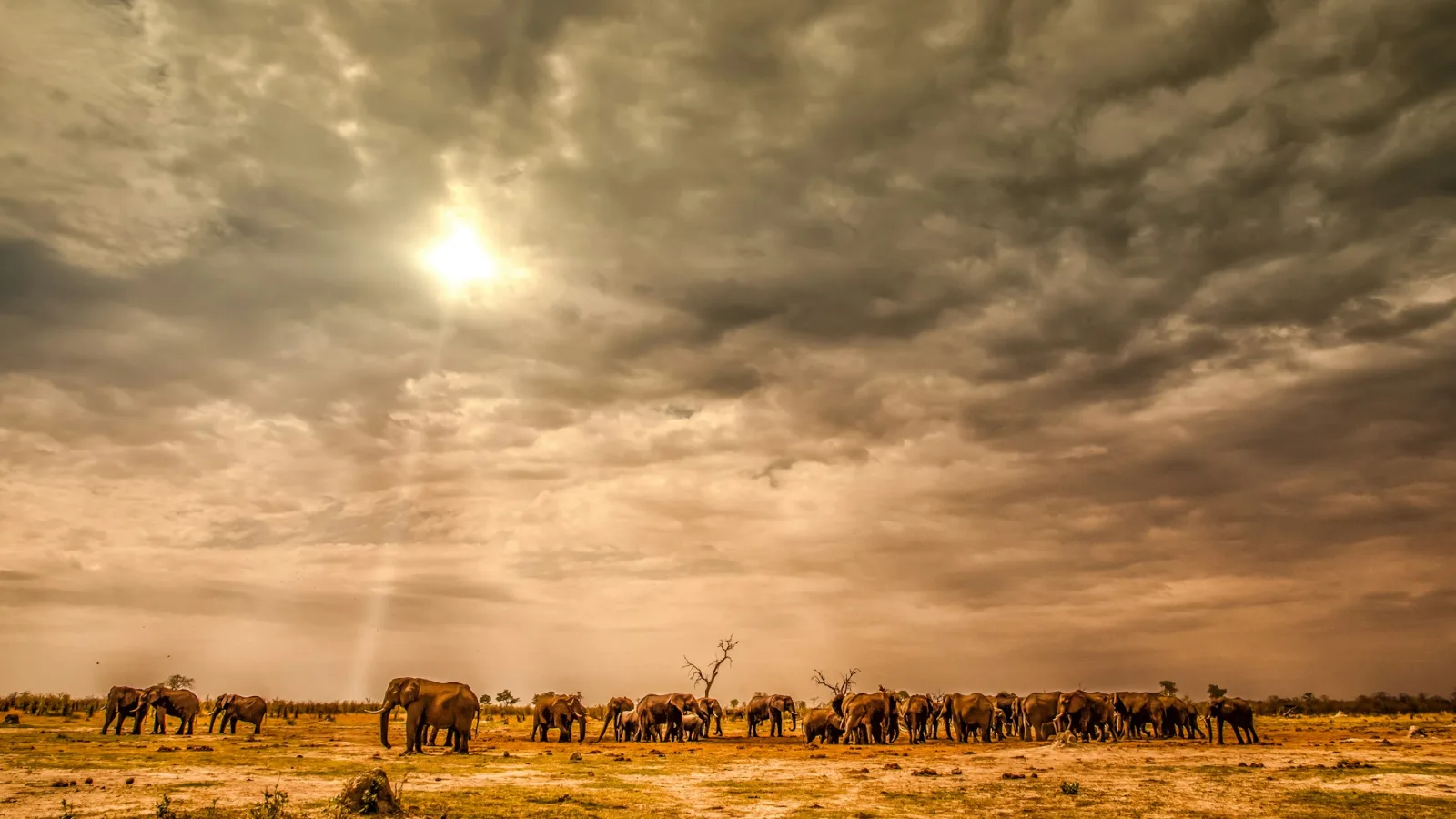
Have more questions? Our Botswana safari experts can help plan your perfect African adventure.

Talk to a Botswana Travel Expert →

Note: Information provided is subject to change. Verify visa requirements, exchange rates, park regulations, and travel advisories before your trip. Prices are approximate and may vary based on location, season, and lodge availability. Always confirm health requirements (like malaria prophylaxis) with a medical professional.

About This Botswana Travel Guide

This Botswana travel guide covers everything Indian travelers need, from visa-free entry rules and Okavango Delta safari tips to local food, weather, shopping, and top wildlife attractions. Researched, regularly updated, and trusted by group tour planners and independent travelers.

Expert Curated Content

Every section — from Botswana visa rules to Okavango Delta packing lists — is verified by travel professionals with extensive Africa safari experience.

Regularly Updated Information

Botswana travel costs, visa rules, and embassy details are reviewed and refreshed to reflect current conditions and park regulations.

Trusted by Indian Travelers

Used by group tour organizers, corporate travel planners, and independent travelers from India researching Botswana safari itineraries and Okavango Delta trips.

Complete Botswana Resource

One guide covering visa requirements, cost, flights, itinerary, food, culture, weather, shopping, and heritage — all with India-specific context and 2026 accuracy.

More Travel Guides

Explore Other Destinations

Plan Your Botswana Safari from India

Fill out the enquiry form below and our travel experts will help you plan your Botswana safari — visa-free entry, flights, luxury lodges, and guided game drives.

Get assistance with flight bookings, Okavango Delta and Chobe National Park tours, and complete Botswana safari packages.

Enquire About This Package