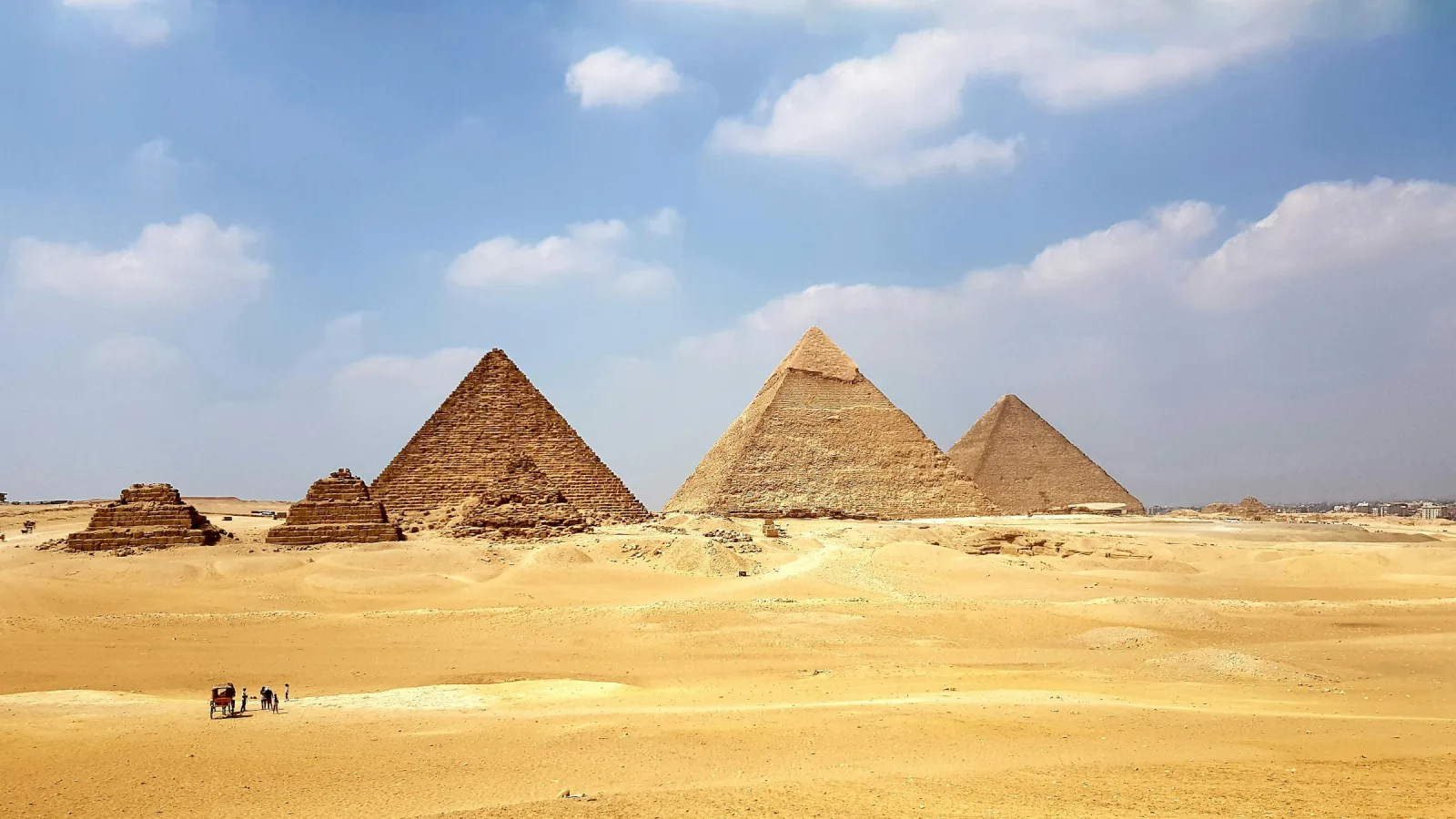
Aerial view of the Great Pyramids of Giza and the Sphinx at sunset, Egypt

Egypt Travel Guide
for Indian Travelers

Visa, cost, itinerary & tips — your complete guide to planning a trip to Egypt from India in 2026.

Updated for 2026 Travelers
Written by Vishal Narayan — Africa Travel Specialist
Reviewed by Veena Rathore · Africa Travel Reviewer
Last updated after reviewing:
  • Egypt E-Visa portal update and eligibility for Indian nationals (2025)
  • Cairo International Airport (CAI) Terminal 2 arrival procedures for Indians
  • Red Sea resort entry guidelines and Nile Cruise booking rules 2026

Last updated: April 2026

Egypt Trip Cost from India (Detailed Breakdown)
Realistic cost breakdown for flights, visa, hotels, Nile cruise, and total budget for 2026

Cost Breakdown 2026

  • Return Flights: ₹45,000 – ₹75,000
  • E-Visa Fee: ₹2,100 (approx. USD 25)
  • Hotels (per night): ₹3,500 – ₹12,000
  • Nile Cruise (3 nights): ₹15,000 – ₹35,000
  • Food (per day): ₹1,500 – ₹4,000
  • Local Transport & Guides: ₹2,000 – ₹5,000/day
  • Activities & Entry Fees: ₹10,000 – ₹20,000 total
  • Total (6–8 days): ₹80,000 – ₹1,50,000 per person

Egypt offers exceptional value for Indian travelers. While flights are moderately priced, on-ground costs for hotels, food, and guided tours are highly affordable compared to Europe.

Best Departure Cities

  • Delhi (DEL) — Excellent connections via Middle East hubs
  • Mumbai (BOM) — Frequent flights via Dubai, Doha, Abu Dhabi
  • Bangalore (BLR) — Good options via Emirates or Qatar Airways
  • Hyderabad (HYD) — Seamless 1-stop connections via Doha
  • Kochi (COK) — Direct and 1-stop options via Sharjah/Doha

Delhi and Mumbai offer the most competitive fares and convenient layovers to Cairo International Airport (CAI).

Ready to explore the land of the Pharaohs? Let us handle flights, visa, Nile cruises, and tours.

View Egypt Tour Packages →
Flight Routes from India to Egypt
Flights from India to Cairo take 8–12 hours with one layover. Here are the most popular routes.

Delhi to Cairo

  • Route 1: DEL → Dubai → CAI (Emirates)
  • Route 2: DEL → Doha → CAI (Qatar Airways)
  • Route 3: DEL → Abu Dhabi → CAI (Etihad)
  • Duration: 9–11 hours
  • Price Range: ₹45,000 – ₹70,000

Mumbai to Cairo

  • Route 1: BOM → Dubai → CAI (Emirates)
  • Route 2: BOM → Doha → CAI (Qatar Airways)
  • Route 3: BOM → Abu Dhabi → CAI (Etihad / Air Arabia)
  • Duration: 8–12 hours
  • Price Range: ₹40,000 – ₹65,000

Note: Cairo International Airport (CAI) is the main gateway. Domestic flights to Luxor, Aswan, and Hurghada operate via EgyptAir and Nile Air. Book domestic sectors in advance for better rates.

Egypt vs Europe Cost for Indian Travelers
How does Egypt compare to popular European destinations on cost? Here is a practical comparison.
ExpenseEgypt (7 days)Europe (7 days)
Flights₹45K – ₹75K₹60K – ₹1L
Visa₹2,100 (E-Visa)₹7K – ₹9K (Schengen)
Hotels/night₹3.5K – ₹12K₹8K – ₹20K
Food/day₹1.5K – ₹4K₹5K – ₹12K
Total Trip₹80K – ₹1.5L₹2L – ₹4.5L
Flights
Egypt₹45K – ₹75K
Europe₹60K – ₹1L
Visa
Egypt₹2,100
Europe₹7K – ₹9K
Hotels/night
Egypt₹3.5K – ₹12K
Europe₹8K – ₹20K
Total Trip
Egypt₹80K – ₹1.5L
Europe₹2L – ₹4.5L

Egypt offers massive savings on-ground compared to Europe. The lower flight cost, cheap E-Visa, and affordable luxury Nile cruises make it a highly budget-friendly international destination.

Best Time to Visit Egypt from India
Egypt can be visited year-round, but winter and spring offer the most comfortable weather for sightseeing.
MonthEgypt SeasonCairo & GizaLuxor & AswanRed SeaIndia Travel Note
JanWinter ✓✓Cool 10–20°CPleasant 10–22°CPerfect 20–25°CPeak season, book early
FebWinter ✓✓Mild 12–22°CWarm 12–25°CPerfect 20–25°CGreat weather, moderate crowds
MarSpring ✓Warm 15–26°CHot 15–30°CWarm 22–27°CIdeal for all regions
AprLate SpringHot 18–32°CVery Hot 20–35°CHot 24–30°CGood, but getting warm
MaySummer StartHot 22–38°CExtreme 25–40°CHot 26–33°CAvoid Luxor, stick to Red Sea
JunSummer PeakVery Hot 25–40°CExtreme 28–45°CHot 28–35°COff-season, low prices
JulSummer PeakVery Hot 25–40°CExtreme 28–45°CHot 28–35°CIndia school hols, but very hot
AugSummer PeakVery Hot 25–40°CExtreme 28–45°CHot 28–35°CExtreme heat in Upper Egypt
SepEarly AutumnHot 22–35°CVery Hot 25–40°CHot 26–33°CShoulder season begins
OctAutumn ✓✓Warm 20–30°CHot 20–35°CPerfect 24–30°CExcellent weather returns
NovAutumn ✓✓Mild 15–25°CPleasant 15–28°CWarm 22–28°CPeak Indian travel month
DecWinter ✓Cool 12–22°CPleasant 12–24°CPerfect 20–25°CIndia school hols, high demand
7-Day Egypt Itinerary for Indian Travelers
A perfect one-week Egypt itinerary covering Cairo, the Nile Cruise, and the Red Sea.

Day-by-Day Plan

  • Day 1: Arrive in Cairo — transfer to hotel, evening walk along the Nile
  • Day 2: Pyramids of Giza, Sphinx, and the Grand Egyptian Museum
  • Day 3: Old Cairo, Coptic Cairo, Khan el-Khalili bazaar, fly to Luxor
  • Day 4: Board Nile Cruise — Karnak Temple and Luxor Temple
  • Day 5: Valley of the Kings, Hatshepsut Temple, sail to Aswan
  • Day 6: Aswan (Philae Temple), fly to Hurghada/Red Sea for resort stay
  • Day 7: Red Sea snorkeling/relaxation, fly back to Cairo, depart

Planning Notes

  • Domestic flights: Book Cairo-Luxor and Aswan-Hurghada on EgyptAir or Nile Air
  • Budget option: Skip the Red Sea — focus entirely on Cairo, Luxor, and Aswan
  • Currency: Carry USD cash — exchange at airport banks for Egyptian Pounds
  • Language: Arabic is official. English is widely spoken in tourist areas
  • Guides: Hire a certified Egyptologist guide for temples and museums
  • Dress code: Dress modestly, especially when visiting mosques and rural areas
  • Book ahead: For Dec–Jan travel, book Nile cruises and hotels 4 months ahead

Want a hassle-free Egypt trip? Our packages include flights, Nile cruises, transfers, and certified guides.

Book Egypt Tour Package →
Egypt Visa for Indians — Complete Guide & Travel Essentials
Essential information for Indian travelers — from Egypt E-Visa requirements and time zones to plug adapters and local transport.

Tip: Carry small denominations of USD or Euros to exchange locally, as ATMs sometimes run out of cash or charge high fees.

Egypt Visa for Indians — 2026 Update

Update (2026): Indian nationals can apply for an Egypt E-Visa online. Additionally, Indians holding a valid US, UK, or Schengen visa are eligible for a Visa on Arrival at Cairo International Airport (USD 25).

  • E-Visa: Apply online at the official Egypt Visa portal (visa2egypt.gov.eg)
  • Visa on Arrival: Available at CAI for Indians with valid US/UK/Schengen visas
  • Cost: USD 25 (approx. ₹2,100) for single entry
  • Documents: Passport (6+ months validity), return ticket, hotel booking
  • Processing time: 3–5 business days for E-Visa
  • Duration permitted: 30 days for tourism
CLICK TO KNOW MORE ABOUT VISA DOCUMENTATION & FEES

Time Zone

Egypt follows Eastern European Time (EET), which is UTC+2 and 2.5 hours behind Indian Standard Time (IST).

  • Egypt Time (EET): UTC+2
  • Egypt is 2.5 hours behind Indian Standard Time (IST)
  • When it is 12:00 PM in Egypt, it is 2:30 PM in India
  • Egypt occasionally observes Daylight Saving Time (UTC+3) in summer
  • Business hours typically run from 9 AM to 5 PM EET on weekdays (Sunday–Thursday)
  • Weekends in Egypt are Friday and Saturday
  • Restaurants serve lunch from 1–4 PM and dinner from 7 PM onwards

Country Code

To call Egypt from India, use the international dialing code +20 followed by the area code and local number.

  • International Dialing Code: +20
  • To call Egypt from India, dial: 00-20-XX-XXXX-XXXX
  • Cairo area code: 2
  • Luxor area code: 95
  • Hurghada area code: 65
  • Emergency services: 122 (Police), 123 (Ambulance)
  • Tourist police: 126
  • Major telecom providers: Vodafone, Orange, Etisalat, WE
  • Tourist SIM cards available at Cairo Airport

Socket & Plugs

Egypt uses Type C and Type F electrical outlets with 220V at 50Hz. Indian travelers will need a plug adapter.

  • Type C and Type F — 220V, 50Hz (European 2-pin round)
  • Indian Type C plugs (2-pin round) work without adapter ✅
  • Indian Type D (3-pin round) plugs require a universal adapter
  • Most hotels provide adapters at the front desk on request
  • Most modern devices (laptops, phone chargers) support 100–240V

Indian Embassy in Egypt

The Embassy of India in Cairo provides consular services for Indian nationals.

  • Address: 10, Amr Ibn El Aas St., Zamalek, Cairo 11211, Egypt
  • Contact: +20 2 2728 6650
  • Email: [email protected]
  • Emergency (24/7): +20 100 165 4422
  • Working Hours: Sun–Thu, 9:00 AM – 4:00 PM
  • Register with MADAD portal before travel for advisories and assistance

Egypt Embassy in India

The Embassy of Egypt in New Delhi processes visa applications and provides consular services.

  • Embassy New Delhi: 14/18, Shantipath, Chanakyapuri, New Delhi 110021
  • Contact Delhi: +91-11-2687 5621 / 2687 5622
  • Email: [email protected]
  • Working Hours: Mon–Fri, 9:00 AM – 3:00 PM
  • Note: E-Visa is the recommended and fastest method for Indian tourists

Car Driving Orientation

Right-Hand Drive (Same as India)

  • Egypt follows right-hand driving, same as India
  • International Driving Permit (IDP) required for self-driving
  • Self-driving is not recommended in Cairo due to chaotic traffic
  • Private drivers and hotel transfers are highly recommended
  • Speed limits: 50 km/h in cities, 100 km/h on highways
  • Seat belts mandatory for front-seat passengers

App Based Taxi

Uber and DiDi are Primary Ride-Hailing Apps

  • Uber operates extensively in Cairo, Alexandria, and major cities
  • DiDi is a popular and often cheaper alternative in Cairo
  • InCare (local app) is also available in Cairo
  • Average fare from Cairo Airport to downtown: 200–300 EGP
  • Always use app-based taxis to avoid haggling and overcharging
  • White metered taxis are available but insist on using the meter
  • Domestic flights and private AC vans are best for inter-city travel

Need help with Egypt E-Visa? Our visa team assists with documentation and application.

Egypt Visa Assistance →
Egypt Culture, Language & Local Customs
Understand Egyptian Arabic, local customs, and cultural norms to connect better with locals.

Official Language

Arabic — Official Language

  • Egyptian Arabic is the most widely understood dialect in the Arab world
  • English is widely spoken in tourist areas, hotels, and by guides
  • French is understood in some upscale establishments
  • Learning basic Arabic phrases is highly appreciated by locals
  • Religion: Predominantly Sunni Muslim, with a significant Coptic Christian minority
  • Call to prayer (Adhan) is heard five times a day across the country
  • Friday is the holy day, and the weekend is Friday-Saturday

Local Vocabulary

Understanding these Egyptian Arabic terms helps connect with locals and navigate daily situations.

  • As-salamu alaykum — Peace be upon you (Hello)
  • Shukran — Thank you
  • Afwan — You're welcome / Excuse me
  • Min fadlak — Please
  • Inshallah — God willing (used for future plans)
  • Yalla — Let's go / Hurry up
  • Maalesh — No problem / Don't worry
  • Khalas — Finished / Done / Enough
  • Camel (Gamel) — Beautiful / Good
  • Bikam? — How much? (Useful in markets)
  • Ghalawi — Expensive

Toilet Signs

Public restrooms are called "Dawab" or "Hammam". Signs typically display Arabic text and pictograms.

  • Men's toilets marked with "Rigala" or male symbol
  • Women's toilets marked with "Sayedy" or female symbol
  • Public toilets in tourist areas are generally clean but require a small tip (10-20 EGP)
  • Shopping malls, restaurants, and hotels have free, well-maintained restrooms
  • Always carry your own tissues and hand sanitizer
  • Western-style seated toilets are standard in hotels and modern facilities
  • Squatter toilets are common in older public facilities and rural areas

Interesting Facts

Egypt is the most populous country in the Arab world and home to one of the oldest civilizations.

  • The Great Pyramid of Giza is the only surviving wonder of the ancient world
  • The Nile is the longest river in the world, flowing 6,650 km through Egypt
  • Egypt has more antiquities than any other country, with over 100 pyramids
  • Cats were considered sacred in ancient Egypt and worshipped as deities
  • The ancient Egyptians invented the 365-day calendar and early forms of paper (papyrus)
  • Cairo is the largest city in Africa and the Middle East
  • Egyptian cinema and music dominate the Arab cultural scene
Egypt Shopping & Markets Guide
From ancient bazaars and spices to cotton textiles and papyrus art.

Shopping Hours

Most Shops: 10:00 AM – 10:00 PM (Daily)

  • Shopping malls (Citystars, Mall of Arabia) operate from 10 AM to midnight
  • Traditional bazaars like Khan el-Khalili are open from 9 AM to 11 PM
  • Shops in tourist areas often stay open later, especially on weekends
  • Supermarkets open from 8 AM to 11 PM; some 24-hour outlets
  • Many shops close during Friday afternoon prayers (12 PM – 2 PM)
  • Bargaining is expected in bazaars and street markets, but not in malls

Famous Markets

Egypt's markets offer a sensory overload of spices, textiles, antiques, and traditional crafts.

  • Khan el-Khalili — Cairo's most famous 14th-century bazaar, perfect for souvenirs
  • Aswan Souk — Traditional market near the Nile, great for spices and Nubian crafts
  • Luxor Souk — Alabaster statues, cotton goods, and local sweets
  • El Attarine — Alexandria's historic perfume and spice market
  • Citystars — Massive modern mall in Cairo with international brands
  • Always carry small cash notes for market purchases
  • Start bargaining at 50% of the asking price and meet in the middle

What to Buy

Shopping in Egypt offers unique souvenirs reflecting its rich history and vibrant culture.

  • Papyrus Art — Hand-painted scrolls (buy from certified institutes)
  • Egyptian Cotton — World-renowned for its softness (towels, shirts, bed sheets)
  • Spices & Herbs — Cumin, coriander, saffron, hibiscus (karkadeh)
  • Perfume Oils — Lotus, papyrus, and musk oils in beautiful glass bottles
  • Alabaster Statues — Hand-carved from local stone (best in Luxor)
  • Brass & Copper Ware — Lanterns, trays, and coffee sets
  • Date Sweets — Stuffed with nuts and covered in chocolate
  • Nubian Crafts — Colorful textiles and baskets from Aswan

Supermarkets

Major supermarket chains offer wide product ranges, including imported goods and local staples.

  • Carrefour — French chain, widespread, excellent for groceries and snacks
  • Spinneys — Upscale supermarket with premium and imported items
  • Kheir Zaman — Local chain, competitive prices, many locations
  • Seoudi — Premium supermarket in Cairo and Giza
  • Bottled water is recommended; tap water is not safe for drinking
  • Local fruits like mangoes, dates, and citrus are incredibly cheap and fresh
Egypt Food & Cuisine Guide
Egyptian cuisine is a delicious blend of Mediterranean, Middle Eastern, and African influences.

Do: Try Koshary and Ful Medames — they are the ultimate Egyptian street food experiences.

Famous Cuisines

Egyptian food is hearty, flavorful, and heavily relies on legumes, vegetables, and bread.

  • Koshary — National dish: rice, macaroni, lentils, chickpeas, tomato sauce, fried onions
  • Ful Medames — Slow-cooked fava beans with oil, cumin, lemon (traditional breakfast)
  • Ta'meya — Egyptian falafel made from fava beans instead of chickpeas
  • Shawarma — Grilled meat wrap with tahini sauce (chicken or beef)
  • Mahshi — Vegetables (zucchini, eggplant, vine leaves) stuffed with spiced rice
  • Kebab & Kofta — Grilled minced meat and meat chunks with bread and tahini
  • Molokhia — Jute leaf soup, often served with chicken or rabbit
  • Om Ali — Traditional Egyptian bread pudding with milk, nuts, and raisins

Famous Fruits & Drinks

Egypt produces excellent fruits and refreshing traditional beverages perfect for the desert climate.

  • Mangoes — Egyptian mangoes (especially in summer) are world-famous
  • Dates — Siwa and Aswan produce some of the sweetest dates globally
  • Guava — Used for fresh juices and desserts
  • Karkadeh — Hot or cold hibiscus tea, rich in vitamin C
  • Sahlab — Warm, creamy orchid root drink with nuts (winter favorite)
  • Fresh Sugarcane Juice (Asab) — Sweet, energizing street drink
  • Tamarhind (Tamr Hindi) — Refreshing, tangy cold drink

National Dish — Koshary

Koshary is Egypt's ultimate comfort food and a must-try for every visitor.

  • A unique mix of rice, macaroni, brown lentils, and chickpeas
  • Topped with a spiced tomato sauce, garlic vinegar, and crispy fried onions
  • Completely vegetarian, affordable, and incredibly filling
  • Available at dedicated Koshary restaurants and street stalls everywhere
  • Best eaten at famous spots like Koshary Abou Tarek in Cairo
  • Customize the spice level with the provided chili sauce (Daqqa)

Avg Cost Of Food

Egypt is very budget-friendly for food. Budget travelers can eat well for under ₹1,000 per day.

  • Street Food/Koshary: 50–100 EGP (₹130–₹260)
  • Shawarma Wrap: 60–120 EGP (₹150–₹310)
  • Local Restaurant Meal: 200–400 EGP (₹520–₹1,040)
  • Mid-range Restaurant: 500–1,000 EGP (₹1,300–₹2,600)
  • Fine Dining / Nile Cruise Dinner: 1,500–3,000 EGP (₹3,900–₹7,800)
  • Fresh Juice / Coffee: 40–80 EGP (₹100–₹210)
  • Bottled Water (1.5L): 10–15 EGP (₹25–₹40)

Tipping (Baksheesh): 10-15% is customary in restaurants if service charge isn't included.

Egypt Weather & Packing Tips
Egypt has a hot desert climate. Pack for extreme heat in summer and cool evenings in winter.

Tip: Dress modestly out of respect for local culture. Shoulders and knees should be covered when visiting mosques and rural areas.

Weather

Egypt has a hot desert climate with mild, rainy winters and extremely hot, dry summers.

  • Cairo & Delta: Hot summers (30–40°C), mild winters (10–20°C)
  • Luxor & Aswan (Upper Egypt): Extreme summers (40–50°C), pleasant winters (10–25°C)
  • Red Sea Coast: Hot year-round, warmest in summer (35–45°C), mild winters (20–25°C)
  • Alexandria: Mediterranean climate, cooler and more humid than Cairo
  • Summer (May–Sep): Extreme heat, especially in the south. Avoid outdoor sightseeing.
  • Winter (Dec–Feb): Best time to visit. Cool evenings, warm days.
  • Spring/Autumn: Shoulder seasons, warm but manageable. Watch out for Khamsin winds in March.

Clothes To Wear

Pack light, breathable fabrics for the day, and a layer for cool desert nights. Respect local customs.

For Sightseeing & Cities:

  • Lightweight cotton and linen clothing (t-shirts, loose trousers, maxi dresses)
  • Modest attire for women: cover shoulders and knees, carry a scarf for mosques
  • Men should avoid sleeveless shirts and very short shorts in public
  • Comfortable, sturdy walking shoes (temple floors are uneven and sandy)
  • Wide-brimmed hat, sunglasses, and high-SPF sunscreen

For Red Sea & Resorts:

  • Swimwear is perfectly fine at hotel pools and private beaches
  • Cover up when walking through the resort lobby or nearby towns
  • Light jacket or shawl for heavily air-conditioned restaurants and buses
Egypt Heritage & Cultural Highlights
UNESCO sites, ancient pharaohs, and cultural treasures that define Egypt's global legacy.

UNESCO World Heritage Sites

Egypt has 7 UNESCO World Heritage Sites, showcasing its unmatched ancient history.

  • Memphis and its Necropolis (Pyramids) (1979) — Giza, Saqqara, Dahshur
  • Ancient Thebes with its Necropolis (1979) — Luxor, Karnak, Valley of the Kings
  • Historic Cairo (1979) — Islamic, Coptic, and medieval architecture
  • Nubian Monuments (Abu Simbel) (1979) — Ramses II temples relocated from the Nile
  • Saint Catherine Area (2002) — Mount Sinai and the oldest Christian monastery
  • Wadi Al-Hitan (Whale Valley) (2005) — Fossilized whale skeletons in the desert

National Symbols

Egypt's symbols reflect its deep connection to the Nile, the desert, and its ancient past.

  • National Animal: Steppe Eagle (historically, the Eagle of Saladin)
  • National Bird: Eagle of Saladin (featured on the coat of arms)
  • National Flower: Egyptian Lotus (water lily, sacred in antiquity)
  • National Sport: Football (Soccer) — deeply passionate fan culture
  • National Drink: Tea (Shai) and Karkadeh (hibiscus)
  • National Dish: Koshary
  • National Dance: Raqs Sharqi (Belly Dance) and Tanoura (Sufi spinning)

Films Shot in Egypt

Egypt's dramatic landscapes and ancient monuments have served as the backdrop for countless global films.

  • The Mummy (1999) — Action-adventure filmed in Morocco and studio sets, inspired by Egypt
  • Cleopatra (1963) — Epic historical drama starring Elizabeth Taylor
  • Death on the Nile (2022) — Agatha Christie mystery filmed at Abu Simbel and Aswan
  • The Spy Who Loved Me (1977) — James Bond features scenes at the Pyramids
  • Transformers: Revenge of the Fallen (2009) — Features the Pyramids and Petra (region)
  • The Egyptian (1954) — Classic Hollywood film set in ancient Egypt

Souvenirs

Best places to shop for souvenirs: Khan el-Khalili, local artisan co-ops, and hotel boutiques.

  • Papyrus Art — Authentic hand-painted scrolls (verify authenticity)
  • Egyptian Cotton — High-thread-count clothing and linens
  • Spice Boxes — Beautifully packaged cumin, saffron, and hibiscus
  • Alabaster Vases — Hand-carved stone from Luxor
  • Perfume Oils — Traditional scents in crystal bottles
  • Cartouche Jewelry — Gold or silver pendant engraved with your name in hieroglyphs
  • Shisha (Hookah) — Decorative water pipes (check customs rules before buying)
Notable Highlights for Indian Travelers
From legendary pharaohs to modern icons, discover the figures who shaped Egypt's history.

Famous Pharaohs & Figures

  • Khufu (c. 2589–2566 BC) — Builder of the Great Pyramid of Giza
  • Hatshepsut (c. 1507–1458 BC) — One of the most successful female pharaohs
  • Akhenaten & Nefertiti (c. 1350 BC) — Revolutionized art and religion
  • Tutankhamun (c. 1341–1323 BC) — Famous for his intact, golden tomb
  • Ramses II (The Great) (c. 1303–1213 BC) — Prolific builder, Abu Simbel
  • Cleopatra VII (69–30 BC) — The last active ruler of the Ptolemaic Kingdom
  • Sa