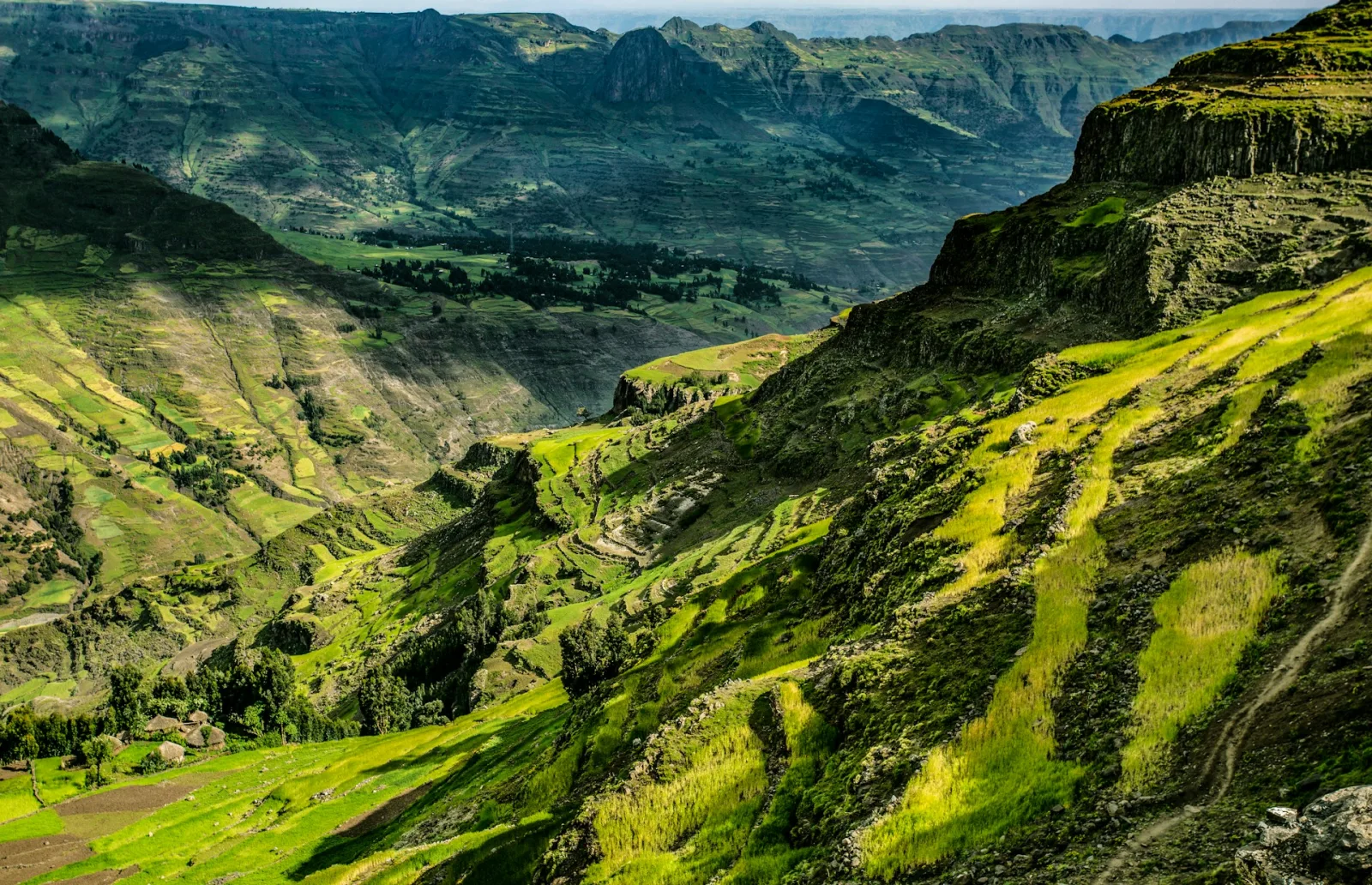
Rock-hewn churches of Lalibela and the Ethiopian highlands, Ethiopia

Ethiopia Travel Guide
for Indian Travelers

Visa, cost, itinerary & tips — your complete guide to planning a trip to Ethiopia from India in 2026.

Updated for 2026 Travelers
Written by Vishal Narayan — Africa Travel Specialist
Reviewed by Veena Rathore · Africa Travel Reviewer
Last updated after reviewing:
  • Ethiopia e-Visa portal expansion and processing times for Indian nationals (2025)
  • Ethiopian Airlines terminal transitions and Addis Ababa Bole (ADD) connection rules
  • Travel advisories for northern Ethiopia regions (Tigray, Amhara) and safe tourist circuits (2026)

Last updated: April 2026

Ethiopia Trip Cost from India (Detailed Breakdown)
Realistic cost breakdown for flights, visa, hotels, food, and total budget for 2026

Cost Breakdown 2026

  • Return Flights: ₹45,000 – ₹80,000
  • e-Visa Fee: ₹4,000 – ₹7,000 ($52–$82 USD)
  • Hotels (per night): ₹3,000 – ₹8,000
  • Food (per day): ₹1,500 – ₹4,000
  • Domestic Flights: ₹10,000 – ₹18,000 total
  • Activities & Entry Fees: ₹8,000 – ₹15,000 total
  • Travel Insurance: ₹1,500 – ₹3,000
  • Total (7 days): ₹80K – ₹1.5L per person

Ethiopia is an affordable destination for Indian travelers. While international flights and domestic hops take up a portion of the budget, on-ground costs for food, accommodation, and guided tours offer excellent value.

Best Departure Cities

  • Delhi (DEL) — Best connectivity via Ethiopian Airlines, Emirates, Qatar
  • Mumbai (BOM) — Excellent options via Middle East hubs
  • Bangalore (BLR) — Good connections via Dubai or Doha
  • Hyderabad (HYD) — Options via Middle East carriers
  • Kochi (COK) — Fewer direct routes, 1+ layover common

Delhi and Mumbai offer the most competitive fares and seamless connections to Addis Ababa Bole International Airport (ADD).

Ready to plan your Ethiopia trip? Let us handle flights, visa, hotels, and tours.

View Ethiopia Tour Packages →
Flight Routes from India to Ethiopia
Flights from India to Ethiopia take 10–16 hours with one layover. Here are the most popular routes.

Delhi to Addis Ababa

  • Route 1: DEL → Dubai → ADD (Emirates + Ethiopian)
  • Route 2: DEL → Doha → ADD (Qatar Airways)
  • Route 3: DEL → Bangkok → ADD (Ethiopian Airlines)
  • Route 4: DEL → Frankfurt → ADD (Lufthansa)
  • Duration: 11–15 hours
  • Price Range: ₹50,000 – ₹85,000

Mumbai to Addis Ababa

  • Route 1: BOM → Dubai → ADD (Emirates)
  • Route 2: BOM → Doha → ADD (Qatar Airways)
  • Route 3: BOM → Addis Ababa direct (Ethiopian Airlines - seasonal)
  • Duration: 10–14 hours
  • Price Range: ₹45,000 – ₹75,000

Note: Addis Ababa Bole (ADD) is the main international hub. Domestic flights to Lalibela and Gondar also operate from ADD. Check Africa travel guides for more regional information.

Ethiopia vs Kenya Cost for Indian Travelers
How does Ethiopia compare to Kenya, another popular African destination? Here is a practical comparison for Indian travelers.
Expense Ethiopia (7 days) Kenya (7 days)
Flights₹45K – ₹80K₹40K – ₹75K
Visa₹4K – ₹7K (e-Visa)₹4K – ₹6K (e-Visa)
Hotels/night₹3K – ₹8K₹5K – ₹15K
Food/day₹1.5K – ₹4K₹2K – ₹6K
Safari/Tours₹10K – ₹20K (Guided)₹25K – ₹50K (Safari Parks)
Total Trip₹80K – ₹1.5L₹1L – ₹2L
Flights
Ethiopia₹45K – ₹80K
Kenya₹40K – ₹75K
Visa
Ethiopia₹4K – ₹7K
Kenya₹4K – ₹6K
Hotels/night
Ethiopia₹3K – ₹8K
Kenya₹5K – ₹15K
Food/day
Ethiopia₹1.5K – ₹4K
Kenya₹2K – ₹6K
Total Trip
Ethiopia₹80K – ₹1.5L
Kenya₹1L – ₹2L

Ethiopia offers incredible value for history and culture enthusiasts. While Kenya is famous for expensive safari lodges, Ethiopia's historical northern circuit is highly affordable and offers a completely different, deeply immersive African experience.

Best Time to Visit Ethiopia from India
Ethiopia's diverse climate zones mean the best time to visit depends on your itinerary.
Month Ethiopia Season Addis Ababa Lalibela Danakil India Travel Note
JanDry PeakMild 12–24°CCool 10–22°CExtreme HeatTimkat festival — book early
FebDry PeakMild 12–25°CCool 10–22°CExtreme HeatGood post-Timkat window
MarDry ✓Warming 13–26°CPleasant 12–24°CVery HotPeak Indian travel month
AprShort RainsRainy 14–26°CRainy 13–24°CVery HotAvoid if possible
MayShort RainsRainy 14–25°CRainy 13–23°CVery HotShoulder season
JunHeavy RainsWet 13–22°CWet 12–21°CHotMonsoon in India
JulHeavy RainsWet 13–21°CWet 12–20°CHotBudget season
AugHeavy RainsWet 13–21°CWet 12–20°CHotAvoid northern regions
SepEnd of Rains ✓Warming 13–22°CClearing 12–21°CVery HotMeskel festival (Sep)
OctDry Start ✓✓Pleasant 13–24°CIdeal 11–22°CVery HotExcellent trekking
NovDry ✓Pleasant 12–24°CCool 10–22°CExtreme HeatGreat wildlife & history
DecDry PeakMild 12–24°CCool 10–22°CExtreme HeatPeak tourist season
7-Day Ethiopia Itinerary for Indian Travelers
A perfect one-week Ethiopia itinerary covering the historical northern circuit.

Day-by-Day Plan

  • Day 1: Arrive in Addis Ababa — National Museum (Lucy), Entoto Mountains
  • Day 2: Addis Ababa — Merkato market, Trinity Cathedral, fly to Lalibela
  • Day 3: Lalibela — Explore the 11 rock-hewn churches (Bete Giyorgis)
  • Day 4: Lalibela — Asheten Maryam monastery, traditional coffee ceremony
  • Day 5: Fly to Gondar — Fasil Ghebbi (Royal Enclosure), Debre Berhan Selassie
  • Day 6: Simien Mountains — Day trip from Gondar for wildlife and landscapes
  • Day 7: Fly back to Addis Ababa — Depart

Planning Notes

  • Domestic flights: Book via Ethiopian Airlines well in advance; they are the primary domestic carrier
  • Budget option: Skip Simien Mountains — Addis + Lalibela + Gondar is the most cost-effective circuit
  • Currency: Carry pristine USD cash — exchange at official banks or hotels upon arrival
  • Language: Amharic is the working language. English is widely understood in tourist hotels
  • Connectivity: Ethio telecom SIM available at Addis Ababa airport; bring your passport for registration
  • Dress code: Pack modest clothing for church visits (shoulders and knees covered)
  • Book ahead: For Jan (Timkat) and Sep (Meskel) festivals, book 5–6 months in advance

Want a hassle-free Ethiopia trip? Our packages include flights, e-Visa assistance, domestic hops, and guided historical tours.

Book Ethiopia Tour Package →
Ethiopia Visa for Indians — Complete Guide & Travel Essentials
Essential information for Indian travelers — from e-Visa requirements and time zones to plug adapters and local transport.

Tip: Carry pristine, untorn USD notes — exchange offices and banks will reject damaged bills.

Ethiopia Visa for Indians — 2026 Update

Update (2026): Indian nationals are eligible for the Ethiopian e-Visa for tourism. You can also obtain a Visa on Arrival (VoA) at Addis Ababa Bole International Airport. The e-Visa is highly recommended to save time. Source: Ethiopian Immigration Service.

  • e-Visa / VoA: Available for Indian passport holders for tourism purposes
  • Cost: Single-entry 30-day visa is approx. $52 USD; 90-day is approx. $72 USD
  • Where to apply: Official portal (evisa.gov.et) or on arrival at ADD airport
  • Documents: Valid passport (6+ months), return ticket, hotel booking, passport photo
  • Processing time: e-Visa takes 24–72 hours; VoA is instant at the airport
  • Duration permitted: 30 or 90 days for tourism
  • Yellow Fever: Certificate required if transiting/arriving from a risk zone (e.g., Kenya)
CLICK TO KNOW MORE ABOUT VISA DOCUMENTATION & FEES

Time Zone

Ethiopia follows East Africa Time (EAT), which is UTC+3 and 2.5 hours behind Indian Standard Time (IST). Note: Locally, Ethiopians often use a 12-hour clock starting at dawn (6:00 AM EAT is "12:00" local time).

  • East Africa Time (EAT): UTC+3
  • Ethiopia is 2.5 hours behind Indian Standard Time (IST)
  • When it is 12:00 PM in India, it is 9:30 AM in Ethiopia
  • Ethiopia does not observe Daylight Saving Time
  • Business hours typically run from 8:30 AM to 5:30 PM EAT on weekdays
  • Banks operate from 8:00 AM to 3:00 PM on weekdays
  • Restaurants serve lunch from 12–3 PM and dinner from 7:00 PM onwards

Country Code

To call Ethiopia from India, use the international dialing code +251 followed by the area code and local number.

  • International Dialing Code: +251
  • To call Ethiopia from India, dial: 00-251-XX-XXX-XXXX
  • Addis Ababa area code: 11
  • Lalibela area code: 33
  • Gondar area code: 58
  • Emergency services: 991 (Police), 907 (Ambulance)
  • Major telecom provider: Ethio telecom (Safaricom Ethiopia is expanding)
  • Tourist SIM cards available at Addis Ababa Bole Airport

Socket & Plugs

Ethiopia uses Type C, E, F, and L electrical outlets with 220V at 50Hz. Indian travelers should carry a universal adapter.

  • Type C, E, F, L — 220V, 50Hz
  • Indian Type C plugs (2-pin round) work in Type C and F sockets ✅
  • Indian Type D (3-pin round) plugs require an adapter
  • Universal travel adapters available at Addis Ababa electronics shops
  • Most hotels provide adapters at the front desk on request
  • Most modern devices (laptops, phone chargers) support 100–240V

Indian Embassy in Ethiopia

The Embassy of India in Addis Ababa provides consular services for Indian nationals.

  • Address: House No. 236/2, Kirkos Sub-City, Woreda 04, Addis Ababa
  • Contact: +251 11 661 1301 / 661 1302
  • Email: [email protected]
  • Emergency (24/7): +251 91 120 0303
  • Working Hours: Mon–Fri, 9:00 AM – 5:00 PM
  • Register with MADAD portal before travel for advisories and assistance

Ethiopia Embassy in India

The Embassy of Ethiopia in New Delhi handles diplomatic relations and visa facilitation.

  • Embassy New Delhi: 12/14, Shantipath, Chanakyapuri, New Delhi 110021
  • Contact Delhi: +91-11-2687 2811 / 2687 2812
  • Email: [email protected]
  • Working Hours: Mon–Fri, 9:00 AM – 5:00 PM
  • Note: Most Indian tourists use the online e-Visa portal rather than embassy visits

Car Driving Orientation

Right-Hand Drive (Same as India)

  • Ethiopia follows right-hand driving, identical to India's system
  • International Driving Permit (IDP) required along with valid home country license
  • Speed limits: 40–60 km/h in urban areas, 80–100 km/h on highways
  • Seat belts mandatory for front passengers
  • Self-driving is not recommended due to mountainous terrain and local driving habits
  • Hiring a local driver/guide is the standard and safest practice
  • Road conditions vary greatly; major highways are paved, rural roads can be rough

Local Transport & Taxis

Ride-hailing apps are limited; use hotel or arranged taxis

  • Uber and Bolt are not widely operational or reliable outside specific zones
  • Blue-and-white Lada taxis are common in Addis Ababa (metered but negotiate beforehand)
  • Best practice: Arrange airport transfers and city transport through your hotel
  • Minibuses (blue-and-white) are the local public transport but not recommended for tourists
  • Domestic flights via Ethiopian Airlines are essential for the northern circuit
  • Light Rail Transit (LRT) operates in Addis Ababa but is very crowded

Need help with Ethiopia e-Visa? Our visa team assists with documentation, application, and follow-up.

Ethiopia Visa Assistance →
Ethiopia Culture, Language & Local Customs
Understand Amharic, the unique calendar, and cultural norms to connect better with locals.

Official Language

Amharic — Working Language, plus 80+ other languages

  • Amharic uses the ancient Ge'ez script (Fidel), one of the oldest writing systems in Africa
  • English is widely spoken in tourist hotels, by guides, and in the aviation sector
  • Oromo, Tigrinya, and Somali are also major regional languages
  • Learning basic Amharic phrases is highly appreciated by locals
  • Ethiopians are incredibly hospitable; "Selam" (Hello) goes a long way

Local Vocabulary

Understanding these Amharic terms helps connect with locals and understand culture better.

  • Selam — Hello / Peace
  • Ameseginalehu — Thank you
  • Ayzo — Good / Okay
  • Eshi — Yes
  • Ay — No
  • Buna — Coffee (central to Ethiopian culture)
  • Injera — The staple sourdough flatbread
  • Gursha — The act of feeding someone else as a sign of affection
  • Arak — Local clear spirit (drink responsibly)
  • Tena Yistilign — May God give you health (traditional blessing)

Toilet Signs

Public restrooms are called "Wesha Bet" or simply marked with English/Icons.

  • Men's toilets marked with "W" or male symbol
  • Women's toilets marked with "M" (for Men/Women in some old signs, but usually standard icons) or female symbol
  • Public toilets in Addis Ababa are basic; always carry your own toilet paper and hand sanitizer
  • Hotels and tourist restaurants have Western-style seated toilets
  • Squat toilets are common in rural areas and public rest stops
  • A small coin tip (10-20 ETB) is expected for attendants at public facilities

Interesting Facts

Ethiopia is the only African nation that was never colonized, retaining its ancient culture and calendar.

  • Ethiopia has its own calendar with 13 months (12 months of 30 days + 1 month of 5/6 days)
  • The calendar is roughly 7-8 years behind the Gregorian calendar
  • Ethiopia is the birthplace of coffee, discovered by a goat herder named Kaldi
  • Addis Ababa is the diplomatic capital of Africa, hosting the African Union HQ
  • The country uses its own script (Ge'ez) and timekeeping system
  • Ethiopian Airlines is the largest and most successful airline in Africa
  • The blue Nile Falls (Tis Abay) contribute significantly to the Nile River
Ethiopia Shopping & Markets Guide
From world-renowned coffee and leather to traditional crosses and handwoven textiles.

Shopping Hours

Most Shops: 8:30 AM – 6:00 PM (Weekdays)

  • Shopping malls like Century Mall and Friendship City Center operate 10:00 AM to 9:00 PM
  • Merkato (Africa's largest open-air market) is busiest in the mornings
  • Small boutiques and local shops may close for lunch or observe religious holidays
  • Supermarkets open from 8 AM to 9 PM
  • Best shopping season: Year-round, but avoid heavy rain months (Jun-Aug)
  • Bargaining is expected in open markets like Merkato and Shola

Flea Markets & Bazaars

Ethiopia's markets offer unique souvenirs including coffee, leather, and religious artifacts.

  • Merkato (Addis Ababa) — Africa's largest open-air market; spices, coffee, textiles
  • Shola Market (Addis Ababa) — Traditional foods, spices, and household goods
  • Piazza (Addis Ababa) — Italian-era architecture, boutiques, and cafes
  • Lalibela Market — Traditional crosses, prayer staffs, and religious paintings
  • Cash (Ethiopian Birr) is king in local markets; cards are rarely accepted
  • Bargaining is acceptable and expected; start at 50% of the asking price

Famous Products

Shopping for Ethiopian coffee and leather offers excellent value and authentic quality.

  • Coffee Beans: Yirgacheffe, Sidamo, and Harar beans are world-class
  • Leather Goods: Ethiopia has a massive livestock population; excellent leather bags and shoes
  • Habesha Kemis: Traditional handwoven cotton dresses with intricate borders
  • Ethiopian Crosses: Intricate brass and silver filigree crosses
  • Spices: Berbere (chili blend) and Mitmita
  • Albama (Honey Wine): Traditional Tej, served in a berele (flask)
  • Canvas Paintings: Traditional Orthodox art styles

Supermarkets

Major supermarkets offer wide product ranges, including imported goods for tourists.

  • Safeway — Popular modern supermarket chain in Addis
  • Friendship Supermarket — Good selection of local and imported items
  • Shoa Supermarket — Local chain with competitive prices
  • Most supermarkets open from 8 AM to 9 PM
  • Local products affordable (coffee, spices, honey, injera flour)
  • Bottled water is essential outside of major hotels
Ethiopia Food & Cuisine Guide
Ethiopian cuisine is famous for its unique coffee culture, spicy stews, and the iconic injera.

Do: Experience a traditional Ethiopian coffee ceremony — it is a sacred social ritual.

Famous Cuisines

Ethiopian cuisine is characterized by slow-cooked stews (wats) served on injera, a spongy sourdough flatbread.

  • Injera — The staple sourdough flatbread made from teff flour; used as both plate and utensil
  • Doro Wat — Spicy chicken stew boiled in berbere spice and niter kibbeh (clarified butter)
  • Shiro — Vegan chickpea or broad bean stew; a daily comfort food
  • Kitfo — Traditional minced raw beef (like tartare); can be cooked if preferred
  • Tibs — Sautéed meat (beef or lamb) with onions, garlic, and rosemary
  • Misir Wat — Spicy red lentil stew (vegan)
  • Tej — Traditional honey wine, slightly sweet and potent
  • Beyaynetu — A massive platter of various vegetarian stews (perfect for sharing)

Coffee Culture

Ethiopia is the birthplace of coffee. The traditional coffee ceremony is a must-experience cultural event.

  • Roasting: Green beans are roasted over coals in front of guests
  • Grinding: Beans are ground by hand using a mortar and pestle (mukecha)
  • Brewing: Brewed in a traditional clay pot called a jebena
  • Serving: Served in small cups (sini) with plenty of sugar (no milk)
  • Three Rounds: Abol (first), Tona (second), Bereka (third - the blessing)
  • Incense: Frankincense is burned during the ceremony to ward off evil spirits
  • Snacks: Often accompanied by popcorn, roasted barley (kolo), or bread

Vegetarian Friendly

Ethiopia is a paradise for vegetarians and vegans due to Orthodox Christian fasting traditions.

  • Orthodox Christians fast for over 200 days a year, avoiding all animal products
  • This has resulted in a massive variety of completely vegan stews and dishes
  • Shiro, Misir Wat, Gomen (collard greens), and Atakilt (cabbage/potatoes) are staples
  • Always confirm that dishes are cooked without niter kibbeh (clarified butter) if vegan
  • Indian vegetarians will find Ethiopian food incredibly familiar and satisfying

Avg Cost Of Food

Budget travelers can eat exceptionally well for very low costs. Tipping 10% is appreciated.

  • Street Food/Sambusa: ETB 100–200
  • Local Cafe (Injera & Wat): ETB 300–600
  • Mid-range Restaurant: ETB 800–1,500 per person
  • Fine Dining / Tourist Hotel: ETB 2,000–4,000+ per person
  • Coffee (Traditional): ETB 100–200
  • Tej (Honey Wine): ETB 300–600 per berele (flask)

Tipping: 10% customary in restaurants if service charge isn't included. Give small change to church attendants and guides.

Ethiopia Weather & Packing Tips
Ethiopia spans multiple climate zones. Pack for your destinations — from mild Addis to extreme Danakil heat.

Tip: Pack layers — Addis Ababa is at 2,300m altitude and gets chilly at night, while the Danakil Depression exceeds 40°C.

Weather

Ethiopia has diverse climates due to its vast elevation changes.

  • Addis Ababa: Mild year-round (15–25°C), cool evenings, distinct wet/dry seasons
  • Lalibela / Gondar: Cool highlands (10–24°C), chilly nights, dry season is best
  • Danakil Depression: Extreme heat year-round (35–50°C), one of the hottest places on Earth
  • Harar: Mild and pleasant, similar to Addis but slightly warmer
  • Omo Valley: Tropical, hot, and humid with distinct rainy periods
  • Best time overall: October to March (Dry season, clear skies)
  • Rainy Season (Kiremt): June to August (Avoid northern highlands)

Clothes To Wear

Respect local customs, especially when visiting religious sites. Modesty is key.

For Addis Ababa & Cities:

  • Light layers for daytime, warm jacket/sweater for evenings (high altitude)
  • Smart-casual attire for dinners and hotels
  • Comfortable walking shoes

For Churches & Monasteries:

  • Shoulders and knees MUST be covered (both men and women)
  • Women should carry a scarf to cover their hair inside rock-hewn churches
  • Slip-on shoes (you must remove them before entering church grounds)

For Danakil / Trekking:

  • Lightweight, breathable, light-colored clothing for extreme heat
  • Wide-brimmed hat, high SPF sunscreen, and UV sunglasses
  • Sturdy hiking boots with good ankle support for Simien Mountains
Ethiopia Heritage & Cultural Highlights
UNESCO sites, ancient kingdoms, and cultural milestones that define Ethiopia's unique identity.

UNESCO World Heritage Sites

Ethiopia boasts 9 UNESCO World Heritage Sites, the most in Africa.

  • Rock-Hewn Churches of Lalibela (1978) — 11 medieval monolithic churches carved from solid rock
  • Simien National Park (1978) — Dramatic landscapes, Gelada baboons, Walia ibex
  • Fasil Ghebbi, Gondar (1979) — 17th-century royal enclosed castle complex
  • Aksum (1980) — Ancient giant obelisks and claimed home of the Ark of the Covenant
  • Lower Valley of the Awash (1980) — Discovery site of "Lucy" (Australopithecus)
  • Lower Valley of the Omo (1980) — Prehistoric sites and diverse indigenous tribes
  • Harar Jugol (2006) — Fortified historic Muslim city with 82 mosques
  • Konso Cultural Landscape (2011) — Terraced hillsides and living cultural traditions
  • Gedeo Cultural Landscape (2023) — Ancient stele fields and agroforestry

National Symbols

Ethiopia's symbols reflect its ancient Christian and Islamic heritage, and its unique biodiversity.

  • National Animal: Walia Ibex (endemic to the Simien Mountains)
  • National Bird: Blue-winged Goose
  • National Flower: Calla Lily
  • National Drink: Coffee (Buna)
  • National Dish: Injera with Doro Wat
  • Flag Colors: Green, Yellow, Red (Pan-African colors, originator of the tricolor)
  • Emblem: Pentagram (Star of Solomon) representing unity and diversity

Festivals

Ethiopian festivals are vibrant, colorful, and deeply rooted in ancient religious traditions.

  • Timkat (Epiphany) — January 19th; massive water blessing processions, best in Gondar
  • Meskel — September 27th; finding of the True Cross, marked by massive bonfires (Demera)
  • Leddet (Christmas) — January 7th; traditional games and church services
  • Enkutatash — September 11th; Ethiopian New Year, marked by yellow daisies

Music & Dance

Ethiopian music uses a unique pentatonic scale system (qignet) that gives it a distinct, mesmerizing sound.

  • Eskista — Traditional shoulder-dancing dance from the Amhara region
  • Masinko — Single-stringed bowed lute
  • Krar — Five or six-stringed lyre
  • Washint — Traditional bamboo flute
  • Live traditional music and dance shows are a must in Addis Ababa (e.g., 2000 Habesha, Yod Abyssinia)

Souvenirs

Best places to shop for souvenirs: Merkato, Piazza boutiques, and Lalibela craft markets.

  • Coffee Beans: Buy whole beans from local roasters (customs may require sealed packaging)
  • Leather Goods: High-quality bags, belts, and jackets
  • Ethiopian Crosses: Handcrafted brass and silver
  • Spices: Berbere blend and raw coffee beans
  • Traditional Clothing: Handwoven cotton scarves and shirts
  • Canvas Art: Orthodox-style paintings
Notable Highlights for Indian Travelers
From ancient human origins to Olympic legends, discover what makes Ethiopia unique on the global stage.

Famous People

  • Haile Selassie I (1892–1975) — Last Emperor of Ethiopia, revered in Rastafari movement
  • Abebe Bikila (1932–1973) — First sub-Saharan African Olympic gold medalist (ran barefoot)
  • Derartu Tulu (1972–) — First black African woman to win an Olympic gold medal
  • Kenenisa Bekele (1982–) — Long-distance running legend, multiple Olympic golds
  • Tirunesh Dibaba (1985–) — "Baby-faced destroyer", multiple Olympic distance champion
  • Mulatu Astatke (1943–) — Father of Ethio-jazz

Historical Milestones

Ethiopia's history is one of the oldest continuous civilizations in the world.

  • Lucy (Dinkinesh) — 3.2 million-year-old hominid fossil found in the Awash Valley
  • Never Colonized — Defeated Italian forces at the Battle of Adwa (1896), remaining independent
  • Ark of the Covenant — Claimed to be housed in the Church of Our Lady Mary of Zion in Axum
  • First Hijra — Early followers of Prophet Muhammad sought refuge in Axum (Kingdom of Aksum)
  • Origin of Coffee — Discovered in the Kaffa region in the 9th century

Unique Traditions

  • The 13-Month Calendar — "Thirteen months of sunshine" is the official tourism slogan
  • Timekeeping — The day starts at dawn (6:00 AM EAT is 12:00 local time)
  • Gursha — Rolling injera and wat into a ball and feeding it to someone as a gesture of love
  • Eating with Hands — Right hand only; eating from a communal plate is standard
  • Fasting — Wednesdays and Fridays are fasting days for Orthodox Christians (vegan food only)

Is Ethiopia expensive for Indians? A trip costs ₹80K–1.5L for 7 days including flights, e-Visa, domestic hops, hotels, and food.

Do Indians need a visa? Yes, Indians can get an e-Visa online or a Visa on Arrival at Addis Ababa Bole Airport.

Flight duration? Flights from India to Addis Ababa typically take 10–16 hours with one layover.

Is Ethiopia safe for Indian tourists? The main tourist circuits (Addis, Lalibela, Gondar) are safe, but border regions should be avoided.

Currency? Ethiopian Birr (ETB). Carry pristine USD cash for exchange. UPI is not available.

Frequently Asked Questions — Ethiopia Travel for Indians
Quick, honest answers to the most common Ethiopia travel questions from Indian travellers
1Do Indians need a visa for Ethiopia?
Yes. Indian nationals can apply for an Ethiopian e-Visa online before travel or obtain a Visa on Arrival at Addis Ababa Bole International Airport. The e-Visa is highly recommended to avoid queues. The single-entry 30-day visa costs around $52 USD.
2Is Ethiopia expensive for Indian tourists?
A 7-day Ethiopia trip from India costs approximately ₹80,000 – ₹1.5 lakh per person including flights, e-Visa, domestic flights, hotels, and food. It is generally more affordable than European or Middle Eastern destinations, and cheaper than Kenya for historical tours.
3How long is the flight from India to Ethiopia?
Flights take 10–16 hours with one layover, typically via Dubai, Doha, or Bangkok. Ethiopian Airlines operates frequent connections from Delhi and Mumbai to Addis Ababa.
4What is the best time to visit Ethiopia from India?
October to March is the dry season and ideal for visiting. January is famous for the Timkat festival. Avoid the heavy rainy season from June to August, especially in the northern highlands where roads can be impassable.
5Is Ethiopia safe for Indian tourists?
The main tourist circuits (Addis Ababa, Lalibela, Gondar, Simien Mountains) are generally safe for tourists. However, border regions and certain northern areas (like parts of Tigray and Amhara) have travel advisories. Always check current government advisories and stick to the established tourist routes.
6What is the currency in Ethiopia? Can I use UPI?
The currency is the Ethiopian Birr (ETB). UPI is not available. Carry pristine, untorn USD cash to exchange at official banks or hotels. International credit cards are accepted at major international hotels in Addis Ababa, but cash is essential for the rest of the country.
7Can vegetarian Indians find food in Ethiopia?
Yes, Ethiopia is excellent for vegetarians and vegans. Due to Orthodox Christian fasting traditions, a vast majority of local dishes (like Shiro, Misir Wat, and Gomen) are completely plant-based and cooked without animal products. Indian vegetarians will find the food incredibly familiar and satisfying.
8What is the time difference between India and Ethiopia?
Ethiopia is 2.5 hours behind Indian Standard Time (IST). Ethiopia follows East Africa Time (EAT, UTC+3). Note: Locally, Ethiopians often use a 12-hour clock starting at dawn.
9What plug type is used in Ethiopia?
Ethiopia uses Type C, E, F, and L electrical outlets at 220V. Indian Type C (2-pin round) plugs work without an adapter, but carrying a universal adapter is highly recommended for other socket types.
10Do I need a Yellow Fever vaccination for Ethiopia?
A Yellow Fever vaccination certificate is required if you are arriving from a country with a risk of Yellow Fever transmission (e.g., Kenya, Tanzania). It is not strictly required if flying directly from India, but carrying it is strongly advised to avoid any quarantine issues at the airport.
11What is the unique calendar in Ethiopia?
Ethiopia uses the Ge'ez calendar, which has 13 months (12 months of 30 days and one month of 5 or 6 days). It is roughly 7 to 8 years behind the Gregorian calendar. This is why their tourism slogan is "Thirteen months of sunshine".
12Is it safe to drink tap water in Ethiopia?
No. It is strongly recommended to drink only bottled or purified water. Avoid ice in drinks outside of high-end international hotels, and use bottled water for brushing your teeth.
13How do I travel between Addis Ababa and Lalibela?
The best and fastest way is by domestic flight via Ethiopian Airlines, which takes about 1 hour. Road travel is not recommended due to mountainous terrain, long travel times, and security considerations.
14What should I wear when visiting Ethiopian churches?
Modest clothing is mandatory. Both men and women must cover their shoulders and knees. Women are often required to cover their hair inside the rock-hewn churches. You must also remove your shoes before entering the church grounds, so slip-on shoes are convenient.
15Does Destination To Plan offer group tour packages to Ethiopia?
Yes. Destination To Plan offers customised group and family tour packages to Ethiopia from India including international flights, e-Visa assistance, domestic hops, hotels, and guided historical tours of the northern circuit. Contact us via the inquiry form below for details and pricing.
Have more questions? Our Ethiopia travel experts can help plan your perfect trip.

Talk to an Ethiopia Travel Expert →

Note: Information provided is subject to change. Verify visa requirements, exchange rates, opening hours, and travel advisories before your trip. Prices are approximate and may vary based on location, season, and inflation. Ethiopia experiences inflation; costs can change rapidly.

About This Ethiopia Travel Guide

This Ethiopia travel guide covers everything Indian travelers need from e-Visa requirements and Addis Ababa travel tips to local food, weather, shopping, and top attractions. Researched, regularly updated, and trusted by group tour planners and independent travelers.

Expert Curated Content

Every section — from Ethiopia visa rules to Addis Ababa shopping hours — is verified by travel professionals with Africa experience.

Regularly Updated Information

Ethiopia travel costs, visa rules, and embassy details are reviewed and refreshed to reflect current conditions including 2026 e-Visa updates.

Trusted by Indian Travelers

Used by group tour organizers, corporate travel planners, and independent travelers from India researching Ethiopia itineraries, Lalibela trips, and Addis Ababa city breaks.

Complete Ethiopia Resource

One guide covering visa requirements, cost, flights, itinerary, food, culture, weather, shopping, and heritage — all with India-specific context and 2026 accuracy.

More Travel Guides

Explore Other Destinations

Plan Your Ethiopia Trip from India

Fill out the enquiry form below and our travel experts will help you plan your Ethiopia tour — visa, flights, hotels, and guided tours.

Get assistance with e-Visa, flight bookings, Addis Ababa hotels, Lalibela and Simien Mountains tours, and complete Ethiopia packages.

Enquire About This Package