2026 updates on Mount Toubkal National Park entry fees and mandatory guide regulations
Road condition and transport availability for Ourika, Imlil, and Ait Ben Haddou routes
Verified vegetarian meal protocols for Indian travelers in remote Berber mountain villages
Fact-checked April 2026
Last updated: April 2026
Exploring the Atlas Mountains: A Guide for Indian Travelers
From gentle valley day trips to challenging high-altitude treks, discover the diverse landscapes of Morocco's mountainous heart.
Planning your full Morocco trip? This guide focuses specifically on the Atlas Mountains. For comprehensive multi-city routing, costs, and general logistics, refer to our main Morocco Travel Guide.
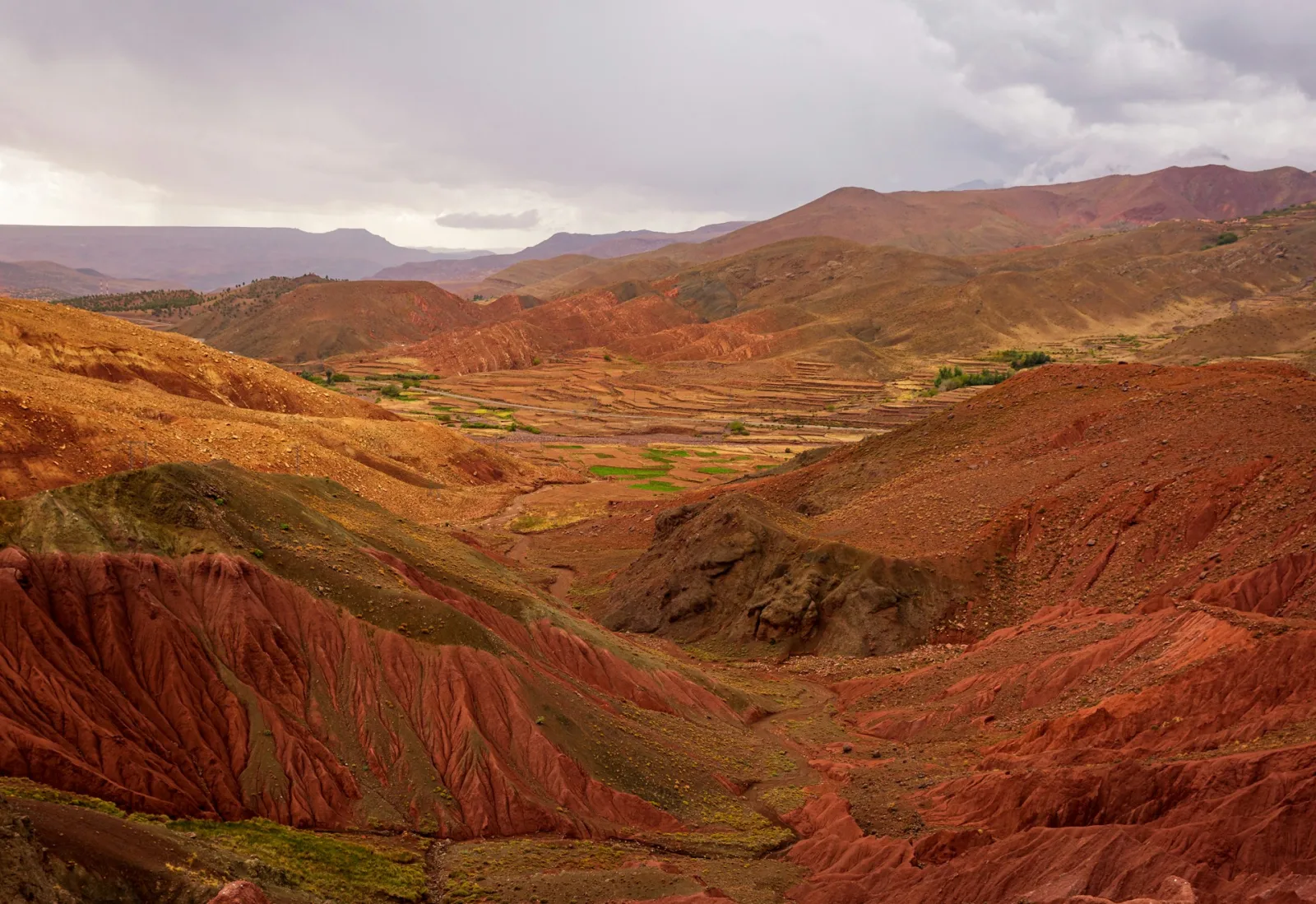
The Atlas Mountains form the dramatic backbone of Morocco, separating the Mediterranean and Atlantic coastlines from the vast Sahara Desert. For Indian travelers, this region offers a striking contrast to the bustling imperial cities. Whether you are seeking a gentle day trip to a lush valley, an immersive cultural homestay in a traditional Berber village, or a challenging multi-day ascent of Mount Toubkal, the Atlas Mountains provide an unforgettable, high-altitude adventure.
Top Atlas Mountain Destinations
The most rewarding valleys and villages to explore, ranging from easy day trips to remote trekking hubs.
Ourika Valley
Best for: Families, seniors, and short day trips.
Located just 1 hour from Marrakech, the Ourika Valley is lush, green, and highly accessible. It features gentle walking paths along the river, traditional watermills, and scenic viewpoints. It is the most popular and manageable mountain excursion for first-time visitors.
Imlil & Ait Bouguemez
Best for: Multi-day treks, cultural immersion, and mule trekking.
Imlil is the primary gateway to Mount Toubkal, offering guesthouses and guide services. The Ait Bouguemez Valley, known as the "Happy Valley," is more remote, featuring stunning terraced agriculture and authentic, unmolested Berber culture, ideal for 2-3 day guided treks.
Todra Gorge & Dades Valley
Best for: Road trips, photography, and rock climbing.
Located in the eastern High Atlas, these dramatic limestone river gorges feature towering 300-meter vertical cliffs. They are a popular stopover on the route between the Sahara Desert (Merzouga) and Marrakech, offering short, scenic walks and impressive geological formations.
Mount Toubkal Trekking Guide
Essential information for Indian travelers planning to summit North Africa's highest peak (4,167m).
Mount Toubkal is a non-technical but physically demanding trek, typically completed in 2 days from Imlil. For Indian travelers, altitude acclimatization and proper logistics are critical.
Mandatory Guides: Since 2018, Moroccan authorities strictly require all trekkers to be accompanied by a certified local guide. Checkpoints are enforced at the National Park entrance.
Duration: 2 days / 1 night is standard. Day 1: Imlil to Toubkal Refuge (3,207m). Day 2: Summit ascent and descent back to Imlil.
Best Time: April to June and September to October. Winter ascents (November–March) require crampons, ice axes, and specialized winter mountaineering experience.
Altitude Sickness: The rapid ascent can cause Acute Mountain Sickness (AMS). Spend a night acclimatizing in Imlil (1,740m) before starting the trek, and hydrate extensively.
For detailed packing requirements for high altitudes, refer to our Morocco Packing List.
Practical Tips for Indian Travelers
Navigating logistics, dietary needs, and cultural etiquette in remote mountain regions.
Dietary Requirements
Remote Berber villages rely heavily on meat (chicken or lamb) and dairy. Vegetarian travelers must inform their tour operator or guide in advance. While guesthouses can prepare vegetable tagines, couscous, and lentil soup, options are limited without prior notice. Carrying high-energy vegetarian snacks (nuts, dried fruits, protein bars) from Marrakech is highly recommended.
Transport & Connectivity
Transport: Shared grand taxis or private transfers are the only way to reach trailheads like Imlil. The roads are winding and steep; motion sickness medication is advised.
Connectivity: Mobile network coverage (Maroc Telecom is most reliable) is available in larger villages like Imlil but becomes intermittent or nonexistent at higher altitudes and remote refuges.
Cash: Carry sufficient Moroccan Dirhams (MAD) in small denominations. ATMs do not exist in mountain villages, and card payments are not accepted.
Frequently Asked Questions — Atlas Mountains
Quick answers to common logistical questions from Indian tourists.
1Can Indian travelers trek Mount Toubkal without a guide?
No. Since 2018, the Moroccan authorities have made it mandatory for all trekkers ascending Mount Toubkal to be accompanied by a certified local guide. This is strictly enforced at the National Park checkpoint for safety and security.
2Is the Ourika Valley a good day trip from Marrakech for Indian families?
Yes, the Ourika Valley is an excellent, family-friendly day trip. It is only 1 hour from Marrakech, features gentle walking paths, safe river views, and traditional Berber villages, making it highly manageable for children and seniors.
3Can vegetarians find food in remote Atlas Mountain villages?
Yes, but options are basic. Traditional Berber meals often include vegetable tagines, couscous, and fresh bread. However, you must inform your tour operator or guide in advance to ensure proper vegetarian meal preparation, as meat is heavily featured in standard village menus.
4What is the best time to visit the Atlas Mountains from India?
Spring (April to May) and Autumn (September to October) offer the most pleasant temperatures for hiking and village visits. Summer can be very hot in the lower valleys, while winter brings heavy snow to higher elevations like Mount Toubkal, requiring specialized gear.
Want a safe, guided Atlas Mountains experience? Our curated Morocco packages include verified local guides, comfortable mountain guesthouses, and seamless transport from Marrakech.
Note: Mountain weather is highly unpredictable, and trail conditions can change rapidly due to rain or snow. Always check local forecasts, hire certified guides for high-altitude treks, and ensure your travel insurance covers high-altitude hiking. For broader trip planning, refer to our Morocco Travel Guide.
About This Atlas Mountains Guide
This Morocco Atlas Mountains guide is researched and updated for 2026, providing Indian travelers with practical, safety-conscious advice for exploring the country's stunning high-altitude regions.
India-Specific Insights
Tailored advice on vegetarian meal protocols in remote villages, motion sickness management on winding roads, and altitude acclimatization for Indian trekkers.
Verified Local Logistics
Accurate, on-the-ground information regarding mandatory guide regulations, National Park entry protocols, and reliable transport options from Marrakech.
2026 Updated Data
Regularly reviewed to reflect current trekking regulations, seasonal weather patterns, and mountain guesthouse standards in the High Atlas.
Fill out the enquiry form below and our travel experts will help you plan your Atlas Mountains adventure — featuring certified local guides, comfortable mountain guesthouses, and seamless Marrakech transfers.
Get a customized mountain itinerary and instant quote for your Morocco trekking adventure.