Chef carving crispy Peking Duck tableside with steaming bamboo steamers in background

China Food & Cuisine Guide
for Indian Travelers 2026

Regional cuisines, Peking Duck etiquette, vegetarian navigation, street food safety & Alipay setup for dining in 2026.

Written by Nisha Chaudhary — Asia Travel Specialist
Reviewed by Namrata Sethi · Asia Travel Reviewer
Last updated after reviewing:
  • Peking Duck reservation windows & Michelin-starred vegetarian restaurants in Beijing (Jan 2026)
  • Alipay foreign card transaction limit updates for food & beverage vendors (Mar 2026)
  • Chinese National Food Safety Bureau street vendor hygiene compliance rates (Feb 2026)

Updated: April 2026

Navigating Chinese Cuisine as an Indian Traveler
From imperial banquets to bustling street stalls — practical dining guidance tailored for Indian palates, dietary restrictions, and modern payment systems.

Chinese cuisine is highly regionalised, featuring eight major culinary traditions that vary dramatically in flavour, spice level, and cooking techniques. For Indian travelers, navigating menus requires understanding regional styles, communicating dietary restrictions clearly, and adapting to China's fully digital payment ecosystem.

Key Update 2026: Alipay and WeChat Pay now support direct international Visa/Mastercard linkage with expanded transaction limits for food vendors. Carrying cash is largely unnecessary. Indian vegetarians should download offline Mandarin translation cards specifying "Su shi" (vegetarian) and "No lard" to avoid hidden animal fats.

← Back to China Travel Guide for complete itinerary, visa, and cost planning.

Peking Duck — Etiquette & Reservation Guide

Traditional Eating Method

Peking Duck is served with crispy skin, tender meat, thin pancakes, sweet bean sauce, scallions, and cucumber.

  1. Take a pancake in your palm.
  2. Spread a small dab of sweet bean sauce.
  3. Add 2-3 slices of duck meat and a few strands of scallion/cucumber.
  4. Roll the pancake tightly into a cylinder.
  5. Take a bite from the end — not with chopsticks.

Pro Tip: Order "one duck, two ways" — crispy skin with pancakes, plus a rich broth made from the remaining carcass.

Where & How to Book

  • Quanjude — Historic chain, traditional wood-fired ovens. Book 1 week ahead via Trip.com or hotel concierge.
  • Da Dong — Modern, less oily, popular with younger crowds. Reservations essential for dinner.
  • Local Hutong Eateries — Authentic, family-run, cashless Alipay payment. Ask your guide for recommendations.
  • Cost: ¥198–¥358 per whole duck (₹2,300–₹4,100). Serves 2–3 people.

Vegetarian alternative: Mock duck (soy protein) prepared in traditional Peking style is widely available in Buddhist restaurants.

Vegetarian & Jain-Friendly Dining in China

Critical: Standard "vegetable" dishes often contain pork lard, chicken stock, or shrimp paste. Always specify restrictions clearly.

Translation & Ordering Strategy

Show this exact phrase on your phone to chefs or staff to avoid cross-contamination:

我是素食者。请不要放肉、肉汤、猪油或海鲜。谢谢。
(Wǒ shì sùshí zhě. Qǐng bùyào fàng ròu, ròutāng, zhūyóu huò hǎixiān. Xièxiè.)
"I am vegetarian. Please do not add meat, meat stock, lard, or seafood. Thank you."
  • Jain Travelers: Specify "No onion, no garlic" (Bù yào cōng, bù yào suàn). Buddhist temple restaurants are safest.
  • Recommended Cities: Beijing, Shanghai, Chengdu, Hangzhou have dedicated vegan chains and English menus.
  • Apps: "HappyCow" works well in Tier 1 cities for locating verified vegetarian spots.

See Beijing vegetarian dining recommendations →

Street Food Guide — What to Eat & Alipay Setup

Must-Try Street Snacks

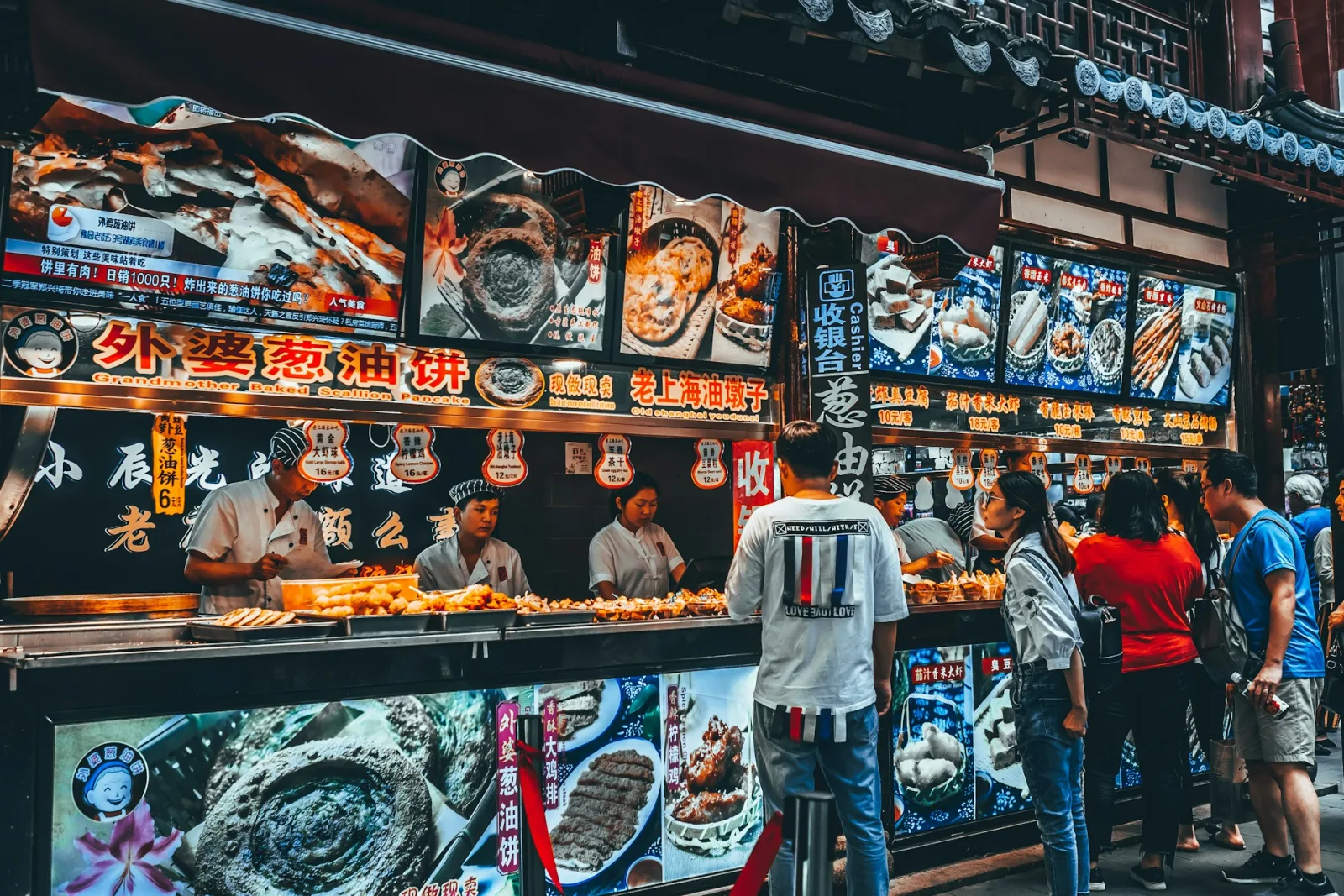
  • Jianbing (煎饼): Savory crepe with egg, scallions, and crispy wonton strip. Breakfast staple. (₹90–₹150)
  • Tanghulu (糖葫芦): Candied hawthorn berries on skewers. Sweet, crunchy, vegetarian-friendly. (₹120)
  • Roujiamo (肉夹馍): "Chinese hamburger" — braised meat in flatbread. Xi'an specialty. (₹180–₹250)
  • Shengjianbao (生煎包): Pan-fried soup dumplings with pork/chive filling. (₹150 for 4 pcs)
  • Malatang (麻辣烫): DIY spicy broth bowls with vegetables, tofu, noodles. Highly customizable. (₹200–₹400)

Hygiene Rule: Choose stalls with long queues (high turnover), avoid raw garnishes, and stick to cooked-to-order items.

Paying with Alipay

  • Setup Before Travel: Download Alipay, link international Visa/Mastercard, enable "Cross-border payments" in your Indian bank app.
  • Scanning: Vendors display QR codes. Open Alipay → "Scan" → point camera → confirm payment.
  • Offline Mode: Some small stalls require vendor to scan your payment barcode. Tap "Pay/Receive" → show barcode.
  • Fees: Alipay charges 3% on transactions above ¥200. Split large bills at restaurants if needed.
  • Backup: Keep ¥500–¥1,000 cash for network outages or remote temple markets.
Regional Cuisine Breakdown for Indian Palates

Spice Levels & Recommendations

  • Sichuan (Chengdu/Chongqing): Numbing + fiery hot (Mala). Try Mapo Tofu, Hot Pot, Dan Dan Noodles. Say "Wei la" (微辣) for mild.
  • Cantonese (Guangzhou/HK): Mild, sweet, focuses on freshness. Dim sum, steamed fish, roast meats. Ideal for sensitive stomachs.
  • Shanghai (Jiangnan): Sweet-sour, soy-heavy. Xiaolongbao, red-braised pork, hairy crab (seasonal). Comforting flavors.
  • Xi'an (Shaanxi): Wheat-based, hearty, garlic-heavy. Biangbiang noodles, lamb soup, flatbreads. Very filling.
  • Beijing (Imperial): Salty-savory, wheat-focused. Zhajiangmian, dumplings, Peking Duck. Familiar to North Indian tastes.

Explore Chinese tea, spices & food souvenirs →

Frequently Asked Questions — China Dining for Indians
1Can Indian vegetarians find safe food in China?
Yes. Major cities like Beijing, Shanghai, and Chengdu have dedicated vegetarian restaurants and Jain-friendly eateries. However, street food and standard restaurant dishes often contain pork fat, lard, or meat stock. Always carry a Mandarin translation card specifying "Su shi, no meat, no lard" to avoid cross-contamination.
2What is Peking Duck and how do I eat it?
Peking Duck is roasted duck with crispy skin, served with thin pancakes, scallions, cucumber, and sweet bean sauce. To eat: place 2-3 slices of duck, a dab of sauce, scallions, and cucumber on a pancake, roll it tightly, and bite. It is traditionally eaten with hands, not chopsticks.
3Is Chinese street food safe for Indian tourists?
Generally safe if you follow basic rules: choose busy stalls with high turnover, eat food cooked fresh in front of you, avoid raw garnishes, and use Alipay/WeChat Pay at established vendors. Bottled or boiled water only. Jianbing (savory crepes) and Tanghulu (candied fruit) are excellent starter options.
4Do I need cash to pay for food in China?
No. China is a nearly cashless society. Link an international Visa/Mastercard to Alipay or WeChat Pay before arrival. It works at 95% of restaurants, street stalls, and convenience stores. Carry ¥500–¥1,000 in cash only as a backup for remote areas or network outages.
5Which region has the spiciest food in China?
Sichuan and Hunan provinces are known for intense spice. Sichuan cuisine uses "numbing" Sichuan peppercorns combined with dried chilies (Mala flavour). Hunan cuisine is purely fiery and sour. If sensitive to spice, specify "Bu la" (不辣) when ordering or choose Cantonese/Jiangnan cuisines which are mild and slightly sweet.
6What is a typical budget for daily meals in China?
Budget travelers spend ₹1,500–₹2,500/day on local noodle shops and street food. Mid-range dining costs ₹3,000–₹5,000/day. Fine dining and specialty experiences like Peking Duck cost ₹1,500–₹3,000 per sitting. Tipping is not expected.

Need a custom China food tour itinerary? Our planners coordinate Peking Duck reservations, vegetarian restaurant routing, and local market visits with English-speaking guides.

Get China Culinary Tour Package →

Disclaimer: Restaurant operating hours, menu offerings, and hygiene standards may vary by location and season. Allergy and dietary restriction accommodations depend on individual vendor capabilities. Alipay transaction policies and foreign card limits are subject to change by Ant Group. Always verify dietary options directly with restaurants before visiting. Destination To Plan provides guidance only; dining experiences depend on real-time vendor conditions.
Need a Custom China Food Tour?

Fill out the enquiry form below and our culinary specialists will design a China food-focused itinerary matching your dietary preferences.

Get personalised routing for Peking Duck, Sichuan hot pot, Cantonese dim sum, vegetarian-safe dining, and local market visits with expert guides.

Enquire About This Package