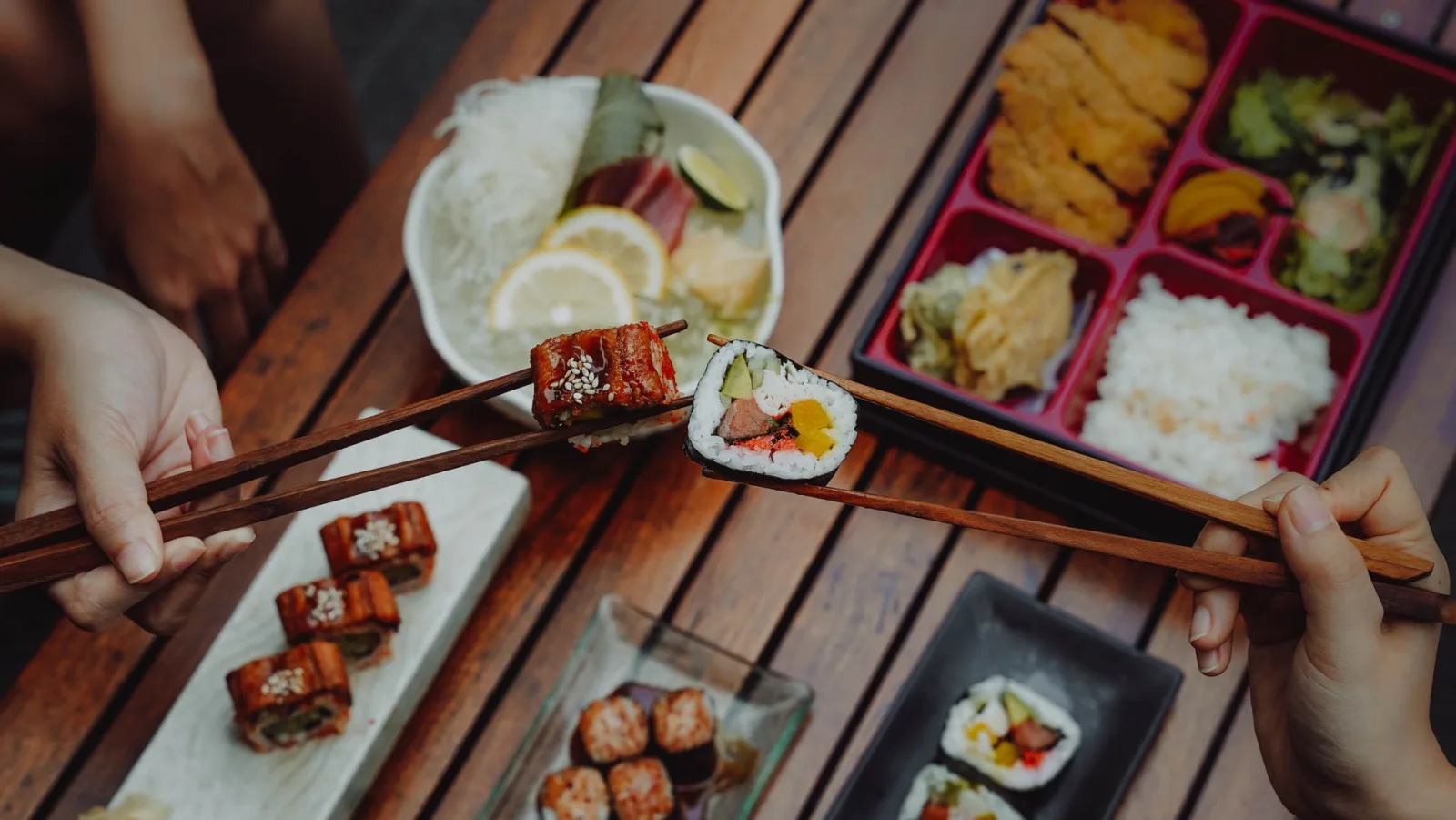
Freshly prepared sushi platter and steaming ramen bowl on wooden table with chopsticks, Japan

Japan Food Guide
for Indian Travelers

Vegetarian dining, ramen, sushi, konbini meals & dining etiquette — your practical Japan food planning resource for 2026.

Written by Nisha Chaudhary — Asia Travel Specialist
Reviewed by Namrata Sethi · Asia Travel Reviewer
Last updated after reviewing:
  • Vegetarian/vegan restaurant certification updates in Japan (2025-2026)
  • Konbini meal labeling changes for allergen transparency
  • Temple shojin ryori reservation guidelines for foreign visitors
Must-Try Japanese Cuisines for Indian Travelers

Japanese cuisine emphasizes seasonality, presentation, and umami. Here are essential dishes for Indian visitors:

  • Ramen: Wheat noodles in rich broth (tonkotsu, shoyu, miso, shio) with chashu pork. Vegetarian options available upon request.
  • Sushi / Sashimi: Vinegared rice with fresh fish; omakase for premium experience. Vegetarian rolls (kappamaki, kanpyo) widely available.
  • Tempura: Lightly battered, deep-fried seafood and vegetables. Naturally vegetarian-friendly if ordered without seafood.
  • Okonomiyaki: Savory pancake with cabbage, noodles, toppings. Request "yasai nomi" (vegetables only) for vegetarian version.
  • Tonkatsu: Breaded, deep-fried pork cutlet. Vegetarian alternatives include katsu with eggplant or tofu.
  • Yakitori: Grilled chicken skewers. Vegetable skewers (negima, shishito) available.
  • Kaiseki: Multi-course traditional haute cuisine; inform restaurants of dietary needs when booking.
  • Curry Rice: Mild Japanese curry with vegetables and meat; vegetarian versions use vegetable broth.

← Back to Japan Travel Guide | Japan Shopping Guide →

Vegetarian & Vegan Dining in Japan

Traditional Japanese cuisine uses fish-based dashi broth, but vegetarian options exist with planning:

  • Shojin Ryori: Buddhist vegan cuisine — book ahead at temples like Nanzen-ji (Kyoto) or Shigetsu (Tenryu-ji)
  • Vegetarian Ramen: T's Tantan (Tokyo Station), Ippudo (vegetarian broth option), or local shops offering soy-miso broth
  • Konbini Meals: 7-Eleven, Lawson, FamilyMart offer onigiri (check ingredients), salads, fruit, and dairy
  • Translation Cards: Use "Vegan Passport" or Google Translate to communicate dietary needs clearly
  • Temple Cafes: Many temples offer matcha and wagashi (traditional sweets) — naturally vegetarian
  • Apps: HappyCow, Vegewel, and Tabelog filter vegetarian/vegan restaurants in major cities

Pro Tip: Inform hotels/ryokan of dietary needs when booking; many can prepare vegetarian kaiseki with advance notice.

Average Food Costs in Japan for Indians

Budget Dining (₹)

  • Konbini Meal (Onigiri + Drink): ₹240–₹480
  • Ramen Bowl: ₹480–₹900
  • Beef Bowl (Gyudon) Set: ₹360–₹600
  • Conveyor Belt Sushi (10 plates): ₹900–₹1,500
  • Teishoku (Set Meal): ₹600–₹1,080
  • Matcha Latte / Coffee: ₹240–₹420

Mid-Range to Premium (₹)

  • Mid-range Restaurant Dinner: ₹1,200–₹2,400 per person
  • Izakaya (Pub-style Dining): ₹1,800–₹3,600 per person
  • Kaiseki / Fine Dining: ₹6,000–₹18,000+ per person
  • Omakase Sushi Experience: ₹4,800–₹12,000+ per person
  • Wagyu Beef Meal: ₹3,000–₹9,000+ per person

Note: Tipping is unnecessary and often refused. Excellent service is standard across all price tiers.

Japanese Dining Etiquette for Indian Travelers
  1. Before eating: Say "itadakimasu" (ee-tah-dah-kee-mas) to show gratitude for the meal.
  2. Chopstick rules: Do not stick chopsticks upright in rice (funeral ritual), do not pass food chopstick-to-chopstick.
  3. Slurping noodles: It is polite to slurp ramen or soba — it enhances flavor and shows appreciation.
  4. Drinking: Say "kampai" (cheers) before drinking; pour for others, not yourself.
  5. After eating: Say "gochisousama deshita" (go-chee-so-sah-mah desh-tah) to thank the host/chef.
  6. Tipping: Not practiced in Japan; excellent service is standard. Leaving cash may cause confusion.
  7. Shoes: Remove shoes before entering tatami rooms or traditional restaurants.
  8. Hands: Wash hands at chozuya before temple meals; use oshibori (wet towel) provided at restaurants.
Konbini (Convenience Store) Dining Guide

Japanese convenience stores are essential for budget travelers, offering quality meals 24/7:

  • 7-Eleven: Best food selection; Seven Bank ATMs accept Indian debit cards
  • Lawson: Known for high-quality bento, sweets, and seasonal collaborations
  • FamilyMart: Strong fresh food, hot snacks, and ticket booking services
  • Staple meals: Onigiri (rice balls), bento boxes, fried chicken (karaage), sandwiches
  • Vegetarian options: Salads, fruit cups, yogurt, edamame, vegetable onigiri (check labels for bonito flakes)
  • Payment: Cash, IC cards (Suica/Pasmo), or credit cards accepted
  • Pro Tip: Konbini microwaves are free for customer use; staff can heat meals upon request
India-Specific Japan Food Tips
  1. Carry spice packets: Japanese cuisine is mild; bring chili oil or spice mixes if you prefer heat.
  2. Download offline Google Translate: Camera translation works well for kanji menus and food labels.
  3. Inform dietary needs early: Tell hotels/ryokan about vegetarian requirements when booking; many can accommodate with notice.
  4. Use IC cards for payment: Load Suica/Pasmo on iPhone/Android Wallet for seamless konbini and vending machine purchases.
  5. Try regional specialties: Each prefecture has unique dishes — ask locals for recommendations beyond tourist areas.
  6. Respect temple dining: Shojin ryori meals are meditative experiences; eat quietly and finish all food served.
Frequently Asked Questions
1Can vegetarian Indians find food in Japan?
Yes, with planning. Traditional broths often contain fish dashi. Look for shojin ryori (Buddhist vegan), dedicated vegetarian cafes in Tokyo/Kyoto, or use "Vegan Passport" cards. Many ramen shops offer soy-miso vegetable options upon request. Konbini (7-Eleven, Lawson) offer salads, onigiri, and fruit.
2What is the average cost of food in Japan for Indians?
Budget travelers can eat well for ¥3,000–¥5,000 per day (₹1,800–₹3,000). Ramen bowls cost ¥800–¥1,500, conveyor belt sushi ¥1,500–¥2,500 for 10 plates, konbini meals ¥400–¥800. Tipping is not practiced in Japan.
3Is Japanese food spicy? Can Indians handle the flavors?
Traditional Japanese cuisine is not spicy — it emphasizes umami, freshness, and balance. Indians accustomed to bold spices may find it mild. Carry chili oil or spice packets if needed. Some ramen shops offer spicy miso or tantanmen options.
4What dining etiquette should Indian travelers follow in Japan?
Say "itadakimasu" before eating, "gochisousama" after. Do not stick chopsticks upright in rice. Slurping noodles is polite. Do not pass food chopstick-to-chopstick. Remove shoes before entering tatami rooms. Tipping is not expected and may be refused.
5Where can Indian tourists find halal or vegetarian-certified restaurants in Japan?
Tokyo and Kyoto have growing halal/vegetarian options. Look for "Vegetarian/Vegan" certification stickers, use HappyCow app, or seek Muslim-friendly restaurants in Asakusa, Shibuya, and near major mosques. Many temples offer shojin ryori (Buddhist vegan) meals with advance reservation.
6Can I use UPI or Indian cards at Japanese restaurants?
UPI is not accepted in Japan. Visa/Mastercard work at hotels, department stores, and larger restaurants. However, many small eateries, ramen shops, and ticket machines are cash-only. Carry Japanese Yen (JPY) and withdraw from 7-Eleven ATMs which accept Indian debit cards.

Planning your Japan food itinerary? Our travel experts can help match your dietary preferences with ideal restaurants, cooking classes, and market tours.

Get a Custom Japan Food Quote →

Disclaimer: Restaurant hours, menus, and dietary accommodations are subject to change. Verify current information with official restaurant websites and tourism boards before finalizing plans. Japan food guidelines may update; check Embassy of Japan in India for latest entry requirements.


More Travel Guides

Explore Other Destinations

Plan Your Japan Food Experience

Tell us your dietary preferences and culinary interests — our Japan specialists will craft a personalized food itinerary with ideal restaurants, cooking classes, and market tours.

Get assistance with vegetarian dining reservations, shojin ryori bookings, konbini navigation tips, and food tour coordination.

Enquire About This Package