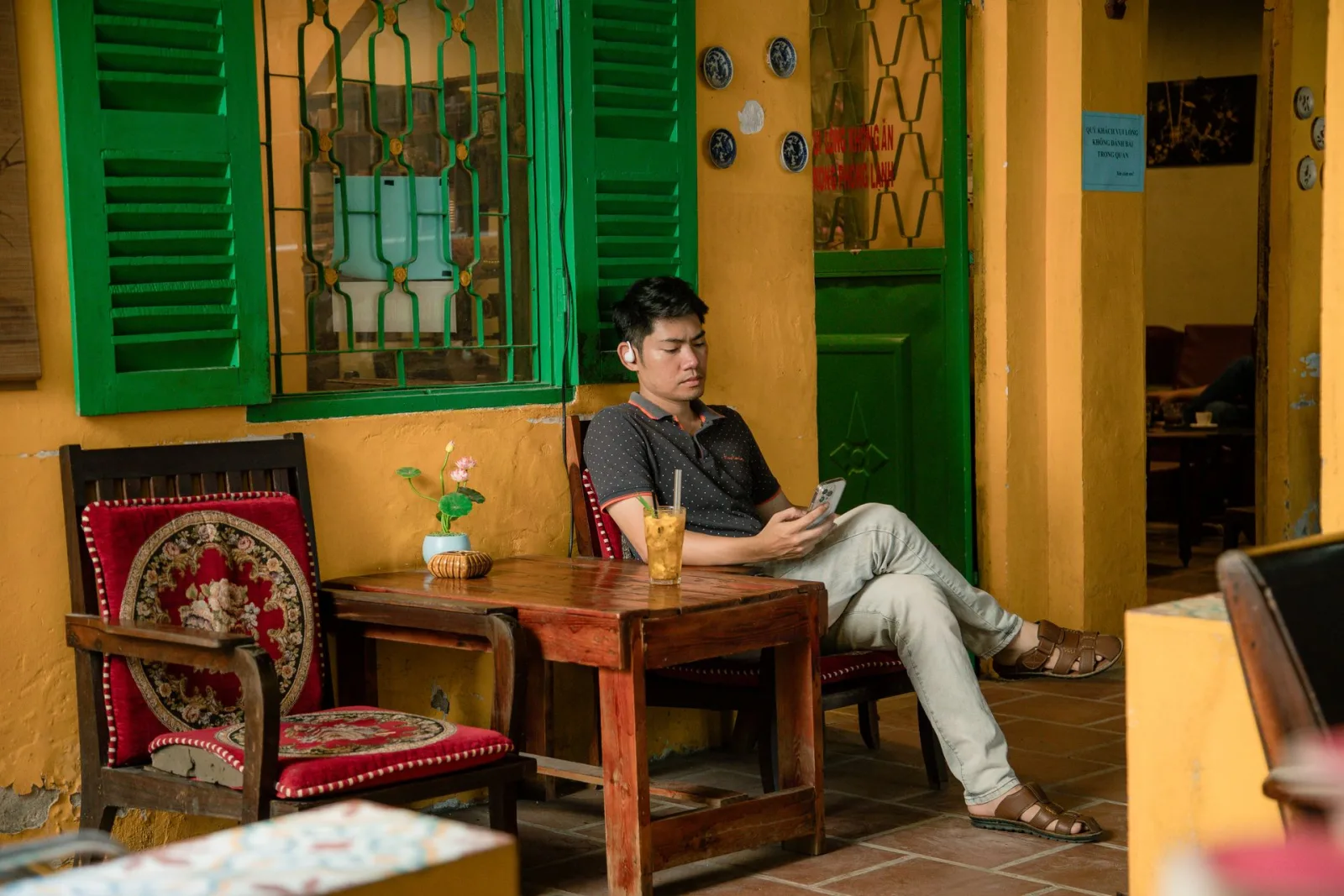
A traveler using a smartphone with a local Vietnam SIM card at a cafe in Hanoi

Vietnam SIM Card & Internet Guide

Everything Indian travelers need to know about eSIMs, local networks, data plans, and staying connected.

Updated for 2026 Travelers
Written by Nisha Chaudhary — Asia Travel Specialist
Reviewed by Namrata Sethi · Asia Travel Reviewer
Last updated after reviewing:
  • 2026 eSIM compatibility and QR code delivery updates for major Vietnamese carriers
  • Revised tourist SIM data packages and pricing at Noi Bai and Tan Son Nhat airports
  • Updated 5G coverage expansion in Hanoi, Da Nang, and Ho Chi Minh City for 2026

Last updated: April 2026

Internet Connectivity in Vietnam
Fast, affordable, and widely available — here is how to stay connected.

Vietnam boasts some of the fastest and most affordable mobile internet in Southeast Asia. 4G coverage is nearly universal across the country, and 5G is rapidly expanding in major cities like Hanoi, Da Nang, and Ho Chi Minh City. For Indian travelers, having a reliable internet connection is non-negotiable for using ride-hailing apps, navigating with Google Maps, and keeping in touch with family via WhatsApp. When budgeting for your trip, a local SIM card is a highly cost-effective expense. To see how this fits into your overall budget, check our detailed Vietnam trip cost from India guide.

Top Telecom Operators in Vietnam
Choosing the right network based on your itinerary and travel style.

The "Big Three" Networks

  • Viettel: The largest carrier and a military-owned enterprise. It has the absolute best coverage, making it the only reliable choice if you are trekking in Sapa, cruising in Ha Long Bay, or visiting rural areas. Highly recommended for most Indian tourists.
  • Vinaphone: The second-largest carrier. It offers incredibly stable and fast 4G/5G speeds in urban areas and major tourist hubs. It is a great alternative to Viettel if you are sticking strictly to cities.
  • Mobifone: Primarily focused on urban centers and the southern region. Coverage is good in Ho Chi Minh City but can be spotty in the northern mountains.

Recommendation: Always opt for Viettel for a multi-city Vietnam itinerary to ensure you never lose signal.


Where and How to Buy a SIM Card
Navigating the airport counters vs. city shops.

Airport vs. City Shops

At the Airport (Recommended): As soon as you clear customs at Noi Bai (Hanoi) or Tan Son Nhat (HCMC), you will see official kiosks for Viettel, Vinaphone, and Mobifone. The staff speaks basic English, will register your passport instantly, and set up the SIM for you. It costs slightly more (approx. ₹400–₹800 for 10GB+) but saves you massive hassle.

In the City: You can find official carrier stores in any city. They are cheaper (approx. ₹250–₹500 for the same data), but you may face a language barrier, and you must ensure they register the SIM to your passport properly.

Registration Law: By law, all SIM cards must be registered with a valid passport. Never buy a "pre-activated" SIM from a random street vendor or hotel, as the government frequently blocks unregistered SIMs.

eSIM vs. Physical SIM
Which option is best for your smartphone?

Choosing Your Tech

  • eSIM (Convenience): If your phone supports eSIM (most recent iPhones, Samsung Galaxy S series, etc.), you can buy a data-only eSIM via apps like Airalo, Holaflex, or Klook before you leave India. It activates the moment you land. It is slightly more expensive per GB but incredibly convenient.
  • Physical SIM (Value): Local Vietnamese carrier physical SIMs offer massive data allowances (often 4GB to 6GB per day) for very cheap. If you have a dual-SIM phone, keep your Indian SIM active for receiving OTPs from banks, and use the local Viettel SIM for all data and local calls.

Pro Tip: Keep your Indian SIM's international roaming disabled to avoid accidental billing shocks, but ensure "Wi-Fi Calling" is enabled if you need to receive incoming bank OTPs over Wi-Fi.

Essential Apps for Vietnam
Download these before you arrive to navigate the country like a pro.

Must-Have Downloads

  • Grab: The absolute most important app. Use it for booking cars, motorbikes, and even ordering food. It prevents scams and overcharging. Link your international card or use cash.
  • Zalo: The local Vietnamese messaging app (similar to WhatsApp). Many local businesses, hotels, and tour guides prefer communicating via Zalo. It's good to have installed.
  • Google Maps: Download the offline maps for Hanoi, Da Nang, and HCMC before your trip. Google Maps works flawlessly in Vietnam.
  • XE Currency: Essential for quickly converting Vietnamese Dong (VND) to INR while shopping or bargaining in markets.
  • WhatsApp: Fully accessible in Vietnam. You will face no restrictions calling home or using group chats.

Staying connected is also a vital part of your safety strategy. For more tips on navigating the country securely, read our Vietnam safety tips for Indians.

Frequently Asked Questions — Vietnam Internet & SIMs
Quick answers to connectivity queries from Indian travelers.
1Should I buy an eSIM or a physical SIM card for Vietnam?
If your phone supports eSIM, it is the most convenient option. You can purchase an eSIM via apps like Airalo or Holaflex before you fly, and it is ready the moment you land. However, physical SIM cards from local carriers like Viettel are slightly cheaper and offer massive data allowances. You can buy them instantly at the airport arrivals hall.
2Which is the best mobile network in Vietnam for tourists?
Viettel is widely considered the best network for tourists, especially if you plan to visit rural areas, mountains like Sapa, or cruise in Ha Long Bay, as it has the widest coverage. Vinaphone and Mobifone are also excellent and offer very fast 4G/5G speeds in major cities like Hanoi, Da Nang, and Ho Chi Minh City.
3Do I need to register my SIM card with my passport?
Yes, Vietnamese law requires all SIM cards to be registered with a valid passport. When you buy a tourist SIM at the airport or an official store, the staff will scan your passport and activate the SIM on the spot. Avoid buying pre-activated SIMs from random street vendors, as they may be disconnected.
4Will my Indian SIM card (Jio/Airtel) work in Vietnam?
Yes, Indian SIM cards will work in Vietnam if you activate an International Roaming (IR) pack. However, international roaming is extremely expensive and data speeds are often throttled. We highly recommend buying a local Vietnamese SIM or an eSIM upon arrival for a fraction of the cost and much faster 4G speeds.
5Is WhatsApp accessible in Vietnam?
Yes, WhatsApp is fully accessible and widely used in Vietnam. Unlike some neighboring countries, there are no firewalls blocking WhatsApp, Facebook, Instagram, or Google services. You will have no issues staying connected with family back in India.
6Is Wi-Fi available in Vietnamese hotels and cafes?
Yes, free Wi-Fi is ubiquitous in Vietnam. Almost all hotels, hostels, cafes, and restaurants offer fast, free Wi-Fi. However, having a personal SIM card is essential for using Grab (ride-hailing), navigating with Google Maps on the go, and staying connected while exploring the streets.

Planning a trip to Vietnam? Let our experts handle your flights, e-Visa, and itinerary so you can focus on the experience.

Plan My Vietnam Trip →

Note: Internet speeds and SIM card promotions change frequently. The prices mentioned are approximate and based on standard tourist packages available at major airports in 2026. Always carry your physical passport when purchasing a SIM card.

Plan Your Connected Vietnam Trip

Fill out the enquiry form below and our travel experts will help you plan a seamless Vietnam tour, including e-Visa, flights, and itinerary assistance.

Get assistance with Vietnam e-Visa, flight bookings, hotel reservations, and complete Vietnam tour packages.

Enquire About This Package