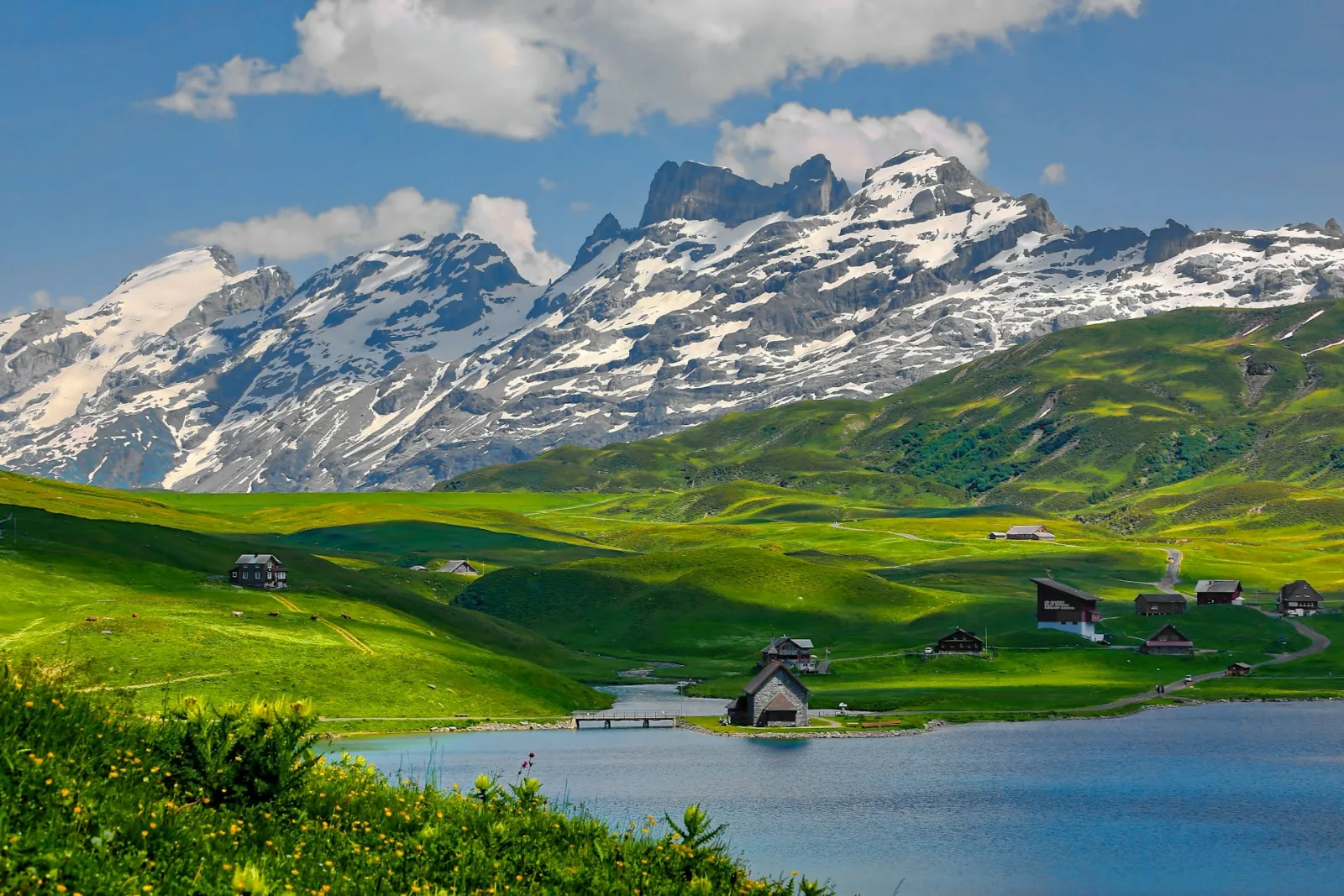
Aerial view of the Swiss Alps overlooking a pristine alpine lake and traditional village, Switzerland

Switzerland Travel Guide
for Indian Travelers

Schengen visa, cost, itinerary & tips — your complete guide to planning a trip to Switzerland from India in 2026.

Updated for 2026 Travelers
Written by Bilas Munda — Europe Travel Specialist
Reviewed by Vijay Prasad · Europe Travel Reviewer
Last updated after reviewing:
  • Swiss Travel Pass fare revision & coverage updates for 2026
  • Zurich Airport terminal upgrades & Schengen entry protocols
  • Indian traveler entry requirements & ETIAS readiness status

Last updated: April 2026

Switzerland Trip Cost from India (Detailed Breakdown)
Realistic cost breakdown for flights, visa, hotels, food, and total budget for 2026

Cost Breakdown 2026

  • Return Flights: ₹60,000 – ₹1,10,000
  • Visa Fee (Schengen): ~₹8,500 (incl. VFS charges)
  • Hotels (per night): ₹12,000 – ₹30,000
  • Food (per day): ₹3,500 – ₹7,500
  • Local Transport (Swiss Pass): ₹25,000 – ₹45,000
  • Activities & Cable Cars: ₹10,000 – ₹20,000 total
  • Travel Insurance: ₹1,500 – ₹3,000
  • Total (7–10 days): ₹2.2L – ₹4L per person

Switzerland is a premium European destination. Costs are higher than Italy or Spain, but efficient public transport and free museum passes offer excellent value for Indian travelers.

Best Departure Cities

  • Delhi (DEL) — Direct flights to Zurich (8-9 hrs) via SWISS or Air India
  • Mumbai (BOM) — Excellent connectivity via Middle East or Frankfurt
  • Bangalore (BLR) — Connecting flights via Dubai, Frankfurt, or Paris
  • Hyderabad (HYD) — Limited options, usually 2 layovers
  • Chennai (MAA) — Options via Doha or Zurich connections

Delhi offers the most direct and time-efficient routing to Zurich. Mumbai provides highly competitive fares via Middle Eastern carriers.

Ready to plan your Switzerland trip? Let us handle flights, visa, hotels, and Swiss Pass arrangements.

View Switzerland Tour Packages →
Flight Routes from India to Switzerland
Flights from India to Switzerland take 8–14 hours. Direct options exist from Delhi, while connecting routes offer flexible pricing.

Delhi to Zurich

  • Route 1: DEL → ZRH Direct (SWISS International Air Lines)
  • Route 2: DEL → ZRH Direct (Air India)
  • Route 3: DEL → Dubai → ZRH (Emirates)
  • Route 4: DEL → Frankfurt → ZRH (Lufthansa)
  • Duration: 8–10 hours direct, 12+ hours with layovers
  • Price Range: ₹60,000 – ₹1,00,000

Mumbai to Zurich

  • Route 1: BOM → Dubai → ZRH (Emirates)
  • Route 2: BOM → Doha → ZRH (Qatar Airways)
  • Route 3: BOM → Istanbul → ZRH (Turkish Airlines)
  • Duration: 11–15 hours with 1 layover
  • Price Range: ₹65,000 – ₹1,10,000

Note: Zurich Airport (ZRH) is Switzerland's primary international gateway. It connects seamlessly to the Swiss rail network via underground train station. Check Europe travel guides for more regional information.

Switzerland vs Rest of Europe Cost for Indian Travelers
How does Switzerland compare to other European destinations on cost? Here is a practical comparison for Indian travelers.
Expense Switzerland (7 days) Italy/France (7 days)
Flights₹60K – ₹1.1L₹55K – ₹95K
Visa₹8.5K (Schengen)₹8.5K (Schengen)
Hotels/night₹12K – ₹30K₹6K – ₹15K
Food/day₹3.5K – ₹7.5K₹2K – ₹5K
Local Transport₹3.5K – ₹6.5K/day₹1.5K – ₹3K/day
Total Trip₹2.2L – ₹4L₹1.5L – ₹2.5L
Flights
Switzerland₹60K – ₹1.1L
Italy/France₹55K – ₹95K
Visa
Switzerland₹8.5K
Italy/France₹8.5K
Hotels/night
Switzerland₹12K – ₹30K
Italy/France₹6K – ₹15K
Food/day
Switzerland₹3.5K – ₹7.5K
Italy/France₹2K – ₹5K
Total Trip
Switzerland₹2.2L – ₹4L
Italy/France₹1.5L – ₹2.5L

Switzerland is a premium destination with higher daily costs, but the Swiss Travel Pass covers nearly all transport, and free museum entries offset expenses. Quality, safety, and scenery are world-class.

Best Time to Visit Switzerland from India
Switzerland can be visited year-round, but the best time depends on the region and your travel goals.
Month Swiss Season Zurich/Lucerne Interlaken/Jungfrau Zermatt India Travel Note
JanWinter PeakCold 1–4°C, festiveSkiing, snow sceneryPeak ski season, openWinter break from India — book early
FebWinter ✓Cold 1–6°CExcellent skiingMatterhorn clear viewsValentine's travel window
MarEarly SpringCool 5–12°CSkiing ends, thaw beginsLower snowfall, quietPost-Holi travel window
AprSpring ✓Mild 8–16°C, bloomingGreen valleys openingGood hiking weatherSpring shoulder season
MayLate Spring ✓Warm 12–20°C, idealWaterfalls peak, trails openExcellent, fewer crowdsBest pre-summer window
JunSummer StartWarm 15–25°C, sunnyFull alpine accessPerfect hiking seasonSummer holidays — book 3-4 months ahead
JulSummer PeakHot 18–28°C, crowdedPeak season, long daysHigh season, clear skiesPeak Indian travel month
AugSummer PeakWarm 18–27°C, busyExcellent trailsFestivals, outdoor eventsEnd of summer holidays
SepAutumn ✓Mild 13–22°C, pleasantGolden foliage, fewer crowdsExcellent weatherGood post-monsoon window
OctLate AutumnCool 8–16°C, crispSome lifts close, quietGood for valley hikesDiwali travel season possible
NovEarly WinterChilly 3–10°C, foggyLimited access, off-seasonPre-ski quiet periodBudget travel from India
DecChristmas PeakChristmas markets, festiveSki resorts openingWinter wonderlandYear-end travel peak
7-Day Switzerland Itinerary for Indian Travelers
A perfect one-week Switzerland itinerary covering Zurich, Lucerne, Interlaken, and Zermatt highlights.

Day-by-Day Plan

  • Day 1: Arrive Zurich — explore Old Town, Lake Zurich promenade
  • Day 2: Train to Lucerne — Chapel Bridge, Mt. Pilatus cable car
  • Day 3: GoldenPass line to Interlaken — Lauterbrunnen Valley visit
  • Day 4: Jungfraujoch excursion — Top of Europe, Ice Palace
  • Day 5: Scenic train to Zermatt — Matterhorn Glacier Paradise
  • Day 6: Gornergrat Railway hike — Car-free village exploration
  • Day 7: Train to Geneva — Lake Geneva cruise, depart

Planning Notes

  • Swiss Travel Pass: Buy a 4 or 8-day pass for unlimited trains, buses, and boats
  • Mountain railways: Book Jungfrau and Gornergrat tickets online to skip queues
  • Budget option: Stay in hostels or budget chain hotels (Motel One, Ibis)
  • Food savings: Use supermarket lunch boxes (Coop/Migros) for ₹500-800 meals
  • Language: English widely spoken; German/French/Italian regionally
  • Connectivity: Buy Swiss SIM or activate international roaming at Delhi airport
  • Book ahead: June-August and Dec require 3-5 month advance booking

Want a hassle-free Switzerland trip? Our packages include flights, Schengen visa, hotels, and seamless Swiss transport.

Book Switzerland Tour Package →
Switzerland Visa for Indians — Complete Guide & Travel Essentials
Essential information for Indian travelers — from Schengen visa requirements and time zones to plug adapters and local transport apps.

Tip: Carry a mix of CHF cash and an international credit card. ATMs dispense local currency with good exchange rates.

Switzerland Visa for Indians — 2026 Update

Schengen Visa Rule (2026): Indian nationals require a short-stay Schengen visa for Switzerland. Processing is managed via VFS Global centers across India. Apply 3-4 weeks before travel. Source: VFS Global Switzerland.

  • Visa Type: Schengen Short Stay (Type C) — valid up to 90 days
  • Fee: €80 for adults (~₹7,200), €40 for children (6-12), Free under 6
  • Where to apply: VFS Global centers in major Indian cities (Delhi, Mumbai, Chennai, etc.)
  • Documents: Valid passport, Schengen application form, flight itinerary, hotel bookings, travel insurance (€30K min), bank statements (last 3 months), employment letter, photos
  • Processing time: 10–15 working days (apply early)
  • Duration permitted: Up to 90 days within 180-day period
  • ETIAS: Expected to launch mid-2025; verify status before travel
CLICK TO KNOW MORE ABOUT VISA DOCUMENTATION & FEES

Time Zone

Switzerland follows Central European Time (CET, UTC+1) and Central European Summer Time (CEST, UTC+2). It is 3.5 or 4.5 hours behind Indian Standard Time (IST) depending on the season.

  • Standard Time (CET): UTC+1 (late Oct to late Mar)
  • Summer Time (CEST): UTC+2 (late Mar to late Oct)
  • Switzerland is 4.5 hours behind IST in winter, 3.5 hours behind in summer
  • When it is 12:00 PM in Switzerland, it is 4:30 PM or 3:30 PM in India
  • Business hours typically run from 8:30 AM to 5:00 PM CET
  • Shops generally close by 6:30 PM on weekdays, 4 PM on Saturdays
  • Sunday closures are strict except in major train stations and airports
  • Restaurants serve dinner from 6:30 PM onwards

Country Code

To call Switzerland from India, use the international dialing code +41 followed by the area code and local number.

  • International Dialing Code: +41
  • To call Switzerland from India, dial: 00-41-XX-XXX-XX-XX
  • Zurich area code: 44
  • Geneva area code: 22
  • Bern area code: 31
  • Emergency services: 117 (Police), 118 (Fire), 144 (Ambulance)
  • Tourist info & general emergency: 112
  • Major telecom providers: Swisscom, Salt, Sunrise
  • Free Wi-Fi available at all major SBB railway stations

Socket & Plugs

Switzerland uses Type J electrical outlets with 230V at 50Hz. Indian travelers will need to check compatibility.

  • Type J — 230V, 50Hz
  • Type J features 3 round pins (grounded) or 2 flat pins (non-grounded)
  • Standard voltage is 230V with a frequency of 50Hz
  • Indian Type C plugs (2-pin round) usually fit into Swiss outlets ✅
  • Indian Type D/M plugs require a Type J or universal travel adapter
  • Universal adapters available at Zurich airport and Swiss supermarkets
  • Most modern devices (laptops, phone chargers) support 100–240V
  • Swiss sockets are grounded for safety compliance

Indian Embassy in Switzerland

The Embassy of India in Bern provides consular services for Indian nationals in Switzerland.

  • Address: Kirchenfeldstrasse 62, 3005 Bern
  • Contact: +41 31 356 0500
  • Email: [email protected]
  • Emergency (24/7): +41 31 356 0500
  • Working Hours: Mon–Fri, 9:00 AM – 5:30 PM
  • Services: passport renewal, emergency certificates, assistance to Indian nationals
  • Register with MADAD portal before travel for advisories and assistance
  • Consular services by appointment only — book online in advance

Swiss Embassy in India

The Swiss Embassy in New Delhi handles diplomatic relations and Schengen visa referrals for India.

  • Embassy New Delhi: 2/50-E, Nyaya Marg, Chanakyapuri, New Delhi 110021
  • Contact Delhi: +91-11-4955-5500
  • Email Delhi: [email protected]
  • Note: Visa applications processed via VFS Global, not directly at embassy
  • Working Hours: Mon–Fri, 9:00 AM – 12:00 PM & 1:00 PM – 3:00 PM
  • Official website: eda.admin.ch
  • Consular section handles emergencies and legalizations
  • Swiss Travel Pass and tourism info available via Switzerland Tourism India

Car Driving Orientation

Right-Hand Drive (Opposite to India)

  • Switzerland follows right-hand driving, opposite to India's left-hand system
  • International Driving Permit (IDP) required along with valid home country license
  • Speed limits: 50 km/h urban, 80 km/h open roads, 120 km/h autobahns
  • Seat belts mandatory for all passengers
  • Zero tolerance for driving under influence (BAC limit 0.05%)
  • Car rental widely available but trains are highly recommended
  • Environmental zones require emission stickers in some cantons
  • Mountain passes (Gotthard, Grimsel) close Nov–May due to snow

App Based Taxi

Uber, Free Now, and SBB Mobile are Primary Transport Apps

  • Uber operates in Zurich, Geneva, Basel, and Bern
  • Free Now (mytaxi) connects you to licensed Swiss taxis
  • Download SBB Mobile for all train, bus, and boat schedules/tickets
  • Payment options include credit/debit cards, in-app wallets, or cash (limited)
  • Average taxi fare from Zurich Airport to city center: CHF 60–85
  • Traditional taxis are reliable but expensive compared to other European cities
  • Public transport (SBB) is cleaner, faster, and highly recommended over taxis
  • Tram networks in Zurich, Geneva, and Basel offer excellent city coverage

Need help with Switzerland visa? Our Schengen visa team assists with documentation, application, and VFS appointments.

Switzerland Visa Assistance →
Switzerland Culture, Language & Local Customs
Understand Switzerland's 4 official languages, regional etiquette, and cultural norms to connect better with locals.

Official Language

German, French, Italian, Romansh — 4 Official Languages

  • Swiss German (63%) is spoken in the north, center, and east (Zurich, Lucerne)
  • French (23%) is spoken in the west (Geneva, Lausanne, Montreux)
  • Italian (8%) is spoken in the south (Ticino region, Lugano)
  • Romansh (<1%) is an ancient Latin-based language in Graubünden
  • English is widely spoken in tourist areas, hotels, and major cities
  • Swiss German dialects differ significantly from Standard German
  • Learning basic French or German phrases enhances travel experience
  • Signage is bilingual or multilingual in border regions

Local Vocabulary

Understanding these Swiss phrases helps connect with locals and navigate daily life smoothly.

  • Grüezi — Hello (formal Swiss German greeting)
  • Hoi / Sali — Hi / Hey (casual Swiss German)
  • Chung — Thank you / Cheers
  • Entschuldigung — Excuse me / Sorry (German)
  • S'il vous plaît — Please (French)
  • Bierdeckel — Coaster / bill (informal)
  • Zvieri — Afternoon snack (Swiss German)
  • Pfadi — Scout / outdoor youth group
  • Wegbillet — Train ticket / travel pass
  • Merci beaucoup — Thank you very much (French)
  • Ciao / Arrivederci — Hello / Goodbye (Italian)

Toilet Signs

Public restrooms are called "WC" (Water Closet) or "Toiletten" in Switzerland. Signs typically display WC with standard pictograms.

  • Men's toilets marked with "Herren" or male symbol
  • Women's toilets marked with "Frauen" or female symbol
  • Public toilets in cities are generally clean and well-maintained
  • Some train stations and public facilities charge CHF 1–2 for entry
  • Shopping malls, restaurants, and hotels have free restrooms for customers
  • Always carry coins (CHF 1/2) as some public toilets require payment
  • Western-style seated toilets are standard throughout Switzerland
  • Accessible/family restrooms available in modern train stations and malls

Interesting Facts

Switzerland is one of the world's wealthiest and most stable nations, known for neutrality, precision engineering, and stunning landscapes.

  • Switzerland has not been in a war since 1815 and maintains armed neutrality
  • Home to the headquarters of the Red Cross and numerous UN agencies in Geneva
  • Over 60% of the country is covered by the Alps, making it a mountaineering paradise
  • Swiss trains run on average 20 seconds late — punctuality is a national pride
  • Zurich and Geneva consistently rank among the world's most livable cities
  • Swiss chocolate industry consumes over 10 kg of chocolate per person annually
  • Over 1,500 lakes dot the Swiss landscape, offering pristine freshwater reserves
  • The Swiss Federal Palace in Bern is the seat of government, open for public tours
Switzerland Shopping & Markets Guide
From luxury watches and Swiss chocolate to traditional alpine crafts and vibrant Christmas markets.

Shopping Hours

Most Shops: 9:00 AM – 6:30 PM (Weekdays)

  • Shopping malls typically operate from 9:00 AM to 7:00 PM, with late nights on Thursdays
  • Sunday shopping is restricted to major train stations and airport retail zones
  • Bahnhofstrasse (Zurich) and Rue du Rhône (Geneva) are premier luxury shopping streets
  • Small boutiques in mountain villages may close for midday breaks or off-season
  • Supermarkets open from 7 AM to 8 PM; Coop and Migros dominate the market
  • Christmas markets operate Nov-Dec, typically 10 AM – 8 PM daily
  • Best shopping season: January sales and late summer clearance (August)
  • VAT refund available for non-EU residents on purchases over CHF 300

Markets & Fairs

Switzerland's markets offer unique souvenirs including handmade crafts, local produce, and festive goods during winter.

  • Zurich Christmas Market — Christkindlimarkt at Hauptbahnhof, 150+ stalls
  • Basel Christmas Market — Barfüsserplatz & Münsterplatz, largest in Switzerland
  • Bern Christmas Market — Historic old town, traditional alpine crafts
  • Lucerne Weekly Market — Fresh produce, flowers, and local delicacies (Tue/Sat)
  • Montreux Christmas Market — Lakeside market with stunning Alpine backdrop
  • Swiss Franc (CHF) or cards accepted; cash preferred at smaller stalls
  • Bargaining is uncommon except at flea markets or antique fairs

Famous Brands

Shopping for Swiss watches offers unparalleled craftsmanship and value compared to global prices, alongside premium chocolate and outdoor gear.

  • Luxury Watches: Rolex, Omega, Patek Philippe, Swatch (affordable Swiss)
  • Swiss Chocolate: Lindt, Toblerone, Sprüngli, Läderach (fresh chocolate)
  • Outdoor Gear: Mammut, On Running, Arc'teryx, Victorinox Swiss Army Knives
  • Alpine Crafts: Hand-carved wooden cowbells, embroidered traditional wear
  • Cheese & Wine: Gruyère, Emmental, Vacherin, Valais wines
  • Traditional Souvenirs: Heidi figurines, Swiss cow imagery, postcards
  • Fashion: Bogner, Akris, local Swiss designers in Zurich and Geneva
  • Pharmacy: Swiss skincare and health supplements (high quality, tax-refund eligible)

Supermarkets

Major supermarket chains like Coop, Migros, and Denner offer wide product ranges with competitive prices and excellent quality.

  • Coop — Largest Swiss chain, widespread, good prices and selection
  • Migros — Second largest, no alcohol sold in main stores, excellent bakery
  • Denner — Discount chain (Migros subsidiary), budget-friendly
  • Manor — Upscale department store with gourmet food halls
  • Most supermarkets open from 7 AM to 8 PM; some 24-hour outlets near major stations
  • Local products affordable and high quality (cheese, chocolate, fresh produce)
  • Tap water is drinkable and exceptionally pure throughout Switzerland
Switzerland Food & Cuisine Guide
Swiss cuisine is known for cheese fondue, raclette, rösti, and world-renowned chocolate.

Do: Try local cheese fondue and chocolate — Swiss cuisine is a highlight of the trip.

Famous Cuisines

Swiss cuisine reflects its geography and multilingual neighbors, blending German, French, and Italian influences into hearty alpine dishes.

  • Cheese Fondue — Melted cheese with wine, garlic, and kirsch, eaten with bread cubes
  • Raclette — Melted cheese scraped over potatoes, pickles, and onions
  • Rösti — Crispy grated potato dish, originally from Bern, served as a side or main
  • Birchermüesli — Invented in Zurich; oats, fruits, yogurt, and nuts breakfast staple
  • Zürcher Geschnetzeltes — Sliced veal in creamy mushroom sauce with rösti
  • Älplermagronen — Alpine macaroni with cheese, potatoes, cream, and onions
  • Papet Vaudois — Leek and potato stew with sausage (Vaud region)
  • Basler Läckerli — Spiced gingerbread cookies traditional to Basel

Famous Fruits

Summer (July–September) offers the best fruit variety. Local orchards in Valais and Lake Geneva regions produce premium seasonal fruits.

  • Apples (Äpfel) — Over 250 varieties grown, especially in Eastern Switzerland
  • Pears (Birnen) — Valais and Lake Geneva regions produce excellent pears
  • Cherries (Kirschen) — Used in kirsch brandy and traditional desserts
  • Grapes (Trauben) — Swiss wine regions (Valais, Vaud) grow premium table & wine grapes
  • Apricots (Aprikosen) — Valais is famous for sweet, sun-ripened apricots
  • Strawberries (Erdbeeren) — Spring/summer staple, used in desserts and jams
  • Plums (Zwetschgen) — Autumn harvest, used in tarts and schnapps

National Dish — Cheese Fondue

Cheese Fondue is Switzerland's most iconic culinary export — more than a meal, it's a communal dining experience and winter tradition.

  • Fondue is traditionally made with Gruyère and Emmental cheese, white wine, garlic, and kirsch
  • Eaten with crusty bread cubes dipped using long-stemmed forks
  • If your bread falls in, tradition says you must buy the next round of wine or kiss your neighbor!
  • Served in a ceramic or cast-iron pot (caquelon) over a small burner
  • Accompanied by pickles, potatoes, and cured meats
  • Fondue restaurants (fonduestuben) are found in every Swiss city and mountain town
  • Best spots: Chalet Swiss (Zurich), Le Chalet (Lucerne), Café des Alpes (Interlaken)
  • Vegetarian/vegan fondue options available using plant-based cheese alternatives

Avg Cost Of Food

Budget travelers can eat well for CHF 25–40 per day at supermarkets and budget eateries. Tipping is not mandatory but rounding up is appreciated.

  • Street Food/Bakery: CHF 5–10
  • Fast Food (Burger/Fries): CHF 15–20
  • Menu del Día / Lunch Special: CHF 20–35
  • Traditional Fondue/Raclette (per person): CHF 25–40
  • Mid-range Restaurant: CHF 35–60 per person
  • Fine Dining: CHF 80–150+ per person
  • Coffee: CHF 4–6
  • Glass of Wine: CHF 7–12

Tipping: 5–10% customary in restaurants, or simply round up the bill. Service charge is included in Swiss prices.

Switzerland Weather & Packing Tips
Switzerland spans multiple climate zones. Pack for your destinations — from mild lakesides to high alpine peaks.

Tip: Pack layers — Switzerland's weather varies greatly from valley floors to mountain summits.

Weather

Switzerland has a temperate alpine climate influenced by its latitude, altitude, and proximity to the Mediterranean and Atlantic.

  • Zurich/Lucerne: Mild summers (20–28°C), cool winters (0–5°C), moderate rainfall
  • Interlaken/Jungfrau: Alpine climate, summer 15–25°C, winter –5 to 5°C, frequent snow
  • Zermatt: High alpine, summer 10–20°C, winter –10 to 0°C, year-round snow at altitude
  • Geneva: Lake climate, warmer summers, milder winters, less snow
  • Ticino (South): Mediterranean influence, hot humid summers, mild winters
  • Best time overall: June–September (summer) & December–February (winter)
  • Shoulder seasons: May & October offer fewer crowds, pleasant temps
  • Mountain weather: Changes rapidly; always check local forecasts before hiking

Clothes To Wear

Swiss dress is smart-casual and practical. Avoid overly casual clothes in cities. Pack according to your specific destinations and season.

For Cities & Lakes (Summer):

  • Light, breathable clothing (cotton, linen)
  • Light jacket or cardigan for evenings
  • Comfortable walking shoes (cobblestone streets)
  • Smart-casual attire for fine dining and concerts
  • Rain jacket or compact umbrella (summer showers common)
  • Sunglasses and sunscreen (high UV at altitude)

For Mountains & Winter:

  • Thermal base layers (merino wool recommended)
  • Insulated mid-layer (fleece or down jacket)
  • Waterproof/windproof outer shell
  • Sturdy hiking boots with ankle support
  • Warm hat, gloves, scarf, and thermal socks
  • Sunglasses & high SPF sunscreen (glare from snow is intense)
Switzerland Heritage & Cultural Highlights
UNESCO sites, Swiss traditions, national symbols, and souvenirs that capture the Swiss identity.

UNESCO World Heritage Sites

Switzerland has 12 UNESCO World Heritage Sites. Many sites offer guided tours, visitor centers, and interactive exhibits.

  • Swiss Alps Jungfrau-Aletsch (2001) — Largest Alpine glaciation system, spectacular peaks
  • Old City of Berne (1983) — Medieval city center with 6 km of arcades
  • Three Castles, Defensive Wall and Ramparts (2000) — Bellinzona's medieval fortifications
  • Lavaux Vineyard Terraces (2007) — Steep Lake Geneva vineyards, wine-tasting trails
  • Benedictine Convent of St John (1983) — Carolingian frescoes, Müstair valley
  • Swiss Tectonic Arena Sardona (2008) — Geological wonder showing continental collision

National Symbols

The Edelweiss flower symbolizes purity and courage. The Swiss cross represents neutrality, precision, and humanitarian values.

  • National Animal: Cow (Simmental & Brown Swiss breeds iconic)
  • National Flower: Edelweiss — rare alpine bloom, protected by law
  • National Sport: Schwingen (Swiss wrestling) and Hornussen
  • National Drink: Swiss wine, Rivella (herbal soda), Kirsch
  • National Dish: Cheese Fondue / Rösti
  • National Instrument: Alphorn — 3.5m wooden horn used by shepherds

  • National Symbol: White cross on red shield — Swiss flag design

Films Shot in Switzerland

Switzerland's alpine landscapes and historic architecture have inspired numerous international films and Swiss cinema classics.

  • Heidi (2015) — Beloved Swiss story filmed in real alpine villages
  • The Grand Budapest Hotel (2014) — Inspired by Swiss mountain resorts
  • Goldfinger (1964) — Iconic opening scenes filmed in Furka Pass
  • A View to a Kill (1985) — Features Lake Geneva and Swiss Alps
  • The Bourne Supremacy (2004) — Zurich and Geneva action sequences
  • Swiss Army Man (2016) — Quirky indie film highlighting Swiss nature

Film Festivals

Swiss film festivals celebrate international and domestic cinema, featuring premieres, director Q&As, and cultural exchanges.

  • Locarno Film Festival — August, one of Europe's top A-list festivals
  • Zurich Film Festival (ZFF) — Late Sept, showcases emerging international talent
  • Fribourg International Film Festival — Focus on Global South cinema
  • Visions du Réel (Nyon) — Premier documentary film festival in Switzerland

Switzerland has a vibrant independent cinema scene with numerous arthouse theaters and state-supported film funding.

Souvenirs

Best places to shop for souvenirs: Bahnhofstrasse (Zurich), Old Town boutiques, train station kiosks, and Christmas markets.

  • Swiss Army Knife — Victorinox or Wenger (authentic, multi-tool)
  • Chocolate Bars — Lindt, Toblerone, Sprüngli, Läderach
  • Cheese & Fondue Sets - Take-home fondue pots and Alpine cheese
  • Edelweiss Crafts — Embroidered cloth, jewelry, wooden carvings
  • Cowbells — Handmade brass or wooden, traditional alpine decor
  • Swiss Watches — From affordable Swatch to luxury Omega
  • Heidi Figurines — Classic Swiss literary character merchandise
  • Alpine Honey & Jam — Local apiary and orchard products
Notable Highlights for Indian Travelers
From famous scientists and athletes to precision engineering, discover what makes Switzerland globally renowned.

Famous People

  • Albert Einstein (1879–1955) — Developed theory of relativity while living in Bern
  • Roger Federer (1981–) — Tennis legend, born in Basel, Swiss national icon
  • Jean Piaget (1896–1980) — Pioneering developmental psychologist
  • Carl Jung (1875–1961) — Founding figure of analytical psychology
  • Le Corbusier (1887–1965) — Influential modernist architect
  • Tina Turner (1939–2023) — "Queen of Rock 'n' Roll", became Swiss citizen
  • Stan Wawrinka (1985–) — Grand Slam tennis champion
  • Heidi (Fictional) — Beloved Swiss literary character by Johanna Spyri

Famous Inventions

Switzerland is known for precision engineering, medical breakthroughs, and everyday innovations used globally.

  • Swiss Army Knife — Invented 1891 by Karl Elsener (Victorinox)
  • Velcro — Invented by George de Mestral (1941) after observing burrs on dog fur
  • Nestlé Milk Chocolate — Daniel Peter & Henri Nestlé developed process (1875)
  • Cellophane — Jacques E. Brandenberger invented transparent film (1908)
  • Electronic Watch (Quartz) — Swiss engineers pioneered quartz movement (1960s)

Switzerland ranks top globally in innovation, patent filings, and scientific research output per capita.

National Dish — Cheese Fondue

  • Fondue originated in Swiss alpine regions as a winter survival food
  • More than a meal — it's a communal dining ritual bringing people together
  • Traditional mix: Gruyère + Emmental + white wine + garlic + kirsch + cornstarch
  • Served in a heated caquelon with bread cubes, pickles, potatoes
  • Long-stemmed forks prevent burns and add to the social experience
  • Regional variations exist: Vacherin fribourgeois, Neuchâtel, tomato, truffle
  • Fondue restaurants are found in every Swiss city and mountain resort
  • Vegetarian/vegan versions available in major cities using plant-based cheese

Is Switzerland expensive for Indians? A trip costs ₹2.2–4 lakh for 7–10 days including flights, visa (€80), hotels, and Swiss Travel Pass.

Do Indians need a visa? Yes, Indian nationals require a Schengen visa. Apply 3–4 weeks before travel via VFS Global. Fee is €80 (~₹7,200).

Flight duration? Direct flights from Delhi to Zurich take 8–9 hours. Connecting routes via Middle East take 12–14 hours.

Is Switzerland safe for Indian tourists? Extremely safe. Low crime, reliable public transport, English widely spoken in tourist zones.

Currency? Swiss Franc (CHF). International cards widely accepted. ATMs dispense CHF. UPI not available.

Frequently Asked Questions — Switzerland Travel for Indians
Quick, honest answers to the most common Switzerland travel questions from Indian travellers
1Do Indians need a visa for Switzerland? Has anything changed recently?
Yes. Indian nationals require a Schengen visa for Switzerland. No recent visa-free agreements exist. Apply via VFS Global India 3–4 weeks before travel. Processing takes 10–15 working days. ETIAS (visa waiver) is expected to launch mid-2025; verify status before travel.
2Is Switzerland expensive for Indian tourists?
A 7–10 day Switzerland trip from India costs approximately ₹2.2–₹4 lakh per person including flights (₹60K–₹1.1L), visa (~₹8.5K), hotels (₹12K–₹30K/night), food (₹3.5K–₹7.5K/day), and Swiss Travel Pass (₹25K–₹45K). It is one of Europe's premium destinations but offers exceptional infrastructure and value.
3How long is the flight from India to Switzerland?
Direct flights from Delhi to Zurich take 8–9 hours. Connecting flights via Dubai, Doha, Frankfurt, or Istanbul take 12–15 hours. Air India and SWISS operate direct routes from Delhi. Mumbai requires at least one layover.
4What is the best time to visit Switzerland from India?
June to September is ideal for summer hiking, lake cruises, and mountain access. December to February is best for skiing, Christmas markets, and snow scenery. May and October offer fewer crowds and pleasant weather. Avoid November (pre-winter off-season).
5Is Switzerland safe for Indian tourists?
Switzerland is extremely safe for Indian tourists, families, and solo women travelers. Crime rates are among the lowest in Europe. Public transport is highly reliable and well-lit. English is widely spoken. Standard precautions apply in tourist hubs.
6Do Indians need a transit visa for Switzerland flights?
If transiting through a non-Schengen airport (Dubai, Doha, Istanbul), no transit visa is needed. If transiting through another Schengen country before Switzerland, your Swiss Schengen visa covers it. Ensure layovers under 24 hours avoid leaving the international zone if visa-free.
7What is the Switzerland Schengen visa fee for Indians?
The Schengen visa fee is €80 for adults (~₹7,200) plus VFS service charges (₹1,500–₹2,500). Children 6–12 pay €40. Below 6 are free. Fees are non-refundable regardless of approval or rejection. Apply with complete documentation to avoid delays.
8What plug type is used in Switzerland?
Switzerland uses Type J outlets (3-pin round, grounded) at 230V, 50Hz. Indian Type C (2-pin round) plugs usually fit. Indian Type D/M (3-pin) plugs require a Type J or universal travel adapter. Available at Zurich airport and Swiss electronics shops.
9Can I use Indian Rupee or UPI in Switzerland?
No. Indian Rupee is not accepted. The currency is Swiss Franc (CHF). UPI is not available. Carry USD/EUR to exchange at airports or city banks, or rely on international Visa/Mastercard. ATMs dispense CHF with good exchange rates. Notify your Indian bank before travel.
10What is the national dish of Switzerland?
Cheese Fondue and Rösti are Switzerland's most iconic dishes. Fondue is melted Gruyère/Emmental cheese with wine and garlic, eaten communally with bread cubes. Rösti is a crispy potato pancake originating from Bern. Both are must-try Alpine classics.
11What is the time difference between India and Switzerland?
Switzerland is 3.5 hours behind IST during summer (CEST, UTC+2) and 4.5 hours behind during winter (CET, UTC+1). India does not observe daylight saving, so the gap shifts by one hour seasonally. When it is 12:00 PM in Switzerland, it is 3:30 PM or 4:30 PM in India.
12Can vegetarian Indians find food in Switzerland?
Yes. Swiss cities like Zurich, Geneva, and Bern have excellent vegetarian and vegan options. Supermarkets (Coop, Migros) offer plant-based meals, and restaurants clearly label vegetarian/vegan dishes. Traditional cheese fondue is vegetarian. Indian restaurants are widely available in major cities.
13Is the Swiss Travel Pass worth it for Indian tourists?
Yes. The Swiss Travel Pass covers unlimited travel on trains, buses, boats, and 500+ museums. It includes free entry to many attractions and discounts on mountain railways (Jungfrau, Gornergrat). For 7+ days of intercity travel, it saves 20–30% vs point-to-point tickets.
14Which is better for first-time visitors — Lucerne or Interlaken?
Combine both for a complete Swiss experience. Lucerne offers stunning lake/mountain access with a relaxed vibe and historic bridges. Interlaken is the adventure hub for Jungfrau region, skydiving, and alpine hiking. Spend 2 nights in each, connected by scenic GoldenPass train.
15Does Destination To Plan offer group tour packages to Switzerland?
Yes. Destination To Plan offers customised group and family tour packages to Switzerland from India including return flights, Schengen visa assistance, hotels, Swiss Travel Pass, guided city tours, mountain excursions, and seamless airport transfers. Contact us via the inquiry form below or visit our Switzerland tour packages page for details and pricing.
Have more questions? Our Switzerland travel experts can help plan your perfect Alpine trip.

Talk to a Switzerland Travel Expert →

Note: Information provided is subject to change. Verify Schengen visa requirements, exchange rates, opening hours, and travel advisories before your trip. Prices are approximate and may vary based on location, season, and Swiss inflation. Switzerland experiences moderate price fluctuations; check official tourism boards for current rates.

About This Switzerland Travel Guide

This Switzerland travel guide covers everything Indian travelers need from Schengen visa requirements and Zurich flight tips to local food, weather, shopping, and top Alpine attractions. Researched, regularly updated, and trusted by group tour planners and independent travelers.

Expert Curated Content

Every section — from Switzerland Schengen visa rules to Zurich shopping hours — is verified by travel professionals with European Alps experience.

Regularly Updated Information

Switzerland travel costs, visa rules, and Swiss Travel Pass details are reviewed and refreshed to reflect current 2026 conditions and seasonal updates.

Trusted by Indian Travelers

Used by group tour organizers, corporate travel planners, and independent travelers from India researching Switzerland itineraries, Jungfrau trips, and Zurich city breaks.

Complete Switzerland Resource

One guide covering visa requirements, cost, flights, itinerary, food, culture, weather, shopping, and heritage — all with India-specific context and 2026 accuracy.

More Travel Guides

Explore Other Destinations

Plan Your Switzerland Trip from India

Fill out the enquiry form below and our travel experts will help you plan your Switzerland tour — visa, flights, hotels, Swiss Travel Pass, and guided tours.

Get assistance with Schengen visa, flight bookings, Lucerne hotels, Jungfrau and Zermatt tours, and complete Switzerland packages.

Enquire About This Package