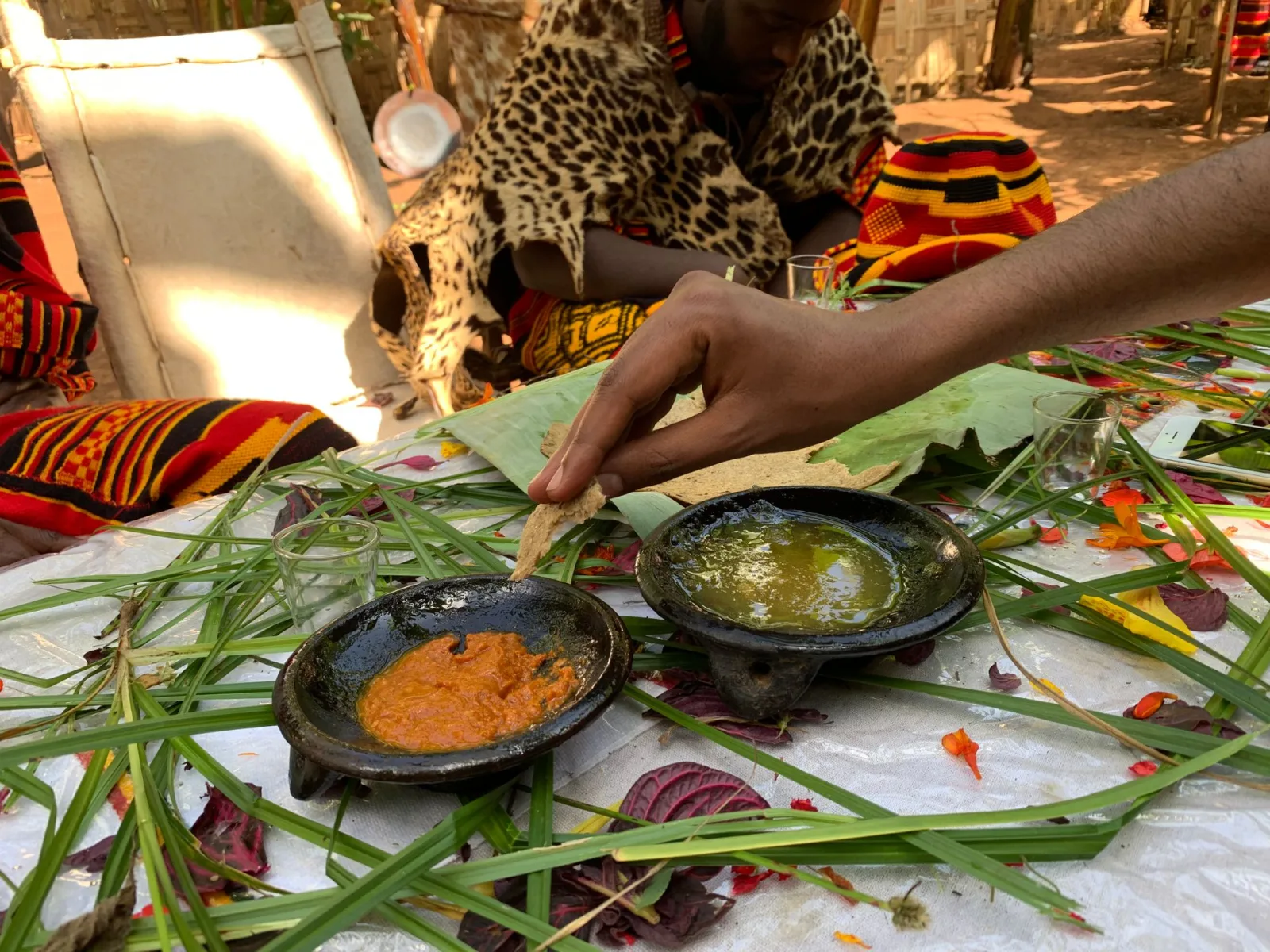
Traditional Ethiopian injera platter with various vegetarian stews and a coffee ceremony setup

Ethiopia Food Guide for Indian Travelers

Navigate Ethiopian cuisine with confidence. Discover vegetarian options, the traditional coffee ceremony, and dining etiquette for 2026.

Written by Vishal Narayan — Africa Travel Specialist
Reviewed by Veena Rathore · Africa Travel Reviewer
Last updated after reviewing:
  • Orthodox Christian fasting traditions and their impact on vegan food availability in Ethiopia (2026)
  • Current availability of Indian vegetarian-friendly restaurants in Addis Ababa and Lalibela
  • Traditional coffee ceremony protocols and hygiene standards for tourists in 2026
Understanding Ethiopian Cuisine as an Indian Traveler
A practical guide to navigating local food, spice levels, and dining customs in Ethiopia.

Ethiopian cuisine is a vibrant, communal, and deeply flavorful experience that revolves around Injera, a spongy sourdough flatbread made from teff flour. For Indian travelers, the good news is that Ethiopian food is highly compatible with Indian palates, especially for vegetarians and vegans.

While the parent Ethiopia Travel Guide covers the broad strokes of the country, this focused guide dives deep into what you will actually eat, how to order it, and how to participate in the sacred coffee ceremony without committing a cultural faux pas. For budget planning, refer to our Ethiopia trip cost from India breakdown.

A Vegetarian and Vegan Paradise
Why Ethiopia is one of the easiest African countries for Indian vegetarians to navigate.

Unlike many other African destinations where meat dominates, Ethiopia has a profound culture of plant-based eating. This is due to the Ethiopian Orthodox Church, which mandates fasting (known as Tsom) for over 200 days a year. During these periods, followers abstain from all animal products, including dairy and eggs.

As a result, almost every restaurant in Addis Ababa, Lalibela, and Gondar offers a dedicated "Fasting Menu" (Yetsom Beyaynetu). This is a large platter of Injera topped with 5 to 8 different vegan stews. Key dishes include:

  • Shiro: A rich, comforting stew made from ground chickpeas or broad beans, garlic, and onions.
  • Misir Wat: Spicy red lentil stew, similar in texture to Indian dal but with distinct Ethiopian spices.
  • Gomen: Collard greens sautéed with garlic, ginger, and jalapeños.
  • Atakilt Wat: A mild, turmeric-spiced cabbage, potato, and carrot stew (very similar to Indian Aloo Gobi).

Pro Tip: When ordering, simply say "Yetsom" (fasting food) to ensure your meal is 100% plant-based and cooked without clarified butter (niter kibbeh).

The Traditional Ethiopian Coffee Ceremony
More than just a drink, the coffee ceremony (Buna) is a sacred ritual of hospitality.

The 4 Stages of the Ceremony

  1. Roasting: Green coffee beans are washed and roasted over hot coals in a small pan. The host will walk around so guests can smell the aromatic smoke, which is considered a blessing.
  2. Grinding: The roasted beans are ground by hand using a traditional wooden mortar and pestle called a mukecha.
  3. Brewing: The ground coffee is boiled in a traditional black clay pot called a jebena, often with spices like cardamom or cinnamon. Frankincense is burned nearby to ward off evil spirits.
  4. Serving: The coffee is poured from a height into small, handleless cups called sini. Traditionally, three rounds are served: Abol (first, strongest), Tona (second, weaker), and Bereka (third, the blessing).

Tourist Etiquette

  • Accept the invitation: Refusing coffee can be seen as impolite. Even if you only take a few sips, accepting the cup shows respect.
  • Take your time: The ceremony is meant to last 45–60 minutes. It is a social event, not a quick caffeine fix.
  • Sugar, no milk: Ethiopian coffee is traditionally served black with plenty of sugar. Milk is rarely offered.
  • Accompaniments: It is usually served with popcorn, roasted barley (kolo), or fresh bread.
Must-Try Ethiopian Dishes
Beyond the vegetarian staples, these are the iconic flavors you should seek out.
  • Doro Wat: The national dish. A rich, spicy chicken stew slow-cooked in berbere (a complex chili spice blend) and niter kibbeh (spiced clarified butter), served with a hard-boiled egg. (Non-vegetarian).
  • Tibs: Sautéed cubes of beef or lamb, cooked with onions, garlic, jalapeños, and rosemary. It is the Ethiopian equivalent of a sizzling platter.
  • Kitfo: Traditional minced raw beef, seasoned with mitmita (a spicy powder) and niter kibbeh. Similar to steak tartare. You can request it "leb leb" (lightly cooked) if you are hesitant about raw meat.
  • Tej: Traditional Ethiopian honey wine. It is slightly sweet, potent, and served in a distinctive flask-shaped bottle called a berele. A must-try cultural experience.
Dining Etiquette & Costs
How to eat like a local and what it will cost you.
  • Use your right hand only: Ethiopian meals are eaten without cutlery. Tear off a piece of Injera with your right hand and use it to scoop up the stews. The left hand is considered unclean.
  • The Gursha: This is the act of rolling a perfect bite of Injera and stew and feeding it to someone else at the table. It is the highest sign of friendship and affection. If someone offers you a gursha, accept it graciously!
  • Share from the center: Meals are typically served on a large, communal platter. Eating from the same plate signifies unity and trust.
  • Cost Expectations: A meal at a local eatery costs around ₹300–₹600. A meal at a mid-range tourist restaurant costs ₹800–₹1,500 per person. Fine dining or hotel restaurants will range from ₹1,500–₹3,000.

Want to experience authentic Ethiopian cuisine without the hassle of planning? Our tour packages include meals at hygienic, highly-rated local restaurants and traditional coffee ceremonies.

View Ethiopia Tour Packages →
Frequently Asked Questions — Ethiopian Food
Quick answers to common culinary questions from Indian travelers.
1Is Ethiopian food spicy for Indian palates?
Ethiopian food uses Berbere, a spice blend containing chili, but it is generally milder and more aromatic than typical Indian curries. You can always request "mild" or "no spice" when ordering, and many stews are naturally mild.
2Can strict vegetarians and vegans eat in Ethiopia?
Yes, Ethiopia is a paradise for vegetarians and vegans. Due to Orthodox Christian fasting traditions (Tsom), a vast majority of local dishes like Shiro, Misir Wat, and Gomen are completely plant-based and cooked without any animal products.
3What is the Ethiopian coffee ceremony?
The coffee ceremony (Buna) is a sacred social ritual where green coffee beans are roasted, ground, and brewed in front of guests using a traditional clay pot (jebena). It is a symbol of hospitality and friendship.
4Is it safe to drink tap water in Ethiopian restaurants?
No. It is strongly recommended to drink only bottled or purified water in Ethiopia. Avoid ice in drinks and use bottled water for brushing your teeth, even in mid-range restaurants.
5How much does a meal cost in Ethiopia for an Indian tourist?
A meal at a local restaurant costs around ₹300–₹600, while a meal at a mid-range tourist restaurant costs ₹800–₹1,500. For a detailed breakdown, check our Ethiopia trip cost from India guide.

Note: Food hygiene standards can vary outside major hotels in Addis Ababa. Stick to busy, reputable restaurants, peel your own fruits, and always drink bottled water to avoid traveler's diarrhea.

More Travel Guides

Explore Other Destinations

Experience Authentic Ethiopian Cuisine on Our Tours

Fill out the enquiry form below and our travel experts will design an Ethiopia itinerary that includes the best local culinary experiences, coffee ceremonies, and hygienic dining options.

We handle all logistics, including domestic flights, historical circuit hotels, and curated food experiences tailored for Indian travelers.

Enquire About This Package