- Carrier: Ethiopian Airlines holds a near-monopoly on domestic routes and maintains excellent international safety standards.
- Key Routes: Addis Ababa (ADD) to Lalibela (LLI), Gondar (GDQ), Dire Dawa (DIR), and Arba Minch (AMH).
- Booking: Book well in advance via the official website or a registered tour operator. Foreigner fares are fixed in USD and are significantly higher than local citizen fares.
- Baggage: Strictly enforced 20kg checked limit and 7kg cabin limit for foreigners. Excess baggage fees are high and payable in USD cash at the airport.
- Delays: Highland weather (fog/rain) can cause delays, especially in Lalibela and Gondar. Always build a 1-day buffer before your international departure.
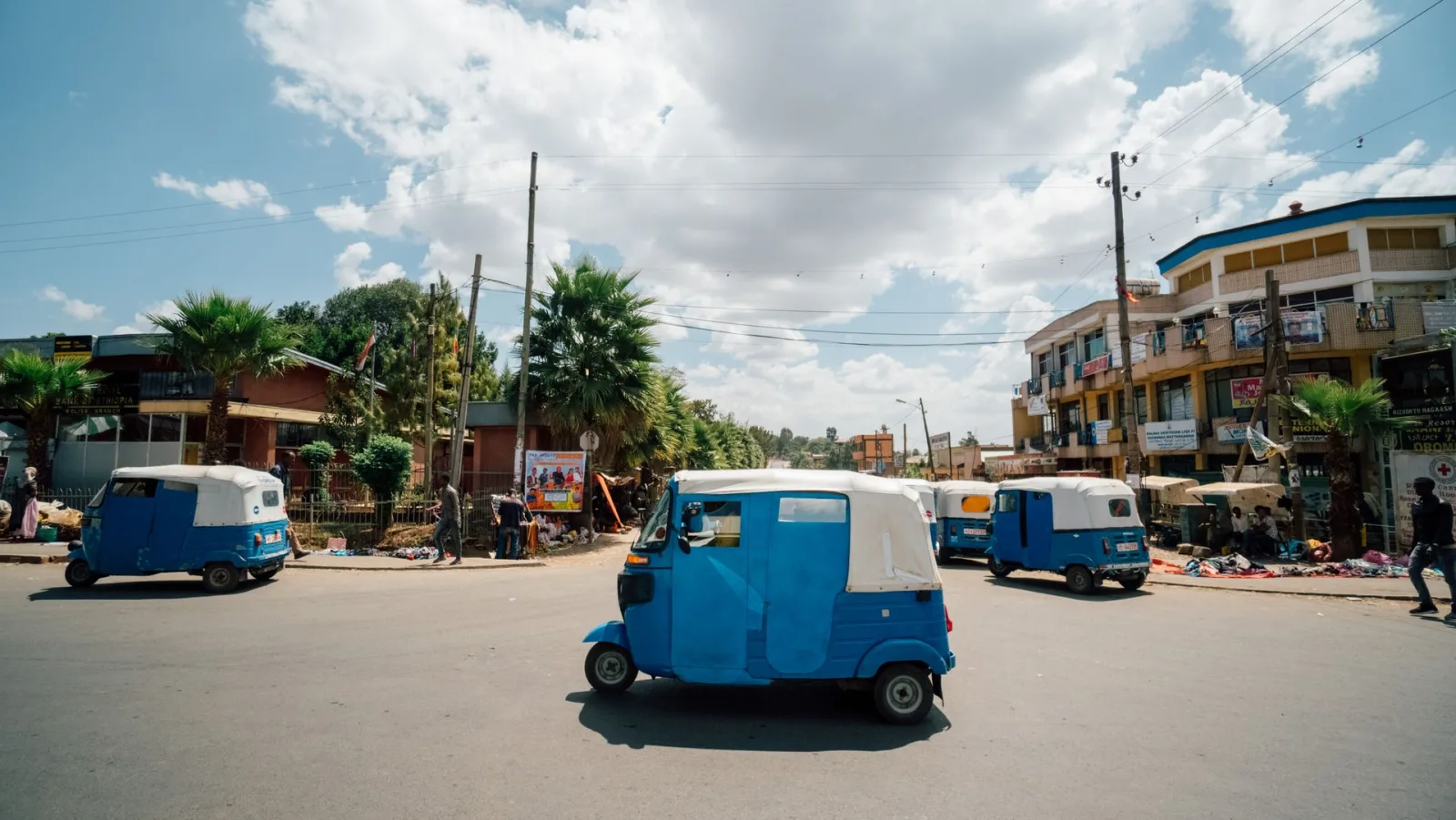
Navigating Ethiopia's Transport Network
A practical guide to moving safely and efficiently across the country's diverse terrain.
Ethiopia's vast size and dramatic topography make transport planning a critical part of any itinerary. While the road network has improved significantly in recent years, mountainous routes and unpredictable driving habits mean that road travel can be slow and exhausting.
For Indian travelers, the most efficient and safest way to cover long distances is via domestic flights. Within cities, app-based ride-hailing has revolutionized urban transport, offering a safe alternative to traditional taxis. This focused guide complements our broader Ethiopia Travel Guide by detailing the practical realities, costs, and safety protocols of getting around Ethiopia.
Domestic Flights: The Recommended Choice
Why flying is the safest and most time-efficient option for the historical circuit.
Taxis & Ride-Hailing Apps
Navigating urban transport safely and avoiding common scams.
Ride-Hailing Apps
In Addis Ababa, apps like Ride and Feres are the most reliable transport options. They offer upfront pricing, GPS tracking, and cash or card payments, eliminating the need to haggle or worry about language barriers. Download and set up these apps before arriving or immediately upon connecting to airport Wi-Fi.
Traditional Taxis
Blue-and-white Lada taxis are ubiquitous in Addis Ababa. However, meters are rarely used, and drivers frequently quote inflated "foreigner" prices. If you must use a traditional taxi, always negotiate and agree on the fare firmly before getting into the vehicle. Hotel-arranged taxis are more expensive but offer greater reliability and safety.
Public Transport: Minibuses & Buses
Understanding the realities of budget ground transport in Ethiopia.
- Minibuses (Blue-and-White): The backbone of Ethiopian public transport. They are incredibly cheap but often overcrowded, drive aggressively, and lack basic safety features. Only recommended for short, daytime hops within cities or to nearby towns.
- Intercity Buses: Companies like Selam Bus offer more comfortable, scheduled services between major cities (e.g., Addis Ababa to Bahir Dar or Hawassa). These are safer and more reliable than minibuses for long distances.
- Light Rail Transit (LRT): Addis Ababa has a light rail system. While very cheap, it is extremely crowded during peak hours and not recommended for tourists with luggage or those unfamiliar with the routes.
- Safety Rule: Never travel on rural roads or intercity buses at night. Poor lighting, mountainous terrain, and unpredictable driving make night travel significantly more hazardous.
Driving & Car Rentals
What Indian travelers need to know before getting behind the wheel.
Requirements
Ethiopia drives on the right-hand side (same as India). To rent a car, you must possess a valid International Driving Permit (IDP) alongside your home country license. Rental agencies will also require a credit card hold for the security deposit.
Why We Discourage Self-Driving
While major highways are paved, rural roads can be rough, poorly signposted, and shared with livestock and pedestrians. Local driving habits can be unpredictable. For most Indian travelers, hiring a car with a professional, English-speaking driver through a registered tour operator is significantly safer, less stressful, and often more cost-effective.
Skip the transport hassles. Our curated Ethiopia packages include all domestic flights, private 4x4 transfers with professional drivers, and seamless airport pickups.
View Ethiopia Tour Packages →Frequently Asked Questions — Transport in Ethiopia
Quick answers to common logistical questions from Indian travelers.
1What is the best way to travel between cities in Ethiopia?
Domestic flights via Ethiopian Airlines are the safest, fastest, and most recommended way to travel between major cities like Addis Ababa, Lalibela, and Gondar. Road travel can take 10+ hours on rough, mountainous terrain.
2Are ride-hailing apps like Uber available in Ethiopia?
Uber is not widely operational in Ethiopia. Instead, local apps like Ride and Feres are the primary and most reliable ride-hailing options in Addis Ababa, offering cash or card payments and GPS tracking.
3Is it safe to take minibuses in Ethiopia?
Minibuses are the cheapest form of transport but are often overcrowded, drive aggressively, and lack safety features. For Indian tourists, they are only recommended for short, daytime hops within or between nearby towns, not for long intercity journeys.
4Do I need an International Driving Permit (IDP) to drive in Ethiopia?
Yes. If you wish to rent a car, you must hold a valid International Driving Permit (IDP) alongside your home country license. However, self-driving is generally discouraged for tourists due to unpredictable local driving habits and road conditions.
Note: Transport schedules, app availability, and road conditions can change. Always verify your domestic flight timings 24–48 hours before departure and consult your hotel or tour operator for the latest local transport advice. For broader safety tips, review our Ethiopia Safety Guide.