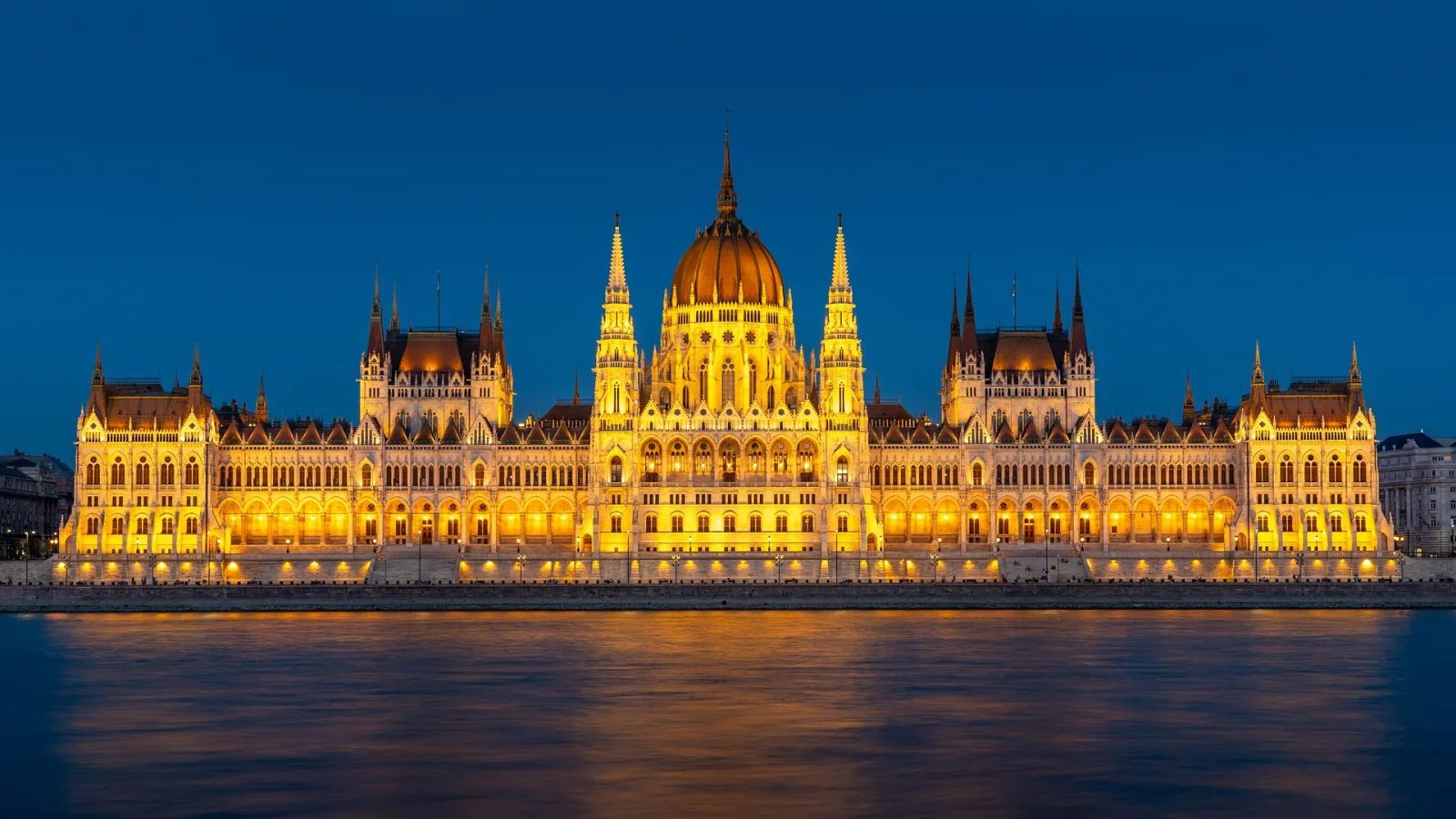
Budapest Parliament building and Buda Castle illuminated at dusk across the Danube River, Hungary

Hungary Travel Guide
for Indian Travelers

Visa, cost, itinerary & tips — your complete guide to planning a trip to Hungary from India in 2026.

Updated for 2026 Travelers
Written by Bilas Munda — Europe Travel Specialist
Reviewed by Vijay Prasad · Europe Travel Reviewer
Last updated after reviewing:
  • Schengen visa appointment slot availability updates via VFS Global 2025
  • Budapest Airport (BUD) Terminal 2 expansion & lounge access updates
  • HUF cash vs card surcharge advisory for Indian tourists 2026

Last updated: April 2026

Hungary Trip Cost from India (Detailed Breakdown)
Realistic cost breakdown for flights, visa, hotels, food, and total budget for 2026

Cost Breakdown 2026

  • Return Flights: ₹60,000 – ₹1,00,000
  • Schengen Visa Fee: ₹8,000 – ₹8,500 (approx. €90 + VFS fees)
  • Hotels (per night): ₹5,000 – ₹12,000
  • Food (per day): ₹2,000 – ₹5,000
  • Local Transport (per day): ₹800 – ₹2,500
  • Activities & Entry Fees: ₹10,000 – ₹20,000 total
  • Travel Insurance: ₹1,500 – ₹2,500
  • Total (7–10 days): ₹1.8L – ₹3.5L per person

Hungary is significantly more affordable than Western Europe. Budapest offers premium experiences at mid-range prices, while the countryside remains highly budget-friendly. Visa fees are the only mandatory upfront cost for entry.

Best Departure Cities

  • Delhi (DEL) — Most direct routing options via Frankfurt or Doha
  • Mumbai (BOM) — Strong connections via Dubai, Istanbul, or Warsaw
  • Bangalore (BLR) — Good options via Middle East hubs
  • Hyderabad (HYD) — Routes via Doha or Frankfurt
  • Chennai (MAA) — Fewer direct connections, usually via Middle East

Delhi and Mumbai offer the most competitive fares and shortest layovers to Budapest Ferenc Liszt International Airport (BUD).

Ready to plan your Hungary trip? Let us handle flights, visa, hotels, and tours.

View Hungary Tour Packages →
Flight Routes from India to Hungary
Flights from India to Budapest take 10–18 hours with one layover. Here are the most popular routes.

Delhi to Budapest

  • Route 1: DEL → Doha → BUD (Qatar Airways)
  • Route 2: DEL → Frankfurt → BUD (Lufthansa)
  • Route 3: DEL → Dubai → BUD (Emirates + FlyDubai)
  • Route 4: DEL → Istanbul → BUD (Turkish Airlines)
  • Duration: 10–14 hours
  • Price Range: ₹60,000 – ₹95,000

Mumbai to Budapest

  • Route 1: BOM → Doha → BUD (Qatar Airways)
  • Route 2: BOM → Istanbul → BUD (Turkish Airlines)
  • Route 3: BOM → Warsaw → BUD (LOT Polish Airlines)
  • Route 4: BOM → Dubai → BUD (Emirates + Wizz Air)
  • Duration: 12–16 hours
  • Price Range: ₹65,000 – ₹1,05,000

Note: Budapest Ferenc Liszt (BUD) is the main international airport. It features a single, modernised terminal. Public transport (Bus 100E) and airport shuttles connect directly to the city centre. Check Europe travel guides for more regional information.

Hungary vs Western Europe Cost for Indian Travelers
How does Hungary compare to popular Western European destinations on cost? Here is a practical comparison for Indian travelers.
Expense Hungary (7 days) France/Italy (7 days)
Flights₹60K – ₹1L₹60K – ₹1.1L
Visa₹8K – ₹8.5K (Schengen)₹8K – ₹8.5K (Schengen)
Hotels/night₹5K – ₹12K₹9K – ₹18K
Food/day₹2K – ₹5K₹5K – ₹12K
Local Transport₹800 – ₹2.5K/day₹2.5K – ₹6K/day
Total Trip₹1.8L – ₹3.5L₹2.5L – ₹4.5L
Flights
Hungary₹60K – ₹1L
France/Italy₹60K – ₹1.1L
Visa
Hungary₹8K – ₹8.5K
France/Italy₹8K – ₹8.5K
Hotels/night
Hungary₹5K – ₹12K
France/Italy₹9K – ₹18K
Food/day
Hungary₹2K – ₹5K
France/Italy₹5K – ₹12K
Total Trip
Hungary₹1.8L – ₹3.5L
France/Italy₹2.5L – ₹4.5L

Hungary offers significantly better value on-ground compared to Western Europe. You experience the same Schengen entry, world-class architecture, and thermal culture at 30-40% lower daily costs.

Best Time to Visit Hungary from India
Hungary can be visited year-round, but the best time depends on your travel goals and weather preferences.
Month Hungary Season Budapest Danube Bend Lake Balaton India Travel Note
JanWinter / ColdCold, 0–3°CClosed/quietQuiet, off-seasonBudget window, New Year
FebLate WinterCool, 0–5°CMostly closedQuietValentine's trips
MarEarly SpringMild, 5–12°COpening upOpeningHoli holidays
AprSpring ✓Pleasant 10–18°CExcellentSpring bloomsGood summer hols start
MaySpring ✓✓Warm 15–22°CBest monthIdealPre-summer peak
JunEarly Summer ✓Warm 18–26°CGreat, long daysBest timeIndia school holidays begin
JulSummer PeakHot 20–30°CBusyPeak seasonPeak travel, book early
AugSummer PeakHot 20–31°CBusyCrowded, warmPeak travel continues
SepAutumn ✓✓Mild 12–22°CIdeal weatherHarvest, winePost-monsoon window
OctAutumn ✓Cool 8–16°CFoliageQuietDiwali holidays, pleasant
NovLate AutumnChilly 3–9°CQuietClosingShoulder season
DecWinter / FestiveFestive, 0–5°CChristmas marketsClosedIndia winter hols, Christmas
7-Day Hungary Itinerary for Indian Travelers
A perfect one-week Hungary itinerary covering Budapest, Danube Bend castles, and Lake Balaton.

Day-by-Day Plan

  • Day 1: Arrive in Budapest — settle in, evening Danube cruise
  • Day 2: Pest side tour — Parliament, St Stephen's Basilica, Jewish Quarter
  • Day 3: Buda Castle district — Fisherman's Bastion, Matthias Church, thermal baths
  • Day 4: Budapest museums & ruin pubs — Széchenyi baths evening visit
  • Day 5: Danube Bend day trip — Szentendre, Visegrád, Esztergom
  • Day 6: Lake Balaton excursion — Tihany Peninsula, Hévíz thermal lake
  • Day 7: Return to Budapest, souvenir shopping, depart

Planning Notes

  • Transport: Budapest public transport (BKK) is excellent. Buy 72-hr or weekly passes
  • Budget option: Focus on Budapest + 1 day trip. Skip Balaton to save accommodation & transit costs
  • Currency: Hungarian Forint (HUF). Carry some cash for markets, but cards are widely accepted
  • Language: Hungarian (Magyar) is non-Indo-European. English widely spoken in tourist zones
  • Connectivity: EU SIM or Indian international roaming works well. Free Wi-Fi in most cafes
  • Vegetarians: Budapest has excellent vegan/vegetarian restaurants. Outside city, stick to cheese/pasta/salads
  • Book ahead: Thermal bath tickets and Parliament interior tours sell out — book 2-3 weeks ahead

Want a hassle-free Hungary trip? Our packages include flights, Schengen visa support, hotels, and guided tours.

Book Hungary Tour Package →
Hungary Visa for Indians — Complete Guide & Travel Essentials
Essential information for Indian travelers — from Schengen visa requirements and time zones to plug adapters and local transport apps.

Tip: Carry some Hungarian Forint (HUF) in small denominations for street food, markets, and public toilets.

Hungary Visa for Indians — 2026 Update

Update (2025-2026): Schengen visa appointments are now booked via VFS Global across major Indian cities. Processing times average 15-20 days, but peak summer season (May-Aug) can see delays up to 30 days. Apply at least 4 weeks before travel. Source: VFS Global Hungary.

  • Visa Type: Schengen Type C (Tourist/Business/Transit)
  • Application Centre: VFS Global (Delhi, Mumbai, Bangalore, Chennai, etc.)
  • Documents: Valid passport (3+ months post-travel), application form, flight itinerary, travel insurance (€30K+ cover), bank statements (3-6 months), hotel bookings, cover letter
  • Visa Fee: €90 (approx. ₹8,000-₹8,500) + VFS service charge
  • Processing time: 15 calendar days standard, up to 20-30 days during peak season
  • Validity: Up to 90 days within 180-day period across all Schengen states
  • Important: Apply to Hungary only if it's your main destination or first point of entry
CLICK TO KNOW MORE ABOUT SCHENGEN VISA DOCUMENTATION & FEES

Time Zone

Hungary follows Central European Time (CET), UTC+1, which is 4.5 hours behind IST. During Daylight Saving Time (late March to October), it observes CEST (UTC+2), 3.5 hours behind IST.

  • Standard Time (CET): UTC+1 (Nov-Mar), 4.5 hrs behind IST
  • Summer Time (CEST): UTC+2 (Mar-Oct), 3.5 hrs behind IST
  • When it is 12:00 PM in Budapest, it is 4:30 PM (summer) / 5:30 PM (winter) in India
  • Business hours: 9 AM – 5 PM CET
  • Restaurants: Lunch 12-3 PM, Dinner 6-9 PM
  • Public transport: Metro 4:30 AM – 11:30 PM; night buses available

Country Code

To call Hungary from India, use the international dialing code +36 followed by the area code and local number.

  • International Dialing Code: +36
  • To call Hungary from India, dial: 00-36-XX-XXXX-XXXX
  • Budapest area code: 1
  • Debrecen area code: 52
  • Emergency services: 112 (EU standard)
  • Police: 107, Ambulance: 104, Fire: 105
  • Major telecom: Telekom, Vodafone, Yettel
  • EU-wide roaming applies for Indian SIMs with international packs

Socket & Plugs

Hungary uses Type C and Type F electrical outlets with 230V at 50Hz. Indian travelers will need a plug adapter for Type D plugs.

  • Type C and Type F — 230V, 50Hz
  • Hungary uses European 2-pin round (Type C) and Schuko (Type F) outlets
  • Standard voltage is 230V with a frequency of 50Hz
  • Indian Type C plugs (2-pin round) work without adapter ✅
  • Indian Type D (3-pin round) plugs require a universal travel adapter
  • Universal adapters available at Budapest airport & electronics shops
  • Most hotels provide adapters on request
  • Modern chargers support 100–240V auto-switching

Indian Embassy in Hungary

The Embassy of India in Budapest provides consular services for Indian nationals.

  • Address: 1121 Budapest, 1121 Budapest, 1121 Budapest, 1121
  • Contact: +36 1 342 5700 / +36 1 342 5701
  • Email: [email protected]
  • Emergency (24/7): +36 30 342 5700
  • Working Hours: Mon–Fri, 9:00 AM – 5:00 PM
  • Services: passport renewal, emergency certificates, consular assistance
  • Register with MADAD portal before travel for advisories

Hungary Embassy in India

The Embassy of Hungary in New Delhi handles visa policy and bilateral relations. Visa applications are processed via VFS Global centres across India.

  • Embassy New Delhi: 30 Niti Marg, Chanakyapuri, New Delhi 110021
  • Contact Delhi: +91 11 4940 8500
  • VFS Global: Primary visa application partner in India
  • Email: [email protected]
  • Working Hours: Mon–Fri, 8:30 AM – 4:30 PM
  • Visa Fee: €90 + VFS service charges
  • Processing time: 15-20 calendar days
  • Note: Apply at least 30 days before your intended travel date

Car Driving Orientation

Right-Hand Drive (Opposite to India)

  • Hungary follows right-hand driving, opposite to India's left-hand system
  • International Driving Permit (IDP) required along with valid home country license
  • Speed limits: 50 km/h urban, 90 km/h rural, 130 km/h motorways
  • Seat belts mandatory for all passengers
  • Strict alcohol limits (0.0% BAC) — zero tolerance
  • Car rental available at Budapest Airport
  • Public transport highly recommended in Budapest
  • Excellent highway network (M1, M5, M7, M3) connects major regions

App Based Taxi

Bolt, Főtaxi, and CityMobil are Primary Ride-Hailing Apps

  • Bolt is widely available in Budapest and major cities
  • Főtaxi is the official yellow taxi network, book via app or phone
  • CityMobil offers competitive rates and wide coverage
  • Payment via app (card) or cash in HUF
  • Average airport to city centre fare: HUF 8,000–10,000
  • Always use metered taxis or registered apps to avoid overcharging
  • BKK app for public transport (metro, tram, bus) is highly reliable

Need help with Hungary Schengen visa? Our visa team assists with documentation, appointment booking, and follow-up.

Hungary Visa Assistance →
Hungary Culture, Language & Local Customs
Understand Hungarian (Magyar), local etiquette, and cultural norms to connect better with locals.

Official Language

Hungarian (Magyar) — Official Language

  • Hungarian is Finno-Ugric, completely unrelated to European Indo-European languages
  • Grammar uses suffixes instead of prepositions, making it unique and challenging
  • English is widely spoken in Budapest, especially among youth and hospitality staff
  • German and Russian are understood by older generations
  • Learning basic phrases like "Köszönöm" (Thank you) is highly appreciated
  • Pronunciation is phonetic — words are read exactly as spelled
  • Translation apps work well in major cities

Local Vocabulary

Understanding these basic Hungarian terms helps navigate daily travel and connect with locals respectfully.

  • Jó napot — Good day / Hello (formal)
  • Köszönöm — Thank you
  • Szívesen — You're welcome
  • Bocsánat — Sorry / Excuse me
  • Igen / Nem — Yes / No
  • Egészségedre! — Cheers! (to your health)
  • Fürdő — Thermal bath
  • Egészséges — Healthy / Good for you
  • Palack — Bottle
  • Szálloda — Hotel

Toilet Signs

Public restrooms are called "WC" or "Illemhely" in Hungary. Signs typically display pictograms or "Férfi" (Men) / "Nő" (Women).

  • Public toilets marked with "Férfi" (Men) or "Nő" (Women)
  • Many public facilities charge a small fee (HUF 200–500)
  • Shopping malls, cafes, and hotels have free, clean restrooms
  • Carry tissues or wet wipes for older train stations or bus stops
  • Modern facilities are wheelchair accessible and well-maintained
  • Thermal baths provide towels, lockers, and changing areas

Interesting Facts

Hungary has the world's largest thermal water cave system, Budapest has over 80 million litres of thermal water pumped daily, and the country produced the Rubik's Cube.

  • Budapest is the only capital with 123 natural thermal springs
  • Hungarian is one of the oldest languages in Europe, with a unique grammar system
  • Paprika was introduced in the 16th century and became a national symbol
  • Hungary has the deepest cave lake in Europe (Lake Hévíz)
  • The Hungarian Parliament is the third-largest legislative building in the world
  • Ernő Rubik invented the Rubik's Cube in Budapest in 1974
  • Traditional folk embroidery and ceramics are UNESCO-recognized crafts
  • Hungary hosted the 1896 first European continental railway line
Hungary Shopping & Markets Guide
From Herend porcelain and paprika to traditional embroidery and thermal bath souvenirs.

Shopping Hours

Most Shops: 10:00 AM – 7:00 PM (Weekdays)

  • Shopping malls operate 10:00 AM to 9:00 PM, Sunday 10:00 AM to 8:00 PM
  • Markets close early on Saturdays (2-4 PM) and are closed on Sundays
  • Great Market Hall opens Mon-Sat, 6 AM – 6 PM (Saturdays until 2 PM)
  • Smaller boutiques may close for lunch (1-3 PM) in rural towns
  • Supermarkets open 7 AM – 9 PM; some 24/7 chains in Budapest
  • Tax-free shopping available for non-EU residents on purchases over HUF 55,000
  • Best sales: January (winter) and July (summer) clearance seasons

Flea Markets

Hungary's markets offer authentic souvenirs including hand-painted porcelain, paprika strings, folk art, and vintage Hungarian items.

  • Great Market Hall (Nagyvásárcsarnok) — Budapest's largest, fresh produce & crafts
  • Ecseri Piac — Largest antique & flea market, weekends only, great for vintage finds
  • Szentendre Open-Air Museum — Folk art, embroidery, traditional crafts
  • Karácsonyi Vásárok — Christmas markets (Nov-Dec), wooden stalls, mulled wine
  • Térkép Utcai Piac — Sunday farmers market, organic & artisanal goods
  • Cash (HUF) preferred at small stalls; cards accepted at larger market booths
  • Bargaining is acceptable at flea markets but not at fixed-price stalls

Famous Brands

Shopping for Hungarian porcelain, embroidery, and paprika offers excellent value compared to international prices, alongside Tokaji wine and traditional crafts.

  • Herend Porcelain: World-famous hand-painted ceramics, luxury tableware
  • Matyó & Kalocsa Embroidery: Traditional floral folk art on linens & tablecloths
  • Paprika: Dried strings and jars (sweet & hot), iconic Hungarian spice
  • Tokaji Wine: Sweet dessert wine, historic royal favourite
  • Unicum: Traditional herbal liqueur, national digestif
  • Thermal Bath Gear: Swimsuits, flip-flops, towels (required for baths)
  • Rubik's Cube: Official merchandise, puzzle books, collector editions
  • Mangalica Products: Premium pork sausages, salami, cured meats

Supermarkets

Major supermarket chains like Tesco, Auchan, Spar, and Lidl offer wide product ranges with competitive prices across Hungary.

  • Tesco / Spar / Lidl — Widespread, affordable groceries & household goods
  • Auchan — Large hypermarkets with extensive product selection
  • Spar — Premium & everyday grocery, convenient city locations
  • Local Markets — Fresh produce, dairy, meats at lower prices
  • Most open 7 AM – 9 PM; some 24/7 in Budapest
  • Hungarian dairy (túró, tejföl, sajt) and bread (kenyér) are excellent quality
  • Bottled water recommended in rural areas; tap water is safe in Budapest
Hungary Food & Cuisine Guide
Hungarian cuisine is known for paprika-seasoned stews, goulash, thermal bath snacks, and hearty comfort food.

Do: Try goulash, lángos, and chimney cake — Hungarian street food and traditional dishes are highlights of the trip.

Famous Cuisines

Hungarian cuisine is hearty, paprika-rich, and influenced by Ottoman, Austrian, and Central European culinary traditions.

  • Gulyás (Goulash) — Traditional beef stew with paprika, potatoes, carrots
  • Lángos — Deep-fried flatbread topped with sour cream, cheese, garlic (street food favourite)
  • Paprikás Csirke — Chicken paprikash with dumplings (nokedli)
  • Töltött Káposzta — Stuffed cabbage rolls in sour sauce
  • Pörkölt — Thick meat stew, often with pork or beef, no potatoes
  • Kürtőskalács — Chimney cake, rolled dough baked over charcoal, sugar-coated
  • Dobos Torta — Layered sponge cake with caramel glaze and buttercream
  • Túrós Csusza — Noodle casserole with cottage cheese and sour cream
  • Húsleves — Clear chicken soup, traditional Hungarian comfort food

Famous Fruits

Summer (June-August) offers the best fruit variety and prices. Local markets sell fresh apricots, peaches, plums, and grapes from Hungarian orchards.

  • Szilva (Plums) — Used for pálinka (fruit brandy) and jams
  • Barack (Apricots) — Famous from Szatmár region, sweet and juicy
  • Cseresznye (Cherries) — Summer staple, eaten fresh or in desserts
  • Alma (Apples) — Autumn harvest, excellent baking & cider apples
  • Szőlő (Grapes) — Tokaj and Eger wine regions, table & wine grapes
  • Eper (Strawberries) — Spring harvest, popular at farmers markets
  • Dinnye (Watermelon) — Summer favourite, sold by street vendors

National Dish — Goulash

Goulash is Hungary's national dish — more than a meal, it's a cultural institution and symbol of Hungarian hospitality.

  • Originally cooked by cattle herders in cast iron cauldrons over open fire
  • Rich, paprika-seasoned broth with beef, potatoes, onions, carrots
  • Not a thick stew — traditional Hungarian gulyás is soup-like
  • Served with fresh bread or dumplings (csipetke)
  • Best enjoyed in traditional csárdas or rural guesthouses
  • Family recipes passed down for generations
  • Vegetarian versions use mushrooms or root vegetables instead of beef
  • Top spots: Budapest restaurants, Great Hungarian Plain (Alföld) regions

Avg Cost Of Food

Budget travelers can eat well for HUF 5,000–10,000 per day at local eateries. Tipping 10% is customary in sit-down restaurants.

  • Street Food/Lángos: HUF 1,200–2,500
  • Kürtőskalács: HUF 800–1,500
  • Menu del Dia (Lunch Special): HUF 3,000–5,000
  • Traditional Restaurant: HUF 5,000–9,000 per person
  • Mid-range Dining: HUF 6,000–12,000 per person
  • Fine Dining: HUF 15,000–35,000+ per person
  • Coffee (Kávé): HUF 600–1,200
  • Beer/Wine (Glass): HUF 800–1,500

Tipping: 10% customary, often rounded up. Check if service charge is included on the bill.

Hungary Weather & Packing Tips
Hungary has a continental climate. Pack for your destinations — from hot Budapest summers to snowy winter markets.

Tip: Pack layers — Hungary's weather shifts quickly from warm days to cool evenings, especially near Lake Balaton.

Weather

Hungary has a continental climate with four distinct seasons and moderate precipitation year-round.

  • Budapest: Hot summers (25–35°C), cold winters (-2 to 5°C), moderate spring/autumn
  • Lake Balaton: Warm summer breezes, cooler evenings, excellent for water sports
  • Great Plain (Alföld): Hot, dry summers, windy autumns, agricultural heartland
  • Northern Mountains: Cooler, more rainfall, winter snow for skiing (Börzsöny, Mátra)
  • Eger & Tokaj: Mild, favourable for vineyards, autumn harvest season
  • Best time overall: April–June & Sept–Oct (pleasant, fewer crowds)
  • Summer (Jun-Aug): Peak tourist season, long daylight hours
  • Winter (Nov-Mar): Christmas markets, thermal baths, lower prices

Clothes To Wear

Hungarians dress smart-casual in cities. Avoid overly athletic wear outside thermal baths. Pack according to season and planned activities.

For Budapest & Cities:

  • Light, breathable clothing for summer (linen, cotton)
  • Light jacket or cardigan for spring/autumn evenings
  • Warm coat, scarf, gloves for winter (thermal baths stay warm!)
  • Comfortable walking shoes (cobblestone streets are common)
  • Smart-casual attire for restaurants & concerts
  • Compact umbrella or rain jacket (spring/autumn showers common)

For Lake Balaton & Countryside:

  • Swimwear & quick-dry towel for beaches & thermal baths
  • Light windbreaker (lake breezes can be strong)
  • Hiking boots for countryside trails & castle ruins
  • Sun hat & SPF 30+ sunscreen (summer UV index is high)
Hungary Heritage & Cultural Highlights
UNESCO sites, thermal bath culture, folk traditions, and souvenirs that capture Hungary's identity.

UNESCO World Heritage Sites

Hungary has 8 UNESCO World Heritage Sites, ranging from ancient cave systems to Baroque architecture.

  • Banks of the Danube & Buda Castle (1987) — Budapest's iconic skyline
  • Hollókő Village (1987) — Preserved Palóc folk architecture
  • Aggtelek Karst & Slovak Karst Caves (1995) — Europe's largest cave system
  • Pannonhalma Benedictine Archabbey (1996) — 10th-century monastery
  • Hortobágy National Park (1999) — Great Hungarian Plain, pastoral traditions
  • Pécs (Sopianae) Early Christian Cemetery (2000) — Roman-era underground tombs
  • Fertő/Neusiedlersee Cultural Landscape (2001) — Lake & grassland ecosystem
  • Tokaj Wine Region (2002) — Historic vineyards & sweet wine production

National Symbols

The Turul bird myth represents ancient Magyar heritage. Paprika and the Hungarian flag symbolise national pride and resilience.

  • National Animal: Turul (mythical bird of prey)
  • National Flower: Tulip (symbolic), Carnation (folk traditions)
  • National Drink: Tokaji Wine & Unicum herbal liqueur
  • National Dish: Goulash (Gulyás)
  • National Dance: Csárdás (folk dance with slow & fast parts)
  • National Instrument: Cimbalom (hammered dulcimer)
  • National Sport: Water polo, fencing, football

Films Shot in Hungary

Budapest's preserved architecture and affordable production costs make it a top filming location for international cinema and series.

  • The Grand Budapest Hotel (2014) — Filmed in Görlitz & Budapest areas
  • Blade Runner 2049 (2017) — Major studio work at Korda Studios
  • John Wick: Chapter 3 (2019) — Action sequences filmed in Budapest
  • The Alienist (2018) — TV series using Budapest as 19th-century New York
  • Evil Dead Rise (2023) — Modern horror shot at local studios
  • Mission: Impossible – Fallout (2018) — Iconic Budapest chase scenes

Film Festivals

Hungary hosts several international and regional film festivals celebrating cinema, documentaries, and independent filmmakers.

  • Budapest International Film Festival — April/May, independent & arthouse
  • Verzió Human Rights Documentary Festival — November
  • Miskolc International Film Festival — September, European focus
  • French Film Festival (Francia Filmnapok) — Budapest, March/April

Budapest has a strong cinematic culture with historic cinemas, indie screenings, and modern multiplexes across the city.

Souvenirs

Best places to shop for souvenirs: Great Market Hall, Andrássy Avenue boutiques, and airport duty-free.

  • Herend Porcelain — Hand-painted tableware & figurines
  • Paprika Strings — Dried, braided, authentic Hungarian spice
  • Folk Embroidery — Kalocsa & Matyó tablecloths, linens
  • Tokaji & Pálinka - Wine bottles & fruit brandy
  • Rubik's Cube — Official merchandise & collector editions
  • Thermal Bath Gear — Swimsuits, flip-flops, towels
  • Mangalica Sausage — Premium cured pork products
  • Chimney Cake Mix — DIY kürtőskalács kits
Notable Highlights for Indian Travelers
From famous personalities to groundbreaking inventions, discover what makes Hungary unique on the global stage.

Famous People

  • Ernő Rubik (1944–) — Inventor of the Rubik's Cube
  • Ignaz Semmelweis (1818–1865) — Pioneer of antiseptic procedures
  • Zsigmond Moricz (1879–1942) — Renowned Hungarian novelist
  • Béla Bartók (1881–1945) — Influential composer & ethnomusicologist
  • Georges Cziffra (1921–1994) — Legendary classical pianist
  • Katalin Karikó (1955–) — mRNA vaccine pioneer, Nobel laureate
  • László Papp (1926–2003) — Three-time Olympic boxing champion
  • Gábor Presser (1948–) — Iconic composer & musician

Famous Inventions

Hungary has a strong tradition in science and engineering, producing numerous Nobel laureates and world-changing innovations.

  • Rubik's Cube — Ernő Rubik, 1974 (architectural puzzle)
  • Electric Locomotive — Kálmán Kandó, 1923 (railway engineering)
  • Holography — Dennis Gabor, 1947 (Nobel Prize-winning tech)
  • Pre-mix Concrete — Almon Strowger, influenced Hungarian construction tech
  • mRNA Technology — Katalin Karikó, foundational research for modern vaccines
  • Flashlight — József Galamb, early battery-powered lighting
  • Carbonated Water — Ányos Jedlik, early carbonation experiments

Hungary has produced 15 Nobel laureates. Strong tradition in physics, chemistry, and engineering.

National Dish — Goulash

  • Goulash is Hungary's culinary and cultural cornerstone
  • Originated as a cattle-herders' meal cooked in cauldrons over open fires
  • Traditional gulyás includes beef, potatoes, carrots, onions, paprika
  • Cooked slowly for 2–3 hours to meld spices and tenderise meat
  • Served with fresh bread or nokedli (Hungarian dumplings)
  • Accompanied by paprika strings, sour cream, and crusty bread
  • Family recipe variations exist across all Hungarian regions
  • Best goulash: Traditional csárdas, Budapest restaurants, Great Plain

Is Hungary expensive for Indians? A trip costs ₹1.8–3.5 lakh for 7–10 days including flights, Schengen visa (€90), hotels, and food.

Do Indians need a visa? Yes. Schengen Type C visa required. Apply via VFS Global 30 days before travel. Processing takes 15-20 days.

Flight duration? Flights from India to Budapest typically take 10–18 hours with one layover.

Is Hungary safe for Indian tourists? Very safe. Budapest is well-policed. Standard precautions apply in tourist areas.

Currency? Hungarian Forint (HUF). Carry some cash for markets, cards widely accepted in cities. UPI not available.

Frequently Asked Questions — Hungary Travel for Indians
Quick, honest answers to the most common Hungary travel questions from Indian travellers
1Do Indians need a visa for Hungary?
Yes. Indian nationals require a Schengen Type C tourist visa to enter Hungary. The visa is applied for via VFS Global centres across India, costs approximately €90 plus service charges, and allows 90 days of travel across the Schengen zone. Processing takes 15-20 calendar days.
2Is Hungary expensive for Indian tourists?
A 7–10 day Hungary trip costs approximately ₹1.8–₹3.5 lakh per person including flights (₹60K–₹1L), visa fees, hotels (₹5K–₹12K/night), food, and activities. It is 30-40% cheaper than Western Europe for similar experiences in food, transport, and accommodation.
3How long is the flight from India to Hungary?
Flights take 10–18 hours with one layover, typically via Frankfurt, Doha, Dubai, Istanbul, or Warsaw. There are no direct flights from India. The Doha (Qatar Airways) and Istanbul (Turkish Airlines) routes are the most popular and seamless for Indian passport holders.
4What is the best time to visit Hungary from India?
April to June and September to October offer mild weather, fewer crowds, and ideal sightseeing conditions. December is peak for Budapest Christmas markets. Summer (July-Aug) is hot (25-35°C) but great for Lake Balaton. October aligns well with Indian post-monsoon travel windows.
5Is Hungary safe for Indian tourists?
Hungary is very safe for Indian tourists. Budapest and major tourist areas are well-policed and tourist-friendly. Standard precautions against pickpocketing in crowded tourist spots and on public transport apply. Indian travelers consistently report comfortable and secure experiences.
6Do Indians need a transit visa for Hungary flights?
If transiting through a Schengen airport, your Schengen visa covers transit. Transit via non-Schengen hubs (Doha, Dubai, Istanbul, Warsaw) does not require a separate transit visa for Indian passport holders, provided you stay in the international transit area and do not exit immigration.
7What is the Hungary Schengen visa fee for Indians?
The Schengen visa fee is €90 (approx. ₹8,000–₹8,500 depending on exchange rate) plus VFS service charges. The fee is non-refundable if the visa is rejected. Processing time is 15 calendar days, but apply at least 30 days before travel during peak seasons.
8What plug type is used in Hungary?
Hungary uses Type C (European 2-pin round) and Type F (Schuko) outlets at 230V, 50Hz. Indian Type C plugs work directly without an adapter. Indian Type D (3-pin round) plugs need a universal travel adapter. Most hotels provide adapters on request. Modern chargers auto-switch between 100–240V.
9Can I use Indian Rupee or UPI in Hungary?
No. Hungarian Forint (HUF) is the local currency. UPI is not available. Carry some EUR or USD to exchange at official bureaus in Budapest. International Visa/Mastercard debit and credit cards are widely accepted in cities, but cash is preferred at local markets, street food stalls, and smaller shops.
10What is the national dish of Hungary?
Goulash (Gulyás) is the national dish — a paprika-rich beef stew with potatoes, carrots, and onions. It originated as a herders' meal and is a cornerstone of Hungarian hospitality. Best enjoyed in traditional csárdas restaurants or family-run guesthouses across the country.
11What is the time difference between India and Hungary?
Hungary is 4.5 hours behind Indian Standard Time (IST) during standard time (CET, UTC+1) and 3.5 hours behind during Daylight Saving Time (CEST, UTC+2). When it is 12:00 PM in Budapest, it is 4:30 PM or 5:30 PM in India depending on the season.
12Can vegetarian Indians find food in Hungary?
Hungarian cuisine is meat-heavy, but vegetarian options like stuffed peppers, mushroom dishes, cheese lángos, pasta, and salads are widely available. Budapest has dedicated vegan and vegetarian restaurants. Outside the capital, inform your hotel or tour operator in advance to ensure suitable meals during excursions.
13Which is better for first-time visitors — Budapest or Countryside?
First-time visitors should prioritise Budapest (4-5 days) for thermal baths, Parliament, Buda Castle, and vibrant nightlife. Add a 2-day Danube Bend trip (Szentendre, Visegrád) and 1-2 days at Lake Balaton or Eger for wine. The countryside offers authentic thermal and folk culture at lower prices.
14Is Hungary better than France/Italy for Indian tourists on budget?
Yes, Hungary costs 30-40% less than France or Italy for similar cultural and architectural experiences. On-ground costs for food, hotels, and transport are significantly lower. Schengen visa fees are identical, but daily spending power stretches much further in Hungary.
15Does Destination To Plan offer group tour packages to Hungary?
Yes. Destination To Plan offers customised group and family tour packages to Hungary from India — including Schengen visa assistance, flights, Budapest hotels, Danube Bend excursions, Lake Balaton visits, transfers, and guided city tours. Contact us for a personalised itinerary and pricing.
Have more questions? Our Hungary travel experts can help plan your perfect Central European getaway.

Talk to a Hungary Travel Expert →

Note: Information provided is subject to change. Verify visa requirements, exchange rates, opening hours, and travel advisories before your trip. Prices are approximate and may vary based on location, season, and inflation. Hungary uses HUF; exchange rates fluctuate.

About This Hungary Travel Guide

This Hungary travel guide covers everything Indian travelers need from Schengen visa rules and Budapest travel tips to local food, weather, shopping, and top attractions. Researched, regularly updated, and trusted by group tour planners and independent travelers.

Expert Curated Content

Every section — from Hungary Schengen visa rules to Budapest shopping hours — is verified by travel professionals with Central Europe experience.

Regularly Updated Information

Hungary travel costs, Schengen visa rules, and embassy details are reviewed and refreshed to reflect current conditions including VFS Global 2026 appointment updates.

Trusted by Indian Travelers

Used by group tour organizers, corporate travel planners, and independent travelers from India researching Hungary itineraries, thermal bath guides, and Budapest city breaks.

Complete Hungary Resource

One guide covering Schengen visa, cost, flights, itinerary, food, culture, weather, shopping, and heritage — all with India-specific context and 2026 accuracy.

More Travel Guides

Explore Other Destinations

Plan Your Hungary Trip from India

Fill out the enquiry form below and our travel experts will help you plan your Hungary tour — Schengen visa, flights, hotels, and guided tours.

Get assistance with Schengen visa, flight bookings, Budapest hotels, Danube Bend & Lake Balaton excursions, and complete Hungary packages.

Enquire About This Package