Halal certification standards and Muslim-owned restaurant expansions in Cairo and Luxor (2026)
Prayer room availability and operating hours at Cairo International Airport (CAI) Terminal 2
Updated visitor guidelines and non-Muslim access rules for major mosques like Al-Azhar and Muhammad Ali
Fact-checked April 2026
Egypt: A Deeply Islamic Heritage Destination
Why Egypt is an exceptionally comfortable and spiritually rewarding destination for Indian Muslims.
For Indian Muslim travelers, Egypt offers a profoundly familiar yet deeply enriching experience. As the historical seat of the Islamic Caliphate and home to Al-Azhar—the oldest university in the Islamic world—Egypt's cultural and spiritual landscape is inherently aligned with Islamic principles. The Adhan echoes across the Nile five times a day, Halal food is the universal standard, and modest dress is the cultural norm.
This specialized guide focuses on the logistics of Halal dining, prayer facilities, and mosque visits, ensuring your journey is both spiritually fulfilling and practically seamless. For a broader look at your overall trip planning, refer to our comprehensive Egypt Travel Guide. If you are exploring the rich culinary landscape, also check our Egypt Food & Cuisine Guide.
Halal Food & Dining in Egypt
Navigating the culinary landscape with absolute confidence.
Unlike many Western or East Asian destinations where finding Halal food requires meticulous research, Egypt makes it effortless. The overwhelming majority of the population is Muslim, and the food supply chain is strictly Halal.
Local Street Food & Eateries
Over 90% of local restaurants, street food stalls, and cafes serve Halal food by default. You can freely enjoy national staples like Koshary (vegan), Ful Medames (fava beans), and Ta'meya (Egyptian falafel). When ordering meat dishes like grilled Kebabs or Kofta, the meat is sourced from local Halal butchers.
Upscale & International Dining
High-end hotels and international restaurants in Cairo and Hurghada also serve Halal meat. If you are dining at a venue that serves alcohol or non-Halal options (rare, but present in some luxury hotel bars), simply ask the staff: "Halal?" or "Is the meat Halal?" to confirm before ordering.
Prayer Facilities & Salah Logistics
Where to pray and how to manage your daily Salah while sightseeing.
Mosques Everywhere: You will find a mosque (Masjid) on almost every major street corner in Cairo, Luxor, and Alexandria. They are generally open for the five daily prayers, and locals are incredibly welcoming if you need to perform Wudu or join the congregation.
Archaeological Sites: Major sites like the Pyramids of Giza or the Valley of the Kings do not have dedicated prayer halls inside the ticketed areas. However, there are usually small mosques or designated clean outdoor spaces just outside the main entrances or near the visitor centers.
Shopping Malls & Airports: Large shopping malls (like Citystars or Mall of Arabia) and Cairo International Airport (Terminals 2 & 3) have dedicated, clean prayer rooms (Musallas) equipped with Wudu facilities.
Nile Cruises: Most Nile Cruises do not have a dedicated mosque on board, but the crew will always direct you to a clean, quiet lounge area or the sun deck where you can lay your prayer mat. The cruise schedule is also often subtly adjusted to allow guests time for Friday Jumu'ah prayers when docked.
Top Historic Mosques to Visit in Egypt
Architectural marvels that showcase Egypt's rich Islamic heritage.
Muhammad Ali Mosque (Cairo)
Located within the Cairo Citadel, this stunning alabaster mosque is visible from almost anywhere in the city. Built in the 19th century, its Ottoman-style architecture and massive hanging lamps are breathtaking. Open to visitors outside of prayer times.
Al-Azhar Mosque (Cairo)
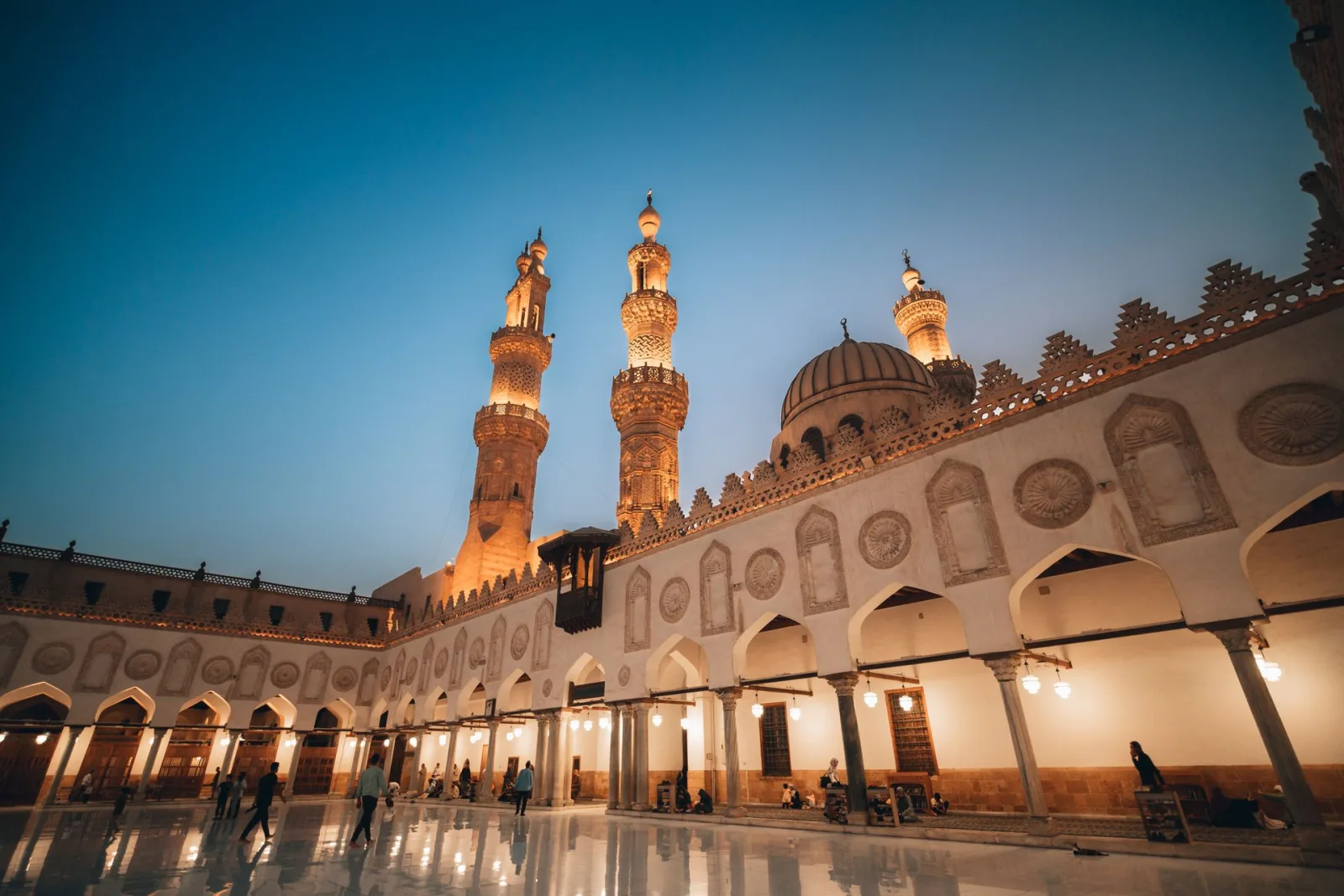
Founded in 970 AD, Al-Azhar is one of the oldest mosques in the world and the oldest degree-granting university in the Islamic world. It is a living center of Islamic learning. Non-Muslims can view the beautiful courtyard, but the main prayer hall is reserved for worshippers.
Abu Haggag Mosque (Luxor)
A fascinating example of layered history, this active mosque is built directly on top of the ancient Luxor Temple. The entrance to the mosque is located high up on the temple's colonnade, showcasing how Islamic architecture was integrated into ancient pharaonic structures.
Cultural Etiquette & Dress Code
Navigating local customs with respect and awareness.
Egypt's cultural norms regarding modesty and social conduct align closely with Islamic values, making Indian Muslim travelers feel instantly at home.
Dress Code: The general public dresses modestly. For women, loose-fitting clothing that covers the arms and legs is standard. While a hijab is not legally required for tourists, carrying a lightweight scarf is highly practical for entering mosques and can help deflect unwanted attention in crowded areas.
Alcohol: Alcohol is not widely consumed by the general public and is mostly confined to specific hotel bars, upscale restaurants, and liquor stores. You will rarely see public intoxication, and the overall atmosphere in local neighborhoods is very conservative and family-oriented.
Friday Prayers (Jumu'ah): On Fridays, expect shops and some tourist sites to close or reduce hours between 12:00 PM and 2:00 PM for Friday prayers. Plan your sightseeing accordingly, or use this time to join the congregation at a local mosque.
Interactions: Greetings like "As-salamu alaykum" are deeply appreciated and will instantly warm your interactions with locals. Egyptians are incredibly hospitable and will often go out of their way to help Muslim travelers find a mosque or Halal food.
Frequently Asked Questions — Muslim Travel in Egypt
Quick answers to common queries from Indian Muslim travelers.
1Is food in Egypt Halal for Indian Muslims?
Yes, the vast majority of food in Egypt is Halal. As a predominantly Muslim country, local eateries, street food stalls, and standard restaurants serve Halal meat by default. You can easily find Halal chicken, beef, and lamb across all cities.
2Are there prayer facilities at Cairo International Airport?
Yes, Cairo International Airport (CAI) has dedicated, clean prayer rooms (Musallas) in both Terminal 2 and Terminal 3. They are located airside near the departure gates and are easily accessible for transit and arriving passengers.
3Can non-Muslims enter mosques in Egypt?
Yes, many major historical mosques in Egypt, such as the Muhammad Ali Mosque and Al-Azhar Mosque, welcome non-Muslim visitors outside of daily prayer times. However, active local neighborhood mosques may restrict entry to Muslims only.
4What is the dress code for visiting mosques in Egypt?
Modest dress is strictly required. Both men and women must cover their shoulders and knees. Women are required to cover their hair with a scarf when entering major historical mosques. Shoes must be removed before entering the prayer halls.
5How does Ramadan affect travel for Muslim tourists in Egypt?
Ramadan is a beautiful time to visit, with vibrant nightly festivities and special Iftar tents. However, some local restaurants and shops may close during daylight fasting hours. Tourist areas and hotels continue to operate normally, and you can easily find food in designated areas. For more details, see our Egypt Ramadan Travel Tips.
Planning a spiritually enriching trip to Egypt? Let our experts arrange your flights, Halal-friendly accommodations, and guided Islamic heritage tours.
Note: While Egypt is deeply rooted in Islamic tradition, it is also a major tourist hub with diverse cultural influences. Always respect local laws and customs, and be mindful of photography rules inside active mosques, where flash photography and tripods are strictly prohibited.
Fill out the enquiry form below and our travel experts will help you plan a comfortable, spiritually enriching Egypt tour with Halal dining and prayer logistics handled.
Get assistance with mosque-included itineraries, Halal-friendly hotels, private transport, and complete Egypt packages.