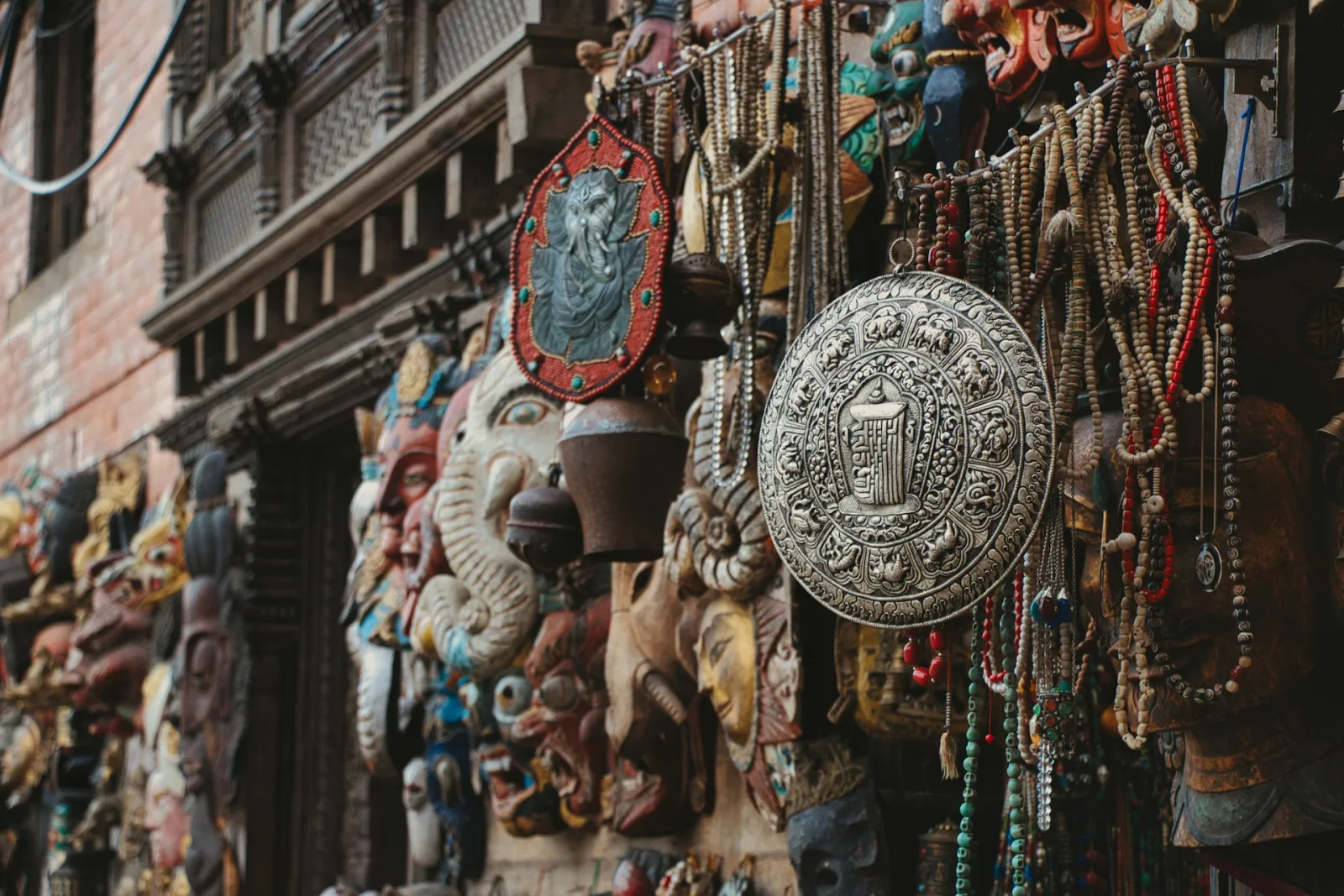
Colorful handicrafts and pashmina shawls displayed at Thamel Market in Kathmandu, Nepal

Nepal Shopping Guide
for Indian Travelers 2026

Thamel markets, pashmina, singing bowls, bargaining tips & authentic souvenir shopping in Kathmandu and Pokhara — tailored for Indian tourists.

Updated for 2026 Travelers
Written by Nisha Chaudhary — Asia Travel Specialist
Reviewed by Namrata Sethi · Asia Travel Reviewer
Last updated after reviewing:
  • Nepal export regulations for handicrafts updated for Indian tourists (April 2026)
  • New Thamel market hygiene ratings and vendor certification program
  • INR acceptance policy revisions at major Kathmandu shopping zones

Last updated: April 2026

Best Shopping Areas in Nepal for Indian Travelers
From bustling Thamel lanes to curated craft centers — where to find authentic Nepali souvenirs.

Thamel Market (Kathmandu)

  • Best for: First-time visitors, budget shopping, one-stop souvenir hunting
  • Why: Walking distance from most hotels, Hindi/English speaking vendors, abundant vegetarian food nearby
  • What to buy: Pashmina, singing bowls, thangka paintings, trekking gear, spices
  • Price Range: Budget to mid-range; bargaining expected
  • Hours: 10 AM – 9 PM daily; busiest evenings

Patan Craft Center

  • Best for: Quality-assured handicrafts, fixed prices, authentic craftsmanship
  • Why: Government-supported center; artisans work on-site; GI-tagged products
  • What to buy: Thangka paintings, metal statues, Dhaka fabric, wood carvings
  • Price Range: Mid to premium; no bargaining
  • Hours: 9 AM – 6 PM; closed Sundays

Lakeside Market (Pokhara)

  • Best for: Lakeside shopping, relaxed browsing, adventure gear
  • Why: Scenic setting, fewer crowds than Thamel, good for last-minute purchases
  • What to buy: Pashmina, trekking poles, local honey, handmade jewelry
  • Price Range: Budget to mid-range; polite bargaining accepted
  • Hours: 10 AM – 8 PM daily

Want authentic Nepali souvenirs delivered to India? Our Nepal packages include curated shopping assistance and export documentation support.

← Back to Nepal Travel Guide
Authentic Nepali Products for Indian Travelers
How to identify genuine handicrafts and avoid counterfeit souvenirs.

Must-Buy Authentic Items

  • Pashmina Shawls: Look for GI tag, soft texture, subtle sheen; authentic pashmina burns to ash (not plastic smell)
  • Singing Bowls: Hand-beaten metal bowls; authentic ones produce sustained resonance; avoid machine-stamped copies
  • Thangka Paintings: Hand-painted on cotton/canvas with natural pigments; check for artist signature and certification
  • Dhaka Fabric: Traditional Nepali woven cloth with geometric patterns; authentic pieces have intricate hand-weaving
  • Khukuri Knives: Iconic Gurkha curved blades; buy from licensed dealers with export permits
  • Wood Carvings: Newari-style windows, statues; authentic pieces show hand-chisel marks

Indian Traveler Tip: Ask for "GI tag" or "handmade certificate" when buying premium items. Reputable shops provide authenticity documentation.

Bargaining Tips for Indian Travelers in Nepal
Polite negotiation strategies to get fair prices without offending vendors.

Smart Bargaining Rules

  • Start at 50–60% of quoted price; negotiate politely to 70–80% final price
  • Smile and be friendly — bargaining is a social interaction, not confrontation
  • Walk away tactic — vendors often call back with better offers
  • Buy in bulk — discounts for multiple items (e.g., 3 pashminas, 5 singing bowls)
  • Avoid bargaining at fixed-price stores (Bhat Bhateni, Patan Craft Center, airport duty-free)
  • Carry small notes — vendors may not have change for large INR/NPR bills

See Nepal trip cost guide for realistic souvenir budgeting in INR.

Cultural Etiquette

  • Respect artisans — many vendors are craftspeople; appreciate their skill
  • Ask about the craft — showing interest often leads to better prices and stories
  • Avoid aggressive haggling — Nepali culture values harmony; keep negotiations light
  • Tip for exceptional service — small NPR notes appreciated for helpful vendors
  • Learn basic Nepali — "Dhanyabad" (thank you) and "Kati ho?" (how much?) go a long way
Payment & Currency Tips for Shopping in Nepal
Navigate INR/NPR exchange, digital payments, and receipt requirements for Indian travelers.

Currency & Payment Options

  • INR Acceptance: Widely accepted in Thamel/Lakeside; ₹500/₹1000 notes restricted — carry ₹100/₹200/₹50
  • NPR Preferred: Exchange excess INR at authorized counters for better rates at small vendors
  • Digital Payments: eSewa, Khalti, and Paytm gaining acceptance in tourist zones; carry cash backup
  • Cards: Visa/Mastercard accepted at premium stores; inform bank of travel to avoid blocks
  • Receipts: Request receipts for export documentation and warranty claims on electronics
  • Export Limits: Declare high-value items (antiques, jewelry) at customs; keep purchase receipts

Exchange Tip: Avoid street money changers; use banks or authorized counters for fair INR→NPR rates.

Export Rules for Shopping in Nepal (Indian Travelers)
Know what you can take home and required documentation for customs clearance.

What You Can Export

  • Allowed: Pashmina, singing bowls, thangka paintings, Dhaka fabric, spices, tea, honey
  • Restricted: Antiques over 100 years old (require Department of Archaeology permit)
  • Prohibited: Wildlife products (ivory, rhino horn), religious artifacts from active temples
  • Khukuri Knives: Allowed for export with purchase receipt; declare at customs
  • Documentation: Keep purchase receipts for high-value items; request export certificates for antiques

Indian Customs Considerations

  • Duty-Free Allowance: ₹50,000 for Indian residents returning from Nepal (land border); ₹1,00,000 for air travel
  • Declare High-Value Items: Electronics, jewelry, antiques exceeding allowance
  • Keep Receipts: Required for customs valuation and warranty claims
  • Prohibited Imports to India: Wildlife products, certain religious artifacts — verify before purchasing

Visa-free entry simplifies border crossings, but customs rules still apply for goods.

Frequently Asked Questions — Nepal Shopping for Indians
Quick answers to common shopping questions from Indian travelers
1What are the best markets for shopping in Nepal for Indians?
Thamel Market in Kathmandu is the top choice for Indian tourists — walking distance from most hotels, abundant vegetarian food, Hindi/English speaking vendors, and authentic handicrafts. Pokhara Lakeside Market and Patan Craft Center are excellent for quality-assured souvenirs.
2Is bargaining acceptable in Nepal markets?
Yes, bargaining is expected and part of the local market culture in Nepal. Start at 50–60% of the quoted price and negotiate politely. Fixed-price stores (Bhat Bhateni, Patan Craft Center) do not allow bargaining.
3Can I use Indian Rupee for shopping in Nepal?
Yes, Indian Rupee is widely accepted in Thamel and tourist areas. However, ₹500 and ₹1000 notes are restricted in Nepal — carry ₹100, ₹200, and ₹50 notes. Exchange excess INR at authorized counters for Nepalese Rupees (NPR).
4How do I identify authentic pashmina in Nepal?
Authentic pashmina is made from Changthangi goat wool, feels soft and warm, has a subtle sheen, and burns to ash (not plastic smell) when tested. Buy from certified shops with GI tags or government-approved labels. Avoid suspiciously cheap "pashmina" — likely acrylic blends.

Note: Prices, vendor policies, and export regulations are subject to change. Verify current rules with Nepal Tourism Board or your hotel before making high-value purchases. This guide provides general shopping guidance for Indian travelers; always request receipts and authenticity certificates for premium items.

More Travel Guides

Explore Other Destinations

Plan Your Nepal Trip from India

Fill out the enquiry form below and our travel experts will help you plan your Nepal tour — shopping guidance, authentic souvenirs, and curated market tours.

Get assistance with Thamel market tours, pashmina authentication, export documentation, and complete Nepal packages.

Enquire About This Package